Home » Understanding PPF Material: Why Every Car Owner Needs Paint Protection Film
Recent Posts
Understanding PPF Material: Why Every Car Owner Needs Paint Protection Film
Ever had that sinking feeling after a long road trip, pulling into your driveway only to spot a fresh rock chip on your hood? Or maybe you have parked your car outside overnight, only to find bird droppings baked into the paint the next morning.
If you care about how your car looks—and let’s be honest, most of us do—you have probably asked yourself the same question over and over: How do I actually keep my paint safe?
That is exactly where paint protection film material enters the picture. PPF material has quietly become one of the smartest investments a car owner can make, and once you understand what it is and what it can do, you will wonder why you waited so long to get it.
In this guide, we are going to walk through everything you need to know about PPF material: what it is made of, how it works, which type fits your needs, how it gets installed, and how to keep it looking its best. And when you are ready to protect your ride with something truly reliable, Decowell is the name to remember.
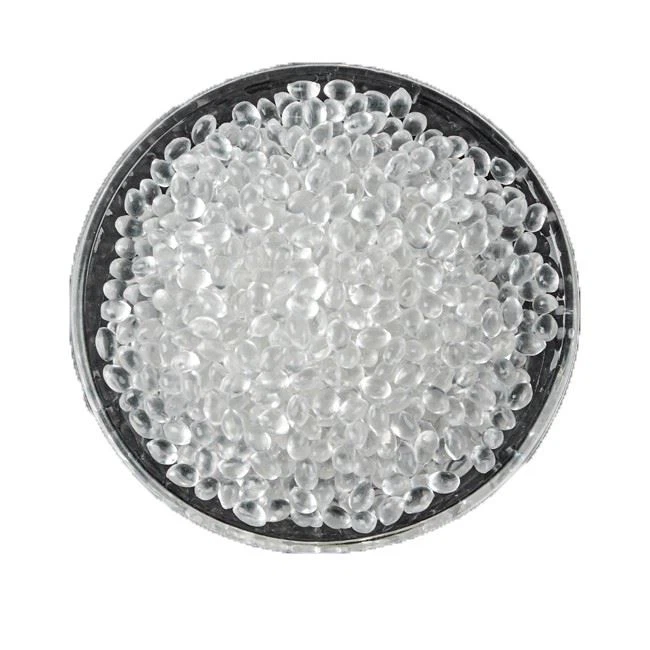
Table of Contents
What Is PPF Material? (And Why Does It Matter?)
PPF material stands for paint protection film. At its most basic level, think of it as an invisible shield that sits on top of your car’s factory paint. But it is not just any shield—it is a highly engineered, multi‑layer film originally developed for military applications, specifically to protect helicopter rotor blades from debris. Over time, that same technology made its way into the automotive world, and today, high‑quality PPF material is one of the most effective ways to preserve a vehicle’s exterior.
Modern PPF material is completely transparent, so it does not change the look of your car. But underneath that clear surface, it is constantly working: absorbing impacts from small rocks, deflecting road grime, and even repairing light scratches on its own.
Here is the thing. Modern automotive paints—especially the eco‑friendly water‑based paints that most manufacturers now use—are thinner and softer than the older solvent‑based finishes. That means your car’s paint is actually more vulnerable today than it was ten years ago. A good PPF material bridges that gap, giving you the protection that modern paint alone simply cannot provide.
The Science Behind PPF Material: What Is It Actually Made Of?
If you want to understand why premium PPF material performs better than cheaper alternatives, you need to look at its internal structure. A high‑quality paint protection film is not just a single sheet of plastic. It is a carefully constructed multilayer system.
Thermoplastic Polyurethane (TPU) – The Backbone
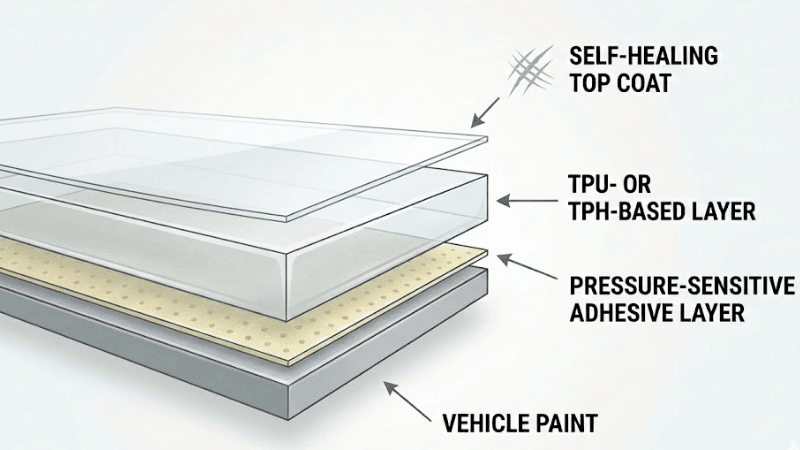
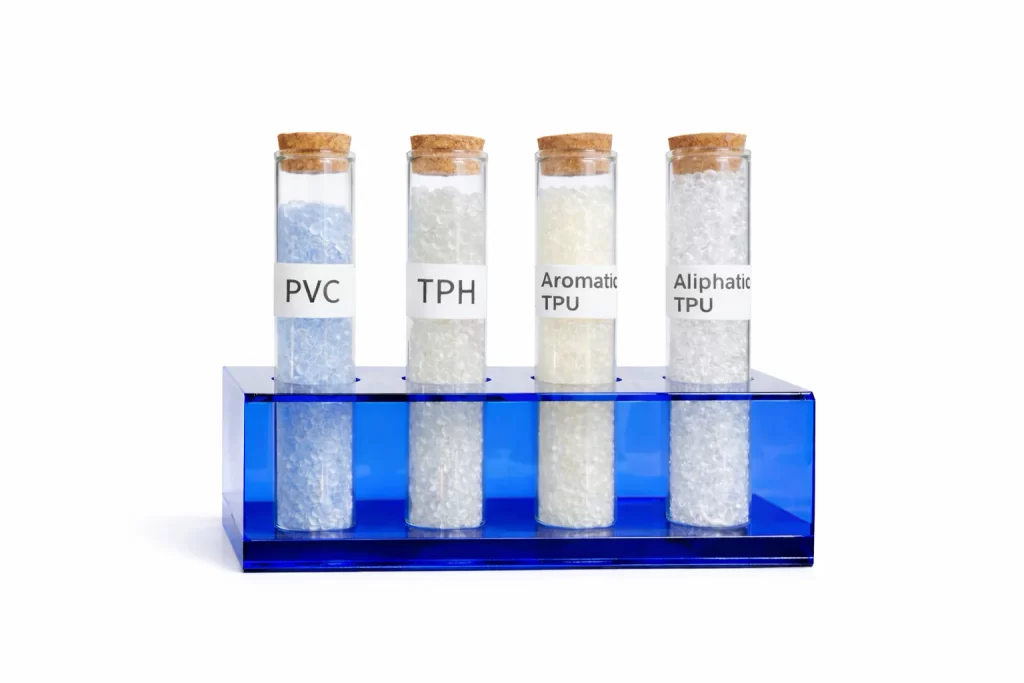
The core of any modern paint protection film material is thermoplastic polyurethane, or TPU. Unlike the older PVC films that were prone to cracking and yellowing, TPU is highly elastic, chemically stable, and incredibly durable.
What makes TPU so special? It has what are called self‑ordering block structures—long polymer chains that give the material flexibility while maintaining impact resistance. In plain English: TPU can stretch, bend, and conform to the curves of your car without tearing. It absorbs impacts from road debris instead of just bouncing them off your paint.
The best PPF material uses aliphatic TPU, which is engineered to resist UV degradation. Older aromatic TPUs would react with sunlight and turn yellow over time. Aliphatic TPU does not contain those same molecular structures, so it stays crystal clear for years.
The Self‑Healing Top Coat
This is where PPF material gets really interesting. The outermost layer of premium paint protection film contains elastomeric polymers—special molecules that exist in a semi‑flexible state. When you get a light scratch or a swirl mark on the surface, it is actually just displacing those polymer chains.
Here is the magic part. Apply a little heat—sunlight, warm water, even a hair dryer—and those polymers get enough energy to flow back to their original, lowest‑energy state. The scratch disappears as if it never existed. Modern self‑healing PPF material can handle minor abrasions and micro‑scratches without leaving any trace behind.
The Adhesive Layer
None of this works if the film does not stick properly. A high‑quality PPF material uses a pressure‑sensitive acrylic adhesive that bonds firmly to your car’s clear coat but can still be removed cleanly without damaging the paint underneath. That is important because it means the protection is not permanent—you can have the film replaced down the road without worrying about ruining your factory finish.
Types of PPF Material: Which Finish Is Right for You?
Not all paint protection film material looks the same. Depending on the look you want, you have several options.
Gloss PPF Material
This is the most common type. Gloss PPF material enhances your car’s existing paint, giving it a deep, mirror‑like shine that looks freshly waxed at all times. It is practically invisible once applied, so if you love your car’s original color and just want to protect it, gloss is your answer.
One thing to keep in mind: gloss PPF material can reveal swirl marks and minor imperfections more easily than matte finishes, especially if you are not careful about how you wash the car. But with proper maintenance, that mirror finish stays stunning.
Matte PPF Material
Matte paint protection film material gives your car a completely different character. It suppresses reflections and creates a smooth, satin‑like, non‑glare surface. If your car came with factory matte paint—or if you simply love that stealthy, aggressive look—matte PPF is the way to go.
One benefit of matte PPF material that often surprises people: it hides small imperfections, dust, and fingerprints much better than glossy finishes. That means you do not have to clean it as often to keep it looking great.
Colored and Textured PPF Material
Beyond gloss and matte, some PPF material comes in colors or even textured finishes like carbon fiber or brushed metal. These options give you the ability to customize the look of your car while still getting the same rock‑chip protection and self‑healing properties. Think of it as a protective wrap that also transforms your car’s style.
How Is PPF Material Installed? (And Why Professional Installation Matters)
Applying paint protection film material is not something you can do in your driveway with a credit card and a YouTube video. It is a meticulous, multi‑step process that requires skill, patience, and experience.
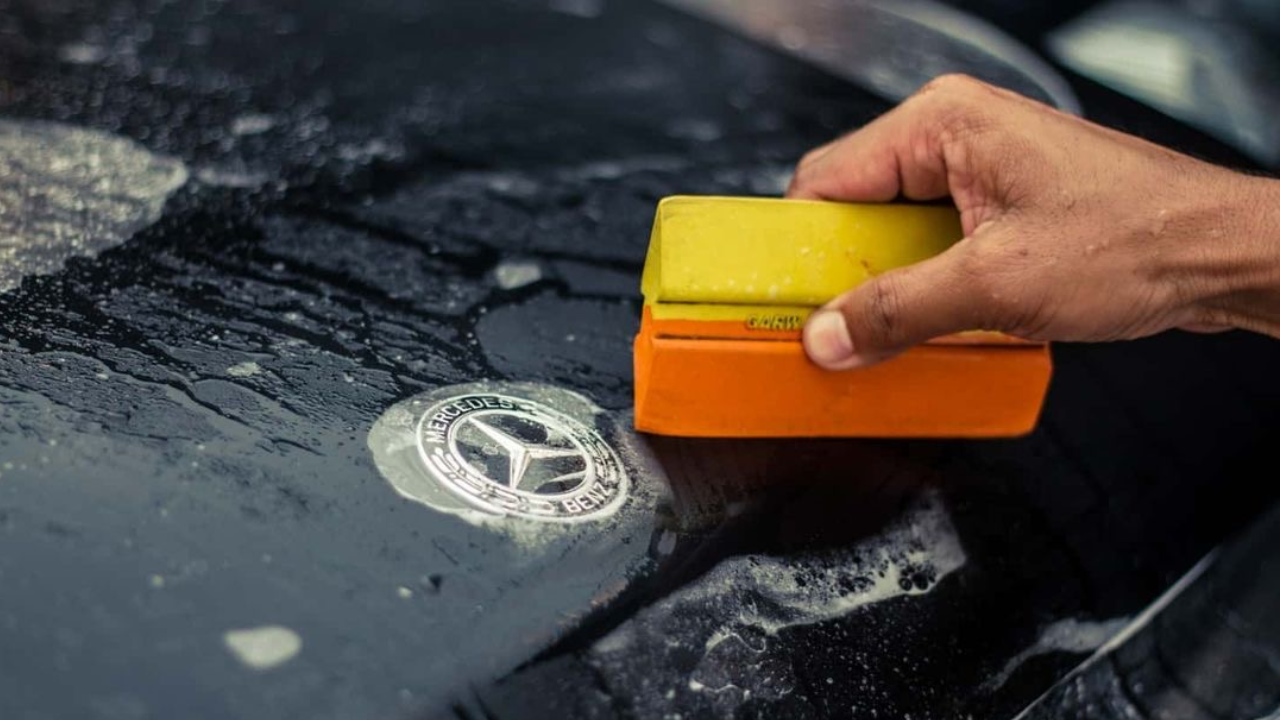
Step 1 – Deep Cleaning and Surface Preparation. Before any PPF material touches the car, the entire surface needs to be decontaminated. Professionals start with a foam wash, then use iron and tar removers, followed by a clay bar treatment to lift out microscopic particles that normal washing cannot touch.
Step 2 – Paint Correction. If your paint already has swirl marks, scratches, or oxidation, those imperfections will be locked under the PPF material if you do not fix them first. That is why professional installers always inspect and correct the paint before applying any film.
Step 3 – Film Cutting. Many high‑end shops use computer‑generated templates specifically designed for your car’s make and model. These pre‑cut patterns fit within millimeters of each panel edge, eliminating the need to cut blades on your actual paint.
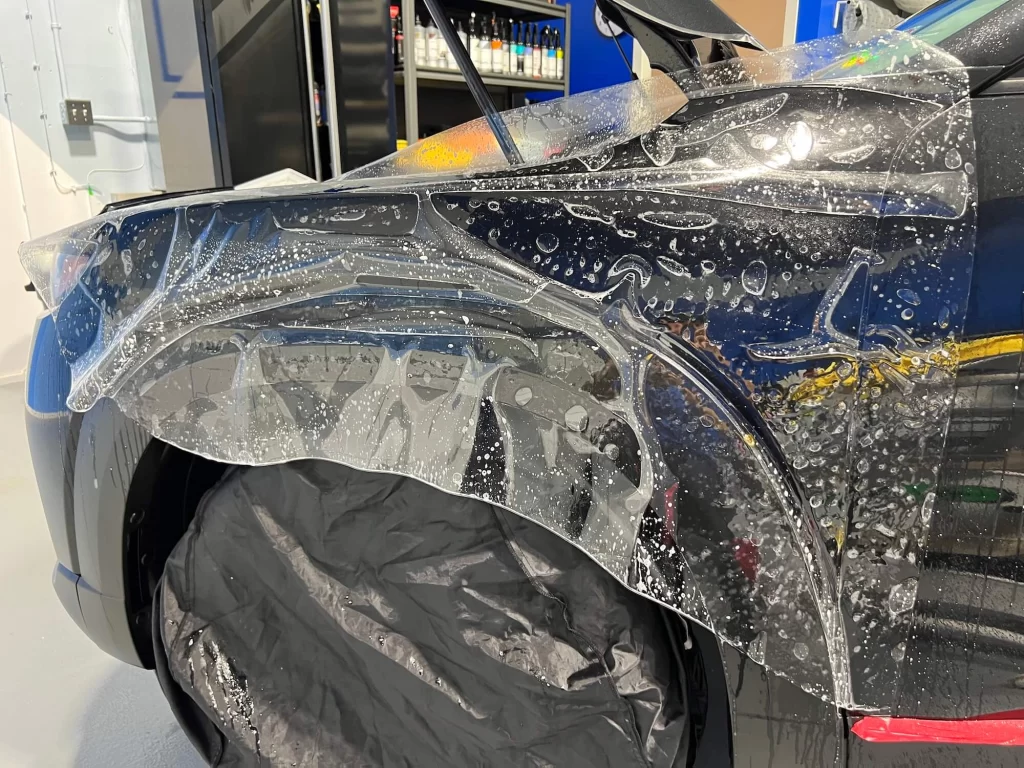
Step 4 – Application. Using a slip solution (water mixed with a small amount of soap), the installer lays the PPF material onto the panel. Then they use squeegees and a tack solution to press the film into place, working from the center outward to eliminate air bubbles. Heat is often applied to help the TPU stretch and conform to complex curves.
Step 5 – Trimming and Finishing. Once the film is in place, edges are carefully sealed and any excess is trimmed. Then the car is left to sit for several days while the adhesive fully cures and the PPF material settles into its final form.
Can you do it yourself? Technically yes, but almost no professional would recommend it. While DIY PPF kits exist, professional installation yields dramatically better results thanks to experience, precision tools, and a controlled dust‑free environment. A single speck of dust trapped under the film becomes a permanent blemish. The extra cost of a pro install is money well spent.
How to Maintain Your PPF Material for Long‑Term Performance
Good news: maintaining paint protection film material is actually easier than maintaining bare paint. But there are a few rules you should follow.
Wash regularly using pH‑neutral shampoo. You should wash your car every one to two weeks using a pH‑balanced car soap. Stick to hand washing with a soft microfiber mitt—the two‑bucket method works great here. Avoid aggressive detergents that contain solvents or alcohol, as they can break down the top coat over time.
Skip the automatic car washes. Those spinning brushes are harsh on any paint finish, and they can be especially damaging to PPF material. The abrasive action can create micro‑scratches faster than the self‑healing layer can repair them. Hand washing is the safest way to keep your film looking flawless.
Use PPF‑safe wax or sealant. You can absolutely wax your PPF material—in fact, regular waxing helps maintain gloss and boosts the hydrophobic properties of the top coat. But you need to use products that are specifically labeled as PPF‑safe. Traditional waxes and polishes meant for bare paint can cloud the film or leave residue.
Inspect for damage periodically. Keep an eye on the edges of the film and look for any lifting, bubbling, or deep scratches that might have penetrated beyond the top coat. Catching small issues early prevents them from becoming bigger problems down the road.
Let the film cure before you wash it. After a fresh installation, do not wash your car for at least five to seven days. The adhesive needs time to fully bond to the paint, and introducing water or chemicals too early can compromise that bond.
Paint Protection Film vs. Ceramic Coating vs. Vinyl Wrap
A lot of car owners get confused about how PPF material compares to other protective options. Let us clear that up.
Ceramic coating is a liquid polymer that chemically bonds to your paint at a molecular level. It creates a hydrophobic, UV‑resistant surface that makes your car extremely easy to clean and gives it a deep, wet‑look shine. However, ceramic coating is measured in microns—it is incredibly thin and has virtually no ability to stop rock chips or physical impact. Think of it as a chemical shield, not a physical one.
Vinyl wrap is primarily designed to change the color or finish of your car. It is thinner than PPF material, usually around 3 to 4 mils, and is not engineered for impact protection. A vinyl wrap will protect against light scratches and UV fading, but it is not a replacement for proper paint protection film when it comes to rock chips and road debris.
PPF material sits in a category of its own. It is thick (typically 6 to 8 mils), physically absorbs impacts, self‑heals light scratches, and preserves the factory paint underneath like nothing else can.
So which one should you choose? The short answer is that they solve different problems. Many enthusiasts actually combine them—PPF on high‑impact areas like the front bumper, hood, and mirrors, then ceramic coating over the entire vehicle, including the PPF. That gives you rock‑chip protection where you need it most and hydrophobic ease‑of‑cleaning everywhere else.
Why PPF Material Is a Smart Financial Investment
Here is a number that might surprise you. According to a national survey of U.S. automotive dealership professionals, 96% believe that applying paint protection film material to all of a new vehicle‘s painted surfaces helps retain more of its value. And 70% of dealers cited value‑retention gains of up to 15%.
Think about that for a second. The average new car in the U.S. costs well over $50,000. If you can preserve an extra 10 to 15 percent of that vehicle’s value simply by protecting the paint with PPF material, the math works out very quickly in your favor. Dealers overwhelmingly agree: vehicles with PPF command higher resale prices, and 92% say that cars with full‑body PPF coverage would have a higher resale value as pre‑owned inventory.
If you drive a luxury car, a sports car, or even just a daily driver that sees a lot of highway miles, protecting the paint is not about vanity. It is about preserving an asset.
Common Myths About PPF Material (Debunked)
Myth 1: PPF material damages factory paint. Absolutely not. Professional‑grade paint protection film uses paint‑safe adhesives that bond cleanly and remove cleanly. The film actually prevents damage to your paint; it does not cause it.
Myth 2: You cannot wax or polish PPF. You can, as long as you use PPF‑safe products. In fact, regular waxing helps maintain the film‘s gloss and hydrophobic performance.
Myth 3: PPF only lasts a year or two. High‑quality PPF material from trusted manufacturers can last many years, depending on how you drive and how you maintain it. Premium films are engineered for long‑term durability and resistance to yellowing, cracking, and peeling.
Myth 4: All PPF material is the same. This could not be further from the truth. The difference between a budget PVC film and a premium aliphatic TPU film with a self‑healing top coat is night and day. You get what you pay for with paint protection film material.
The Future of PPF Material (And Why It Matters)
The global paint protection film market is growing rapidly. Industry reports show that the market is projected to continue expanding, driven by increasing consumer awareness of vehicle protection and ongoing technological advancements like self‑healing and hydrophobic coatings.
At the same time, more and more car owners are holding onto their vehicles longer. The average age of cars on the road is now 12.6 years. When you are keeping a car for more than a decade, protecting the paint is no longer a luxury. It is just smart ownership.
Frequently Asked Questions About PPF Material
Q: Will PPF material protect my car from rock chips?
Yes, absolutely. Physical impact protection is the single biggest reason people install PPF material. The thick TPU layer absorbs the impact and prevents the debris from reaching your factory clear coat.
Q: How long does paint protection film last on a car?
High‑quality PPF material is designed for long‑term use. The exact lifespan depends on factors like how much you drive, where you park, and how you maintain the film, but premium films are engineered to stay clear and effective for many years with proper care.
Q: Can I apply PPF material myself?
While DIY installation is technically possible, it is strongly discouraged. Professional installation ensures proper surface preparation, precise cutting, dust‑free application, and a flawless finish. A single spec of dust or a single air bubble can ruin the look of the film, and most car owners find that paying a professional is well worth the investment.
Q: Does PPF material yellow over time?
Cheaper films made from aromatic TPU can yellow. But premium PPF material made from aliphatic TPU is engineered with UV stabilizers that resist yellowing and keep the film optically clear for years. That is why you should always choose a high‑quality film from a trusted source.
Q: Can I wash my car normally after installing PPF?
Yes, but wait at least five to seven days after installation to let the adhesive fully cure. After that, hand washing with pH‑neutral car shampoo is the safest approach. Avoid automatic car washes with spinning brushes.
Q: Will PPF material hide existing scratches or paint defects?
No. In fact, PPF material will actually lock in any existing imperfections. That is why professional installers always perform paint correction—fixing swirl marks, scratches, and oxidation—before applying the film. The cleaner your paint is underneath, the better the final result will look.
Q: Is PPF material the same as a ceramic coating?
No, they are different products that serve different purposes. PPF material is a physical film that stops rock chips and absorbs impacts. Ceramic coating is a liquid polymer that chemically bonds to paint, creating a hydrophobic, easy‑to‑clean surface. Many car owners use both for maximum protection.
Final Thoughts: Why You Should Trust Decowell
When it comes to protecting your car’s paint, the quality of the PPF material itself makes all the difference. Not all paint protection films are created equal, and cutting corners on the film is a mistake you will see every time you look at your car.
That is where Decowell comes in. Decowell delivers premium paint protection film material engineered for real‑world driving conditions—rock chips, road debris, UV exposure, and everything else the road throws at you. With Decowell’s advanced TPU formulation and self‑healing top coat technology, you get the invisible protection your car deserves without compromising on clarity, gloss, or durability.
Whether you drive a daily commuter that lives on the highway, a weekend sports car that you keep in showroom condition, or a luxury vehicle that needs to hold its value, Decowell has the right PPF material for you.
Your car’s paint is only original once. Protect it with something that actually works. Protect it with Decowell.