Decowell Dyed Car Window Film
20+ Years Professional Expertise | Professional Automotive Film Manufacturer | Full-Solution Provider (PPF, Window Film, Wrap Film) | 2000+ Certified Installers | From R&D to Production | High-Cost-Effective Premium Films | Ample Stock | Professional Team | Serving 40+ Countries | Reliable Logistics
Home » Products » Car Window Film » Dyed Window Film
Product Categories
Dyed Film
— Car Window Film
Specifications
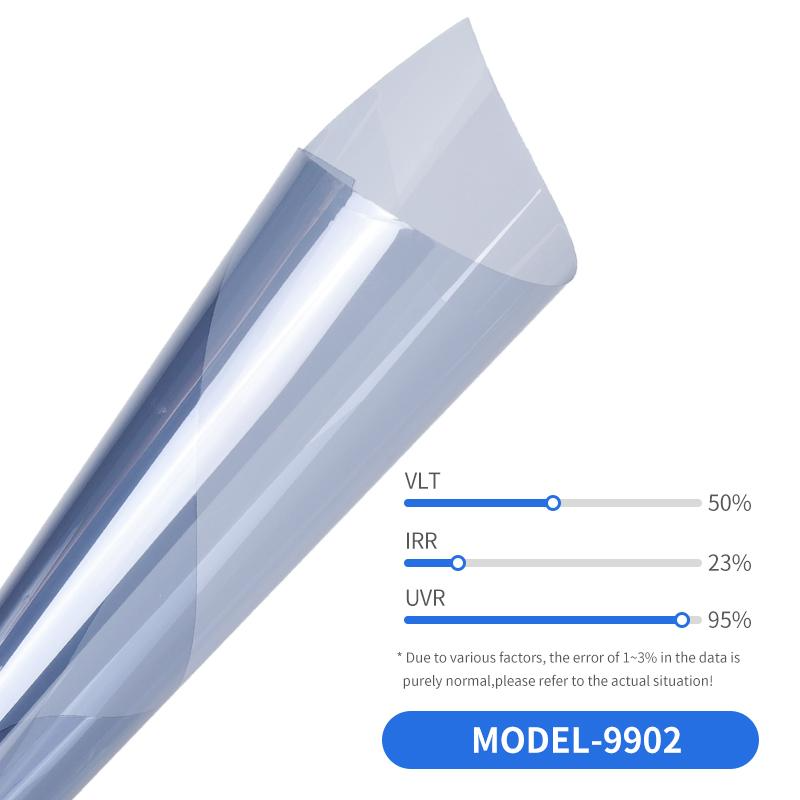
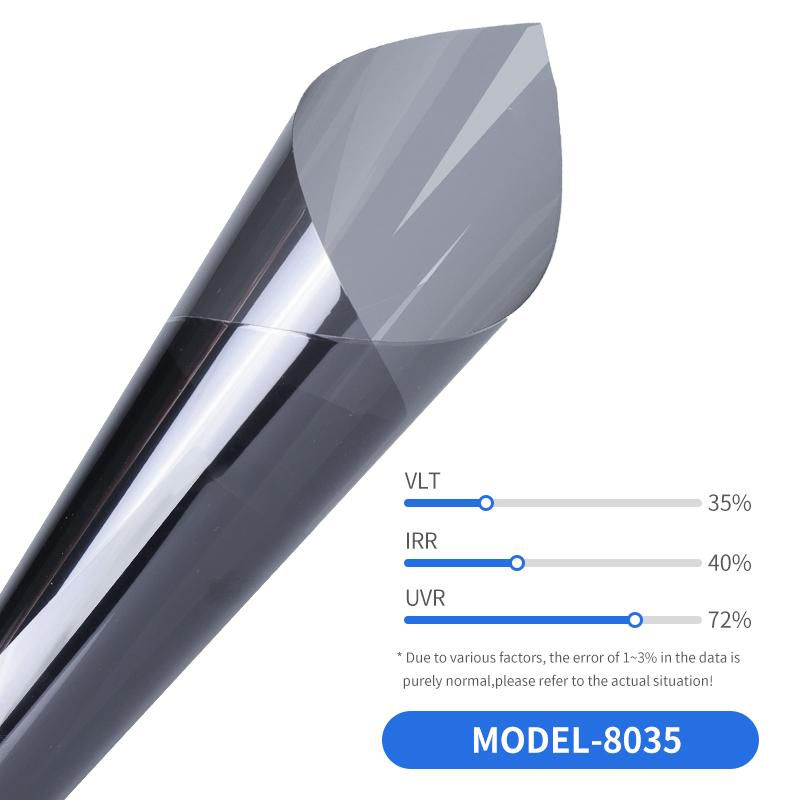
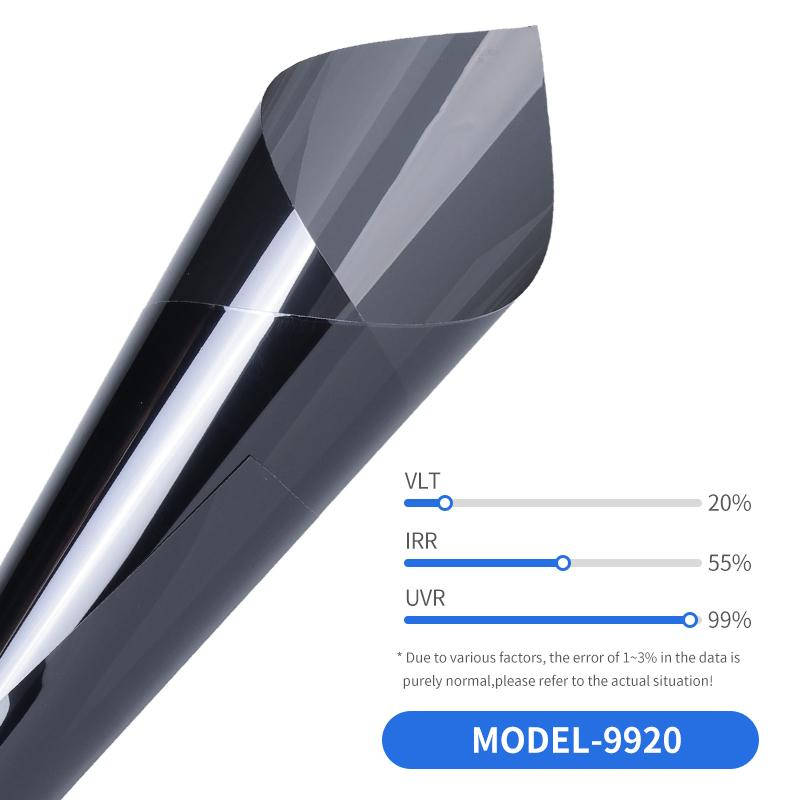
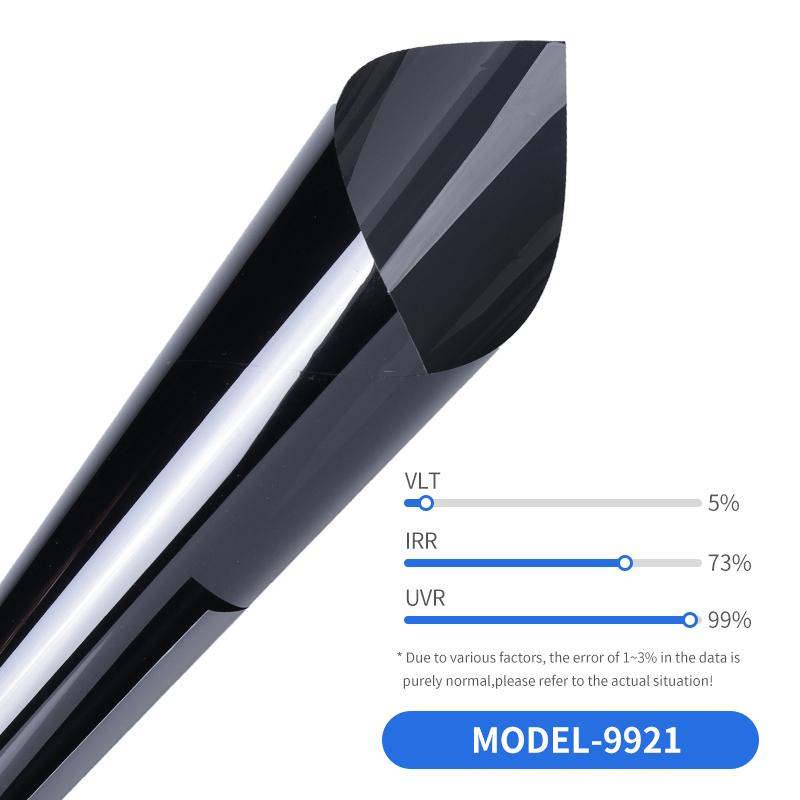
VLT: (Visible Light Transmission) 66%, 50%, 35%, 20%, 5%, 3%, 30%, 15%
IRR: 43%, 23%, 40%, 55%, 73%, 77%, 30%, 35%, 50%, 65%
UVR (UV Rejection): 99%, 95%, 72%, 85%, 90%
TSER: 30%, 47%, 60%, 74%, 85%, 47%, 58%, 70%, 83%
Thickness: 2 mil
Size: 1.52m × 30m (60inch × 100ft)
Material: PET
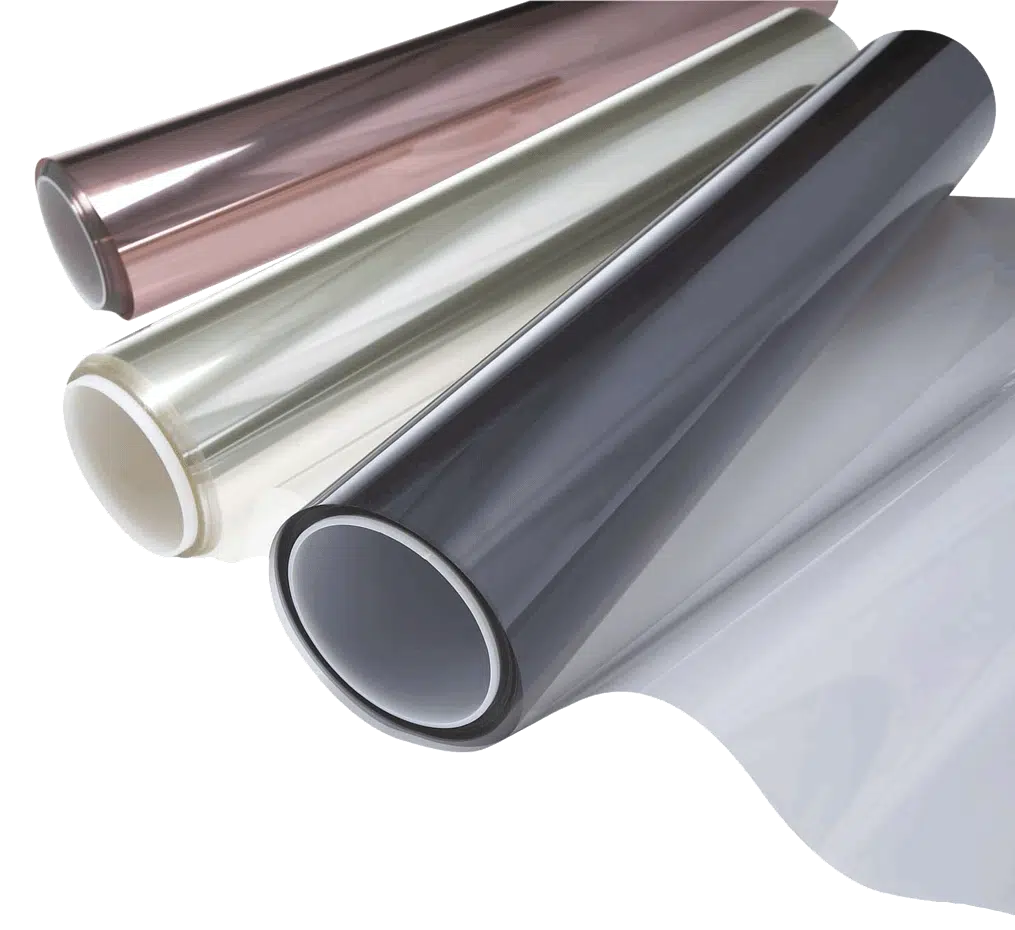
Color: Light Grey, Blue, Light Black, Black, Dark Black, Super Dark Black, Ultra Super Dark Black
Overview
The Decowell Dyed Window Film offers a reliable and cost-effective solution for automotive window tinting. With 5% visible light transmission, this film delivers maximum privacy and superior glare reduction, creating a sleek, dark appearance that enhances any vehicle’s aesthetic. Engineered with durable dyed polyester construction, it provides consistent performance and long-lasting color stability.
Why Choose Decowell?
Maximum Privacy – With only 5% VLT, this film provides exceptional privacy, making it difficult to see inside the vehicle while maintaining clear outward visibility.
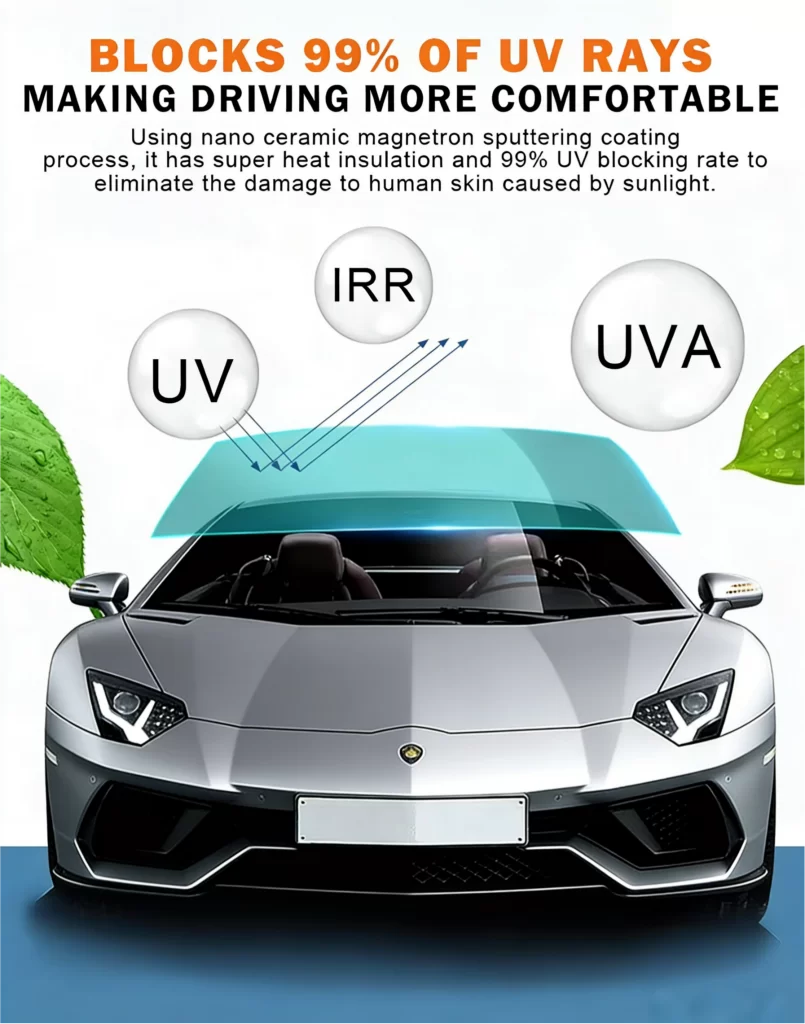
Effective UV Protection – Blocks up to 99% of harmful ultraviolet rays, protecting both driver and passengers from UV exposure while helping prevent interior fading and cracking.
Reliable Heat Reduction – The dyed construction helps reduce solar heat buildup inside the cabin, improving comfort and reducing air conditioning load.
Durable Construction – 2 mil thickness offers good handling during installation and lasting durability against daily wear.
Color Stability – High-quality dye formulation resists fading and maintains consistent appearance over time.
Standard Roll Size – 1.52m × 30m (60inch × 100ft) is the industry-standard format, efficiently covering full vehicle windows with minimal waste.
Applications
Side and rear windows – maximum privacy with sleek dark appearance
Commercial fleets – consistent quality across multiple vehicles
Budget-conscious installations – cost-effective tinting solution
Professional installers – easy to work with, reliable results
Hot climate regions – effective heat and glare reduction
Dyed Window Film: What Every Car Owner Needs to Know Before Tinting
When someone starts looking into window tint for the first time, dyed window film is usually the first thing they come across. It is the most basic, most affordable type of automotive tint available, and for good reason — it gets the job done at a price that fits almost any budget. But there is a lot more to understand about dyed window film than just the upfront cost. The choices you make about window tint affect everything from how hot your car gets in summer to how long the tint actually looks good before it starts changing color.
Here is a complete breakdown of dyed window film — how it works, what it does well, where it falls short, and how to tell whether it is the right fit for your vehicle or your shop.
What Exactly Is Dyed Window Film?
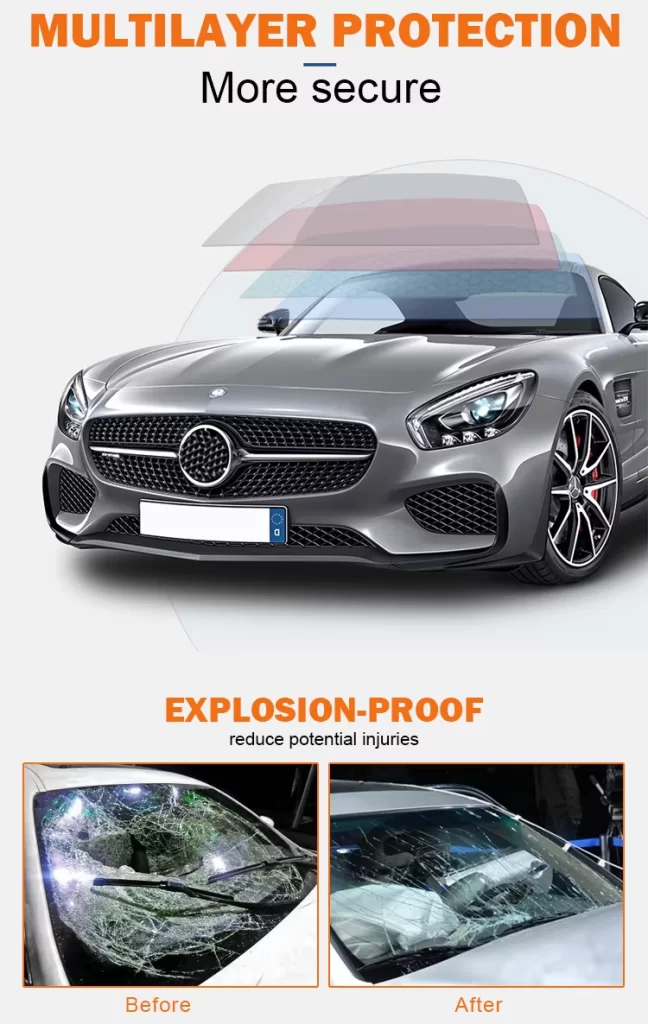
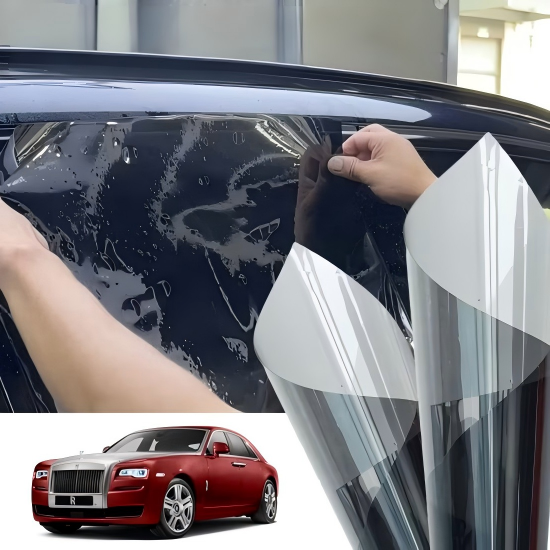
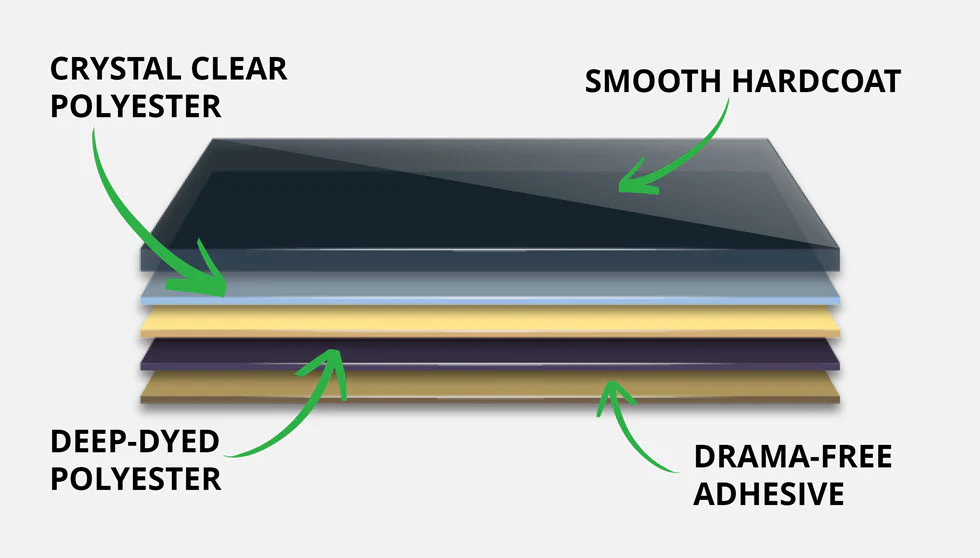
Dyed window film is pretty much exactly what it sounds like. It is a thin, multi‑layer sheet made from polyester film with a layer of colored dye laminated between the adhesive backing and a protective top coating [14†L3-L5]. The dye is what gives the film its dark appearance. When light hits the window, the dye absorbs a large portion of the visible light instead of letting it pass through into the car.
Think of it like sunglasses for your windows. The dye darkens the glass, cuts down on glare, and makes it harder for people outside to see inside your vehicle [14†L5-L7]. That basic construction is why dyed window film is the most budget-friendly tint option available. The manufacturing process is simpler compared to advanced films like carbon or ceramic, which means lower production costs and a lower price tag for the end user [14†L10-L12].
There are a few variations of dyed film out there. Some are single‑ply (one layer of dyed polyester), while others use two plies for slightly better durability. But at its core, the technology has not changed much over the years — it is still basically a colored layer sandwiched between protective surfaces [3†L30-L32].
The Upsides of Dyed Window Film
Despite its limitations, dyed window film has some genuine strengths that keep it on the market.
Affordability. This is the number‑one reason people choose dyed film. For car owners on a tight budget, dyed window tint offers an immediate visual upgrade without a huge financial commitment. For shops, carrying a dyed option allows them to serve price‑sensitive customers who might otherwise skip tinting altogether.
Privacy. Dyed film does a solid job of reducing visibility into the vehicle. Darker shades can make it difficult for passersby to see inside, which adds a layer of security for anything left in the car [14†L6-L7].
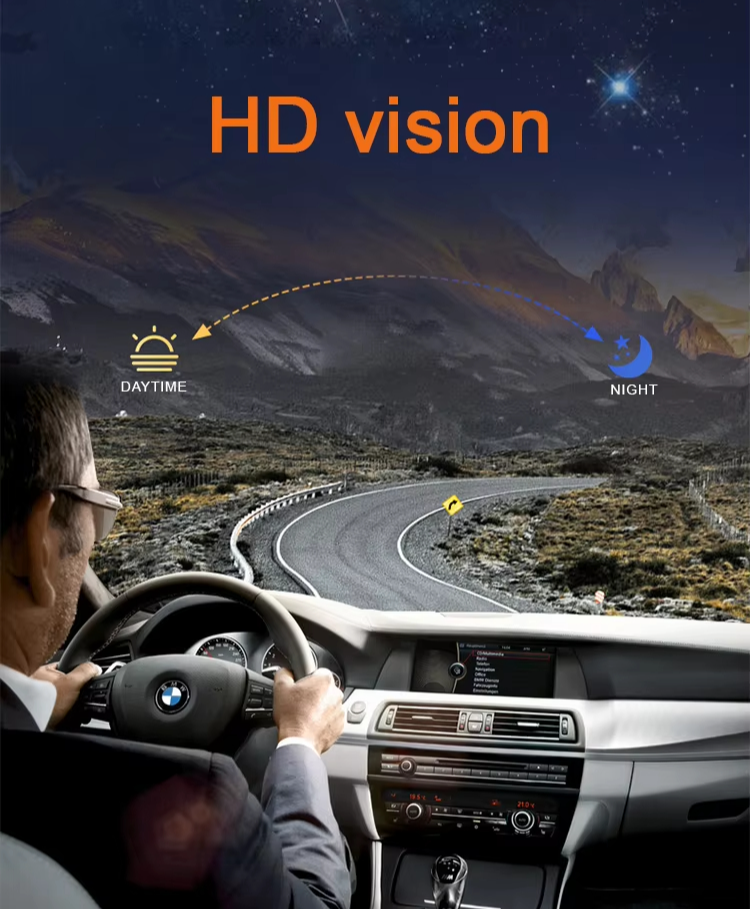
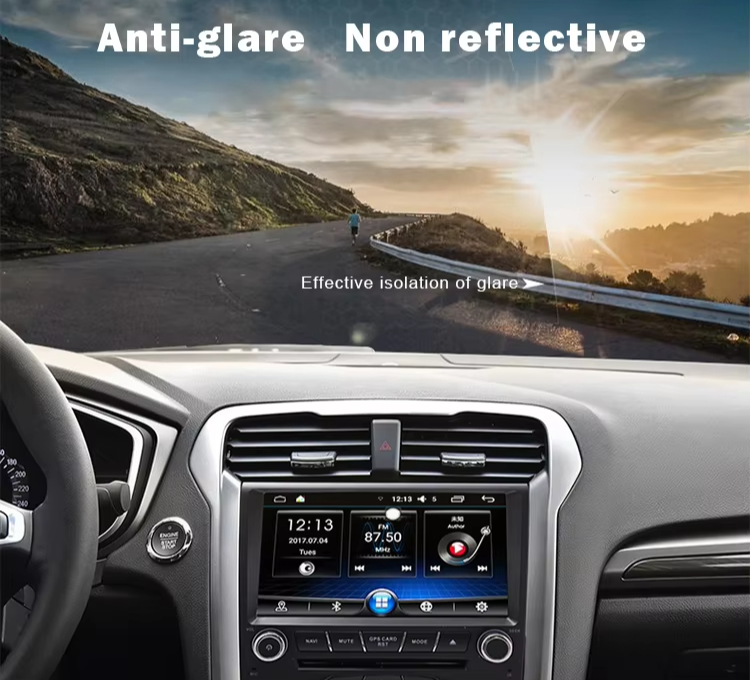
Glare reduction. Sun glare and headlight glare are real safety issues. Dyed window film cuts down on that harsh brightness, making daytime and nighttime driving more comfortable on the eyes [14†L7].
Non‑metallic construction. Unlike metalized tint, dyed film contains no metal particles. That means it will not interfere with GPS signals, cell reception, Bluetooth, or toll transponders — something that matters more now that so many vehicles have built‑in antennas in the glass [14†L55-L56].
For someone who just wants darker windows and is not too concerned about heat rejection or long‑term looks, dyed film can seem like a perfectly reasonable choice.
Where Dyed Window Film Falls Short
The problems with dyed window film do not usually show up on day one. They appear months or years later, after the sun has had time to work on the material. Here is what tends to go wrong.
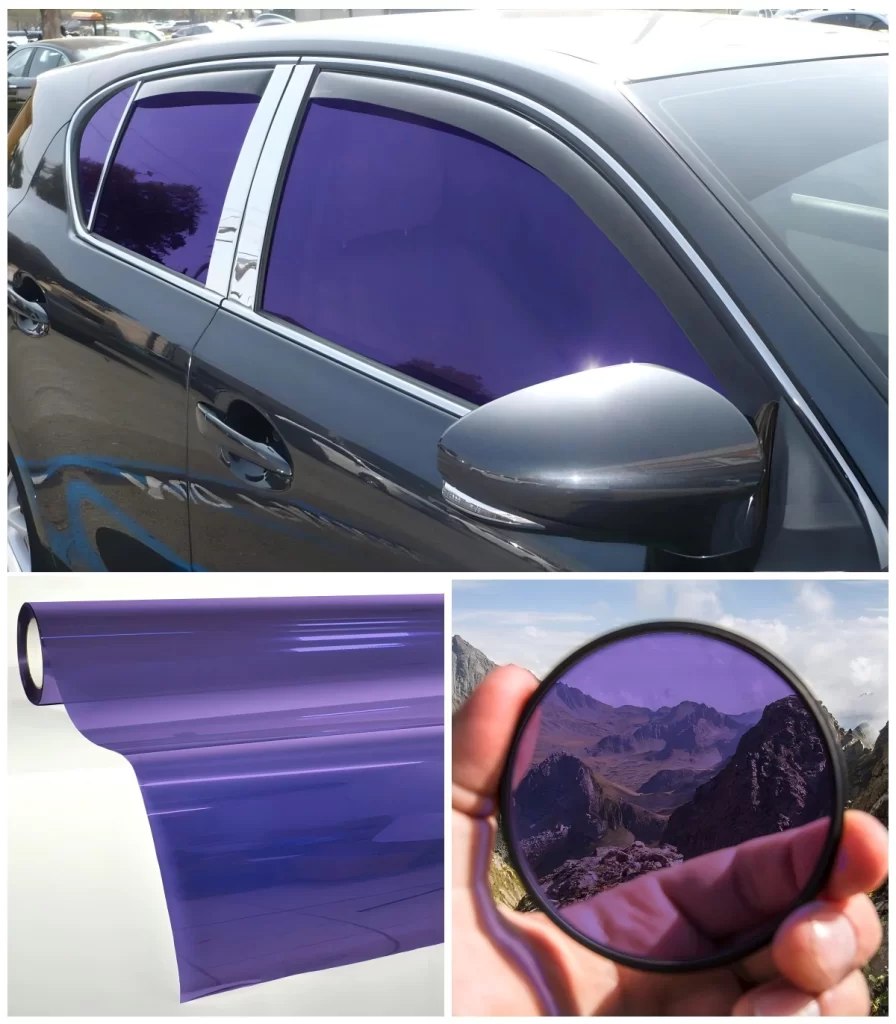
It Turns Purple — Here Is Why
Everyone has seen it. A car driving down the road with windows that used to be dark black or charcoal but are now an unmistakable shade of purple. That discoloration is one of the most common signs of failing dyed window film, and there is a straightforward scientific reason for it.
Most black or charcoal dyed films are actually made by mixing multiple dye colors — typically red, green, and blue — to achieve that dark appearance [14†L29-L31]. Under normal conditions, that mixture looks uniform and dark. But ultraviolet radiation from the sun breaks down dye molecules over time. The problem is that different colors degrade at different rates. Red dye molecules tend to be the least stable under UV exposure [9†L29-L31]. As the red component fades away, the remaining blue and green dyes start to show through. Mix blue and green together, and you get … purple [11†L12-L13].
This is not something that happens to every dyed film at the same speed. Lower‑quality films with minimal UV inhibitors can start changing color within a year or two, especially in sunny climates [13†L20-L22]. Better‑quality dyed films might take three to five years before the purple tint becomes obvious. But the chemistry is unavoidable — dye degrades under sunlight. Once that purple hue appears, there is no fixing it. The film has to be removed and replaced [13†L22-L23].
Limited Heat Rejection
Here is something a lot of car owners do not realize until after they have paid for installation. Dyed window film works by absorbing light, not reflecting it away [10†L22-L24]. When the film absorbs solar energy, that energy has to go somewhere. It turns into heat — heat that radiates directly into your car’s interior.
The result is mediocre heat rejection performance. Dyed films typically achieve Total Solar Energy Rejection (TSER) ratings of only 15 to 25 percent [10†L36-L37]. Compare that to carbon films at 35 to 45 percent or ceramic films that can reach 60 percent or higher [10†L36-L37]. In practical terms, that means a car with dyed tint will still get uncomfortably hot on a sunny summer day. The air conditioning has to work harder, fuel efficiency takes a small hit, and the interior stays hotter for longer.
Short Lifespan
Dyed window film simply does not last as long as other types of tint. Under normal use, most dyed films last somewhere between three and five years before showing noticeable signs of degradation — fading, purple discoloration, or bubbling [11†L8-L9]. In extreme climates like Arizona, Texas, or Florida, that lifespan can be even shorter. Some low‑quality dyed films begin to fail within a year of installation when parked outside daily [2†L7-L9].
Carbon and ceramic films, by contrast, regularly last eight to ten years or more without significant fading [11†L9-L11]. When you factor in the cost of removing failed tint and replacing it, the “savings” from choosing dyed film start to look less impressive.
Bubbling and Peeling
Cheaper dyed films often use lower‑grade adhesives that do not hold up well under temperature extremes. When a car sits in the sun, the glass gets hot, and the adhesive can soften. Over time, that leads to bubbles forming between the film and the glass [13†L23-L27]. Once bubbles appear, they tend to spread. Moisture gets underneath, which accelerates the degradation of both the dye and the adhesive [4†L44-L47]. In many cases, the only fix is to strip the old film off entirely and start over.
Poor installation makes this problem worse, but even a perfect installation cannot overcome the inherent limitations of low‑quality dyed film materials.
Dyed vs. Carbon vs. Ceramic: How They Compare
To understand where dyed window film really stands, it helps to look at it alongside the other main tint technologies available today.
| Feature | Dyed Window Film | Carbon Window Film | Ceramic Window Film |
|---|---|---|---|
| Heat rejection (TSER) | 15–25% | 35–45% | Up to 60% |
| UV rejection | 99% | 99% | 99% |
| Infrared rejection | 5–15% | 40–55% | Up to 97% |
| Signal interference | None | None | None |
| Appearance | Glossy, deep black | Matte, non‑reflective | Neutral, clean finish |
| Durability | 3–7 years | 10+ years | 10–15+ years |
| Color stability | Fades to purple | No fading | No fading |
*Data from industry performance testing [10†L35-L46]*
Carbon film uses microscopic carbon particles embedded throughout the material. Those particles absorb infrared heat more effectively than dye and, importantly, they do not degrade under UV exposure the way dye does [10†L26-L29]. That is why carbon tint keeps its color year after year without turning purple. It also has a distinctive matte black finish that many drivers prefer over the glossy look of dyed film.
Ceramic film sits at the top of the performance ladder. Nano‑ceramic particles reflect and absorb infrared radiation at much higher rates than either carbon or dye [10†L30-L34]. Ceramic film offers the best heat rejection, the longest lifespan, and the clearest optical quality. It is also completely non‑metallic, so like dyed film, it will not interfere with any electronic signals.
All three types — dyed, carbon, and ceramic — can achieve 99 percent UV rejection when manufactured properly [10†L37-L38]. The real difference shows up in heat rejection and long‑term appearance. Dyed film keeps UV rays out, but it lets heat through. Carbon and ceramic keep both UV and heat out, and they keep looking good for years longer.
Installation and Care
Even the best window film will fail early if it is not installed correctly. Dyed window film is more forgiving during installation than ceramic or carbon, but there are still some key points to keep in mind.
Proper surface preparation. If the glass has dust, dirt, or adhesive residue, the tint will not bond correctly. Bubbles form when moisture or debris gets trapped between the film and the glass during application [4†L6-L8]. A clean workspace and careful prep work make a huge difference in the final result.
Curing time. After installation, dyed window film needs time to cure fully. Most installers recommend leaving windows rolled up for at least two to three days after tinting. Rolling windows down too soon can peel the edges or create bubbles that would not have formed otherwise.
Cleaning. Once the film has cured, maintenance is straightforward. Use a mild, ammonia‑free glass cleaner and a soft microfiber cloth. Ammonia breaks down window film adhesives over time, so avoid household cleaners that contain it [11†L16-L17]. Harsh chemicals can also accelerate fading and discoloration [8†L37-L40].
Avoid abrasive materials. Never use paper towels or rough cloths on window tint. Micro‑abrasions accumulate over years and create a hazy, scattered effect that makes nighttime driving more difficult [11†L39-L44].
Parking habits. Parking in shade or a garage whenever possible extends the life of any window film, but it is especially important for dyed film. Less direct sunlight means slower dye degradation and longer‑lasting color.
Legal Considerations for Dyed Window Film
Window tint laws in the United States are not uniform. Each state sets its own rules about how dark windows can be, measured by visible light transmission percentage — the amount of light that must pass through the glass and film combined [15†L8-L10].
Here are some examples of front side window limits across different states:
California: 70% VLT minimum
Texas: 25% VLT minimum
Florida: 28% VLT minimum
New York: 70% VLT minimum
Nevada: 35% VLT minimum
The windshield is even more restricted. In most states, only the top few inches of the windshield can be tinted. Full‑windshield tint is illegal in many places.
Dyed film itself is generally legal, but going too dark on front windows can result in tickets, failed vehicle inspections, and orders to remove the film at your own expense. Before choosing a dyed window film shade, check your local regulations. Installers familiar with state laws can recommend film shades that stay compliant while still providing the look and function you want.
Who Should Choose Dyed Window Film?
With all of that said, dyed window film is not a bad product. It is simply a product designed for a specific set of priorities.
Dyed film makes the most sense for:
Car owners on a very tight budget who need the lowest possible upfront cost
Vehicles that are not kept for the long term — leased cars or vehicles planned for sale within a couple of years
Drivers in moderate climates where extreme heat is not a major concern
Shops serving price‑sensitive customers who prioritize affordability over long‑term performance
Dyed film is less suitable for:
Owners who plan to keep their vehicle for five years or more
Anyone living in hot, sunny climates where heat rejection matters
Drivers who want consistent, fade‑free appearance over the life of the tint
Shops that want to avoid callbacks and customer complaints about purple discoloration or bubbling
For many car owners, spending a bit more upfront on carbon or ceramic film saves money and hassle in the long run. But for those who need tint on a tight budget right now, dyed window film remains a viable entry‑level option.
Decowell Window Film Solutions
At Decowell, we understand that every driver and every shop has different needs when it comes to window tint. That is why we offer a range of window film products designed for quality, durability, and real‑world performance.
Whether you are looking for budget‑friendly dyed window film for basic privacy and glare reduction, or you want the superior heat rejection and fade‑resistance of advanced carbon or ceramic technology, Decowell has options to fit your requirements. Our films are manufactured to consistent standards with attention to optical clarity, adhesive reliability, and long‑term color stability.
For professional installers and shop owners, Decowell window films are engineered to install smoothly with predictable handling characteristics — fewer installation headaches, cleaner results, and satisfied customers. We also offer custom roll sizes and packaging options to suit your business operations.
If you are considering dyed window film for your vehicle or your shop, or if you want to explore higher‑performance alternatives, reach out to the Decowell team. We will help you find the right window film solution for your specific needs — whether that means matching a budget, maximizing heat rejection, or ensuring your tint stays looking fresh for years.
Decowell — quality window film solutions for drivers and installers who demand performance that lasts.
Frequently Asked Questions About Dyed Window Film
What is dyed window film, exactly?
Dyed window film is an automotive tint made by laminating a layer of colored dye between a polyester base and a protective top coating. The dye absorbs visible light, which darkens the windows, reduces glare, and provides privacy.
Does dyed window film block UV rays?
Yes, quality dyed window film can block up to 99 percent of harmful UV radiation. That said, many lower‑quality dyed films do not achieve that level of protection. Premium‑grade dyed films include UV inhibitors in their construction, but budget options often skimp on this feature [3†L18-L19].
Why does dyed window film turn purple?
Dyed window film turns purple because the dye molecules break down under ultraviolet radiation from the sun. Most black tint is made from a mixture of red, blue, and green dyes. Red dye fades fastest, leaving the remaining blue and green pigments to create a purple appearance [9†L29-L31].
How long does dyed window film last?
Typical dyed window film lasts between three and five years before noticeable fading or discoloration appears [11†L8-L9]. In hot, sunny climates, some low‑quality dyed films begin to fail within one to two years [2†L7-L9].
Does dyed window film block heat effectively?
Not very well. Dyed film absorbs heat rather than reflecting it away, which means much of that absorbed heat radiates into the vehicle. Typical dyed films achieve only 15 to 25 percent Total Solar Energy Rejection, compared to 35 to 45 percent for carbon films and up to 60 percent for ceramic films [10†L36-L37].
Can I install dyed window film myself?
It is possible, but professional installation is strongly recommended. Improper cleaning, trapped dust, or incorrect squeegee technique leads to bubbles that appear within weeks. Poor edge sealing causes peeling. For best results, have a professional installer handle the job [4†L6-L8].
Is dyed window film legal in the United States?
Dyed film is legal in most states, but the allowed darkness level varies by state and by which window is being tinted. Front side windows typically face the strictest limits. Check your local regulations before choosing a dyed film shade [15†L8-L13].
How do I clean dyed window film without damaging it?
Use a mild, ammonia‑free glass cleaner and a soft microfiber cloth. Avoid paper towels, which create micro‑abrasions over time. Never use harsh chemicals, abrasive sponges, or automatic car washes with spinning brushes on tinted windows [11†L16-L17].
What is the difference between dyed, carbon, and ceramic window tint?
Dyed tint uses dye for coloration but offers limited heat rejection and fades over time. Carbon tint uses carbon particles for better heat rejection and permanent color stability. Ceramic tint uses nano‑ceramic particles for the highest heat rejection, longest lifespan, and clearest optical quality [10†L35-L41].
Is dyed window film worth it?
For car owners on a tight budget or those keeping their vehicle for only a few years, dyed film can be a reasonable choice. For drivers who want lasting performance, better heat rejection, and fade‑free appearance over the long term, upgrading to carbon or ceramic film usually makes more financial sense in the long run [14†L42-L49].