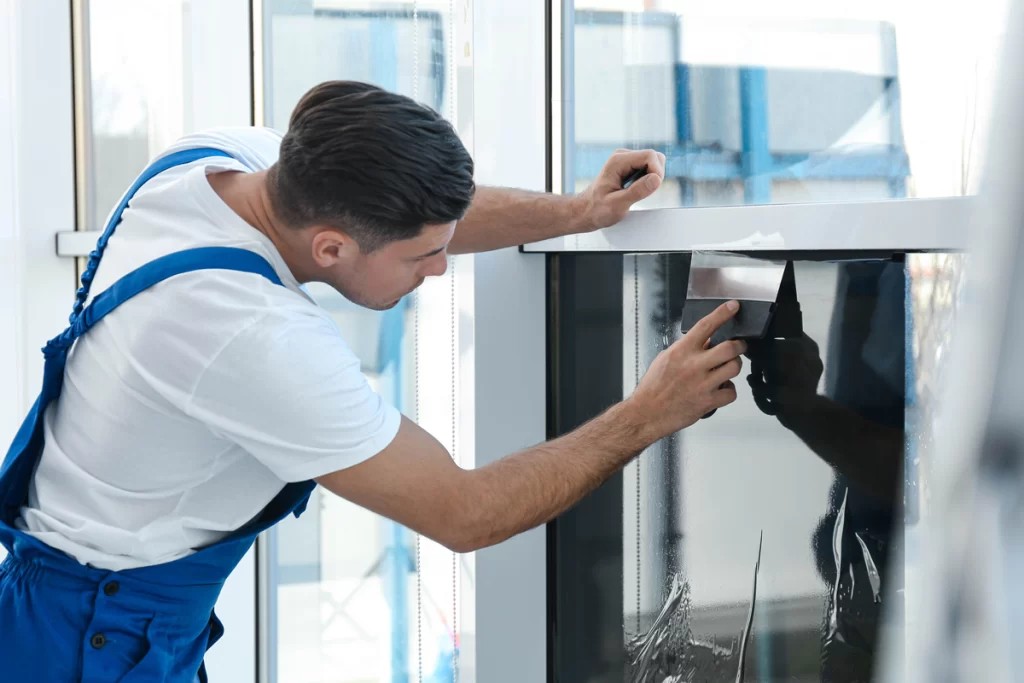
Decowell Safety Film — Building Window Tinting
20+ Years Professional Expertise | Professional Automotive Film Manufacturer | Full-Solution Provider (PPF, Window Film, Wrap Film) | 2000+ Certified Installers | From R&D to Production | High-Cost-Effective Premium Films | Ample Stock | Professional Team | Serving 40+ Countries | Reliable Logistics
Home » Products » Building Window Tinting » Safety Film
Product Categories
Safety Film
— Building Window Tinting
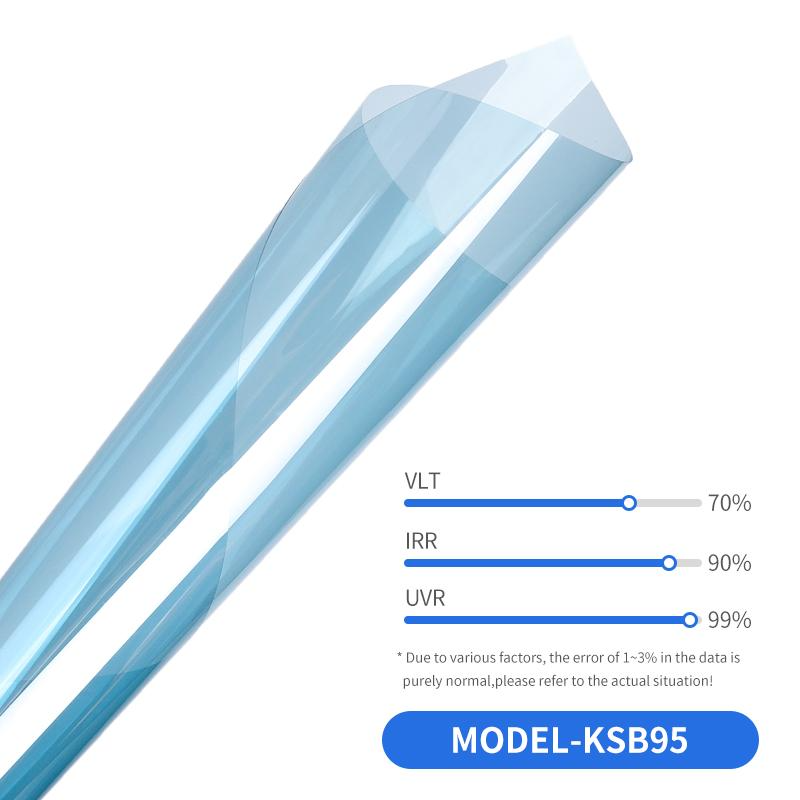
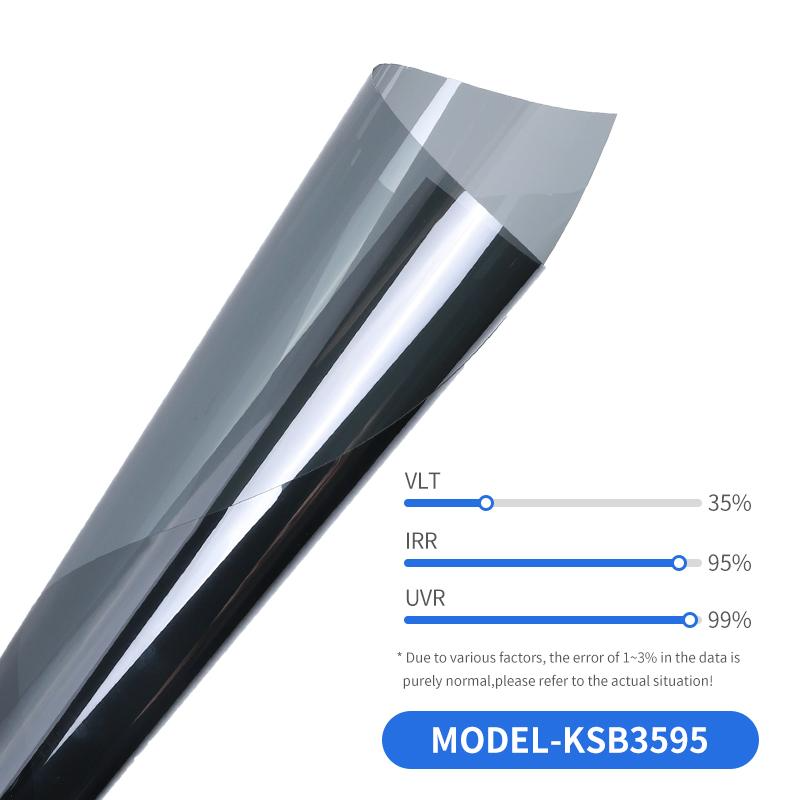
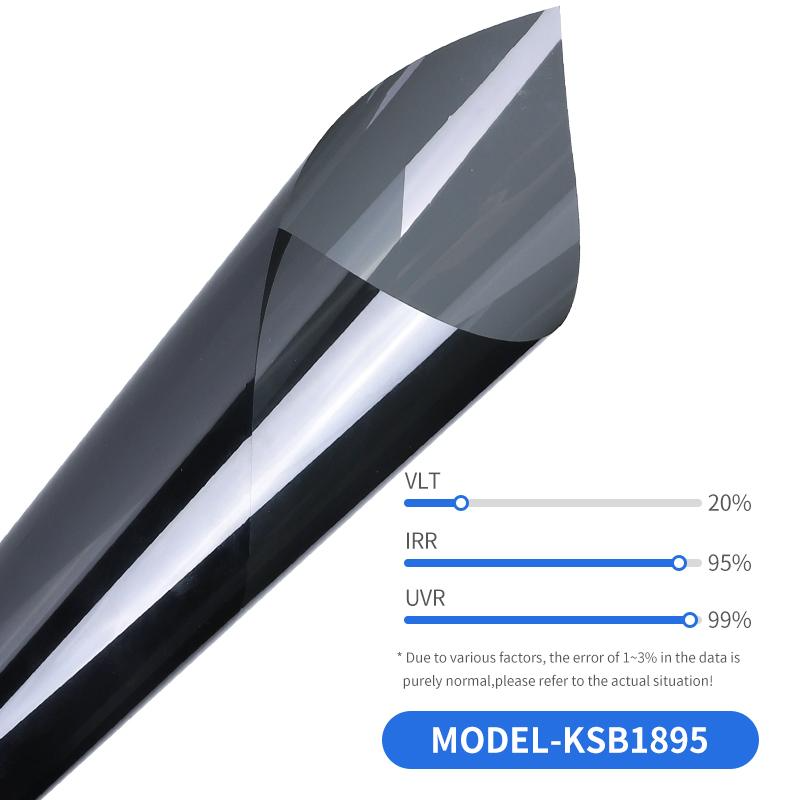
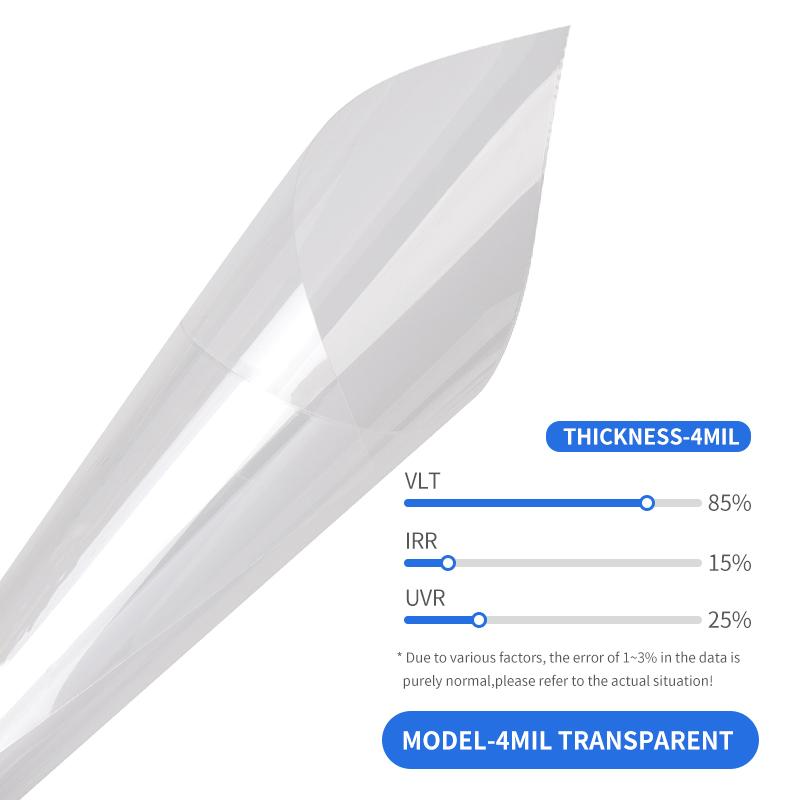
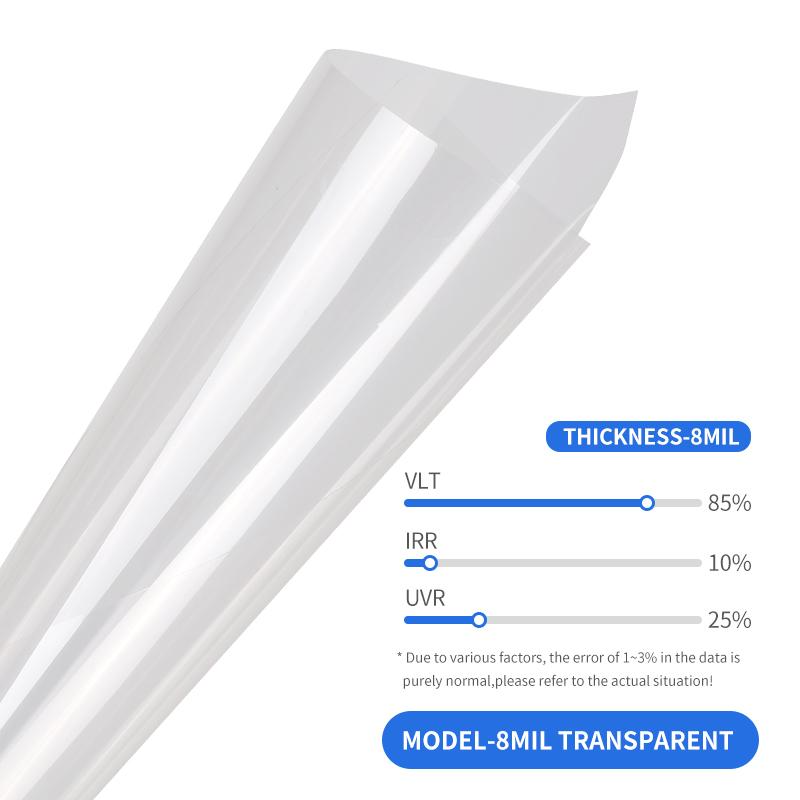
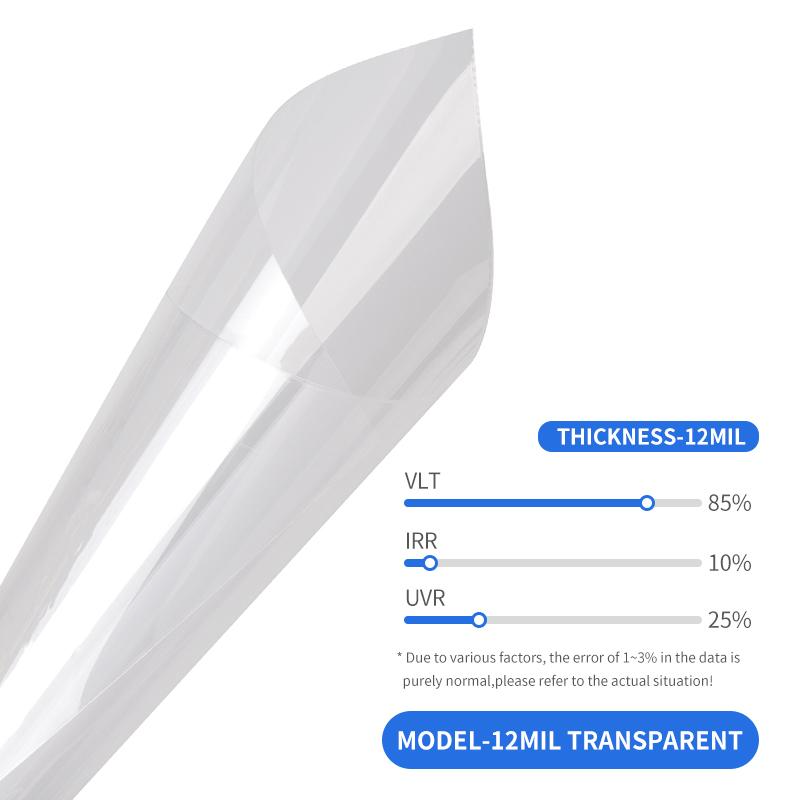
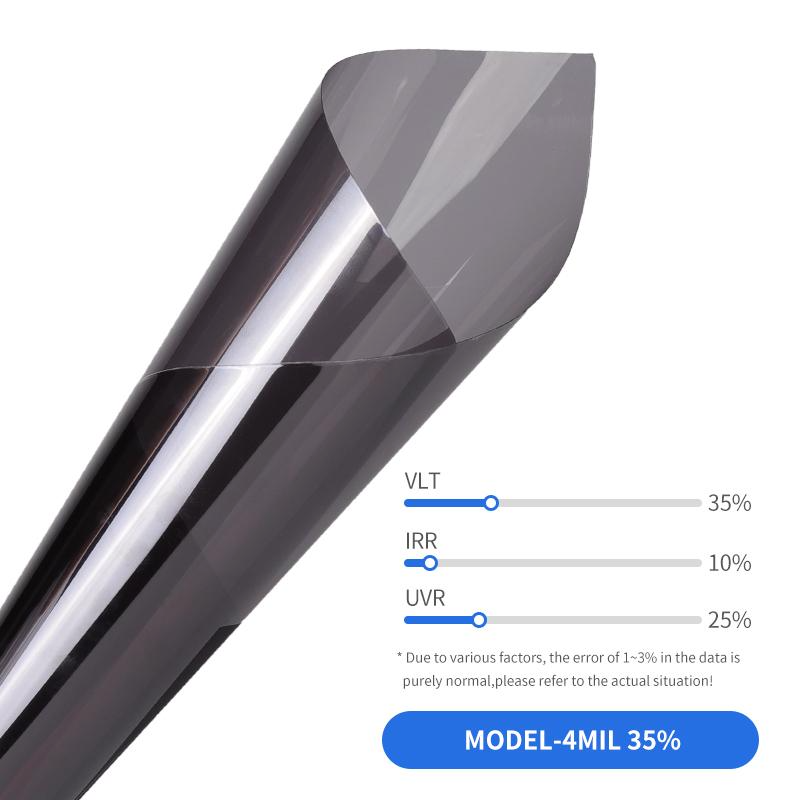
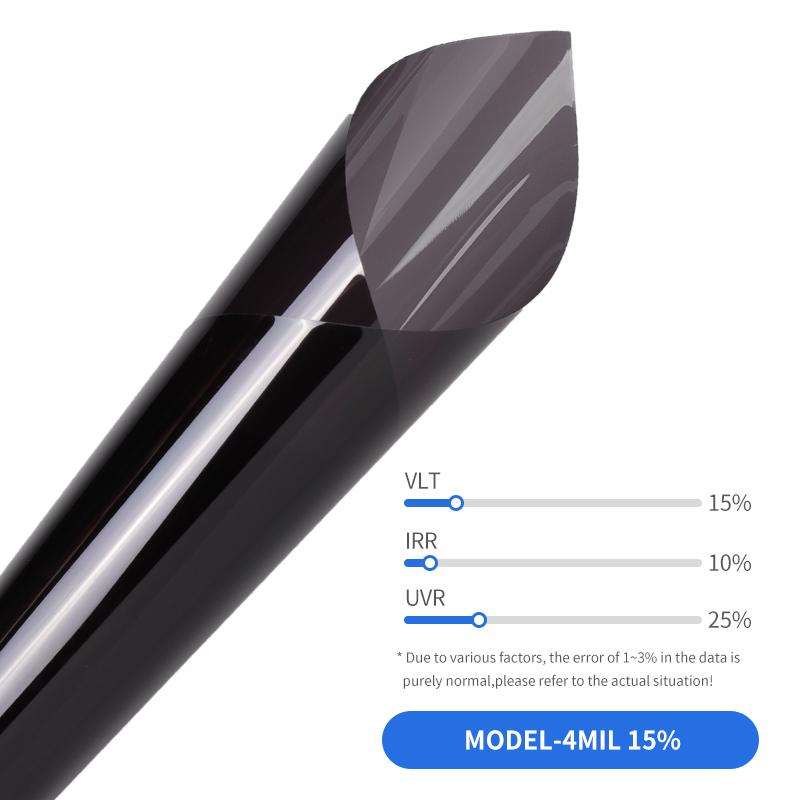
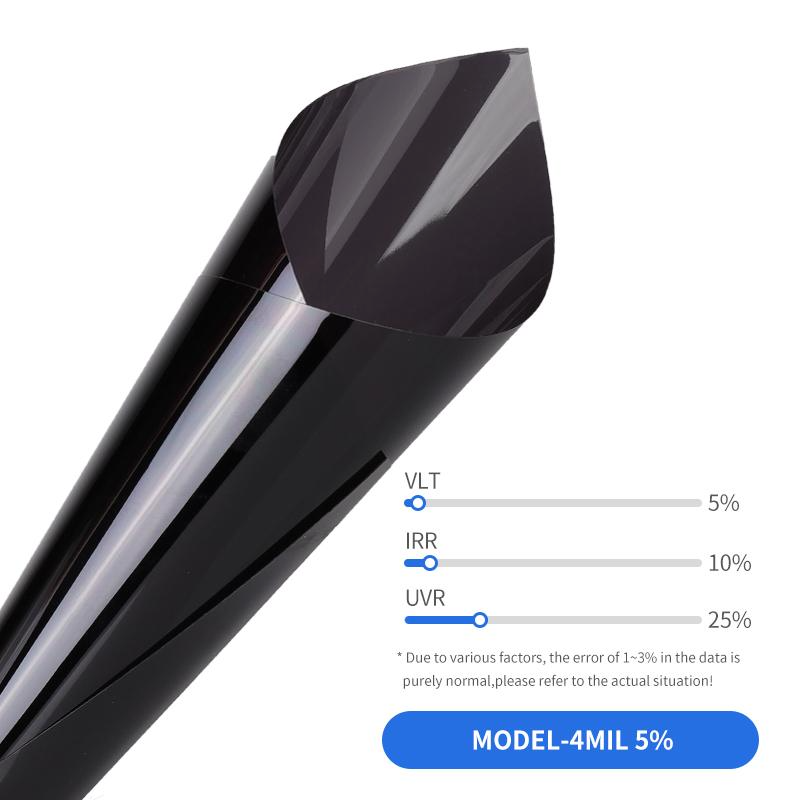
Specifications
Color: Blue, Black, Dark Black, Transparent, Light Black, Super Dark Black
Material: PET
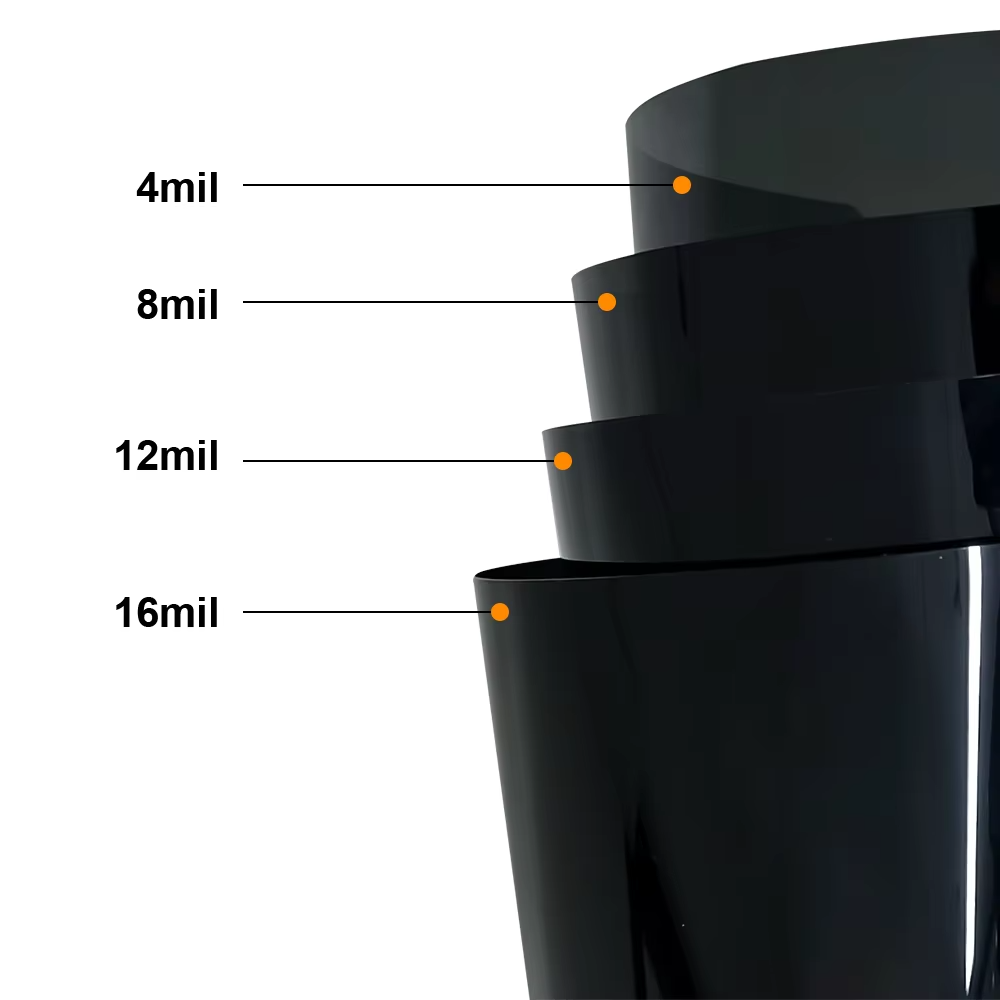
Thickness Options: 4mil / 8mil / 12mil / 16mil
UV Rejection: 99%
Visible Light Transmittance: 70%, 35%, 20%, 85%, 85%, 50%, 15%, 5%
TSER (Total Solar Energy Rejected): 55%, 74%, 86%, 11%, 14%, 20%, 50%, 62%, 72%, 83%
IR Heat Rejection: 90%, 95%, 10%, 50%
HAZE: 0.26, 0.55, 0.42
Roll Size: 1.52m × 30m
Certifications: CE (Complies with EU Standards)
Overview
Decowell Safety Film is a high-performance security window film designed to provide enhanced protection for glass surfaces. Available in four thickness options—4mil, 8mil, 12mil, and 16mil—this black PET film offers superior anti-shatter properties, UV protection, and scratch resistance. It is ideal for both residential and commercial applications where safety, security, and UV protection are essential.
Key Features
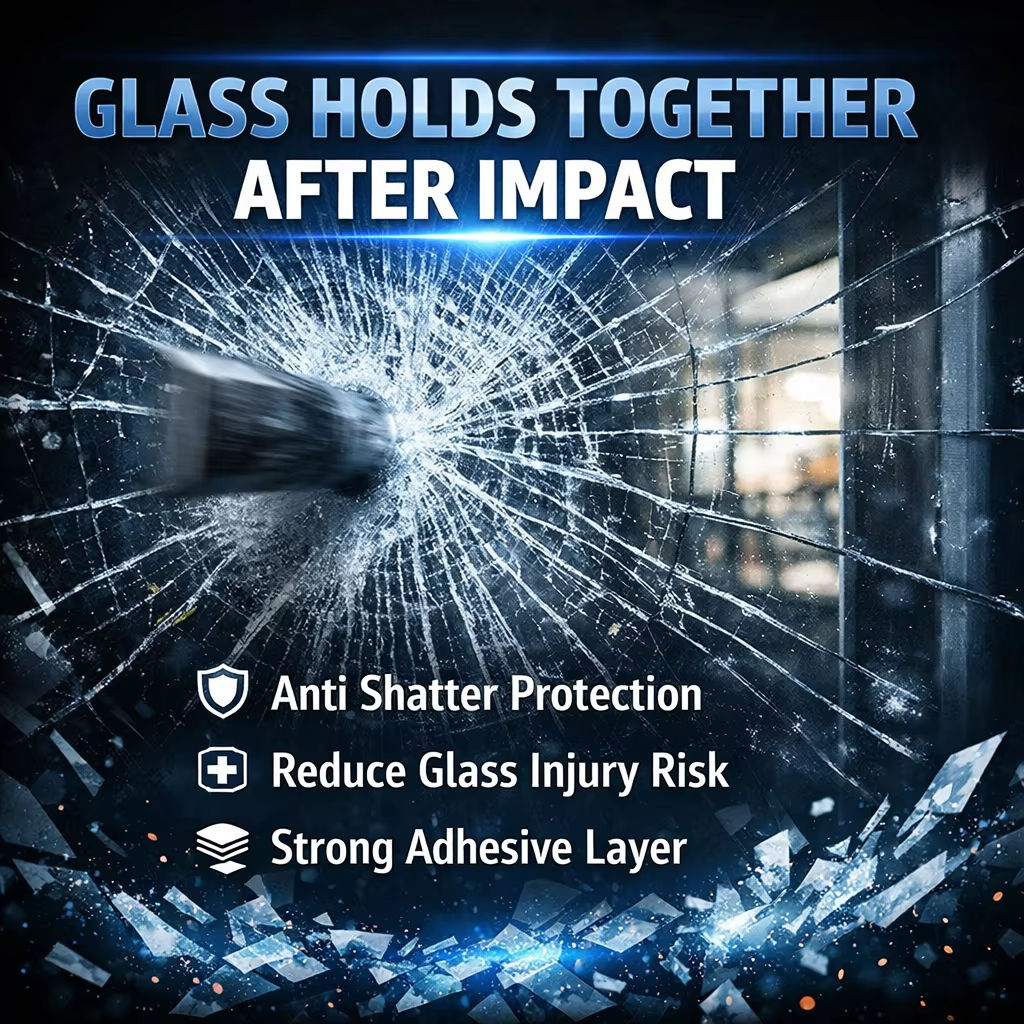
Anti-Shatter Protection: Holds glass fragments together upon impact, reducing the risk of injury from broken glass
Multiple Thickness Options: Choose from 4mil, 8mil, 12mil, or 16mil for different levels of security protection
High UV Rejection: Blocks 99% of harmful ultraviolet rays, protecting interiors from fading and occupants from UV exposure
Scratch Resistant: Durable surface coating resists scratches during installation and daily use
Sand Proof: Provides additional protection against abrasive damage
Heat Control: Solar energy rejection (TSER) ranging from 40% to 73% helps reduce cooling costs
Applications
Residential: Home windows, glass doors, sliding doors, skylights
Commercial: Storefront windows, office buildings, retail displays
Institutional: Schools, hospitals, government buildings
Architectural: Glass facades, curtain walls, balcony railings
Automotive: Vehicle windows (when compliant with local tinting regulations)
Quality Assurance
CE certified, compliant with EU standards
Factory-direct pricing with full quality control throughout production
Supplier rating of 5.0/5.0 based on 228 reviews
Installation Notes
For best results, professional installation is recommended
Clean glass surface thoroughly before application
Apply to interior side of glass for optimal protection
Allow 7-14 days for adhesive to fully cure
Avoid cleaning with abrasive materials
Safety Film for Building Windows – The Essential Guide to Glass Protection
Windows are supposed to let light in while keeping danger out. But in reality, standard glass is one of the most vulnerable parts of any building. A single hit from a flying branch during a storm, a hammer swung by an intruder, or even an accidental bump can turn a window into a shower of dangerous shards. That is where safety film changes the equation.
Safety film for building windows has become a practical, cost-effective solution for anyone looking to strengthen existing glass without tearing out frames and installing expensive replacements. This guide walks through what safety film actually is, how it works, what it protects against, and why building owners across residential and commercial spaces are choosing to install it.
What Is Safety Film for Building Windows?
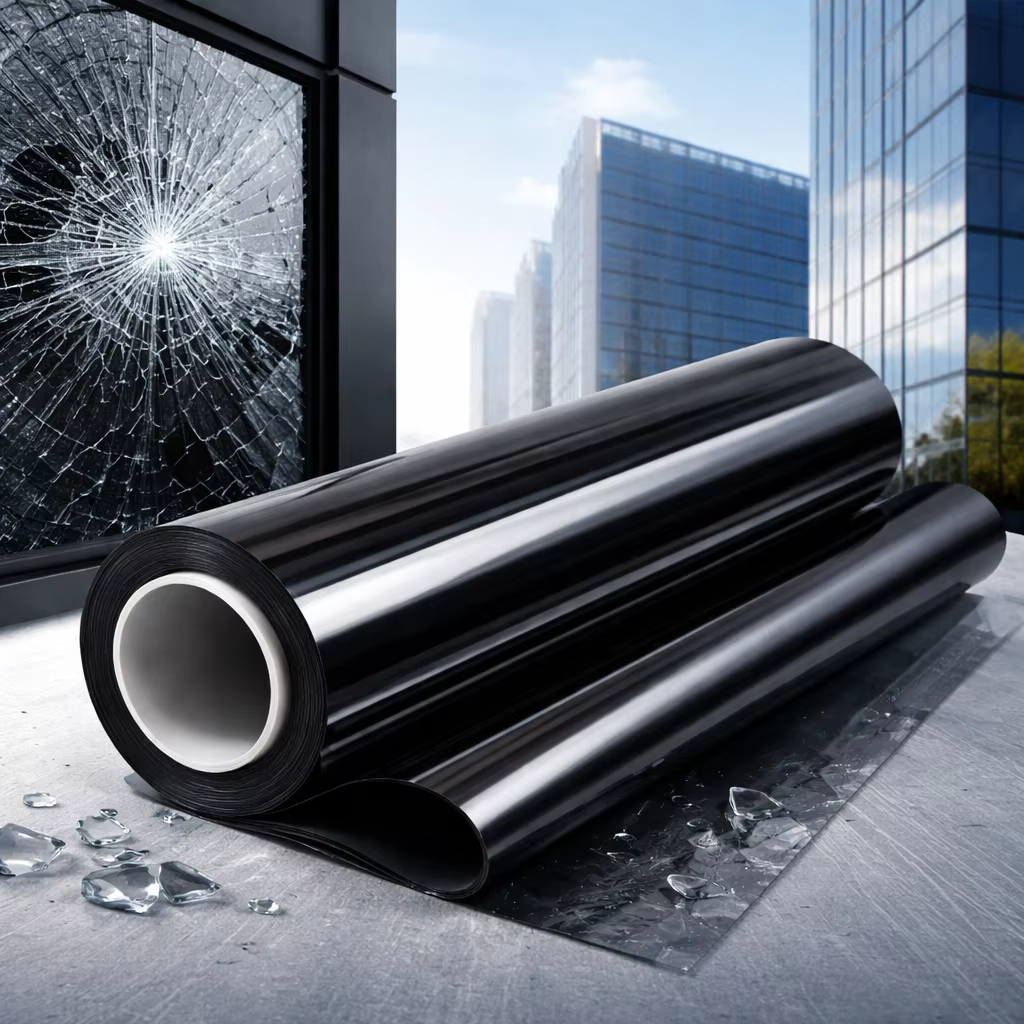
Safety film is a thick, multi-layered polyester sheet that bonds to the interior side of existing window glass. Unlike standard solar control films that mainly reduce heat and glare, safety film is designed first and foremost to hold broken glass together when the window gets hit.
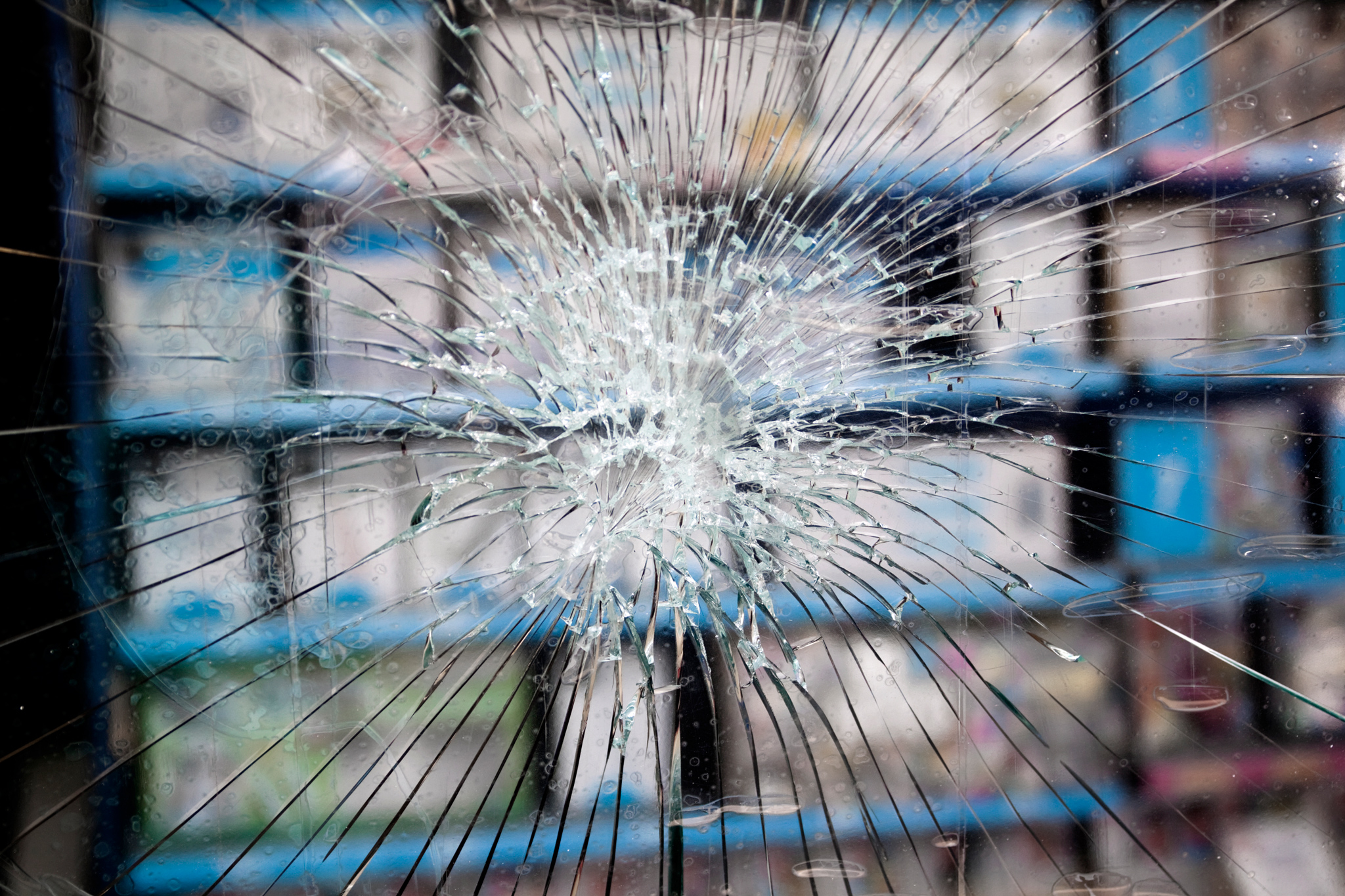
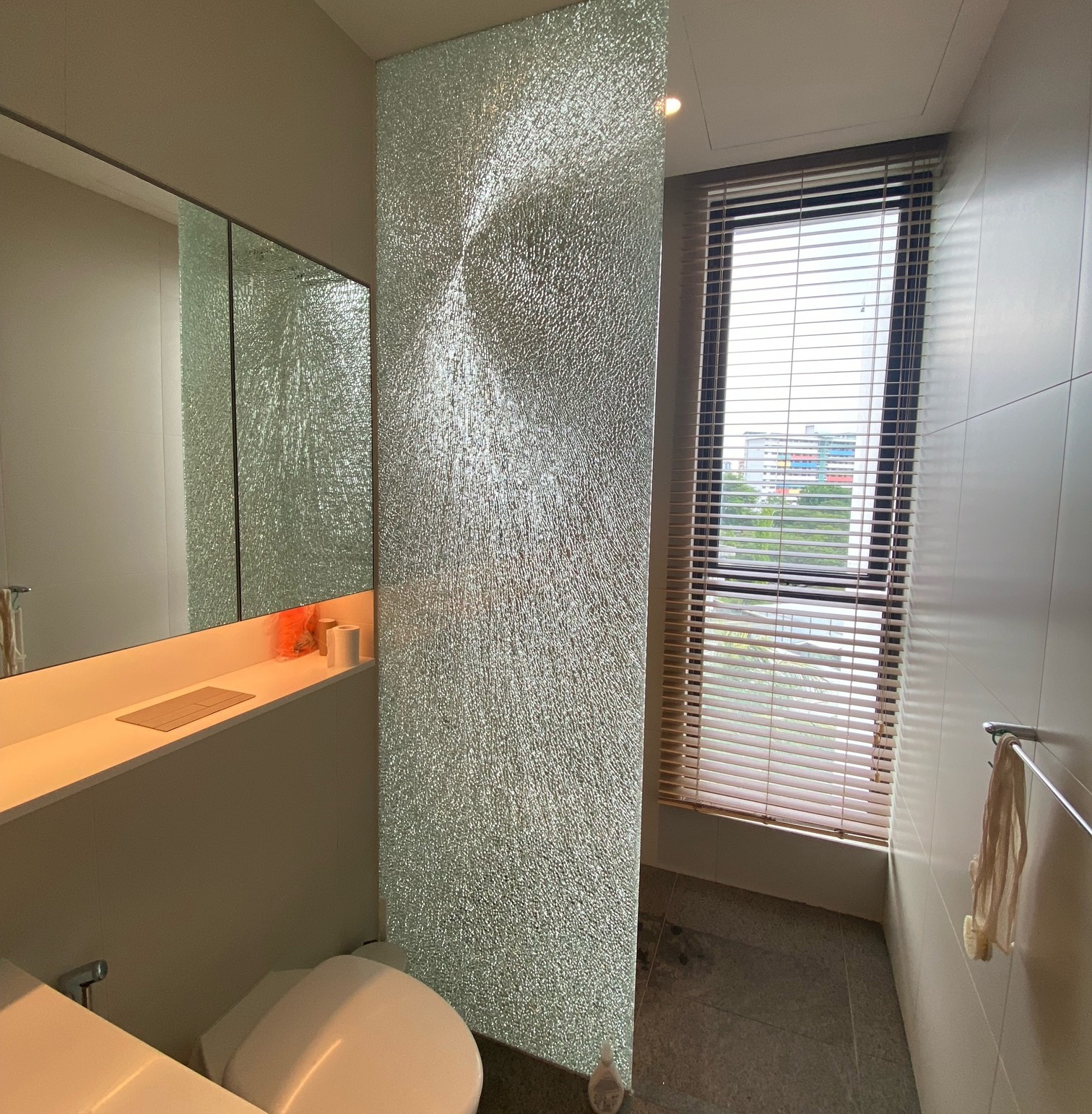
The film works as a retention system. When glass breaks under impact, the safety film keeps those sharp shards attached to itself rather than allowing them to scatter across the room or fly toward people inside. This simple function dramatically reduces the risk of injury from flying glass and keeps the building envelope intact longer during security incidents or natural disasters.
Safety film is measured by thickness, commonly ranging from 4 mil to 15 mil. Thicker films generally offer better tear resistance and longer retention time under sustained attack. For comparison, typical decorative or solar-control films are much thinner — often 1.5 mil or less. The extra thickness of safety film is what gives it the strength to absorb impacts and resist tearing.
Some safety films also incorporate UV-blocking properties and solar control features, but those are secondary benefits. The primary job is glass retention.
How Safety Film Protects Your Building
Most people assume that a broken window is just a broken window. But in reality, the immediate danger after glass breaks is not the missing pane — it is the flying shards. Glass fragments can travel at high speeds, causing deep cuts, eye injuries, and even life-threatening wounds. Safety film addresses this exact hazard.
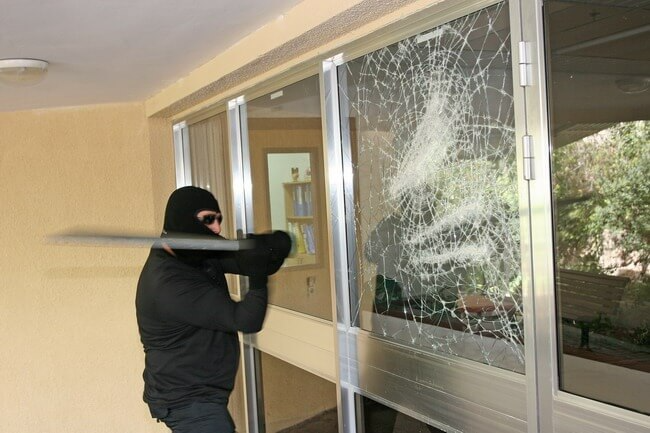
Flying glass prevention. When a safety film is properly applied, broken glass stays attached to the film rather than exploding outward. This protects occupants from lacerations and keeps the window opening covered, which also helps maintain some barrier against weather and intruders even after breakage.
Shatter containment. The film essentially creates a bonded layer across the entire glass surface. If the glass cracks, the film holds the pieces in place, preventing them from falling out of the frame. This containment is especially valuable in high-traffic areas, schools, retail stores, and homes with children or elderly residents.
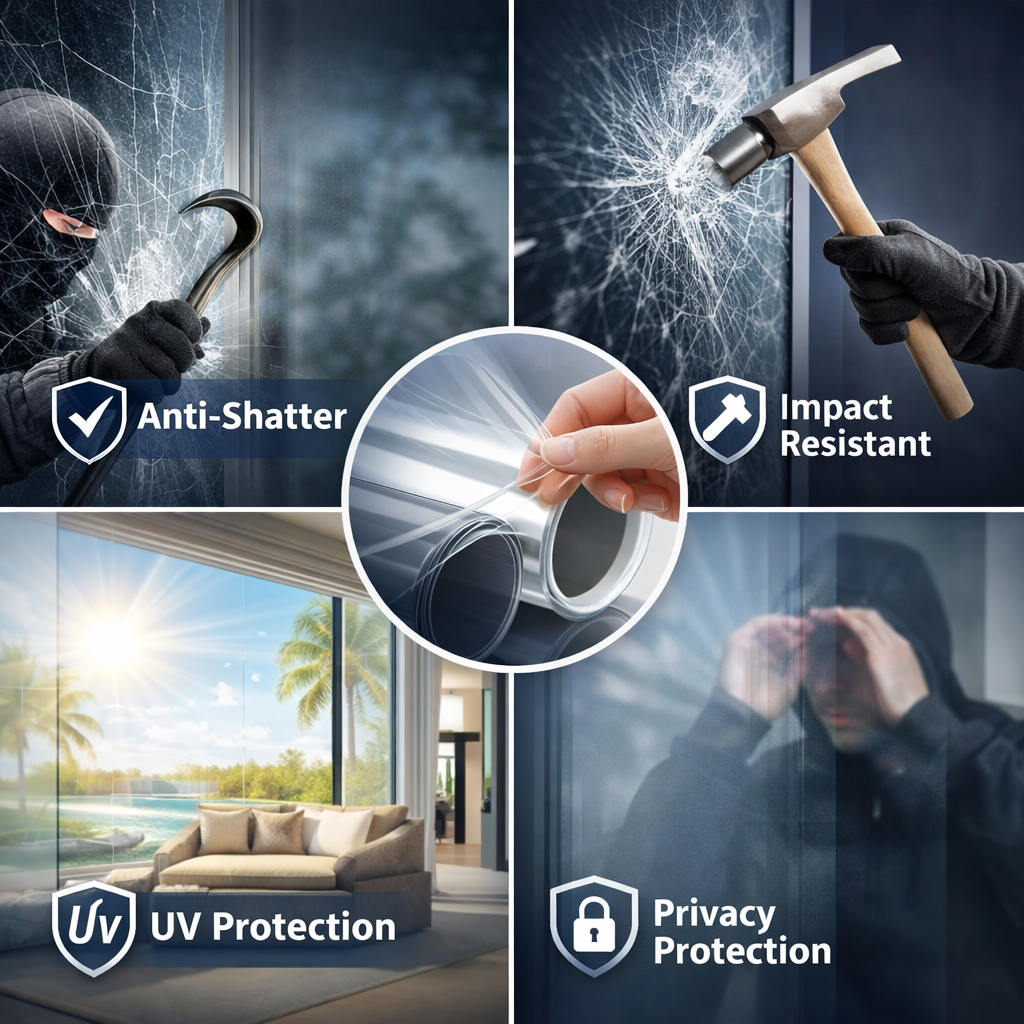
Delay of forced entry. No film makes glass unbreakable. But security-grade safety film makes breaking through noticeably harder and louder. A burglar who expects to smash a window and reach through in seconds finds that the glass stays in place, requiring multiple hits or entirely different tools. That delay — sometimes just an extra minute — can be the difference between a successful break-in and one that gets abandoned. Studies show that time is the most critical factor in intrusion attempts; when entry takes too long, most intruders give up.
The Real Benefits of Safety Film on Building Windows
Beyond the obvious security advantages, safety film offers several practical benefits that building owners appreciate once the film is installed.
Protection against natural disasters. During hurricanes, tornadoes, or earthquakes, windows face extreme forces from windblown debris and building movement. Safety film helps hold glass in place when the worst happens. It will not make a window stormproof, but it significantly reduces the risk of broken glass becoming a secondary hazard. In earthquake-prone areas, the film contains shards that would otherwise spray across rooms during seismic shaking.
UV protection for interiors. Most safety films block up to 99 percent of ultraviolet radiation. Over time, UV rays fade furniture, flooring, artwork, and merchandise. By filtering out those damaging wavelengths, safety film helps preserve interior finishes without blocking natural light. For retail stores, museums, and homes with valuable furnishings, this protection alone can justify the investment.
Solar heat reduction. Many safety films incorporate solar-control properties that reject infrared heat. These dual-purpose films keep buildings cooler in summer by reducing solar heat gain through windows. Lower cooling demand translates directly into energy savings, especially in commercial buildings with large glass facades. Some estimates suggest that properly installed solar safety films can reduce air conditioning consumption by significant margins.
Glare reduction for occupant comfort. Excessive glare makes it hard to work on screens, watch television, or simply sit comfortably near a window. Tinted safety films cut down glare while preserving outward visibility, improving the comfort of any space with large glass surfaces.
Privacy without blocking light. Reflective or frosted safety film options provide daytime privacy by making it harder to see inside from outside. Unlike curtains or blinds that block the view entirely, film maintains the connection to the outdoors while limiting visibility.
Cost-effective code compliance. In some jurisdictions, building codes require safety glazing in certain areas — near doors, stairways, ramps, or in windows close to the floor. Replacing existing glass with tempered or laminated glass is expensive and disruptive. Safety film offers an alternative path to meeting these safety requirements at a fraction of the cost.
Where Safety Film Makes the Most Sense
Different buildings have different risk profiles. Safety film is not a one-size-fits-all product. Here is where it adds the most value.
Retail stores and storefronts. Businesses with large street-facing windows are frequent targets for smash-and-grab theft. Thieves break the glass, grab merchandise, and run — often in seconds. Safety film slows them down, turning a quick entry into a noisy, time-consuming struggle. That extra time often deters the attempt entirely or allows alarms to alert authorities before merchandise is taken.
Schools and daycare centers. Protecting children from broken glass is a top priority. Safety film on classroom windows, hallway glass, and entrance doors reduces the risk of injury from accidental impacts, vandalism, or in worst-case scenarios, violent incidents. The film holds shattered glass together, containing hazards rather than creating new ones.
Office buildings with ground-floor windows. Employees working near large windows benefit from the added safety layer. Accidental impacts, attempted break-ins after hours, or severe weather events all become less dangerous when glass is filmed. Additionally, solar-control safety films reduce cooling costs, which adds up across large commercial spaces.
Residential homes, especially those with sliding glass doors. Sliding glass doors are often targeted by burglars because they look vulnerable. Safety film applied to the glass panels makes those entry points substantially harder to breach. Homes with young children also benefit — kids running near glass doors are less likely to be injured if they accidentally collide with filmed glass.
Historic buildings where replacement is not an option. Many older buildings have unique glass that cannot be replaced affordably or without losing historical character. Safety film upgrades the existing glass to meet modern safety standards without altering its appearance. This preservation-friendly approach maintains the building’s aesthetic while protecting its occupants.
Government facilities and critical infrastructure. Security is paramount in government buildings, courthouses, police stations, and transit hubs. Safety film adds a layer of protection against forced entry, vandalism, and even blast-related glass fragmentation. While it will not stop a determined attack, it buys time and contains hazards — both of which matter in security-sensitive environments.
Understanding Safety Film Thickness and Anchoring
Not all safety films offer the same level of protection. Two factors determine performance: film thickness and whether the film is anchored to the frame.
Film thickness. Entry-level safety films are around 4 mil thick. These provide basic glass retention and some resistance to accidental impacts. For higher security needs, 8 mil or 15 mil films are used. Thicker films resist tearing longer under repeated strikes, giving them better performance against forced entry attempts. For extreme security applications, films as thick as 14 mil or more are available, though these require specialized installation.
Frame anchoring. This is the part that many people overlook. A film might hold broken glass together, but if the entire glass pane pops out of the frame, the protection fails. Anchoring systems — such as wet glaze structural silicone — bond the filmed glass to the window frame, keeping the whole assembly in place even under heavy impact. For maximum security, especially in buildings that face threats like riots, bomb blasts, or hurricanes, anchoring is essential.
In extreme cases, some systems incorporate an energy-absorbing steel cable that prevents windowpanes and frames from turning into dangerous projectiles during a powerful blast or extreme weather, providing an additional layer of containment when the entire assembly is under stress.
Professional Installation vs. DIY
Applying safety film is not the same as sticking a decorative film on a bathroom window. The process requires precision, clean conditions, and technique.
Professional installation ensures the glass is prepared correctly — free of dust, dirt, and old adhesive residue that would cause bubbles or premature failure. Professionals also handle the exact cutting needed for a clean edge, apply the slip solution evenly, and properly squeegee out air bubbles. For applications requiring frame anchoring, professional installers are essential to apply the structural silicone correctly.
That said, DIY installation is possible for smaller windows or less demanding applications. Kits are available with pre-cut film sheets, and instructions guide users through the process. However, first-time DIY attempts often result in visible bubbles, misaligned edges, or dirt trapped under the film — all of which compromise both appearance and performance. For safety-critical applications, professional installation is strongly recommended.
Whichever route you choose, after installation, the film needs time to cure. Most manufacturers recommend leaving windows untouched for at least 48 hours, and some advise waiting up to seven days before the first cleaning.
Maintaining Safety Film on Building Windows
Once safety film is installed, it requires very little ongoing attention. A few simple habits keep it performing well for years.
Cleaning. Use a mild, non-abrasive glass cleaner with a soft microfiber cloth. Avoid cleaners containing ammonia or harsh chemicals that could break down the adhesive or top coat over time. Paper towels can leave micro-scratches, so stick to soft cloths.
Avoiding damage. Do not use razor blades, scrapers, or abrasive pads on filmed glass. These tools cut into the film’s surface, compromising its integrity and appearance. If adhesive residue from tape or stickers needs removal, use a film-safe solvent rather than scraping.
Inspecting edges. Over time, the edges of the film can occasionally lift if the window frame gets bumped or if improper cleaning tools catch the edge. If lifting occurs early, a professional can often re-bond the edge without replacing the entire film.
Well-maintained safety film lasts many years. Indoors, away from direct weather exposure, films commonly remain effective for a decade or longer. Exterior-grade films have shorter lifespans due to constant sun and weather exposure.
Decowell Safety Film — Protection You Can Count On
When it comes to safety film for building windows, quality matters. Not every film delivers the same glass retention performance, UV protection, or solar control. Decowell brings years of experience in window film manufacturing to the table, offering safety film solutions designed for real-world protection.
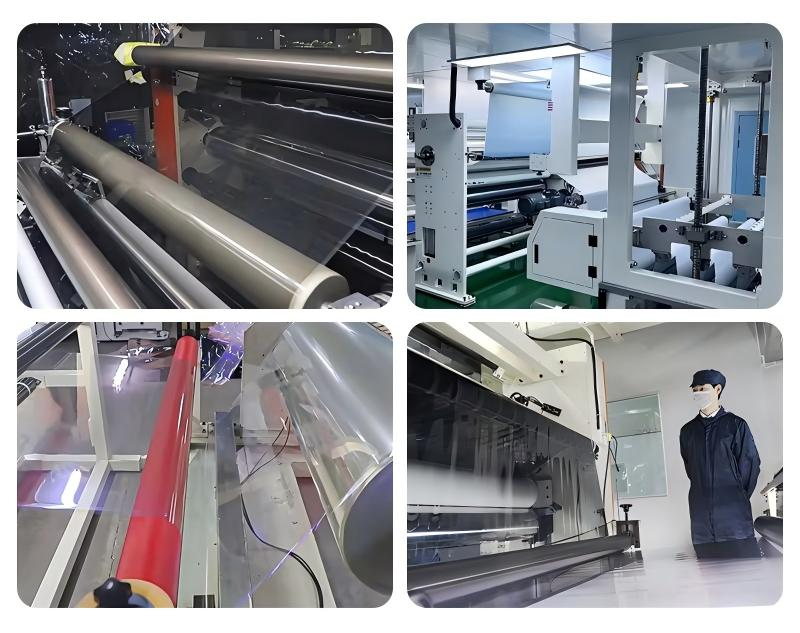
Decowell safety films are manufactured using high-grade polyester materials and strong acrylic adhesives engineered for long-term bonding. Whether you are securing a retail storefront, protecting a school, upgrading a residential sliding glass door, or bringing an older building up to safety codes, Decowell has options to fit your needs.
Available in different thickness levels to match your risk profile — from basic breakage containment to forced-entry deterrent — Decowell safety films provide reliable glass retention when it matters most. And for those who need both safety and solar control, Decowell offers combined-function films that block heat and UV while keeping glass intact.
Choosing Decowell means choosing a partner who understands that safety film is not an accessory — it is a layer of defense that works silently, invisibly, every single day.
Decowell — safety film for building windows. Stronger glass. Safer spaces.
Frequently Asked Questions About Safety Film
What exactly is safety film for building windows?
Safety film is a thick polyester sheet applied to existing window glass. Its primary job is to hold broken glass together when the window is hit or shattered, preventing dangerous shards from flying into the interior and causing injury.
How is safety film different from regular window tint?
Regular window tint is thin — usually around 1 to 2 mil — and focuses on heat reduction, UV blocking, and aesthetics. Safety film is much thicker, typically 4 to 15 mil, and is engineered first for glass retention and impact resistance. Some safety films combine both functions, but the thickness is the giveaway difference.
Can safety film make my windows unbreakable?
No. No film makes glass unbreakable. What safety film does is hold broken glass together so it does not scatter. The glass can still crack or shatter, but the fragments stay attached to the film rather than becoming airborne hazards.
Does safety film protect against break-ins?
It does not stop a determined intruder, but it significantly slows them down. When a window is filmed, breaking through requires multiple strikes and often different tools. The extra time and noise often deter burglars, who usually want quick, quiet entry.
Will safety film block UV rays?
Most safety films block up to 99 percent of ultraviolet radiation. This protects interior furnishings, flooring, artwork, and merchandise from fading while also reducing occupants’ skin exposure to harmful UV rays.
Does safety film help with energy costs?
Many safety films incorporate solar-control properties that reject infrared heat, reducing solar heat gain through windows. This lowers cooling demand during warm months, which translates into energy savings. Some safety films also provide low-emissivity (low-E) properties that help retain interior heat during winter, balancing energy efficiency year-round.
Can I install safety film myself or do I need a professional?
Smaller windows can be DIY projects, but professional installation is strongly recommended for safety-critical applications. Professionals prepare the glass properly, apply the film without bubbles or dirt contamination, and, when needed, correctly install frame anchoring systems. For large windows or high-security needs, go with a professional.
How long does safety film last?
Properly installed interior safety films typically last 10 years or more. Exterior-grade films, exposed to direct sun and weather, have shorter lifespans. Regular gentle cleaning and avoiding abrasive contact help maximize longevity.
Can safety film be applied to any window?
Almost any flat glass window can receive safety film. Curved or textured glass may be more challenging. A professional installer can assess whether your specific windows are suitable candidates. In some cases, glass that already has existing damage or weak seals may not be ideal for filming.
What is frame anchoring and why does it matter?
Frame anchoring bonds the filmed glass to the window frame using structural silicone or mechanical anchors. This prevents the entire glass pane from popping out of the frame under impact. For forced-entry protection, hurricane resistance, or blast mitigation, anchoring is essential to realize the full benefit of the film.
Does safety film change how my windows look?
Clear safety films are optically transparent and nearly invisible once installed. Tinted or reflective safety films do change appearance — adding color, reducing glare, or providing daytime privacy. The choice depends on whether you prioritize staying incognito or gaining additional solar and privacy benefits.
Is safety film required by building codes?
In some jurisdictions, building codes require safety glazing in specific hazardous locations such as doors, sidelites, and windows near the floor. Safety film can be an approved method to bring existing glass into compliance without full window replacement, though local regulations vary.