Home » Carbon Fiber Protection Film: Preserving Your Performance Aesthetics
Recent Posts
Carbon Fiber Protection Film: Preserving Your Performance Aesthetics
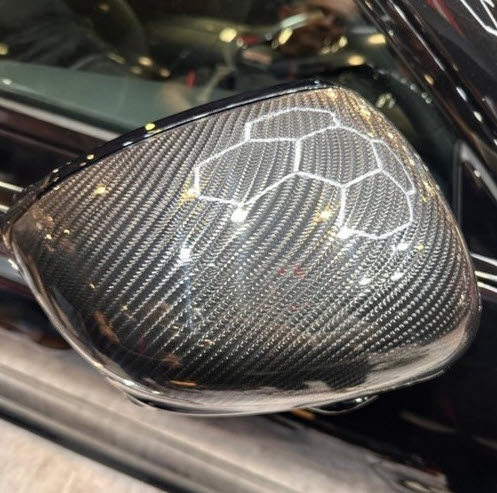
Carbon fiber isn’t just another material on your car. When you see that distinct woven pattern on a front splitter, a rear diffuser, or a hood, you immediately know—this car means business. The lightweight strength that makes carbon fiber essential in aerospace, motorsports, and high-end automotive manufacturing is also what makes it incredibly desirable to car enthusiasts and everyday drivers alike.
But here’s the problem everyone with exposed carbon fiber eventually discovers. That glossy, mesmerizing weave you love is protected by nothing more than a thin layer of resin. And resin is fragile. Under the sun’s constant assault, carbon fiber’s resin finish can yellow and haze, dulling the intricate pattern you paid good money for. A stray rock chip from the motorway isn’t just cosmetic. It can fracture the resin and expose the delicate carbon structure underneath. Without proper protection, the parts that make your car stand out become the parts that hold it back come resale time.
That’s where carbon fiber protection film enters the picture.
If you have invested in genuine carbon fiber components or want that high-performance look without the vulnerability, you need to know what actually works. This guide covers everything from why carbon fiber needs special treatment to what protection film actually does, how to install it, and how to keep it looking fresh for the long haul.
Let’s get into it.
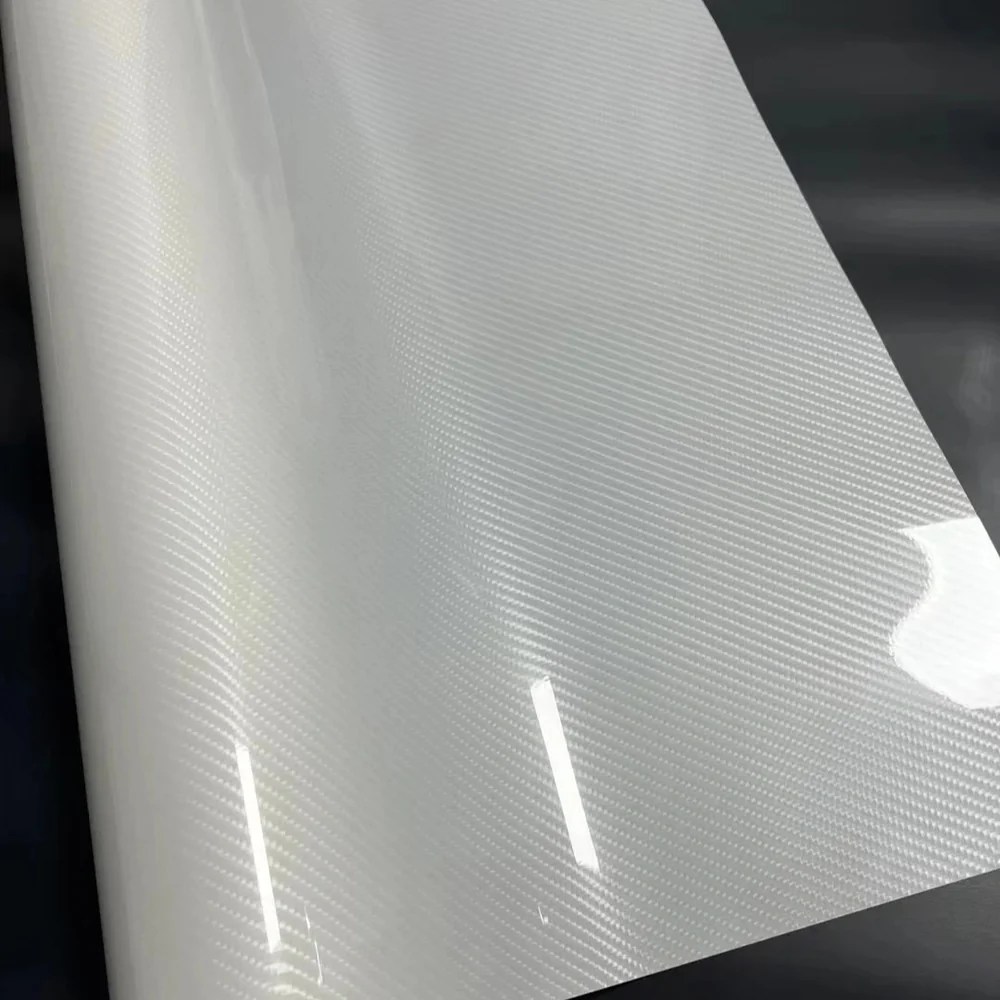
Table of Contents
What Is Carbon Fiber and Why Does It Need Protection?
Before we talk about protection, let’s quickly address what you’re protecting.
Carbon fiber reinforced materials are distinguished by very high strength and low weight relative to metals like aluminum and steel. A carbon fiber hood weighs a fraction of what a steel hood does, which means better handling, improved fuel efficiency, and a more responsive driving feel. But here’s what the glossy marketing photos don’t show.
The carbon fiber weave itself is incredibly strong. It’s the resin that holds everything together and gives the material its smooth, glossy finish that is vulnerable. This epoxy matrix, which encases the carbon strands, is sensitive to sunlight. Long-term external exposure without protection can degrade that resin layer, causing it to yellow, chalk, or develop micro-cracks.
Manufacturers apply UV-resistant clear coats to exposed carbon parts, but those coatings aren’t invincible. Like any clear coat on painted surfaces, they can be scratched, chipped, and worn down by road debris, harsh weather, and the environment. This is why paint protection film is a comprehensive solution for those seeking maximum durability.
Without protection, you are looking at potential issues ranging from faded, hazy appearance all the way to physical damage that requires expensive professional repair.
What Is Carbon Fiber Protection Film?
Carbon fiber protection film is a paint protection film engineered specifically to preserve high-end automotive finishes. At its core, it is a multi-layered thermoplastic polyurethane film applied directly to the carbon fiber surface. It sits there invisibly, absorbing impact and blocking UV light so the carbon weave underneath stays pristine.
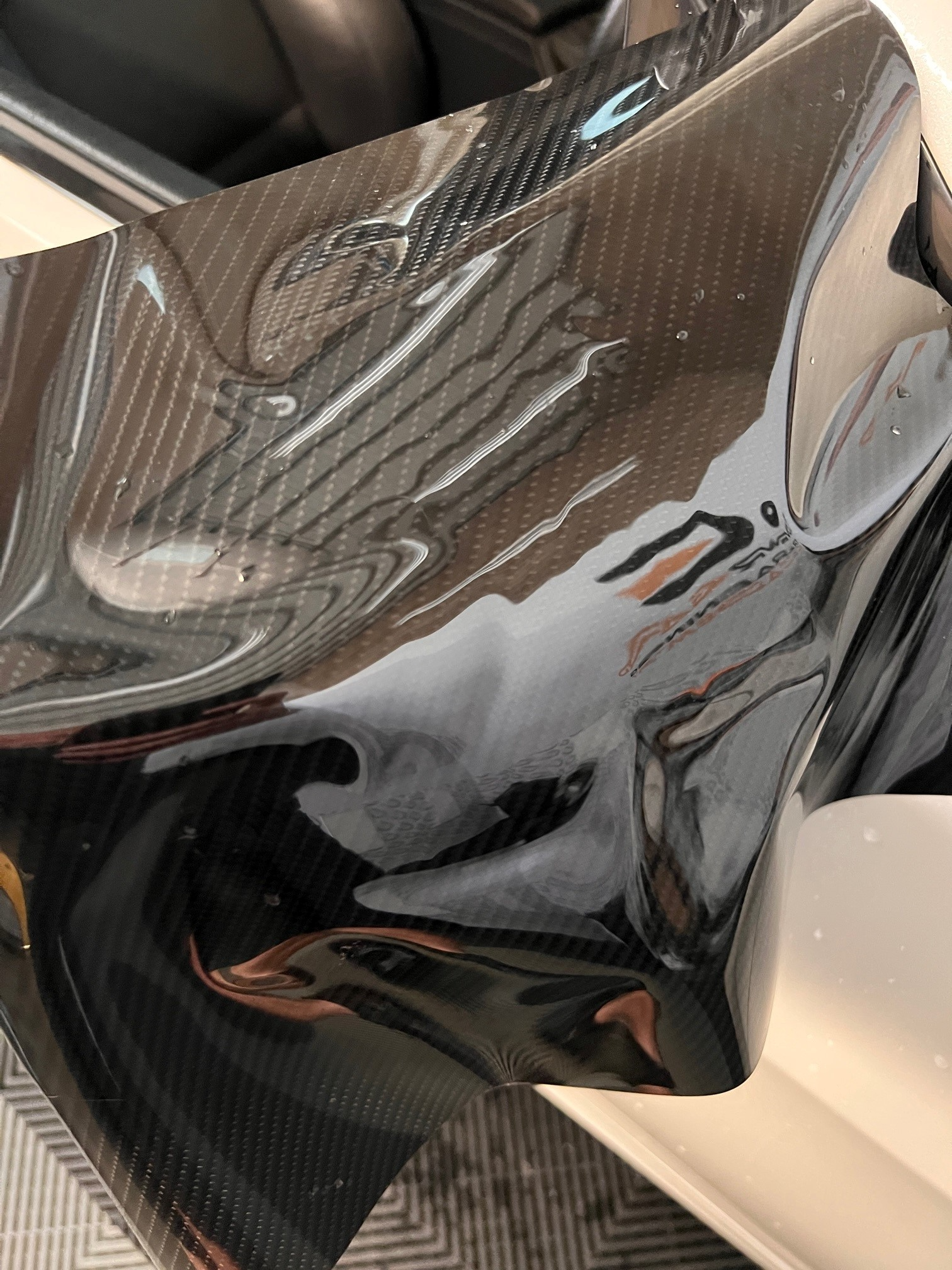
What makes this category special is that many protection films incorporate the carbon aesthetic directly into the design. Instead of putting a clear film over your existing clear-coated carbon, you can install a film that replicates the iconic woven pattern of real carbon fiber. This gives you a dual benefit: you get the look of fresh, flawless carbon fiber across your entire panel, plus the full protective capabilities of premium TPU.
The best films in this category achieve a deep, textured pattern that genuinely mimics real carbon fiber, available in both gloss and matte finishes.
Carbon Fiber Protection Film vs. Everything Else
The automotive aftermarket offers several ways to change or protect your car’s appearance. Understanding how carbon fiber PPF stacks up against the alternatives is crucial.
Standard Clear PPF
Clear paint protection film provides outstanding physical protection, self-healing capabilities, and UV defense. But it is invisible. Your carbon fiber parts will still look like genuine carbon because you can see the weave underneath. The problem is that clear PPF doesn’t cover up any existing wear or discoloration on your carbon components. If your original clear coat has already started to yellow or haze, clear PPF will seal that damage right in. Also, for painted panels, clear PPF does nothing to change the appearance.
Clear PPF typically lasts 7 to 10 years with proper care. It offers impact resistance from road debris, rock chips, and minor abrasions. It also blocks UV damage and includes self-healing top coats that repair light surface scratches with heat.
Vinyl Wrap
Vinyl wraps are the go-to for changing colors and adding wild patterns. They are thin, typically around 3-4 mils thick compared to PPF’s 8-12 mils. A vinyl wrap can transform the appearance of your car for a relatively low upfront cost, offering endless colors and finishes.
However, vinyl wraps do not protect against rock chips or deep scratches. Vinyl wraps are also more susceptible to damage from environmental factors and lack self-healing properties. The lifespan is significantly shorter, typically around 3 to 5 years before the film starts to fade, peel, or crack. For a vehicle that sees regular road use, a vinyl wrap alone leaves your paint vulnerable.
Genuine Carbon Fiber Replacement Parts
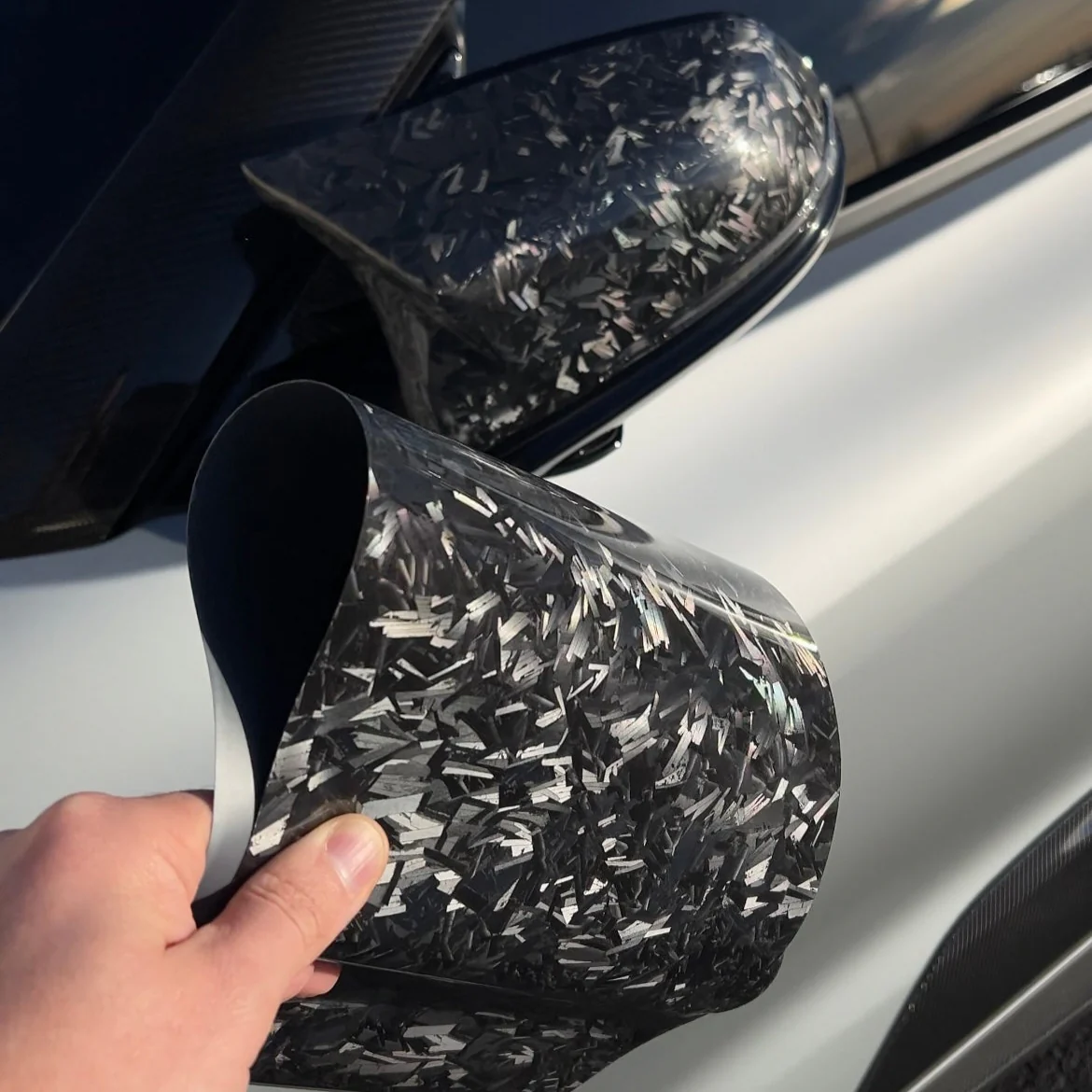
Nothing looks as good as real carbon fiber—until it gets damaged. Buying genuine carbon fiber components such as hoods, spoilers, and mirror caps gives you the authentic, lightweight look. But the cost is high. A single carbon fiber hood can cost thousands of dollars, and replacement costs when parts get damaged are even higher. Genuine carbon parts also require ongoing maintenance to keep the resin finish clear and glossy.
Carbon Fiber Pattern PPF
This is where the “best of both worlds” argument gets interesting. Carbon fiber PPF gives you a built-in carbon fiber pattern within the film itself, combined with the real-world, self-healing benefits of traditional paint protection. It transforms the appearance of the underlying surface to mimic woven carbon fiber while simultaneously shielding it from rock chips, scratches, and UV radiation. It is a two-in-one solution for both aesthetic transformation and long-term protection.
Key Features of Quality Carbon Fiber Protection Film
If you are evaluating carbon fiber protection films, certain features separate the products that truly perform from those that are just cosmetic stickers.
TPU Material
Thermoplastic polyurethane is the industry standard for premium paint protection. It is flexible, impact-resistant, and engineered to wrap around complex curves without tearing. Quality carbon fiber PPF uses TPU as the base material, offering clarity and durability that cheaper alternatives cannot match.
Self-Healing Technology
This is one of the biggest advantages of TPU-based films. Light surface scratches and swirl marks disappear when exposed to heat—whether from the sun, warm water, or a heat gun. The top coat contains elastomeric polymers that “remember” their original shape. When those polymers are scratched, heat causes them to return to their low-energy state, effectively erasing the blemish. Vinyl wraps cannot do this. Traditional paint finishes cannot do this. Only premium TPU films can.
UV Resistance
Ultraviolet radiation is the silent killer of carbon fiber aesthetics. Without adequate protection, UV rays break down the epoxy resin matrix, causing the weave to yellow, fade, or develop a hazy appearance. High-quality protection films incorporate UV-stable formulations that block harmful radiation, preserving both the film and the underlying carbon for years.
Hydrophobic Properties
Hydrophobic means water-hating. A hydrophobic top coat causes water to bead up and roll off the surface rather than sitting there and drying into ugly spots. Mud, bird droppings, tree sap, and road grime have a harder time bonding to the surface, which means easier cleaning and longer-lasting clarity. Some advanced films also resist water staining, so those mineral deposits don’t leave permanent marks.
Optical Clarity and Texture Depth
For films that replicate the carbon fiber look, the quality of the pattern matters enormously. Premium films achieve a three-dimensional effect with visible depth rather than a flat, printed appearance. The best ones are nearly indistinguishable from the real thing when properly installed.
How UV Light Damages Carbon Fiber Components
Let’s take a moment to understand the science behind UV damage, because this is where many car owners miss the warning signs.
The carbon fiber weave itself is UV-resistant. It is basically a form of carbon, which handles sunlight just fine. The problem is the resin. Most carbon fiber components are manufactured with an epoxy resin matrix that holds the carbon strands together and gives the part its smooth, glossy surface. This epoxy matrix is UV-sensitive. Prolonged sunlight exposure causes the resin to break down, leading to three specific types of damage.
Yellowing is the most visible symptom. The clear or lightly tinted resin develops an amber or yellow cast, which dulls the black-and-silver contrast of the carbon weave. The part starts to look aged and neglected.
Chalking occurs when the resin surface degrades at a microscopic level, creating a powdery residue on the surface. The deep gloss is replaced by a flat, hazy look.
Micro-cracking happens when resin embrittlement leads to tiny cracks in the surface. These micro-cracks allow moisture and contaminants to penetrate deeper into the carbon structure, leading to more serious degradation over time.
Once the resin layer is compromised, restoring the original appearance requires professional sanding and re-coating—a costly and time-consuming process. Paint protection film stops this cycle before it starts by blocking UV radiation from ever reaching the resin layer.
Common High-Impact Areas That Need Protection
Not all carbon fiber components face the same level of risk. The parts that see the most action on the road require the most attention.
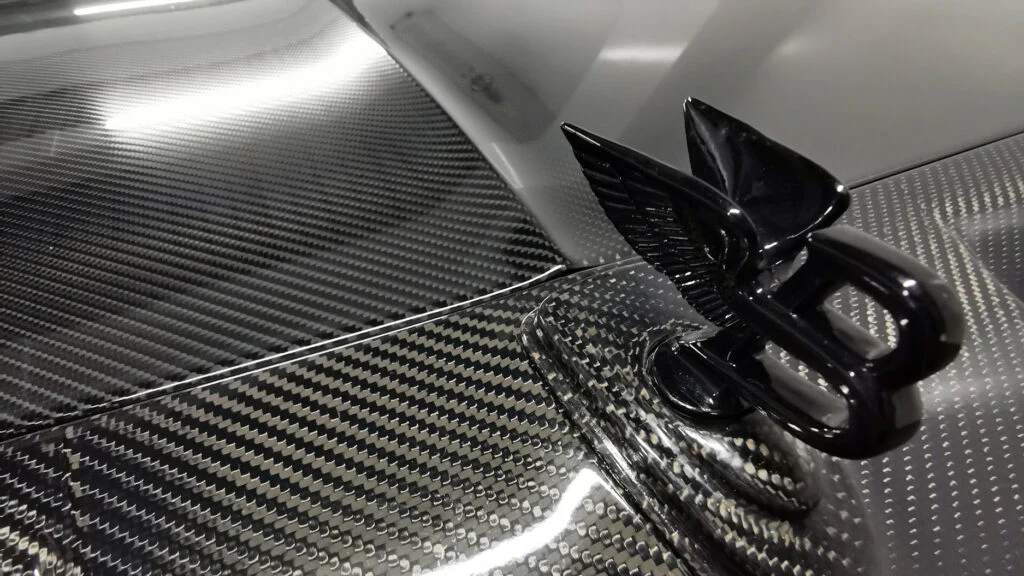
Front bumper and lip spoilers sit at the very front of the car. They take the brunt of every rock chip, piece of gravel, and bug splatter from highway driving. This area is the number-one priority for carbon fiber protection.
Hoods get constant sun exposure and are vulnerable to stones bouncing up from the road. A carbon fiber hood is often the most expensive single carbon component on the car, making it a high-value target for protection.
Side skirts are low to the ground and get sandblasted by road debris kicked up by the front tires. They also face door dings and parking lot hazards.
Mirror caps are small but visible. Every driver has scraped a mirror against something at some point. These tiny carbon accents are expensive to replace relative to their size.
Rear diffusers sit low and exposed, catching rocks that fly up from the rear tires and seeing plenty of road grime.
Spoilers and wings are highly visible and face constant UV exposure. Some wings also get hit by debris from the road, though to a lesser degree than front-end components.
Interior carbon trim on dashboards, center consoles, and door panels may not face rock chips, but sunlight through the windshield and daily contact cause wear. Interior protection films preserve that showroom look.
Installation: What to Expect
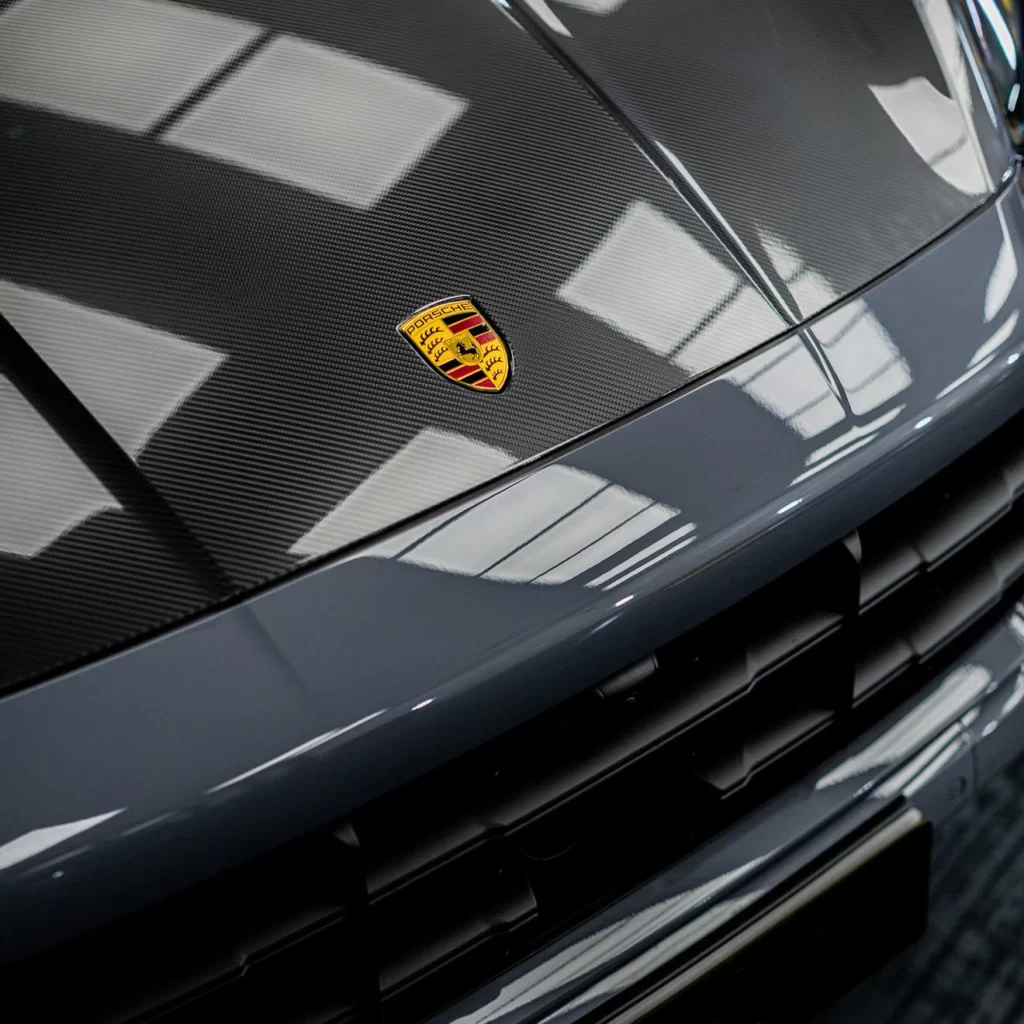
Installing carbon fiber protection film requires skill, patience, and proper preparation. A flawless installation is almost invisible. A poor installation shows bubbles, lifted edges, and trapped dust.
The process generally follows these steps.
Surface preparation is the most critical phase. The carbon fiber surface must be thoroughly cleaned and decontaminated. Any wax, oil, or residue prevents the adhesive from bonding properly. Professional installers use specialized cleaning solutions to remove all contaminants.
Film cutting uses precision patterns to match the exact dimensions of each panel. Computer-cut patterns ensure the film fits within millimeters of the edges without requiring blade work on the paint.
Application involves positioning the film onto the surface using a slip solution—basically soapy water—that allows the film to float and be repositioned before final adhesion. Once aligned, the solution is squeegeed out, pressing the film firmly onto the surface.
Edge tucking ensures that film edges are wrapped around the panel perimeters rather than sitting flush with them. Wrapped edges are much less likely to lift or collect dirt over time.
Heat activation finalizes the bond. After installation, heat helps the adhesive cure and settles the film into complex curves. Some installers use heat guns to post-heat edges and ensure long-term adhesion.
Curing time typically lasts 48 hours. During this period, the sunroof or panel should not be opened or washed. The adhesive continues to bond during this window.
Professional installation is strongly recommended for best results. The margin for error is small, and bubbles or dust trapped under the film are nearly impossible to fix once the adhesive has fully cured.
Maintenance and Care
One of the best things about paint protection film is that ongoing maintenance is straightforward.
Wash the film using a soft microfiber cloth and pH-neutral car shampoo. Avoid harsh chemicals, abrasive sponges, and automatic car washes with rotating brushes that can scratch the surface over time. The hydrophobic properties of quality films make cleaning noticeably easier. Water and dirt simply bead up and roll away.
For TPU films with self-healing capabilities, small scratches and swirl marks from washing or minor contact will disappear on their own with exposure to heat. Direct sunlight or warm water is usually enough to activate the healing process.
There is no special ongoing maintenance required beyond cleaning. The film continues to block UV, resist impact, and self-heal without any additional treatments.
Frequently Asked Questions
Q1: What is carbon fiber protection film?
Carbon fiber protection film is a paint protection film engineered specifically for carbon fiber surfaces. It provides physical impact resistance, UV protection, and scratch resistance while preserving the appearance of the underlying carbon weave.
Q2: How is carbon fiber PPF different from regular clear PPF?
Regular clear PPF is transparent and invisible, making it ideal for preserving factory paint finishes. Carbon fiber PPF includes a built-in woven pattern that replicates the look of real carbon fiber, so it transforms the appearance of the underlying surface while also protecting it.
Q3: Can carbon fiber PPF prevent UV yellowing on my carbon parts?
Yes. Quality protection films block harmful UV radiation that degrades the epoxy resin used in carbon fiber components. This stops yellowing, chalking, and micro-cracking before they start.
Q4: Is carbon fiber protection film self-healing?
Yes, premium TPU-based films feature self-healing top coats. Light surface scratches and swirl marks disappear when exposed to heat, keeping the finish looking flawless.
Q5: How long does carbon fiber protection film last?
Quality TPU films are engineered for long-term durability, maintaining their clarity, UV protection, and self-healing properties across many years of daily driving.
Q6: Will carbon fiber PPF look like real carbon fiber?
The best films achieve a deep, textured pattern that genuinely mimics real carbon fiber, available in both gloss and matte finishes. When professionally installed, it can be nearly indistinguishable from the real thing.
Q7: Can carbon fiber protection film be installed on any car?
Yes. Carbon fiber PPF can be applied to any painted or clear-coated surface, including factory paint, existing carbon fiber components, and other smooth exterior panels.
Q8: How do I maintain carbon fiber protection film?
Maintenance is simple. Wash with pH-neutral car soap and a soft microfiber cloth, avoid abrasive brushes or harsh chemicals, and dry with a clean microfiber towel. The hydrophobic surface makes washing easier than unprotected paint.
Q9: Will the film damage my factory paint or carbon finish when removed?
No. Quality TPU films use acrylic adhesives designed for clean removal. When professionally installed and removed, the original surface remains completely intact.
Q10: Is carbon fiber protection film worth the investment?
If you have invested in carbon fiber components or simply want to give your car a high-performance look without compromising protection, yes. Carbon fiber PPF delivers both aesthetic transformation and genuine physical protection—two upgrades in one investment.
Protect Your Carbon Fiber Investment with Decowell Film
At Decowell Film, we specialize in high-performance automotive protection solutions engineered for the real world. Our carbon fiber protection film products combine premium TPU construction with advanced self-healing technology, UV resistance, and hydrophobic properties that keep your vehicle looking fresh for the long haul.
Whether you are an installer looking to expand your service offerings, a distributor seeking reliable supply, or a car owner ready to protect your investment, Decowell Film delivers professional-grade solutions you can trust. Our films are engineered for optical clarity, ease of installation, and long-term durability—everything you need to preserve the aesthetics and integrity of your vehicle’s most vulnerable surfaces.
Contact Decowell Film today to learn more about our carbon fiber protection solutions. Let’s discuss how we can help protect your vehicles and keep them looking exceptional for years to come.