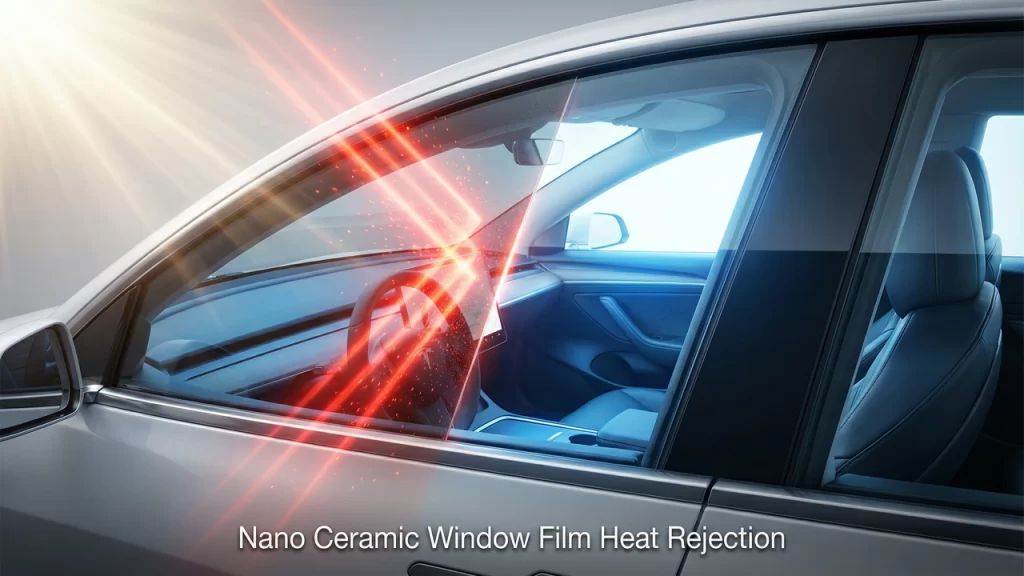
Decowell Heat Rejection Film— Car Window Film
20+ Years Professional Expertise | Professional Automotive Film Manufacturer | Full-Solution Provider (PPF, Window Film, Wrap Film) | 2000+ Certified Installers | From R&D to Production | High-Cost-Effective Premium Films | Ample Stock | Professional Team | Serving 40+ Countries | Reliable Logistics
Home » Products » Car Window Film » Nano Ceramic Window Film » Heat Rejection Window Film
Product Categories
Heat Rejection Film
— Car Window Film
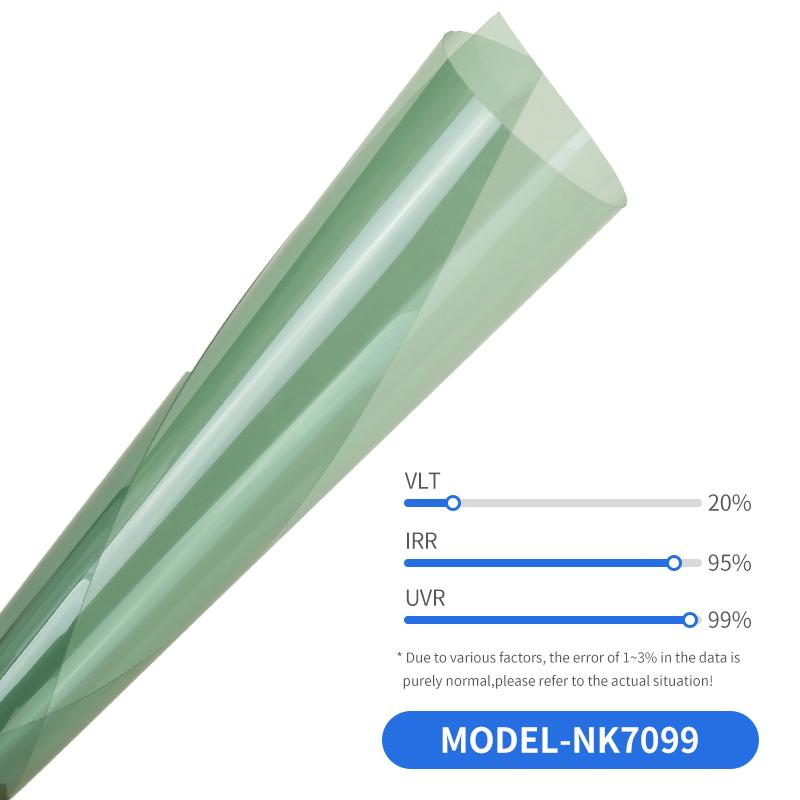
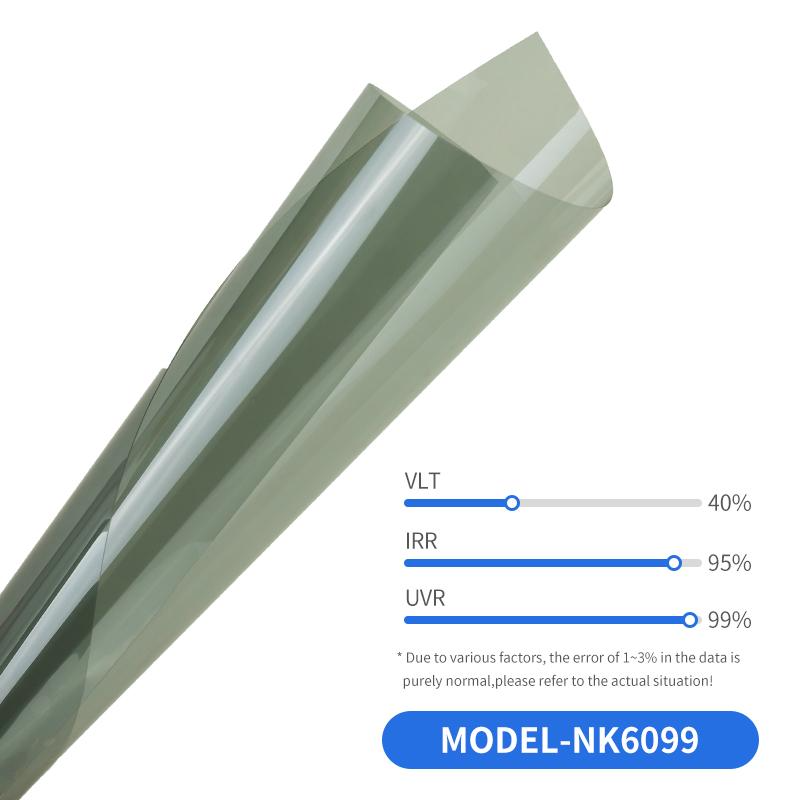
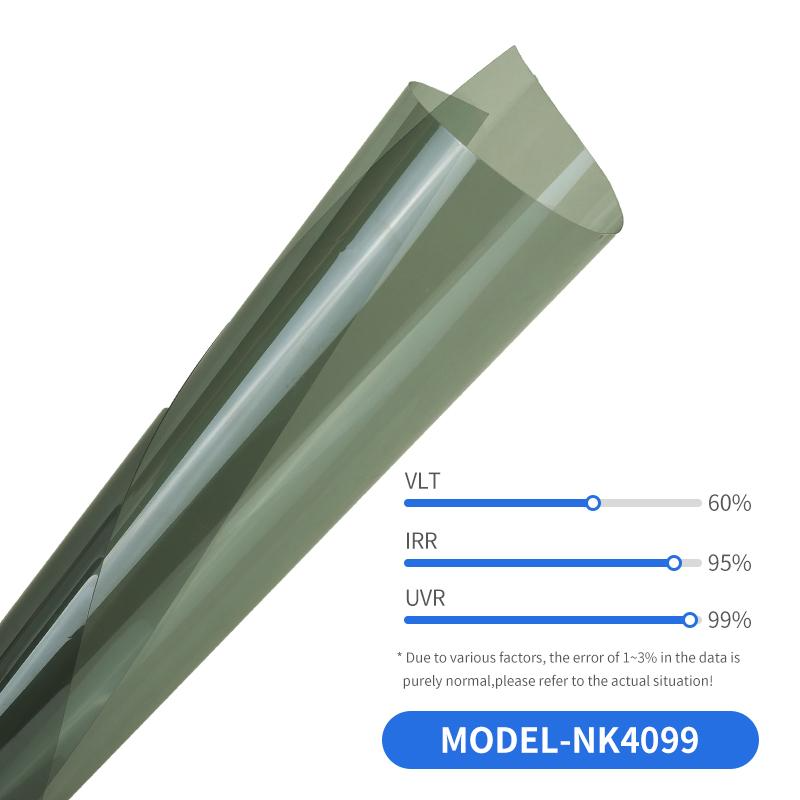
Specifications
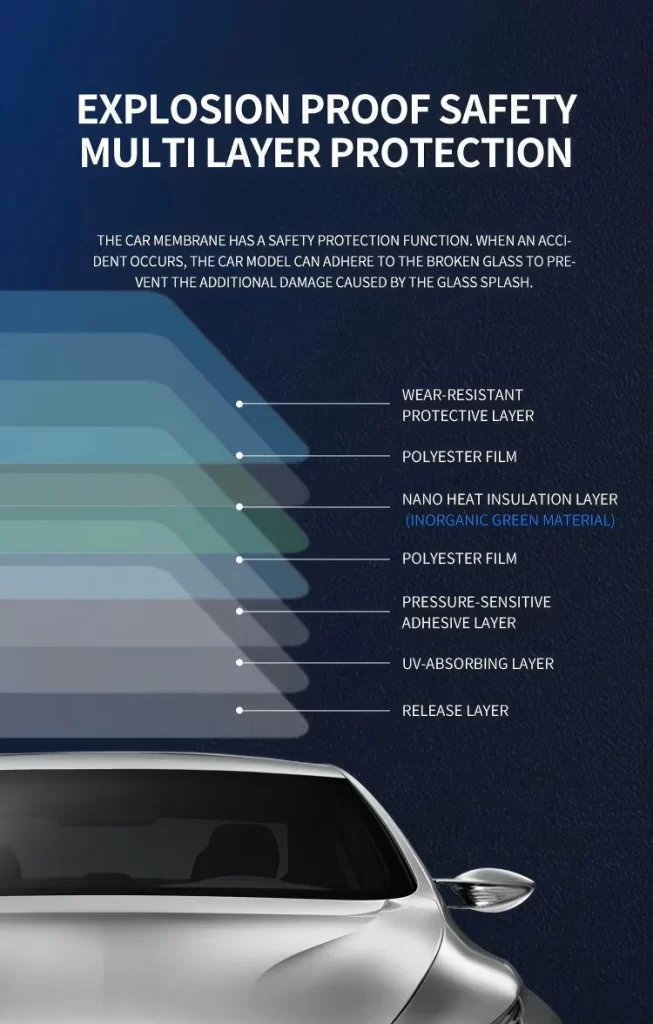
Material: Premium PET (Polyethylene Terephthalate) with Nano-Ceramic Coating
Thickness: 1.5 Mil
Size: 1.52*30m
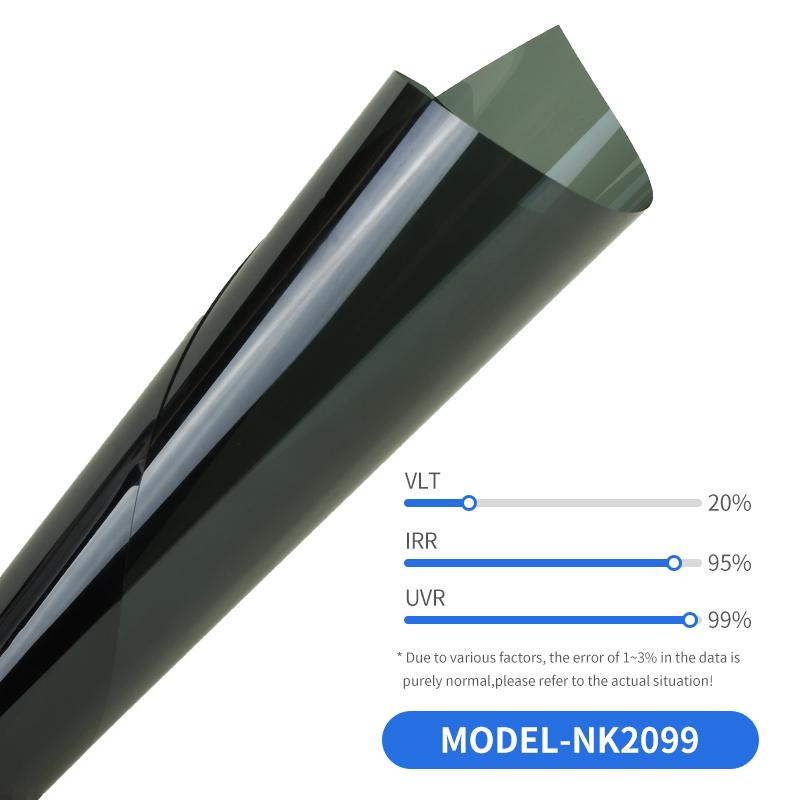
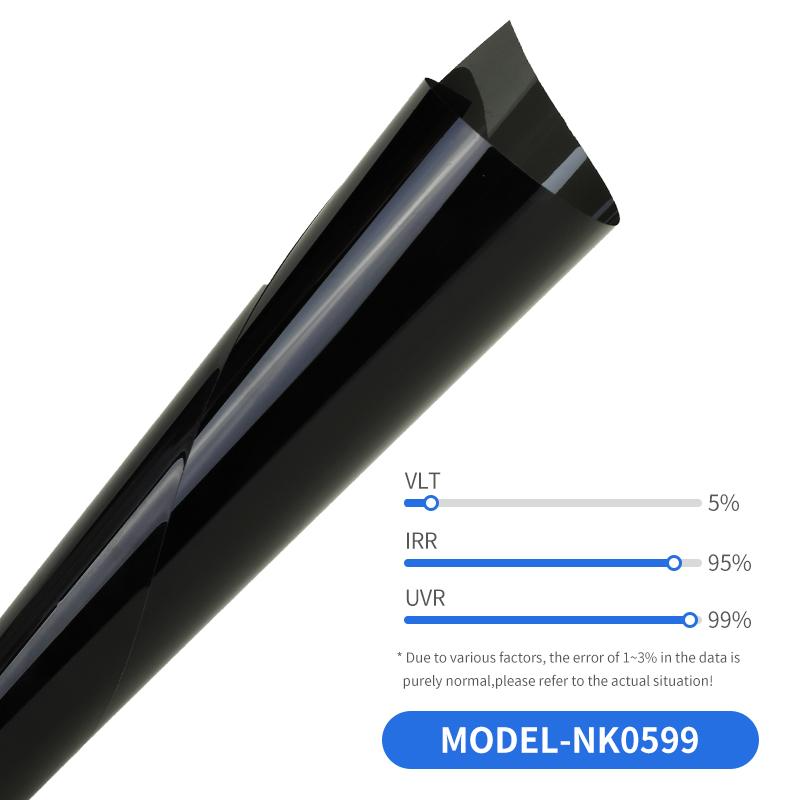
VLT Options: 65%, 60%, 40%, 20%, 5%
IRR: 95%
UV Rejection: 99%
TSER: 56%, 65%, 73%, 85%, 95%
HAZE: 0.25, 0.39, 0.72, 0.56, 0.41
Function: Self-Healing (surface), UV Proof, Anti-Scratch, Heat Insulation, Solar Control
Adhesive: Imported Removable Self-Adhesive Glue
Position: All automotive glass (Windshield, Side, Rear)
Color: Green, Light Green, Black, Dark Black, Super Dark Black
Compliance: CE Certified, Complies with EU Standards
Overview
Beat the heat and protect your vehicle with Decowell Heat Rejection Film – a premium nano-ceramic window tint designed for superior solar control and long-lasting performance. Engineered using advanced ceramic technology, this film delivers exceptional infrared rejection while maintaining crystal-clear visibility and signal transparency.
Whether you’re a professional installer or a car owner seeking maximum comfort, Decowell Heat Rejection Film combines cutting-edge materials with an 8-year warranty for complete peace of mind.
Key Features
1. Superior Heat Rejection Technology
Advanced nano-ceramic particles effectively block infrared radiation.
Significantly reduces cabin temperature, easing the load on your air conditioning.
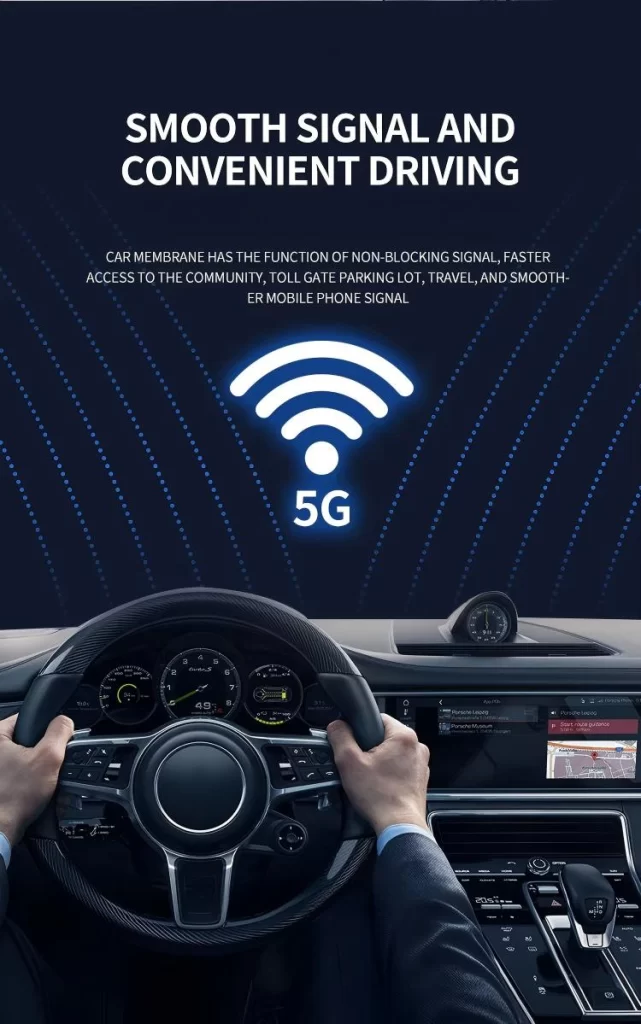
Non-metallic construction ensures zero signal interference with GPS, 5G, and mobile devices.
2. Maximum UV Protection
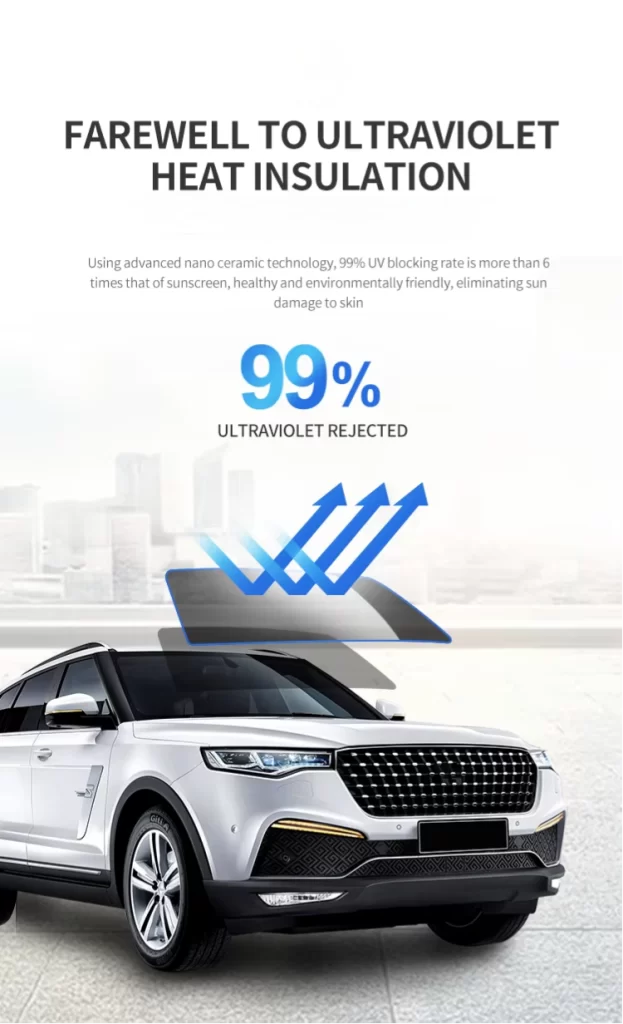
Blocks 99% of harmful UV rays, protecting passengers from sun damage.
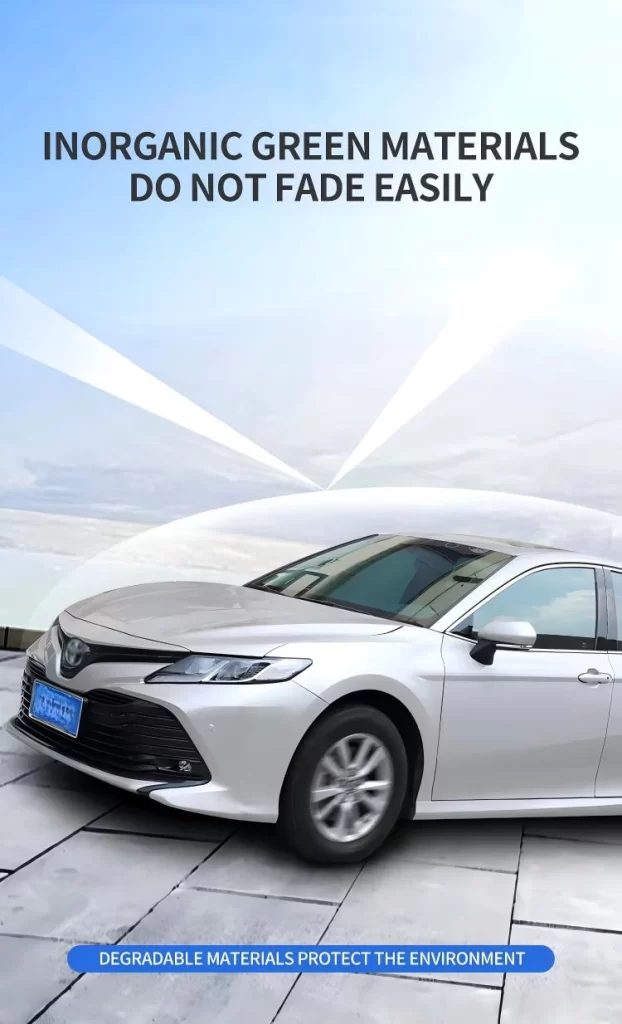
Prevents fading and cracking of your vehicle’s interior upholstery and dashboard.
Helps reduce the risk of skin-related health issues during long drives.
3. Premium Imported Adhesive
Features imported removable glue for professional-grade installation.
Bubble-free application with strong, long-lasting adhesion.
Clean removal without damaging rear window defrosters or glass surfaces.
4. Built to Last
Backed by a comprehensive 8-year warranty against fading, bubbling, and peeling.
Anti-scratch coating protects against daily wear from window operation.
Maintains optical clarity and performance for the life of the film.
5. Crystal Clear Optics
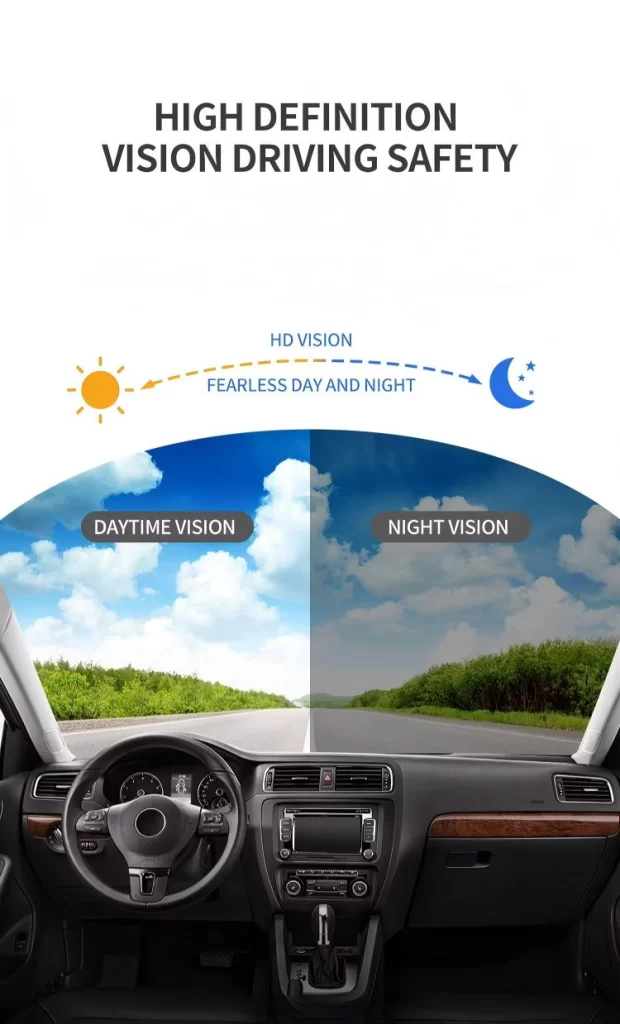
High-definition transparency ensures minimal visual obstruction.
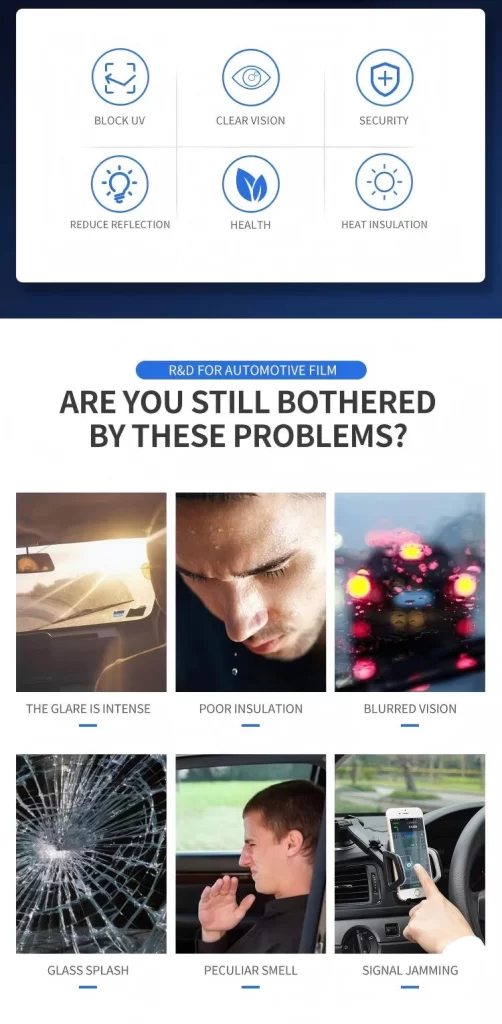
Reduces dangerous glare from headlights and direct sunlight.
True color rendition without the “hazy” look of lower-quality films.
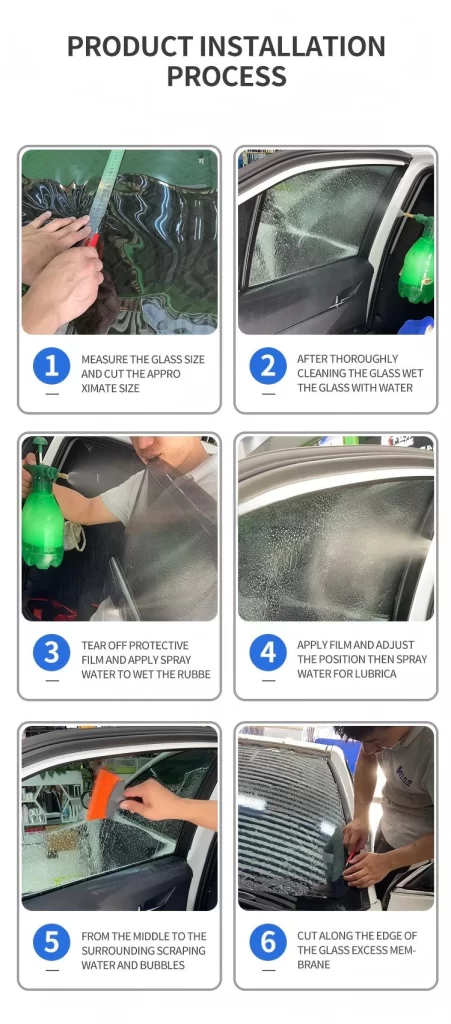
6. Easy Installation
Optimized 1.5mil thickness for excellent handling and conformability.
High tensile strength prevents wrinkling during application.
Compatible with all standard window tinting tools and techniques.
Applications
Passenger Vehicles: Perfect for cars, SUVs, and family vehicles.
Front Windshield: Use high VLT options (50%-75%) for legal front-windshield heat rejection.
Commercial Fleets: Protect drivers and reduce fuel costs associated with air conditioning.
Luxury & Classic Cars: Maintain aesthetics while adding modern comfort.
Why Choose Decowell Heat Rejection Film?
Decowell is committed to manufacturing high-performance films that meet the demands of professional installers and distributors worldwide. Our Heat Rejection Film is designed to compete with top global brands while offering excellent value.
What sets us apart:
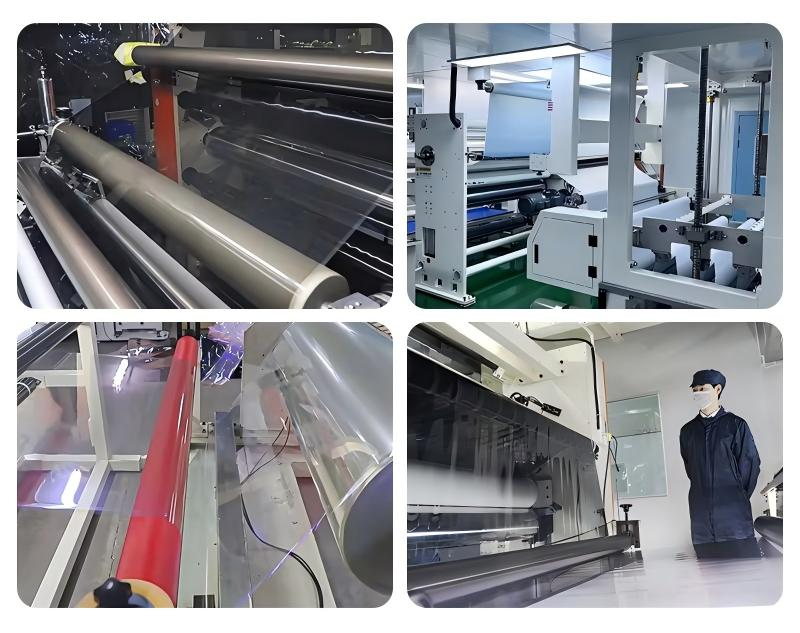
Consistent Quality: Rigorous factory testing ensures every roll meets specifications.
Low MOQ: Start with just 1 roll to test the market.
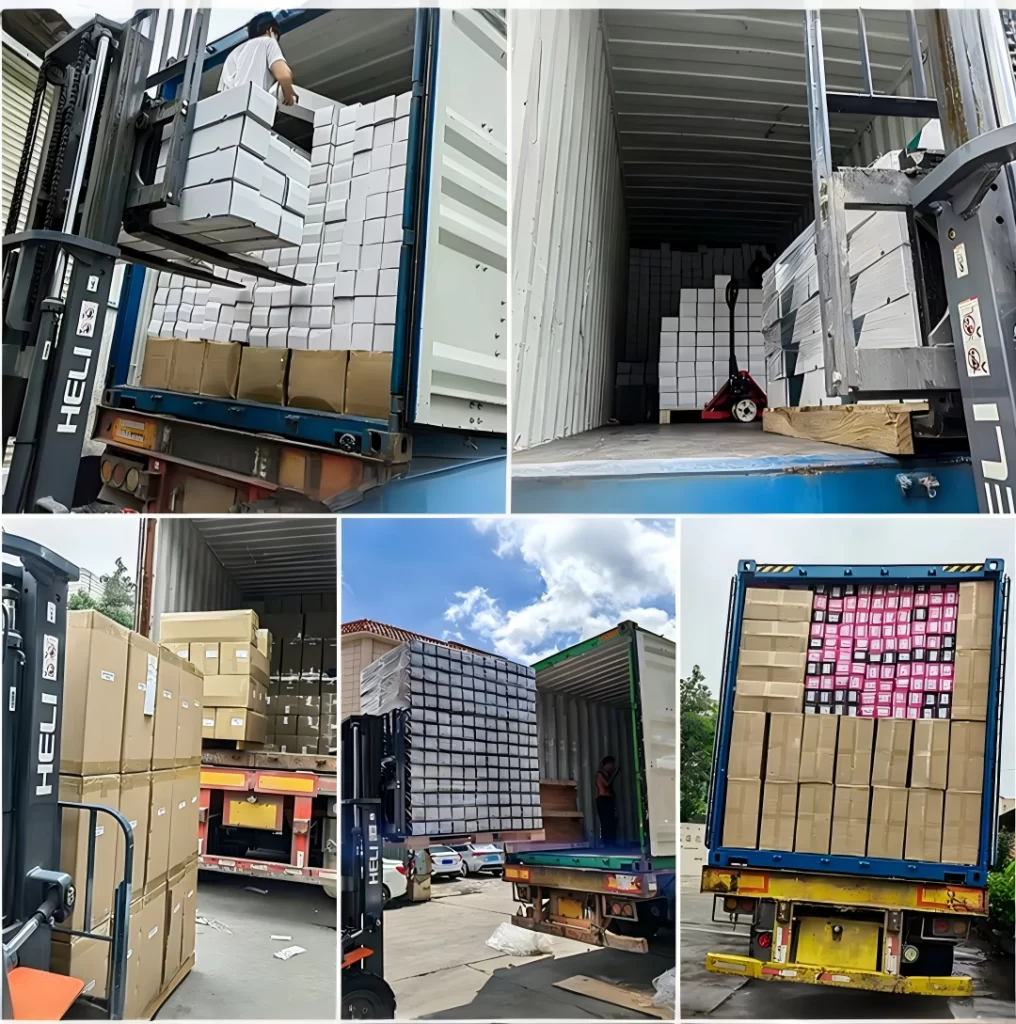
Fast Shipping: Ready-to-ship inventory with 3-day dispatch.
OEM Services: Custom branding and packaging available for bulk orders.
Global Trust: Serving customers across Middle East, Southeast Asia, and South America.
Customization & Packaging
Custom Logo: Print your brand on the core and packaging (MOQ: 50 rolls).
Custom Packaging: Design your own box for retail presentation.
Standard Packaging: Securely packed in strong hard cartons to prevent transit damage.
Sample Orders: Test the quality before committing to bulk purchases.
Ready to experience the Decowell difference? Contact us today for wholesale pricing, samples, or custom orders.
FAQ
Q: Does this film interfere with phone or GPS signals?
A: No. Decowell Heat Rejection Film is non-metallic nano-ceramic, allowing 5G, GPS, and radio signals to pass through clearly.
Q: What is the warranty period?
A: This film comes with an 8-year warranty against fading, bubbling, peeling, and delamination.
Q: Is this film suitable for the front windshield?
A: Yes. We recommend higher VLT options (50%, 70%, 75%) for front windshield applications to ensure legal compliance and safe night driving.
Q: Can I install this film myself?
A: Professional installation is recommended for best results. However, experienced DIYers can achieve good results with the right tools and technique.
Heat Rejection Car Window Film: How to Keep Your Cabin Cool in Extreme Summer Temperatures
Let‘s be honest — nobody enjoys climbing into a car that’s been sitting in the sun. The steering wheel burns your hands, the seat feels like a hot plate, and you find yourself cranking the AC to max just to survive the first few minutes of the drive. If this sounds familiar, you‘re not alone. And the good news? There’s a straightforward solution that works.
Heat rejection car window film has come a long way from the old-school dark plastic sheets you might remember from years ago. Today‘s technology is smarter, clearer, and far more effective at keeping heat exactly where it belongs — outside your car.
So how does it actually work? And more importantly, how do you pick the right one without getting lost in all the technical jargon? Let’s break it all down in plain English.
The single biggest misconception about window tint
Let‘s start with the most common myth out there: darker tint equals better heat rejection.
It makes intuitive sense, right? Darker shades block more light, so they must block more heat. But here’s where things get interesting — that‘s actually not how modern window films work.
Visible light transmission — often shortened to VLT — is simply a measure of how much light passes through your windows. A tint with 20% VLT looks dark. A tint with 70% VLT looks nearly clear. But VLT alone tells you almost nothing about how well the film blocks heat.
Why? Because heat from the sun isn‘t just visible light. The heat you feel when sunlight hits your skin comes primarily from infrared radiation, which you can’t see at all. A cheap dark film might look impressive, but if it‘s made with basic dye, it‘s doing very little to stop the real heat source. And in some cases, low-quality dark tints can actually make things worse — dark surfaces absorb heat, and if the film can‘t dissipate that heat efficiently, it radiates right back into your cabin.
The takeaway is simple: don’t judge a film by how dark it looks. Judge it by how it‘s built.
What actually makes a car window film reject heat?
To understand heat rejection, you first need to understand what you’re fighting against. Sunlight that hits your car contains three types of energy:
Infrared (IR) radiation — This makes up roughly 53% of solar heat. It‘s invisible, but you feel it as warmth on your skin. This is the main target of quality window films.
Visible light — About 44% of solar heat. This is the light you actually see. Blocking it reduces heat, but also reduces visibility.
**Ultraviolet (UV) — The remaining 3% of solar energy, but also the most harmful to your skin and your car’s interior.
A good heat rejection car window film works by blocking or reflecting these forms of energy before they can get trapped inside your vehicle. The most advanced films use a combination of absorption and reflection — absorbing heat while simultaneously reflecting a large portion of solar energy back outward.
This is where ceramic and nano-ceramic technology changes the game entirely. Instead of relying on dyes or metals, ceramic particles are embedded into the film at a microscopic level. These particles are engineered to target and block infrared heat while letting visible light pass through naturally. The result is a film that keeps your cabin significantly cooler without forcing you to live in a dark cave every time you drive.
The two numbers you actually need to pay attention to
When you start comparing different heat rejection films, you‘ll see a lot of numbers thrown around. Two of them really matter. The rest is just noise.
TSER (Total Solar Energy Rejection) is the most honest metric out there. TSER measures the total percentage of solar energy a film rejects — including infrared, visible light, and UV combined. If a film has a TSER of 50%, that means half of the sun’s total energy is blocked from entering your cabin. The higher the TSER, the cooler your car will feel.
IRR (Infrared Rejection) measures how much infrared radiation the film blocks. A high IRR number sounds impressive — “blocks up to 95% of infrared!” — but keep in mind that IRR only addresses about 53% of the total solar energy. A film can claim 99% IRR but still have a modest TSER because it’s not blocking visible light effectively.
So here‘s a simple rule: always ask for the TSER number. If a supplier won’t share it, that‘s a red flag. If they give you TSER alongside IRR, you know they’re being transparent about real-world performance.
A quick rundown of the main types of car window film
Not all window films are created equal. Here’s a straightforward breakdown of what‘s out there, from basic to best.
Dyed films are the entry-level option. They use a layer of dye to darken the glass and reduce glare. But they offer minimal heat rejection, provide very limited UV protection, and tend to fade or turn purple after a couple of years of sun exposure. They’re cheap for a reason — you get exactly what you pay for.
Metalized films contain microscopic metal particles that improve heat rejection and add shatter resistance. The trade-off? Metal can interfere with GPS, Bluetooth, radio, and cell signals — a major downside in modern cars packed with electronics.
Carbon films use carbon particles instead of dye. They offer solid heat rejection (typically 40-60% infrared block), a sleek matte finish, and no signal interference. They won‘t fade over time like dyed films, and they strike a good balance between cost and performance. But they don’t quite reach the levels of ceramic.
Ceramic and nano-ceramic films are the current gold standard. These films use nano-sized ceramic particles to achieve superior heat rejection — typically 80-95% infrared block — while maintaining crystal clarity and zero signal interference. They block over 99% of harmful UV rays, resist fading for years, and keep your cabin dramatically cooler.
To put that into perspective: carbon films generally block up to 60% of infrared heat, while ceramic films can reach up to 95%. That‘s not a small difference — that’s the line between “this helps a little” and “this actually works.”
How much cooler does a heat rejection window film actually make your car?
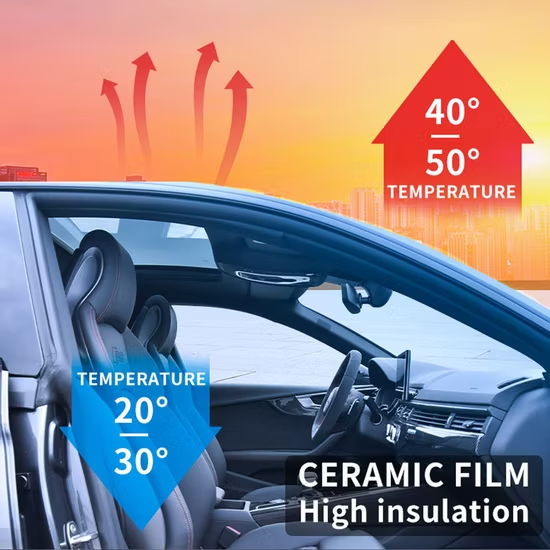
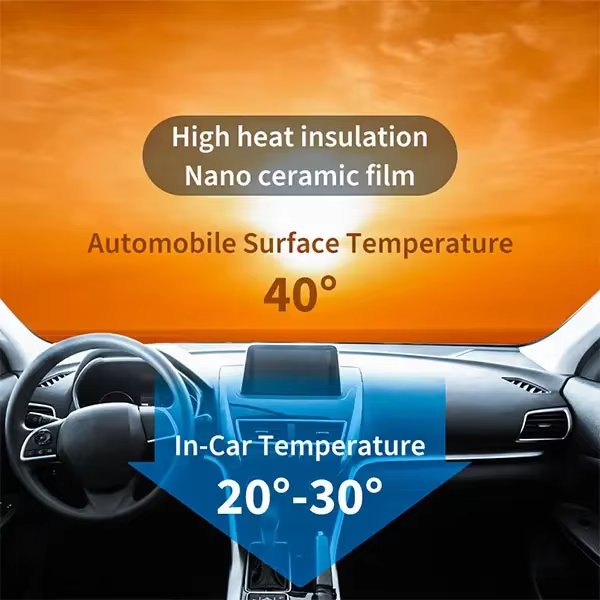
Let‘s talk real numbers. In controlled thermal testing, cars fitted with quality ceramic film stayed noticeably cooler than untinted vehicles. Surface temperatures can be lowered by tens of degrees, and cabin temperatures come down faster after parking in the sun.
One of the biggest differences you’ll notice is how quickly your AC can cool the cabin. With a high-performance heat rejection film, the AC doesn‘t have to fight against a preheated oven every time you start the car. The system works less, cools faster, and over time that means less strain on your vehicle.
For drivers in regions with long, hot summers — we’re talking consistent 35°C to 45°C temperatures — the difference is genuinely noticeable. You can park your car, run errands for an hour, and still come back to a cabin that feels manageable rather than unbearable.
Beyond heat: what else a quality film brings to the table
The best heat rejection car window film doesn‘t just keep your car cooler. It delivers a bunch of other benefits that make it a smart investment for any driver.
UV protection is one of the biggest advantages you might not think about — until you notice your dashboard starting to crack or your leather seats fading. High-quality ceramic films block over 99% of both UVA and UVB rays. That means less skin damage for you and your passengers, and a car interior that stays looking newer for much longer.
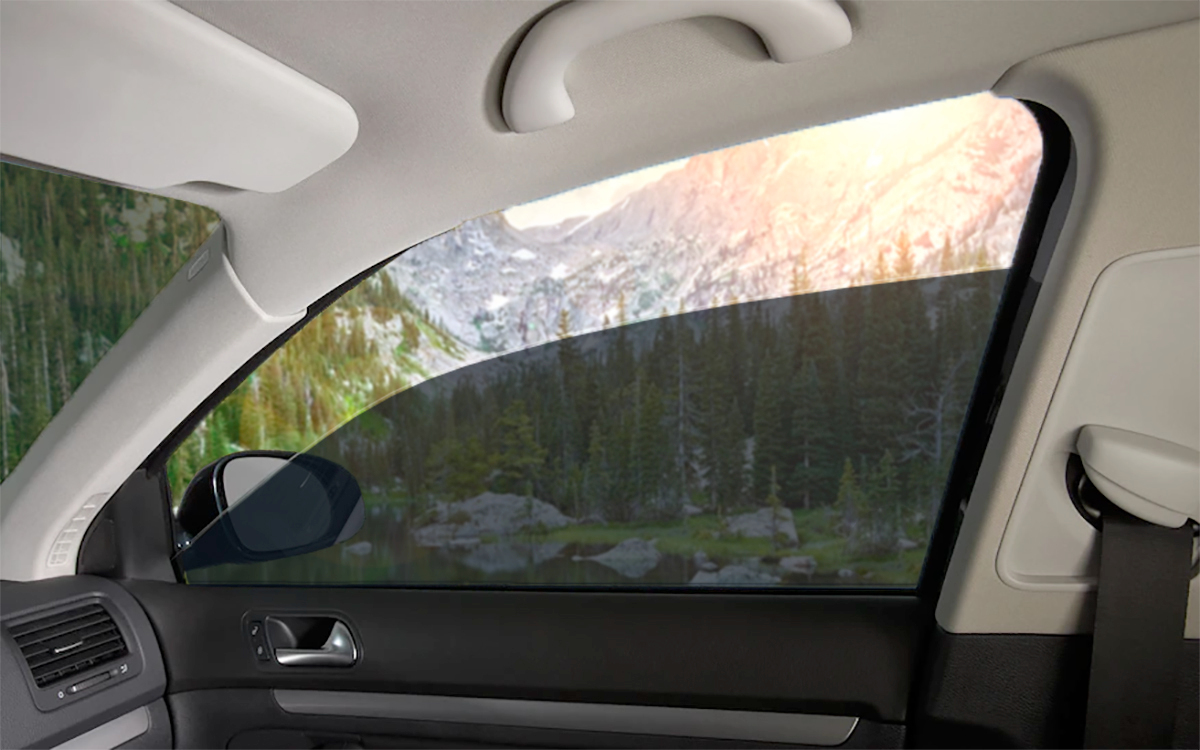
Glare reduction makes a real difference in driving comfort and safety. Direct sunlight bouncing off the road or reflecting off other vehicles can strain your eyes and even create dangerous visibility conditions. A good film cuts that glare without making the world outside look unnaturally dark.
Signal clarity is another feature that matters more than ever in modern vehicles. Metalized films can interfere with GPS navigation, Bluetooth connections, and even cell reception. Ceramic and carbon films are completely metal-free, so your electronics keep working exactly as they should.
Shatter resistance is an added safety benefit most people don‘t think about until after an accident. When a window breaks, the film helps hold the shattered glass together, reducing the risk of injury from flying shards.
What to look for when choosing a heat rejection car window film
Whether you’re a car owner shopping for your own vehicle or a business sourcing films for professional installation, here‘s a quick checklist to guide your decision:
Focus on TSER first. This is your most reliable indicator of real-world heat rejection. Look for films with TSER figures that match your climate and needs.
Don’t get distracted by IRR alone. High infrared numbers are great, but always ask how that translates into total solar energy rejection.
Look for 99% UV block. This should be standard for any quality film. If a film can‘t deliver this, it’s not worth your time.
Check for signal compatibility. If the film contains metal, expect interference with your car‘s electronics. Metal-free ceramic or carbon films are the way to go.
Consider local tinting regulations. Different regions have different rules on how dark your windows can be. A high-performance ceramic film with lighter VLT can deliver excellent heat rejection while keeping you on the right side of the law.
Why Decowell should be your first call for heat rejection car window film
At Decowell, we don‘t just manufacture window film — we engineer solutions that make driving genuinely more comfortable, especially when the mercury climbs.
Our advanced ceramic and nano-ceramic window films are built with one goal in mind: superior heat rejection without compromise. We use cutting-edge nano-ceramic technology to block infrared heat effectively while maintaining exceptional optical clarity. No signal interference. No fading or discoloration over time. Just reliable, long-lasting protection that works when you need it most.
With Decowell heat rejection car window film, your cabin stays cooler, your AC works less, and your interior gets the UV protection it deserves. Whether you’re an installation shop stocking up for your next client or a fleet manager looking to keep drivers comfortable across an entire vehicle lineup, we‘re here to help.
Ready to experience the difference that real heat rejection technology makes? Contact Decowell today to learn more about our product range, request samples, or discuss bulk supply for your business. Let’s keep your customers cool together.
Frequently Asked Questions
Q: Can window tint reduce cabin temperature even when the car is parked?
A: Yes. While no window film can completely stop heat buildup in a parked car — especially after hours in direct sun — high-quality heat rejection film significantly slows the rate of temperature increase. The difference is most noticeable when you first open the door after the car has been sitting.
Q: Will a heat rejection window film affect my night driving visibility?
A: Quality ceramic films maintain excellent clarity because they block heat primarily by targeting infrared radiation, not by simply darkening visible light. You can achieve strong heat rejection with relatively light shades that won‘t impair night driving.
Q: How long does heat rejection film last before it needs replacement?
A: Premium ceramic and carbon films are designed to last for many years without fading, bubbling, or turning purple. Lower-quality dyed films may show visible degradation in just a couple of years.
Q: Can I install heat rejection window film on my windshield?
A: In many regions, clear or nearly clear films are permitted on windshields as long as visible light transmission meets legal requirements. Check local regulations before proceeding.
Q: What’s the main difference between ceramic and carbon heat rejection film?
A: Carbon film offers good performance at a more accessible price point, typically blocking 40-60% of infrared heat. Ceramic film delivers superior results — often 80-95% infrared block — with better clarity and longer lifespan. For drivers in hot climates or those who keep their cars for many years, ceramic is the stronger long-term choice.
Q: Does heat rejection film also reduce glare during bright daytime driving?
A: Yes. Most quality window films significantly cut glare from direct sunlight and reflected glare from other vehicles and wet roads. This makes driving more comfortable and safer in bright conditions.