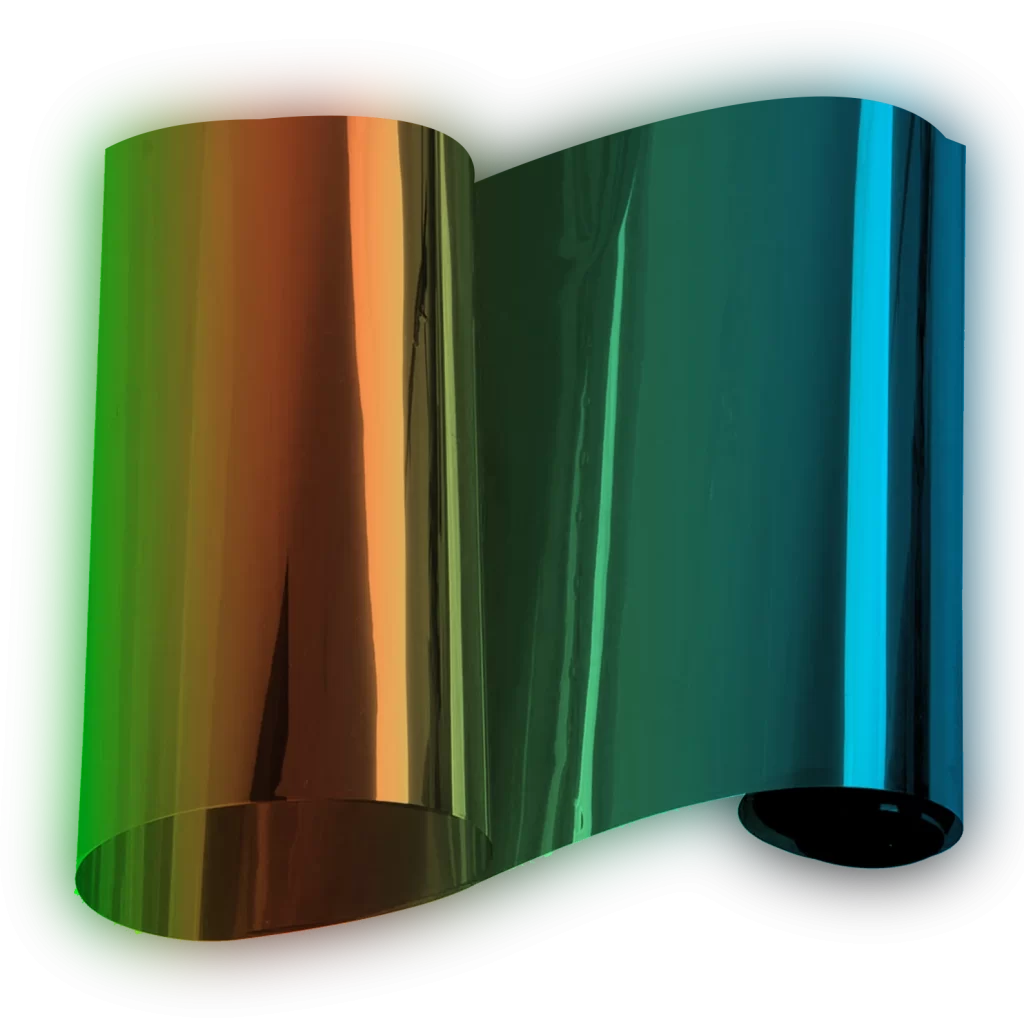
Decowell Chameleon Car Window Film
20+ Years Professional Expertise | Professional Automotive Film Manufacturer | Full-Solution Provider (PPF, Window Film, Wrap Film) | 2000+ Certified Installers | From R&D to Production | High-Cost-Effective Premium Films | Ample Stock | Professional Team | Serving 40+ Countries | Reliable Logistics
Home » Products » Car Window Film » Chameleon Window Film
Product Categories
Chameleon Film
— Car Window Film
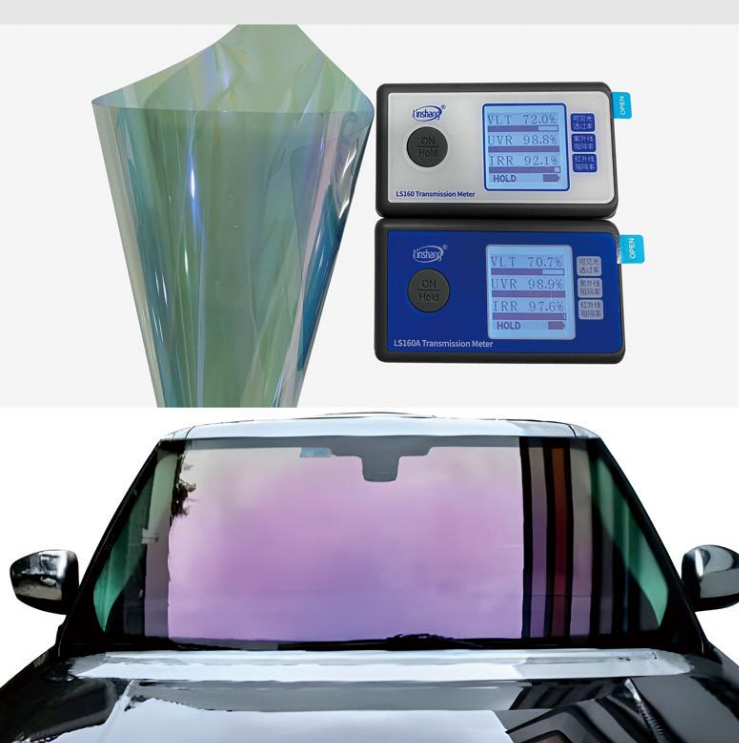
Purple 01
VLT (Visible Light Transmission) 72.0% UVR (UV Rejection) 98.9% IRR (Infrared Rejection) 97.6% Thickness 2 mil Size 1.52m × 30m (60inch × 100ft)
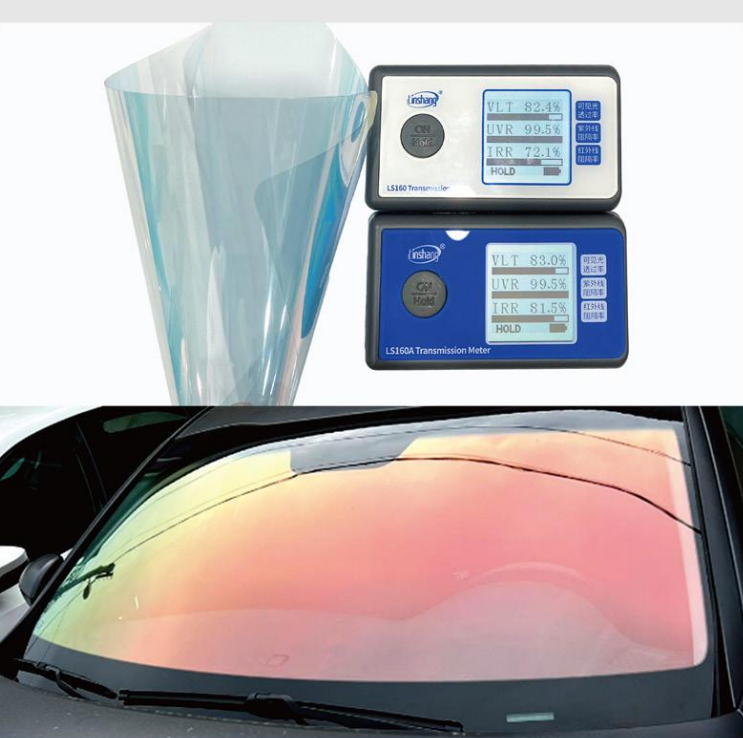
Pink 01
VLT (Visible Light Transmission) 83.0% UVR (UV Rejection) 99.5% IRR (Infrared Rejection) 81.5% Thickness 2 mil Size 1.52m × 30m (60inch × 100ft)
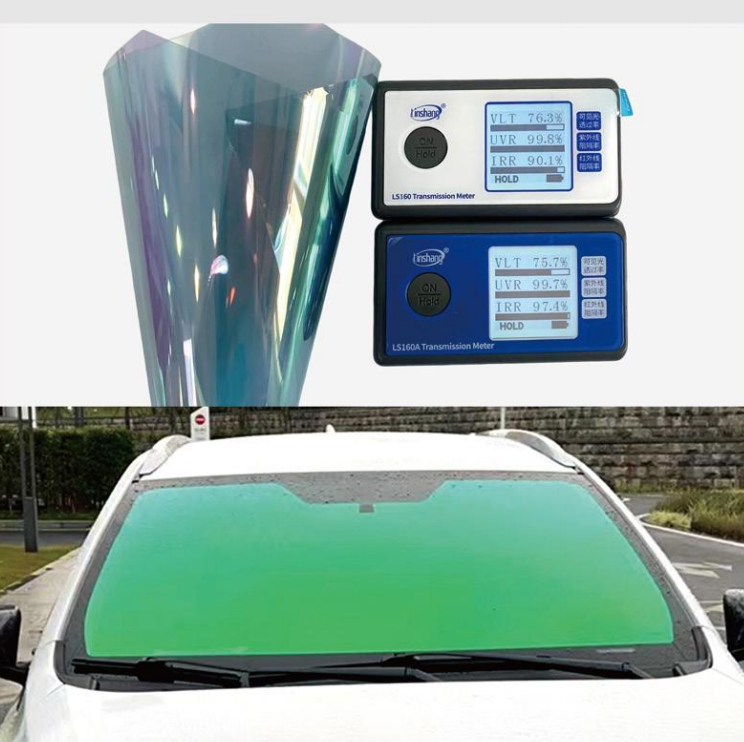
Green 01
VLT (Visible Light Transmission) 75.7% UVR (UV Rejection) 99.7% IRR (Infrared Rejection) 97.4% Thickness 2 mil Size 1.52m × 30m (60inch × 100ft)
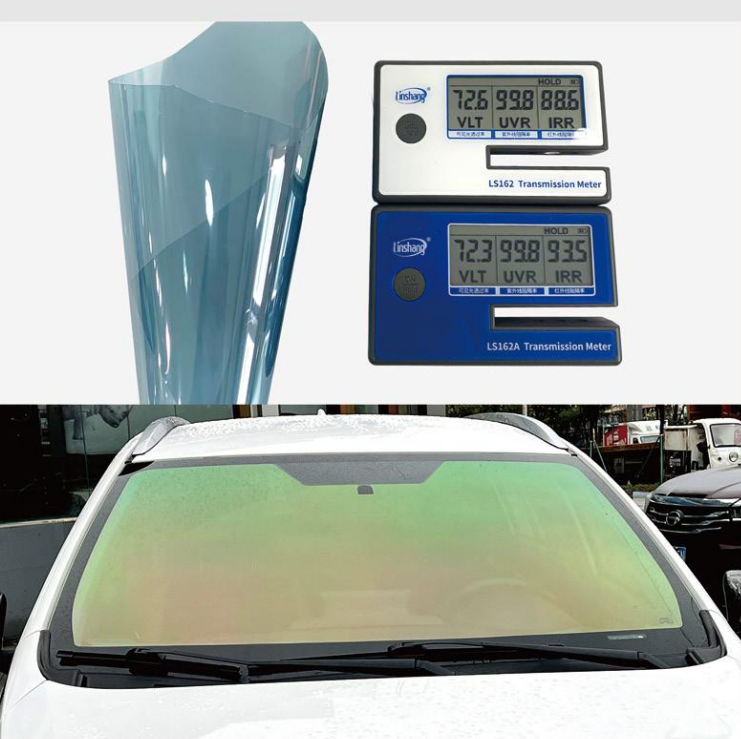
Green 02
VLT (Visible Light Transmission) 72.3% UVR (UV Rejection) 99.8% IRR (Infrared Rejection) 93.5% Thickness 2 mil Size 1.52m × 30m (60inch × 100ft)
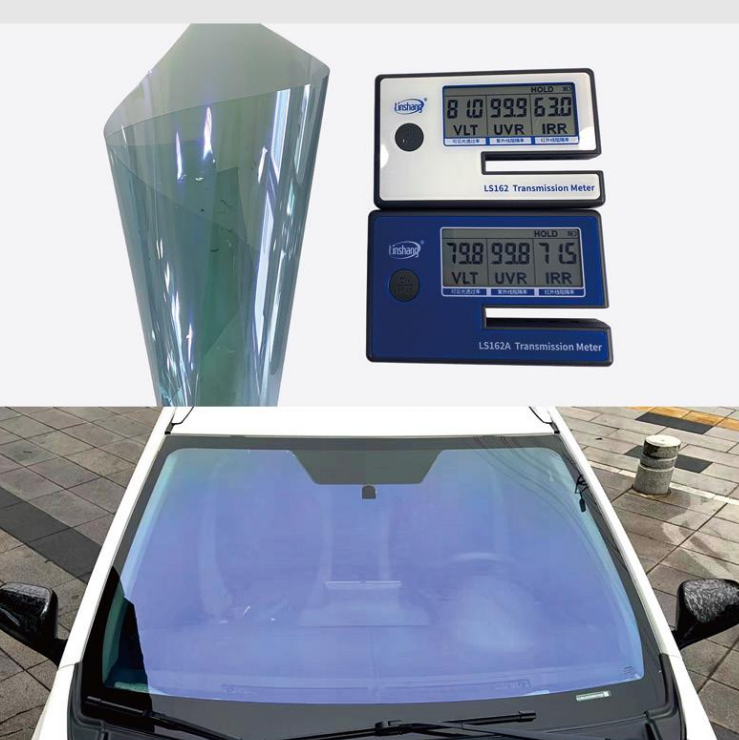
Blue 01
VLT (Visible Light Transmission) 79.8% UVR (UV Rejection) 99.8% IRR (Infrared Rejection) 71.5% Thickness 2 mil Size 1.52m × 30m (60inch × 100ft)
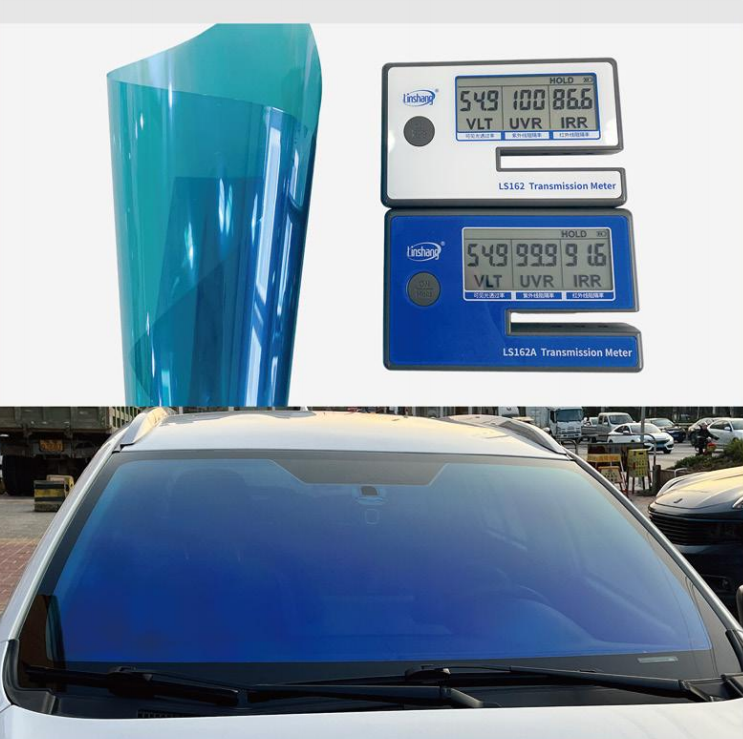
Blue 02
VLT (Visible Light Transmission) 54.9% UVR (UV Rejection) 99.9% IRR (Infrared Rejection) 91.6% Thickness 2 mil Size 1.52m × 30m (60inch × 100ft)
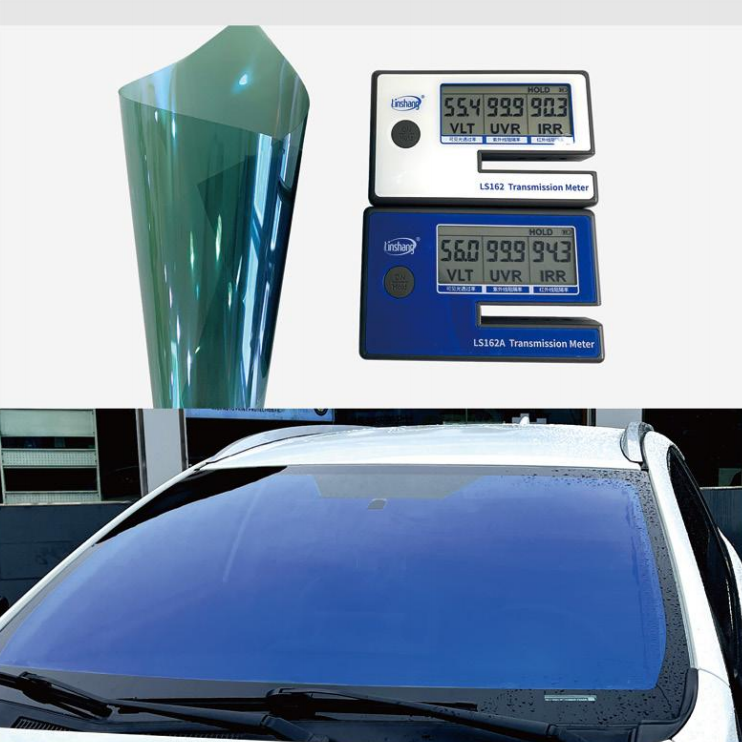
Blue 03
VLT (Visible Light Transmission) 56.0% UVR (UV Rejection) 99.9% IRR (Infrared Rejection) 94.3% Thickness 2 mil Size 1.52m × 30m (60inch × 100ft)
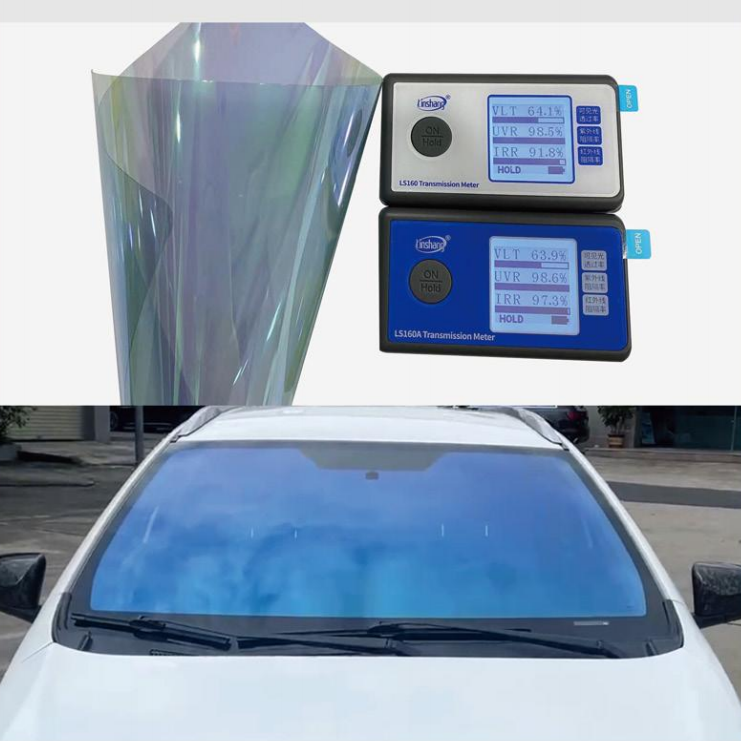
Blue 04
VLT (Visible Light Transmission) 64.1% UVR (UV Rejection) 98.6% IRR (Infrared Rejection) 97.3% Thickness 2 mil Size 1.52m × 30m (60inch × 100ft)
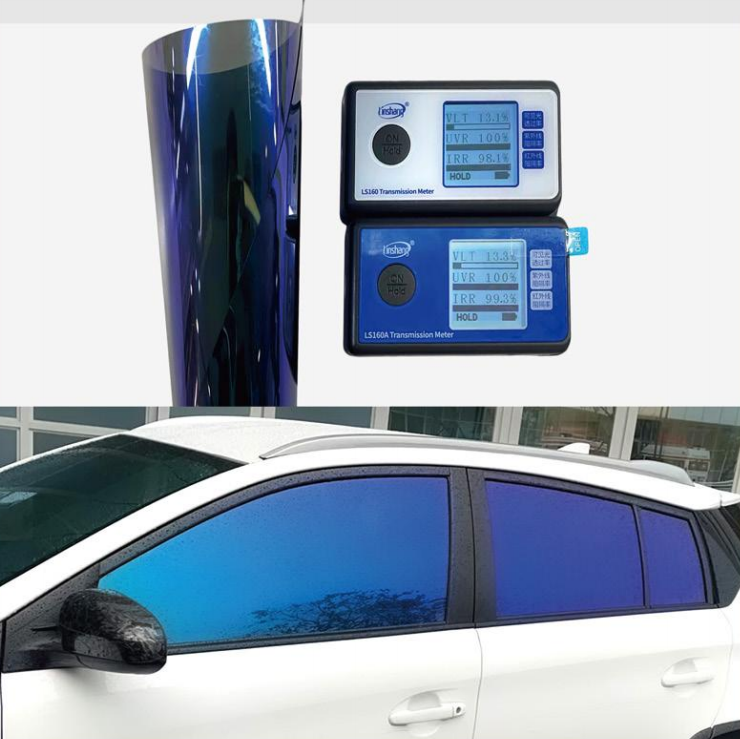
Blue 05
VLT (Visible Light Transmission) 13.3% UVR (UV Rejection) 99.3% IRR (Infrared Rejection) 100% Thickness 2 mil Warranty 3 Years Size 1.52m × 30m (60inch × 100ft)
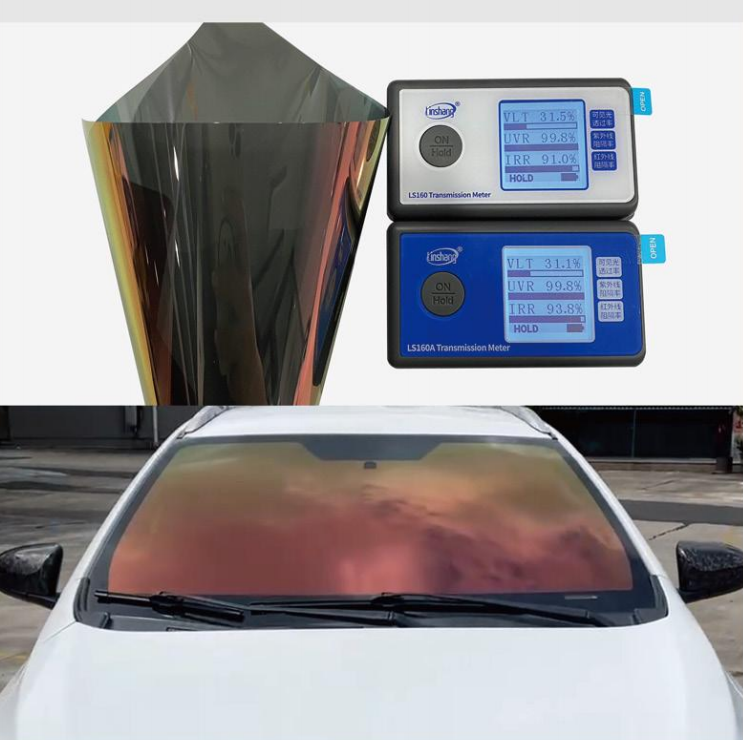
Sunset Orange 01
VLT (Visible Light Transmission) 31.5% UVR (UV Rejection) 99.8% IRR (Infrared Rejection) 93.8% Thickness 2 mil Size 1.52m × 30m (60inch × 100ft)
Specifications
Position: Windshield, Side & Rear Windows
Material: Premium PET
VLT (Visible Light Transmission): 80% – 85%
Thickness: 2 mil
Function: Color Changing, UV Proof, Self Healing, Anti-Scratch, Sand Proof
Color: Sunset Orange, Sunset Red Rose, Pink, Blue, Purple, Green
Adhesive: Self-Adhesive (Easy Application)
Customization: Logo, Packaging, and Graphic Customization Available
Decowell Chameleon Window Film
Elevate Your Ride with Next-Generation Color-Shifting Technology
The Decowell Chameleon Window Film is not just a tint—it’s a statement. Engineered for drivers who demand both striking aesthetics and uncompromised performance, this film combines a mesmerizing color-changing effect with high-tech functionality to protect your vehicle and enhance your driving experience.
Whether you’re looking to give your car a premium, head-turning finish or shield the interior from harmful UV rays, the Decowell Chameleon series delivers on all fronts.
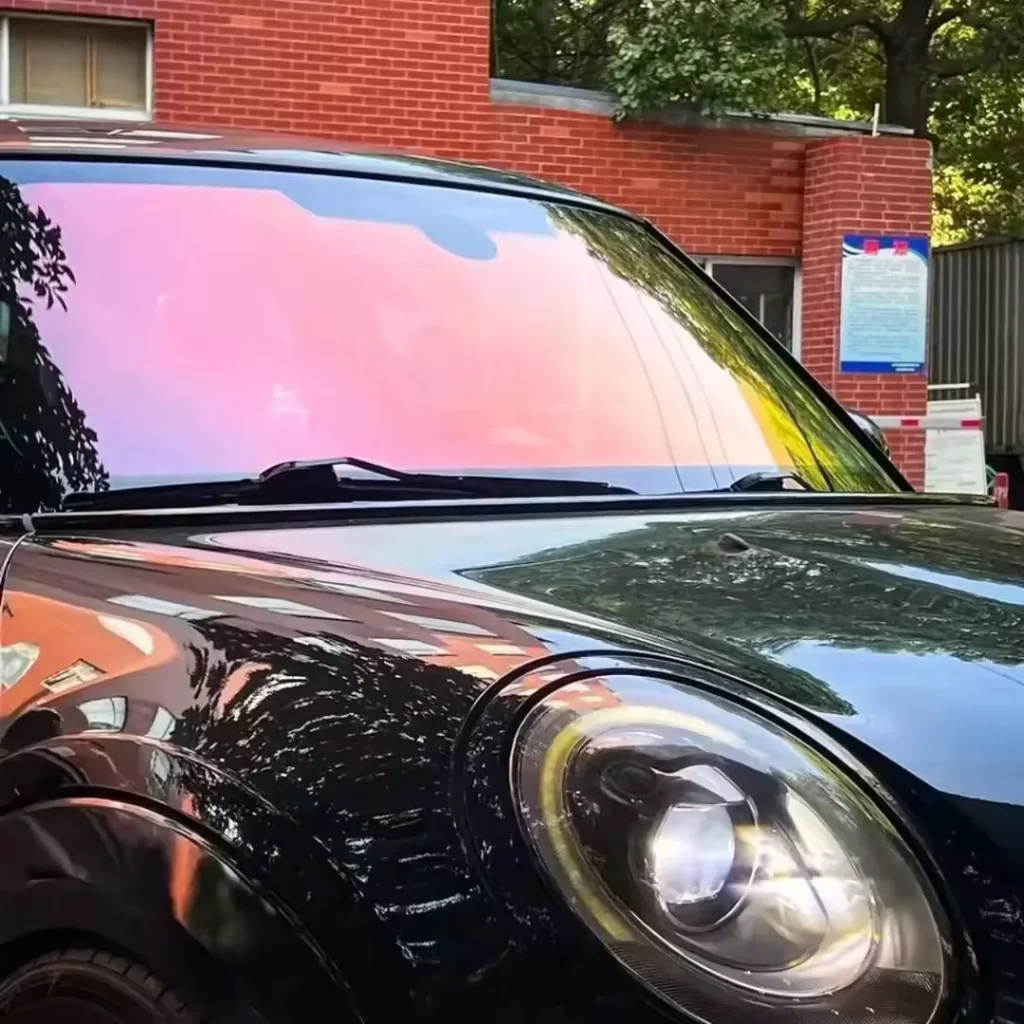
Why Choose Decowell Chameleon Window Film?
🔮 Stunning Color-Shifting Aesthetics
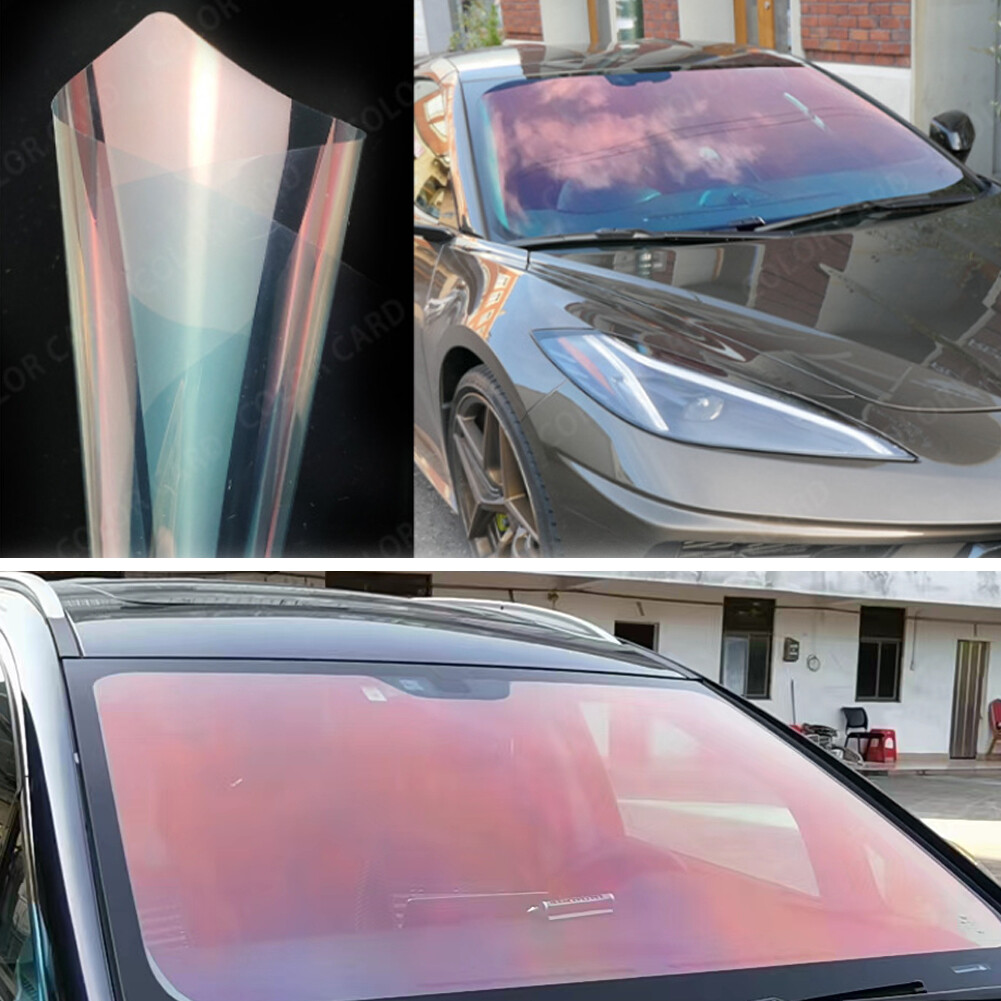
Experience a dynamic visual transformation. The film shifts between brilliant hues depending on the light and viewing angle—offering a spectrum of blue, purple, and green tones that add a unique, high-end character to any vehicle. Perfect for windshields, side windows, and rear glass.
☀️ Superior Heat & UV Rejection
Stay cool and protected. With 80–85% VLT (Visible Light Transmission), this film allows ample natural light to pass through while blocking up to 99% of harmful UV rays. It significantly reduces solar heat buildup, keeping the cabin comfortable and protecting upholstery from fading and cracking.
🛡️ Built to Last
Self-Healing Technology – Minor scratches and swirl marks disappear with exposure to heat, ensuring a flawless finish over time.
Anti-Scratch Coating – Provides an extra layer of durability against daily wear and tear.
Sand & Dust Proof – Ideal for harsh environments, maintaining clarity and appearance.
📡 5G & Signal Friendly
Unlike metallic films that can interfere with GPS, radio, and mobile signals, the Decowell Chameleon Window Film is engineered to be signal-friendly. Stay connected without compromise.
✅ Compliant & Reliable
Manufactured under strict quality control, this film complies with EU standards, ensuring safety, optical clarity, and environmental responsibility.
Applications
Car Enthusiasts looking to personalize their vehicle with a high-end, eye-catching finish.
Fleet Owners & Detailers who need durable, easy-to-install film with consistent quality.
Dealers & Exporters seeking a reliable supplier with flexible customization options and fast lead times.
Frequently Asked Questions (FAQ)
1. What is the difference between Decowell Chameleon Film and regular tint?
Unlike traditional dark tints, this film changes color based on light angle and maintains higher visible light transmission (80–85%), ensuring better visibility at night while still offering UV and heat protection.
2. Does this film interfere with GPS or mobile signals?
No. It is made from non-metallic materials, making it 5G-friendly and safe for use with all electronic devices inside the vehicle.
3. Can I install it myself?
Yes. The film features a self-adhesive backing that allows for bubble-free application. However, professional installation is recommended for the best finish, especially on curved surfaces like windshields.
4. Is it legal for windshield use?
Decowell Chameleon Film with 80–85% VLT is suitable for front windshields in many regions. Always check local regulations regarding tint darkness and reflectivity before installation.
5. Do you offer custom packaging or logo options?
Yes. We offer customized logo printing (min. 1 roll), custom packaging, and graphic customization for bulk orders.
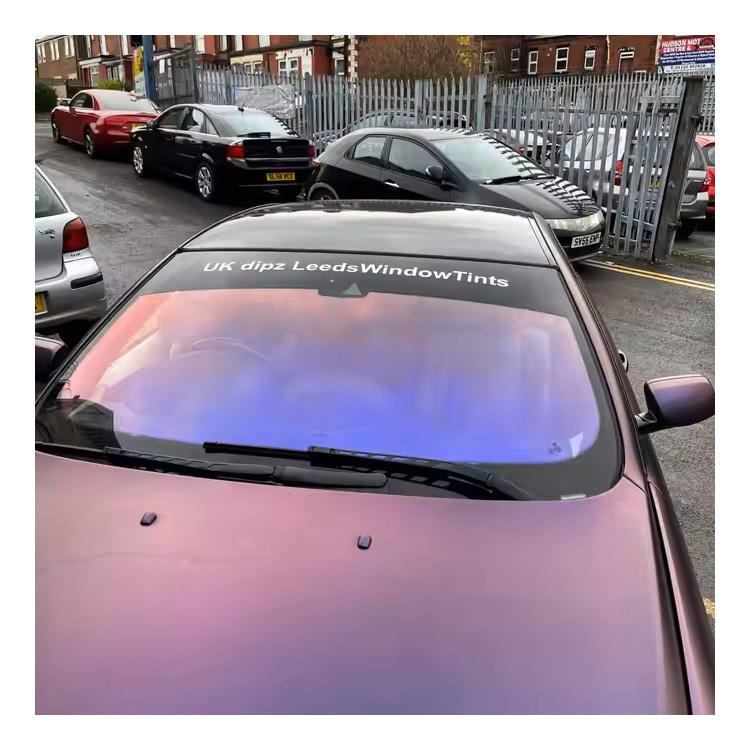
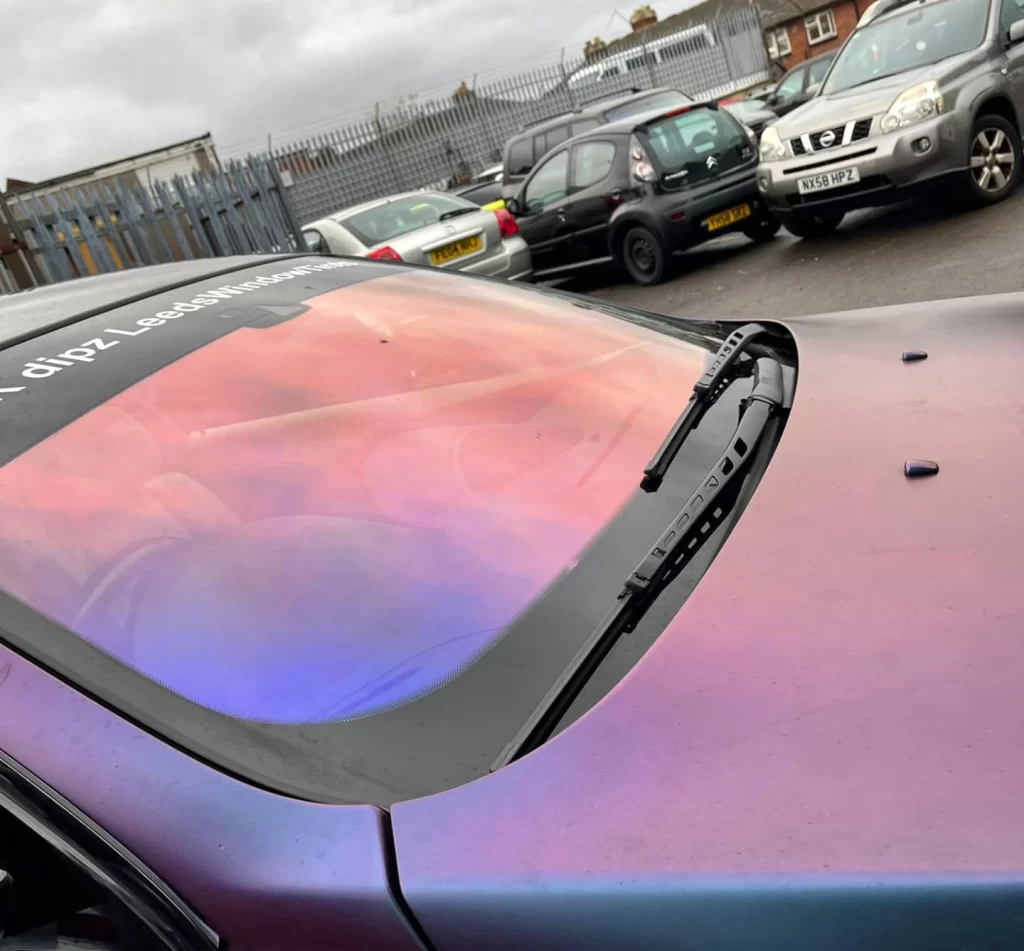
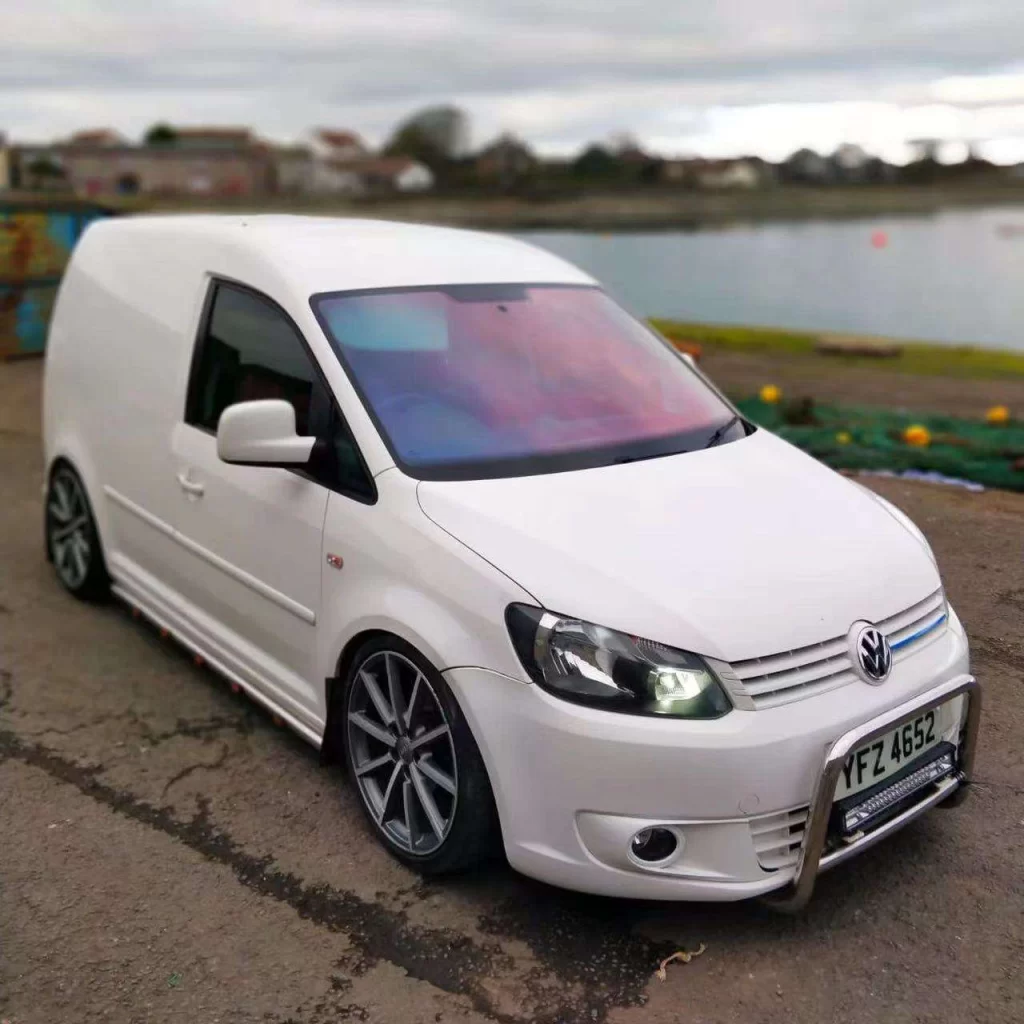
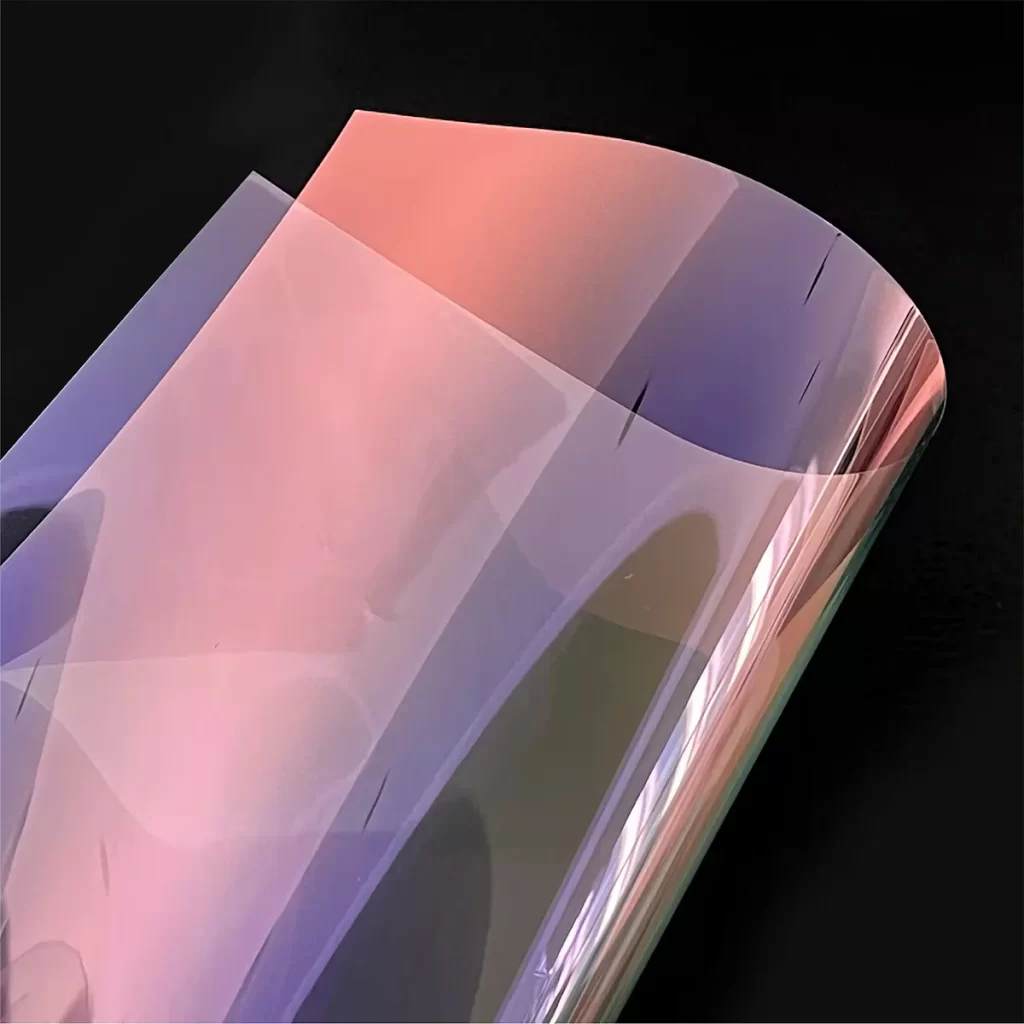
Chameleon Window Film: Color‑Shifting Automotive Tint
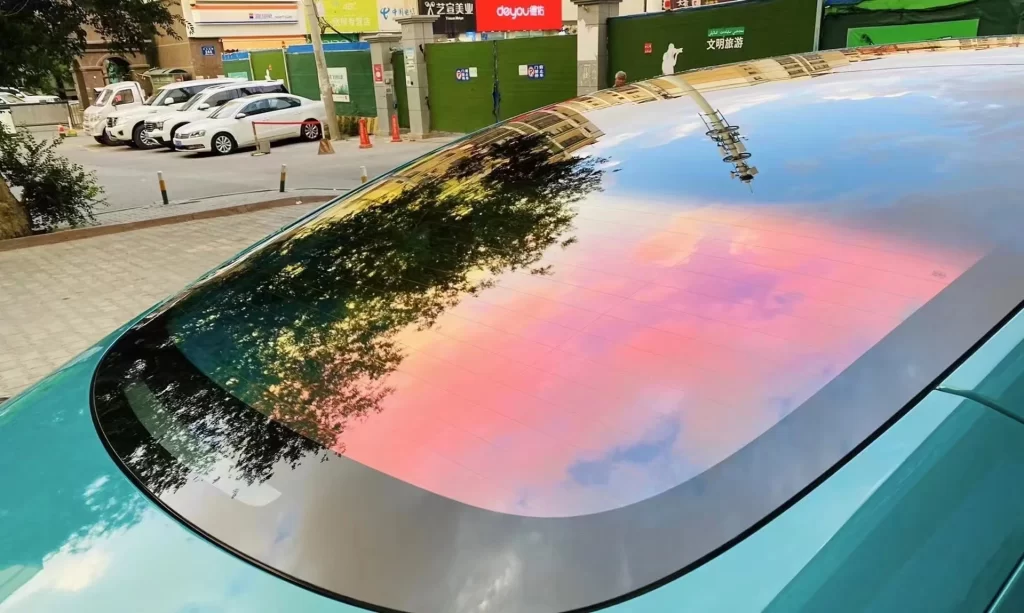
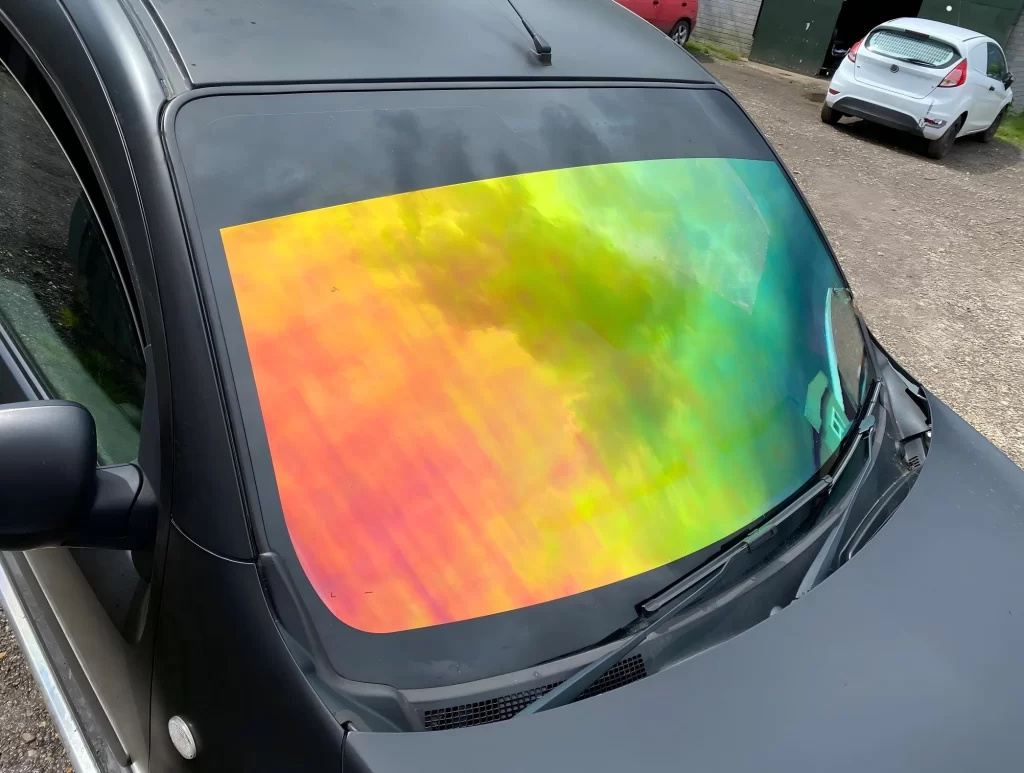
Walking through a parking lot these days, you have probably noticed something different about some cars. Their windows catch the light in a way that does not look like ordinary tint. One moment they shine deep blue, the next they flash purple or red, depending on where you stand. That is not a factory paint option or a trick of the light—it is chameleon window film, and it has quickly become one of the most talked‑about upgrades in the automotive world.
For car owners who want something more than the usual black or smoke tint, chameleon window film offers a completely different experience. It changes color depending on the angle you look at it, the intensity of sunlight, and even the weather conditions surrounding your vehicle [8†L38-L41]. Think of it as a mood ring for your car, but one that also works hard to protect your interior, block heat, and reduce glare.
But there is more to chameleon window film than just the visual wow factor. Some drivers assume it is purely decorative—a flashy accessory that sacrifices performance for looks. The reality is quite different. Modern chameleon window tint is engineered with multi‑layer technology that reflects solar energy, blocks harmful UV radiation, and keeps cabin temperatures down, all while delivering that head‑turning color‑shifting effect [1†L12-L15]. It is style and substance rolled into one film.
This guide walks you through everything you need to know about chameleon window film—how it works, what it protects against, how to install and maintain it, and why it has become one of the fastest‑growing segments of the automotive film market. Whether you are a car owner considering an upgrade or a shop looking to add chameleon window tint to your service lineup, the information here will help you make informed decisions.
What Is Chameleon Window Film and How Does It Work?
At its core, chameleon window film is a high‑performance automotive tint that changes color based on the angle of light and the viewer’s perspective. Unlike traditional window films that offer a static, unchanging shade—usually black, charcoal, or smoke—chameleon window tint creates a dynamic iridescent effect, shifting between multiple hues such as blue, purple, red, green, and even gold depending on lighting conditions and viewing angle [0†L14-L17].
The science behind the effect is surprisingly straightforward. Chameleon window film uses an advanced optical coating with multiple micro‑layers, each designed to reflect and transmit light differently [5†L6-L9]. When sunlight hits the film at different angles, different wavelengths of light bounce back to your eyes, creating the illusion that the color is shifting. This is similar to how a soap bubble displays rainbow colors—different thicknesses in the film’s layers cause light to interfere with itself, producing different visible colors from different angles [8†L38-L41].
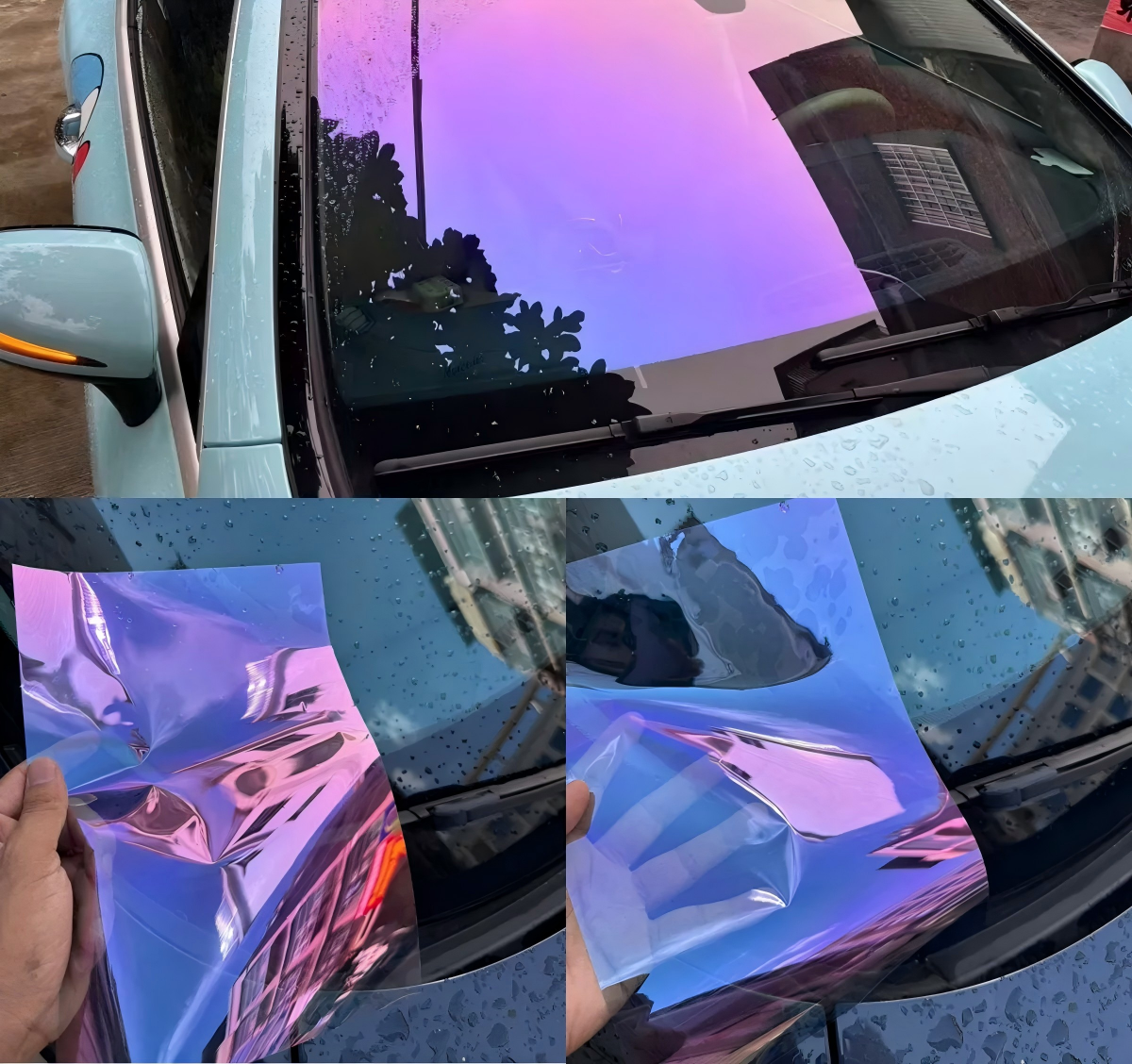
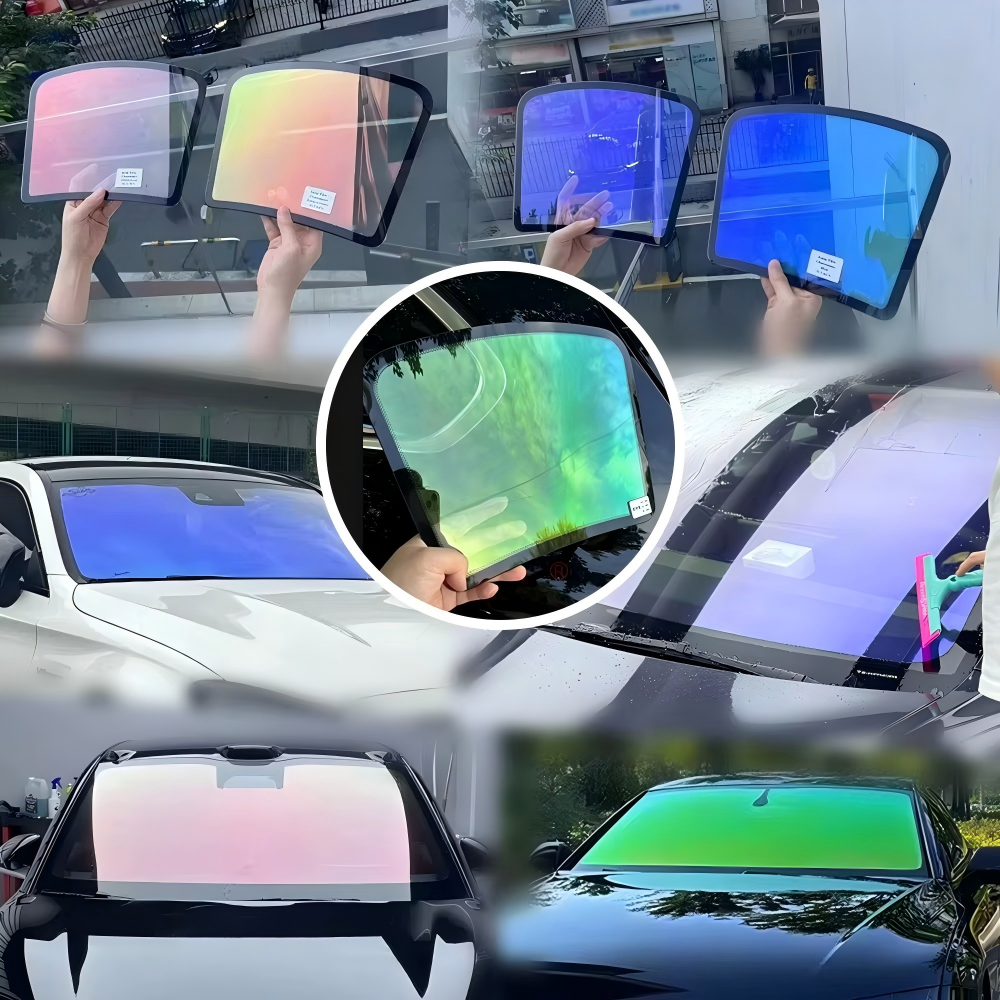
Some variations of chameleon window tint go one step further, incorporating thermochromic or photochromic technology that responds to temperature changes or UV exposure [0†L24-L26]. In simpler terms, the film itself can adjust its shade and color depth based on how warm it gets or how strong the sun is at that moment. No buttons to press, no switches to flip—just smart material science working in the background.
Chameleon window film is typically measured in mils (thousandths of an inch), with automotive grades ranging from 1.8 to 3 mils in thickness [8†L11-L12]. While that might not sound like much, the multi‑layer construction packs a surprising amount of engineering into a very thin sheet. High‑quality chameleon window tint uses polyester (PET) or similar durable substrates, combined with specialized metal or nano‑ceramic particles in the optical coating [1†L31-L36].
One common question is whether chameleon window film affects visibility from the inside. The answer is generally no—good‑quality chameleon tint maintains excellent outward clarity while creating the color‑shifting effect for people looking in [6†L12-L13]. From the driver’s seat, the world outside remains clear and undistorted, with only a slight colored hue at the edges of your vision. You get the style without sacrificing safety.
Benefits of Chameleon Window Tint for Everyday Drivers
UV Protection That Goes Beyond the Surface
The primary job of any window film is protection, and chameleon window film takes this seriously. Premium chameleon window tint blocks up to 99% of harmful UV radiation from reaching the inside of your car [1†L20-L22]. That is not a small number. UV rays are responsible for fading upholstery, cracking leather seats, and causing dashboards to become brittle over time. They also pose a long‑term health risk to anyone who spends hours behind the wheel.
With chameleon window tint installed, your car’s interior stays looking newer for longer. The seats do not fade unevenly. The steering wheel does not develop that sticky, sun‑damaged texture. And you can drive with the windows up on sunny days without worrying about what those UV rays are doing to your skin or your passengers’ skin [1†L33-L36]. It is protection that works every single time the sun comes out.
Heat Rejection for Hot Climates
If you have ever climbed into a car that has been parked in direct summer sun for a few hours, you know exactly how uncomfortable that blast of trapped heat can be. Chameleon window film helps solve this problem through effective infrared heat rejection. High‑quality chameleon tint blocks a significant percentage of solar heat from entering the cabin [10†L7-L9].
What does that mean in real terms? On a hot day, your air conditioning does not have to work nearly as hard to keep the interior comfortable. The car cools down faster when you first get in, and it stays cooler while you drive. Over time, that means less fuel burned running the AC and a more comfortable driving experience overall [1†L8-L9].
Glare Reduction for Safer Driving
Glare from the sun and from oncoming headlights is more than just annoying—it is a genuine safety hazard. Chameleon window film reduces glare by cutting down the amount of intense light that reaches your eyes [1†L13-L15]. This makes a noticeable difference during sunrise and sunset commutes, when the sun sits low on the horizon and seems to aim straight at your windshield. It also helps at night, reducing the harshness of high‑beam headlights from oncoming traffic. Less eye strain means a more relaxed, safer drive.
Privacy Without Compromising Style
Traditional dark tints give you privacy, but they often come with trade‑offs—reduced visibility at night, a somewhat generic appearance, and potential legal issues if they go too dark. Chameleon window film offers a different kind of privacy. The color‑shifting effect naturally reduces how easily people can see into your vehicle from the outside, without needing extremely low VLT (Visible Light Transmission) levels [1†L39-L41]. You get the seclusion you want and the visual character you did not know you needed.
A Look That Stands Out
Beyond all the functional benefits, chameleon window film simply looks different from anything else on the road. The color‑shifting effect changes throughout the day—morning light might emphasize blues, afternoon sun might bring out purples, and overcast skies could reveal green or gold tones [5†L28-L30]. No two lighting conditions show the film the same way. For car owners who enjoy personalizing their vehicles, chameleon window tint offers a level of visual interest that a standard black tint simply cannot match [6†L6-L8].
Chameleon Window Film vs. Ceramic Tint – What Is the Difference?
This comparison comes up frequently, and it is worth understanding because the two products serve different priorities. Chameleon window film and ceramic tint both offer UV protection and heat rejection, but they excel in different areas.
Chameleon window film is built around an optical coating that creates the signature color‑shifting effect while still blocking heat and UV radiation [5†L6-L9]. It prioritizes visual customization alongside performance. The chameleon window tint gives you a unique appearance that changes with the light, something no other type of film can replicate.
Ceramic tint, by contrast, focuses purely on thermal performance. It uses non‑metallic ceramic particles to block infrared heat without interfering with electronic signals like GPS or cell reception [5†L16-L19]. It typically comes in traditional dark shades rather than color‑shifting options.
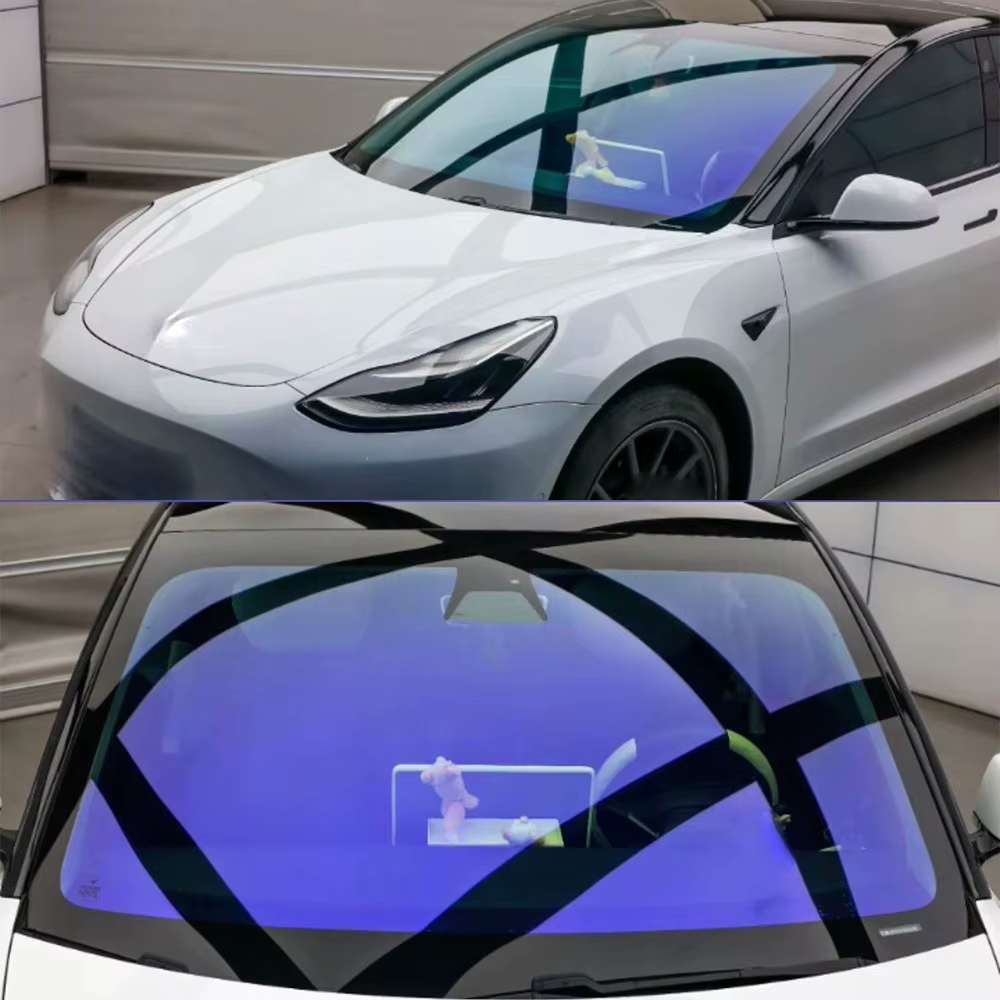
So which one is right for you? If your priority is maximum heat rejection and you prefer a traditional dark look, ceramic tint is a solid choice. If you want a film that performs well thermally but also transforms your car’s appearance with that shifting color effect, chameleon window film is the answer. The good news is that you do not have to choose exclusively—many car owners install chameleon window tint on side and rear windows for the visual impact, while using a clear or light ceramic film on the windshield to combine the best of both worlds.
Installation Considerations for Chameleon Window Film
Why Professional Installation Matters
Chameleon window film is not the easiest film to install. It requires more precision than standard window film because of its layered, reflective surface—any wrinkles, bubbles, or trapped dust will be far more visible than they would be on a solid dark tint [8†L22-L24]. The multi‑layer construction that gives chameleon window tint its color‑shifting properties also makes it less forgiving during application.
For this reason, professional installation is strongly recommended, especially for full‑vehicle applications. Professional installers work in clean, dust‑controlled environments. They understand how to manage the film around complex curves and tight edges. They use the right amount of heat and the correct squeegee techniques to push out air bubbles and ensure a smooth, bubble‑free finish [2†L47-L50].
That said, chameleon window film is available in DIY rolls for smaller applications like side windows or partial coverage. If you choose the DIY route, patience and attention to detail are your best tools.
The Basic Installation Process
The installation process for chameleon window film follows the same general steps as any automotive window tint, but with extra care needed at each stage.
Preparation comes first. The window must be spotless—no dust, no lint, no residue. Installers use a razor blade scraper to remove any stuck‑on debris, then clean the surface thoroughly with a lint‑free cloth.
The slip solution is mixed. A spray bottle is filled with distilled water and a few drops of baby shampoo or a dedicated slip solution. This liquid allows the film to glide across the glass during positioning before the adhesive locks down [2†L6-L10].
The film is cut and positioned. Chameleon window film is cut slightly oversized, then sprayed with slip solution on the adhesive side. The window glass gets sprayed as well. The film is carefully placed adhesive‑side down, starting from the top edge and working downward.
Squeegeeing removes water and air. Using a hard card or soft squeegee, the installer pushes slip solution and air bubbles from the center out toward the edges. Firm, even strokes are essential—too much pressure can crease the film, while too little leaves bubbles behind [2†L47-L50].
Edges are trimmed and sealed. Excess film is trimmed away with a precision knife, leaving a small gap from the window edge to prevent peeling. The installer runs a heat gun along the edges to activate the adhesive and lock the film in place.
Curing takes time. After installation, chameleon window film needs time to cure fully—usually 24 to 48 hours. During this period, the film should not be cleaned, and windows should not be rolled down.
Maintaining Your Chameleon Window Film
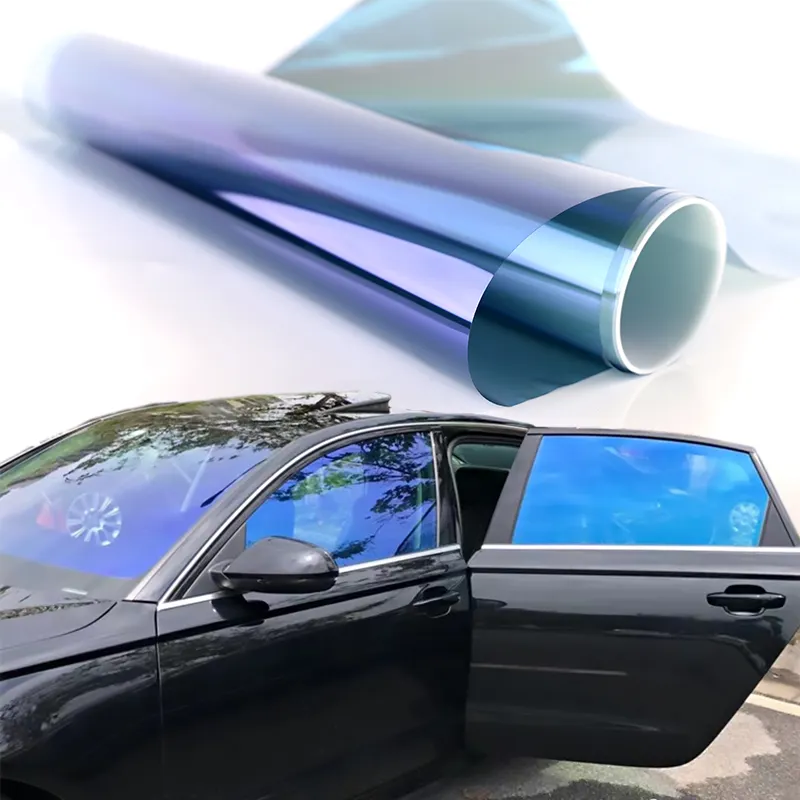
One of the best things about chameleon window film is that it does not require special maintenance routines. A few simple habits keep the film looking great and performing well for years.
Washing Guidelines
Use gentle cleaning solutions. A mixture of water with a few drops of mild dishwashing detergent works well for routine cleaning. Isopropyl alcohol can be used for tougher spots, but avoid it as a daily cleaner [3†L27-L29].
Stick to soft materials. Microfiber cloths are ideal—they are soft, lint‑free, and gentle on the film’s surface. Never use brushes, abrasive sponges, or harsh scrub pads on chameleon window tint [3†L5-L8].
Avoid ammonia‑based cleaners. Household glass cleaners often contain ammonia, which can damage window films over time. Stick to pH‑neutral or film‑safe cleaning products [3†L8].
Skip the automatic car wash. The spinning brushes in tunnel washes can scratch and abrade chameleon window film. Hand washing or touchless car washes are much safer options.
Handling Contaminants
Bird droppings, tree sap, and bug splatter should be cleaned off as soon as possible. Even with a protective top coat, leaving acidic contaminants on the surface for extended periods can cause staining or etching. A quick wipe with a damp microfiber cloth and mild soap solution is usually all it takes.
Avoiding Physical Damage
Edges are the most vulnerable part of any window tint installation. Be mindful when cleaning around window frames—do not let squeegees or cloths catch the film edge and peel it back. Also avoid placing stickers or adhesives directly on chameleon window film [2†L14-L15]. If you need to remove something stuck to the film, do it carefully to avoid tearing.
Legal Considerations for Chameleon Window Film in the US
The legal status of chameleon window film depends on where you drive. The film itself is generally legal, but there are specific rules about how dark it can be and how reflective it can appear [4†L6-L8].
Understanding VLT (Visible Light Transmission)
Every state regulates window tint based on VLT percentage—the amount of light that must pass through your windows (glass plus film). For example, if a state says the limit is 35% VLT, your windows must allow at least 35% of light to pass through. Anything darker is illegal [4†L35-L37].
Front side windows typically have the strictest limits. Most states require 35% to 70% VLT on front windows [4†L30-L33]. A few states, like California and New York, have higher minimums, meaning the tint cannot be too dark.
Rear windows and rear windshields generally offer more flexibility. Many states allow darker tints on rear glass, sometimes as low as 15% VLT or even no restriction for SUVs and vans [4†L26-L28].
The windshield is the most restricted area. In most states, only the top strip (often called the “AS‑1 line”) can be tinted. Full‑windshield chameleon window film is not legal in many jurisdictions, so check local regulations before applying any film to the front glass [4†L8-L11].
Reflective Tint Rules
Some states have additional restrictions on reflective or mirrored finishes—and chameleon window film can sometimes fall into this category because of its shiny, iridescent appearance. Approximately half of US states prohibit reflective window tints altogether, while the other half have specific limits on reflectivity levels [4†L7-L11]. States with reflective tint restrictions include California, Alaska, Hawaii, Colorado, Maine, Illinois, and Iowa [4†L9-L11].
How to Stay Legal
If you are considering chameleon window film, take these steps before installation:
Research your state’s tint laws. Look up the specific VLT requirements for front side windows, rear windows, and the windshield. Regulations vary significantly from state to state.
Choose an appropriate VLT level. Chameleon window film is available in various VLT options, from lighter 85% films suitable for front windows to darker options for rear glass [10†L33-L35]. Selecting the right VLT helps ensure compliance.
Consider a lighter film for front windows. A chameleon window tint with 70% or higher VLT typically meets front‑window requirements in most states [4†L30-L31].
Consult a professional installer. Reputable installers know local regulations and can recommend compliant chameleon window film options for your vehicle.
Ignoring tint laws can lead to fines, failed vehicle inspections, and—in some cases—orders to remove the film at your own expense. A little research upfront saves a lot of headache later.
The Growing Popularity of Chameleon Window Film
The demand for chameleon window film has grown significantly in recent years, and the numbers back up what the market is showing. The global chameleon wrap film market—which includes chameleon window tint and related products—was valued at approximately 1.2billionin2024andisprojectedtoreacharound1.2billionin2024andisprojectedtoreacharound2.8 billion by 2033, growing at nearly 10% annually [7†L18-L20].
Several factors are driving this growth. Car owners are increasingly looking for ways to personalize their vehicles without making permanent changes. Chameleon window film offers a removable, reversible upgrade that transforms the car’s appearance while adding functional benefits like UV protection and heat rejection [7†L6-L8].
The rise of social media and automotive content has also played a role. Eye‑catching builds get attention online, and chameleon window film photographs well in a variety of lighting conditions. As more enthusiasts share photos and videos of their chameleon‑tinted cars, interest continues to spread.
For shop owners and installers, adding chameleon window film to their service menu represents a smart business move. Customers are actively seeking out this product, and offering high‑quality chameleon window tint can differentiate a shop from competitors still only stocking traditional dark films. Bulk orders of chameleon window film have also been picking up, indicating growing wholesale demand [7†L5-L6].
Decowell – Quality Chameleon Window Film for the Global Market
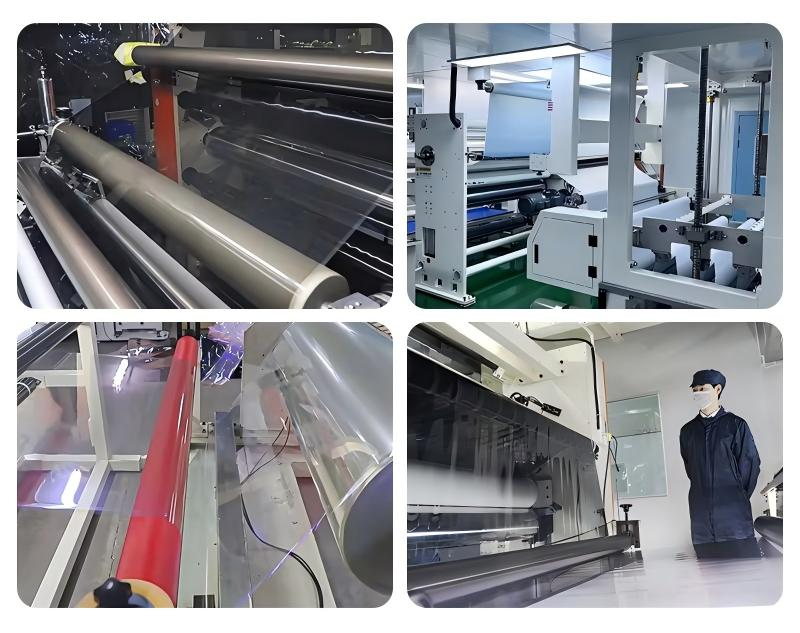
When it comes to chameleon window film, quality matters significantly more than with traditional tints. The color‑shifting effect relies on precise layer construction—any inconsistency in manufacturing will show up as uneven color, patchiness, or premature fading.
Decowell understands this, which is why their chameleon window film products are engineered with attention to detail at every stage of production. Using advanced materials and precision manufacturing techniques, Decowell produces chameleon window tint that delivers:
Consistent color‑shifting effect across every roll, ensuring uniform appearance on all windows
Effective UV protection to guard interiors and passengers from sun damage
Reliable heat rejection that keeps cabins cooler in warm climates
Durable construction that resists fading, peeling, and bubbling over time
Multiple VLT options to help meet legal requirements in different regions
Easy handling for professional installation with predictable shrinkage and adhesive behavior
For car owners looking to upgrade their vehicles with chameleon window film, Decowell offers the performance you expect from premium window film combined with the visual impact you are looking for. The color‑shifting effect transforms ordinary windows into a conversation piece, while the protective properties work silently in the background day after day.
Decowell – premium chameleon window film for drivers who want their vehicles to stand out without sacrificing performance. Whether you are outfitting a sports car, luxury sedan, SUV, or daily driver, Decowell delivers chameleon window tint that performs as impressively as it looks.
Frequently Asked Questions About Chameleon Window Film
What is chameleon window film exactly?
Chameleon window film is an automotive window tint that changes color depending on the viewing angle, lighting conditions, and surrounding environment. It uses multi‑layer optical coating technology to create a shifting, iridescent effect while simultaneously providing UV protection, heat rejection, and glare reduction.
Is chameleon window film legal in the United States?
Chameleon window film is generally legal, but specific regulations vary by state. The legality depends primarily on the VLT (Visible Light Transmission) percentage and whether the film is considered reflective. Some states prohibit reflective tints altogether, while others allow them within specific limits. Research your state’s tint laws before installation, or consult a professional installer familiar with local regulations.
Does chameleon window tint block UV rays?
Yes, quality chameleon window film blocks up to 99% of harmful UV radiation. This protects both vehicle occupants and interior materials from sun damage, including fading upholstery and cracking dashboards.
Can chameleon window film be installed on any car?
Chameleon window film can be installed on most vehicles with standard automotive glass. Professional installation is recommended for best results, especially on curved glass and vehicles with complex window shapes. DIY installation is possible for smaller applications but requires careful technique.
How does chameleon window film differ from ceramic tint?
Chameleon window film is built around a color‑shifting optical coating that creates a dynamic appearance while still providing UV and heat protection. Ceramic tint focuses purely on thermal performance and comes in traditional dark shades rather than color‑changing options. Some drivers use both—chameleon film for side and rear windows, ceramic film for the windshield.
Does chameleon window tint affect visibility from inside the car?
No. Quality chameleon window film maintains excellent outward clarity. From the driver’s seat, the view remains clear and undistorted, with only a minor colored hue visible at certain angles. The color‑shifting effect is primarily visible from outside the vehicle.
How long does chameleon window film last?
High‑quality chameleon window film can maintain its appearance and performance for many years with proper installation and care. Factors affecting longevity include film quality, climate conditions, sun exposure, and maintenance habits.
What is the best way to maintain chameleon window film?
Maintain chameleon window film by washing with a mild soap solution and a soft microfiber cloth. Avoid ammonia‑based cleaners, abrasive sponges, and automatic car washes with spinning brushes. Clean off bird droppings and tree sap promptly. For the first 48 hours after installation, avoid cleaning or rolling down windows to allow the film to cure properly.
Can chameleon window tint be removed later?
Yes, chameleon window film can be professionally removed without damaging the underlying glass. Removal typically involves applying heat to soften the adhesive, then carefully peeling the film away. Professional removal is recommended to avoid adhesive residue or surface scratches.