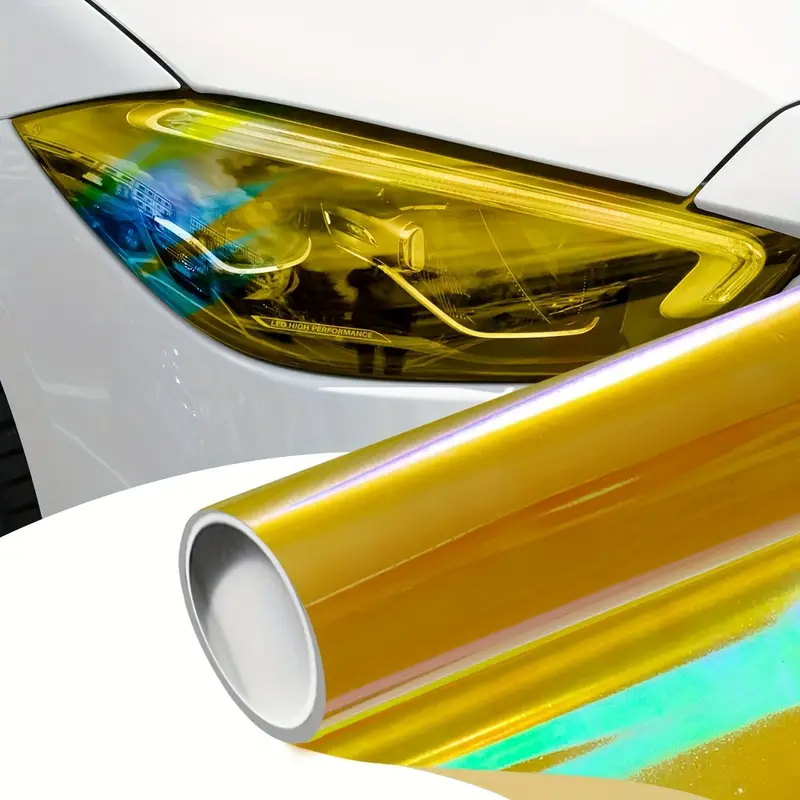
Decowell TPU Car Headlight Film: The Most Comprehensive and Cost-Effective Car Film in China
20+ Years Professional Expertise | Professional Automotive Film Manufacturer | Full-Solution Provider (PPF, Window Film, Wrap Film) | 2000+ Certified Installers | From R&D to Production | High-Cost-Effective Premium Films | Ample Stock | Professional Team | Serving 40+ Countries | Reliable Logistics
Product Categories
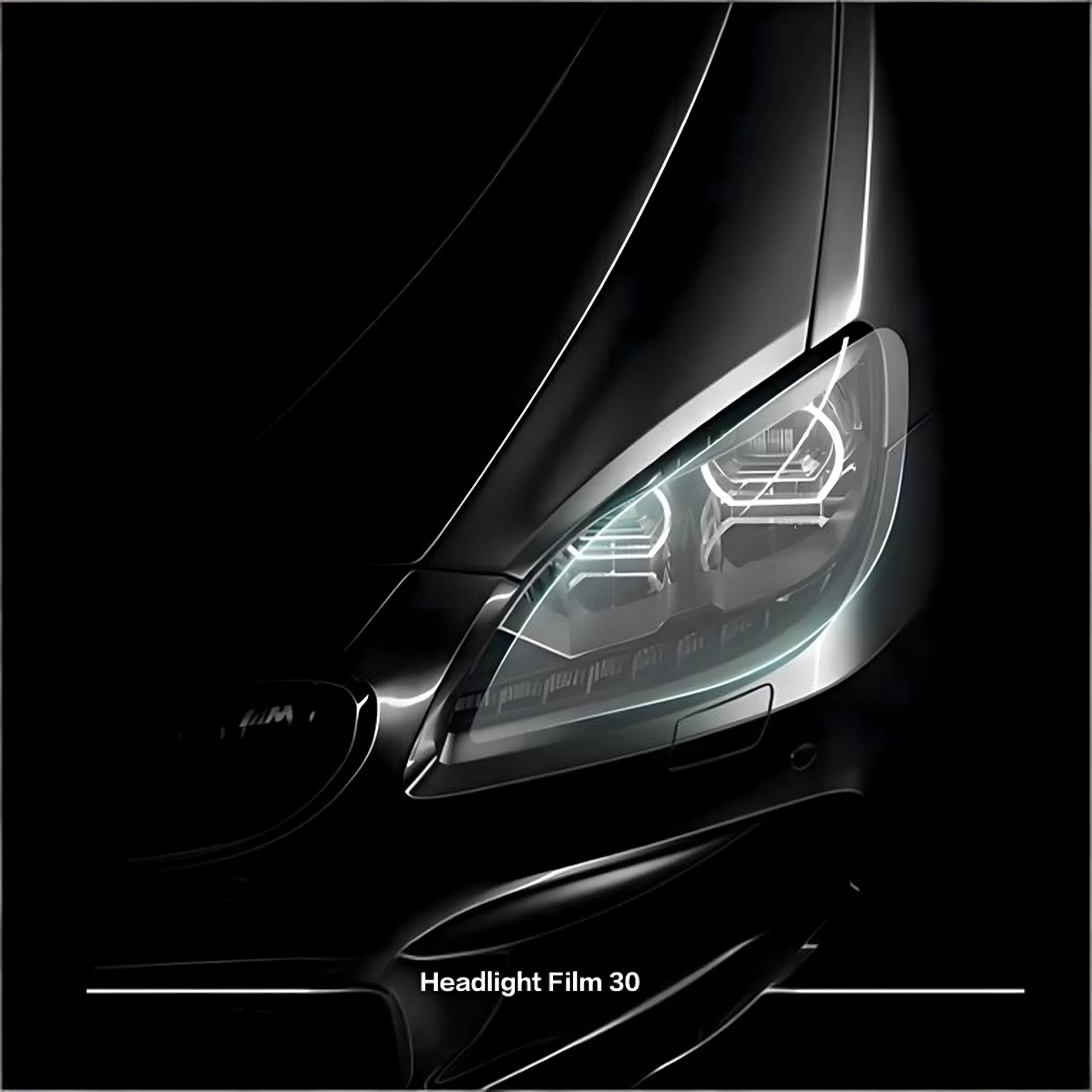
Total thickness (Coating+TPU+PSA): 8 Mil
Gloss: 92.4
VLT: 30%
Elongation at break: 320%
Hydrophobic property: R9 – R10
Heat self-healing: 100%
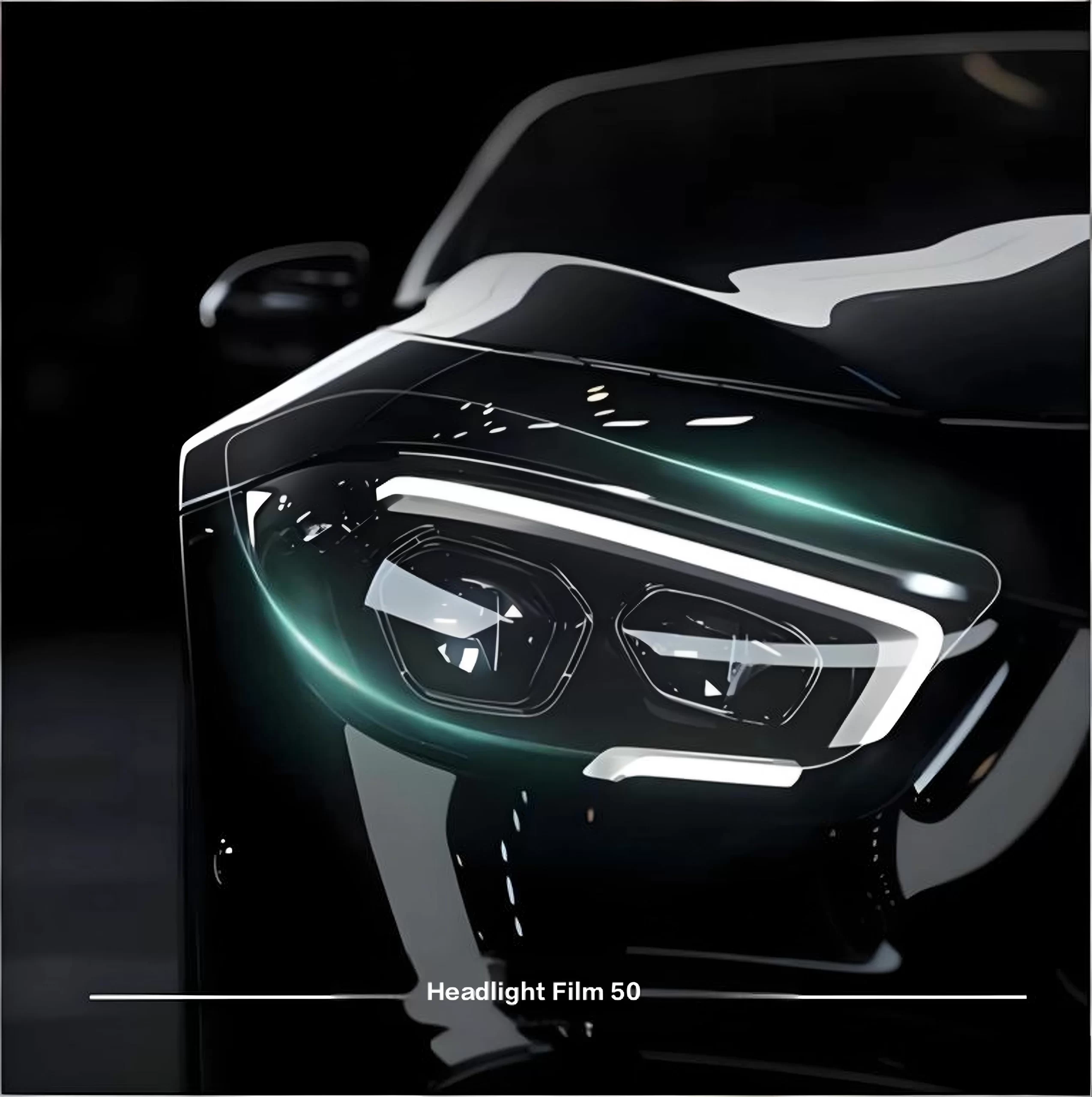
Total thickness (Coating+TPU+PSA): 8 Mil
Gloss: 92.6
VLT: 50%
Elongation at break: 353%
Hydrophobic property: R9 – R10
Heat self-healing: 100%
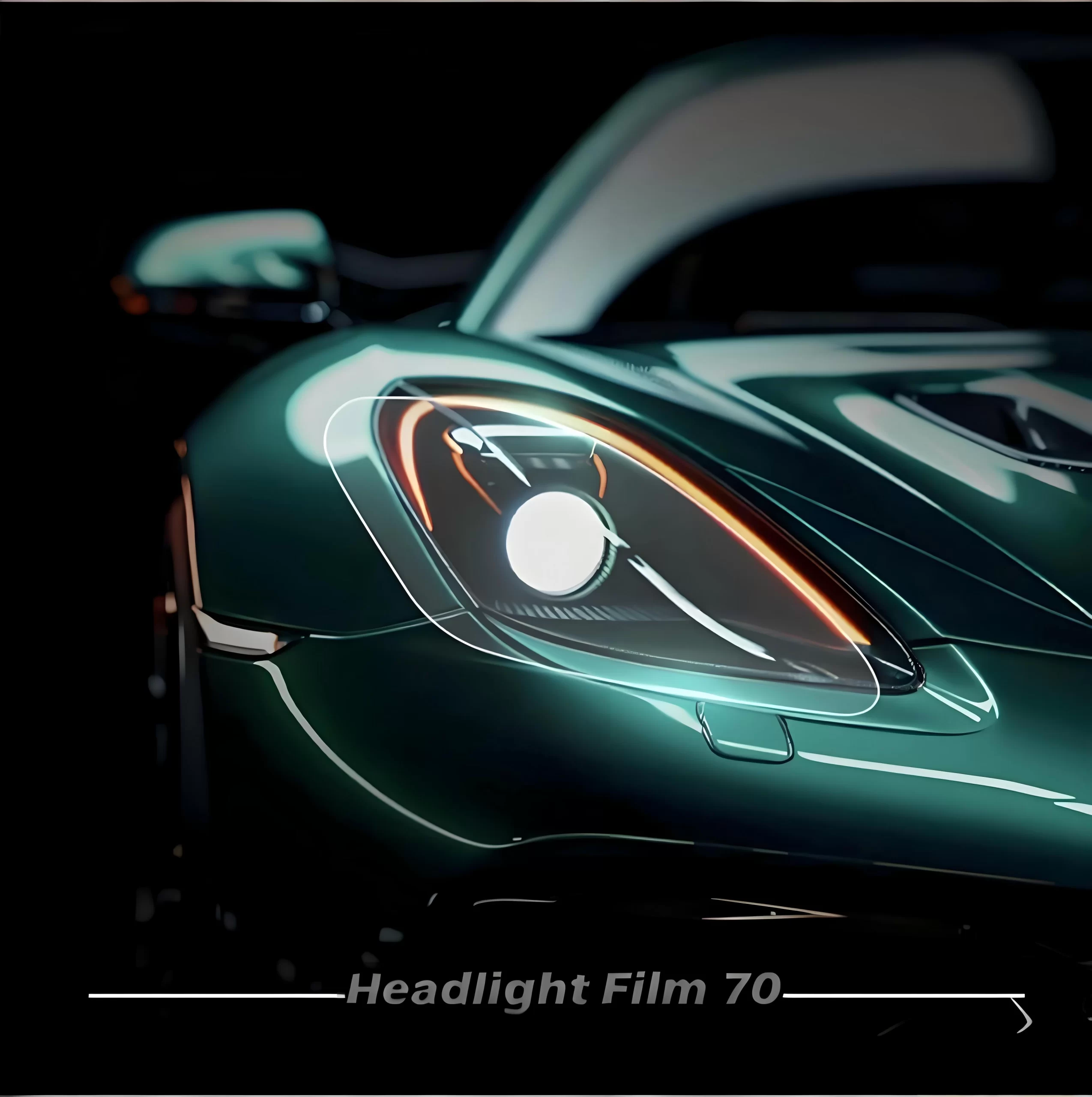
Total thickness (Coating+TPU+PSA): 8 Mil
Gloss: 92.6
VLT: 50%
Elongation at break: 353%
Hydrophobic property: R9 – R10
Heat self-healing: 100%
Car Headlight Film: Protection, Style, and Clarity
Introduction: Why Your Headlights Deserve Better
Let’s be honest—headlights don’t get the respect they deserve. They sit there, mile after mile, taking hits from gravel, baking under UV rays, and getting caked with bug guts and road grime. And what happens? That crystal-clear lens turns yellow, gets pitted, and starts looking like it belongs on a car twice its age.
Here’s the thing modern headlights aren’t cheap. We’re talking polycarbonate lenses with integrated LEDs, sensors, and complex housings that can cost anywhere from $500 to $2,500 per assembly to replace . That’s not pocket change.
Enter car headlight film. Whether you call it headlight tint, headlight protection film, or headlight wrap, this simple upgrade does two things really well: it protects your investment and transforms your ride’s appearance. And the best part? You don’t need a shop to do it.
This guide covers everything—materials, installation, legality, maintenance, and how to choose the right film for your car. By the end, you’ll know exactly what to look for. And when you’re ready for premium protection, Decowell’s TPU Headlight Film delivers the quality your vehicle deserves.
What Is Car Headlight Film?
Car headlight film is a thin, durable layer applied directly to your headlight lenses. Think of it as a sacrificial barrier—the film takes the abuse so your actual headlights don’t have to .
Modern headlights are typically made from polycarbonate, a lightweight plastic that gives designers incredible freedom but comes with a downside: it’s vulnerable to UV damage, scratching, and chemical attack . Without protection, polycarbonate lenses oxidize, turning that ugly yellow color that makes even a new car look old .
Headlight film blocks UV rays, absorbs impact from road debris, and preserves clarity for years. When the film gets worn, you replace it—much cheaper than replacing the whole headlight assembly.
What headlight film does:
Creates a protective barrier against rock chips, sand, and road salt
Blocks 99% of UV rays that cause yellowing and hazing
Reduces glare from oncoming traffic
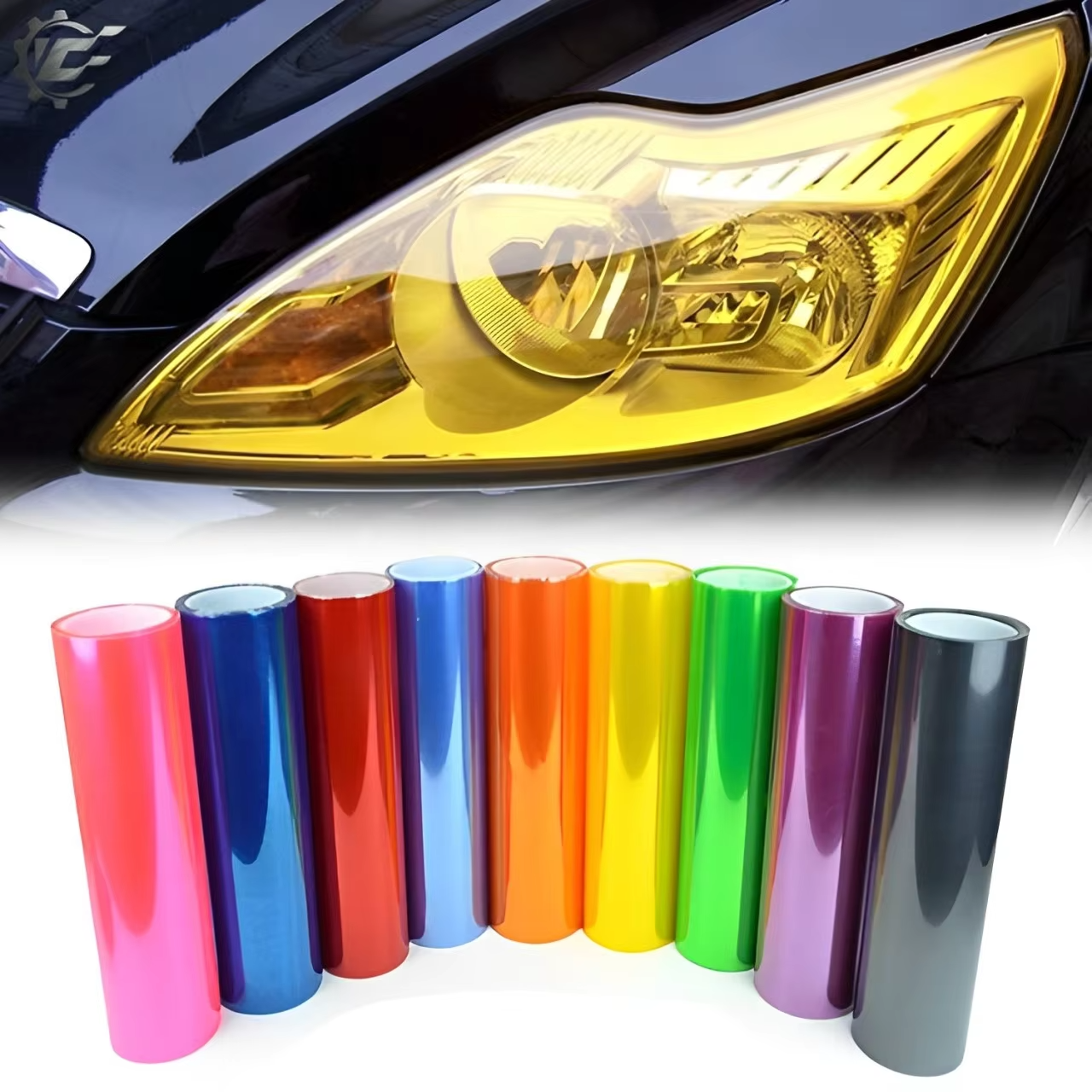
Enhances appearance with various tint options
Preserves headlight clarity and light output
Adds resale value by keeping original lenses pristine
Headlight Film Materials: TPU vs. Vinyl vs. PVC
Not all headlight films are created equal. The material makes all the difference in durability, clarity, and performance.
TPU (Thermoplastic Polyurethane)
TPU is the premium choice—and for good reason. It’s the same material used in high-end paint protection film (PPF) for supercars .
What makes TPU special:
Self-healing properties: Minor scratches disappear with heat exposure—from sunlight, warm water, or a heat gun
Exceptional flexibility: Conforms to complex curves without cracking
UV resistance: Maintains clarity for 5–10 years
Impact absorption: Thicker construction (typically 6–8 mil) handles rock chips better
Temperature tolerance: Performs from -40°C to 100°C in premium grades
TPU films cost more upfront but deliver long-term value. They’re ideal for daily drivers, premium vehicles, and anyone planning to keep their car for years.
Vinyl
Vinyl is the most common and affordable option. It’s flexible, comes in countless colors, and installs easily .
Vinyl characteristics:
Lifespan: 2–5 years typically
Cost: Significantly cheaper than TPU
Scratch resistance: Moderate—no self-healing properties
UV resistance: Good quality vinyl resists yellowing, but cheaper grades may fade
Vinyl works well for budget-conscious projects, temporary color changes, or vehicles that aren’t daily drivers.
PVC
PVC films offer decent durability at moderate cost. Some premium PVC films, like XPEL’s 30-mil option, feature scratch-resistant polyurethane coatings for enhanced protection .
PVC considerations:
Durability: Better than basic vinyl, not as good as TPU
Clarity: Good optical properties when properly manufactured
Conformability: Requires heat for complex curves
Material Comparison
| Feature | Standard Vinyl | Premium PVC | TPU (Self-Healing) |
|---|---|---|---|
| Lifespan | 2–3 years | 3–5 years | 5–10 years |
| Scratch Resistance | Moderate | Good | Excellent (self-healing) |
| UV Protection | Moderate | Good | Excellent |
| Flexibility | Good | Good | Excellent |
| Cost | $ | $$ | $$$ |
| Best For | Budget builds, temporary looks | Daily drivers | Long-term protection, premium vehicles |
Types of Headlight Film by Appearance
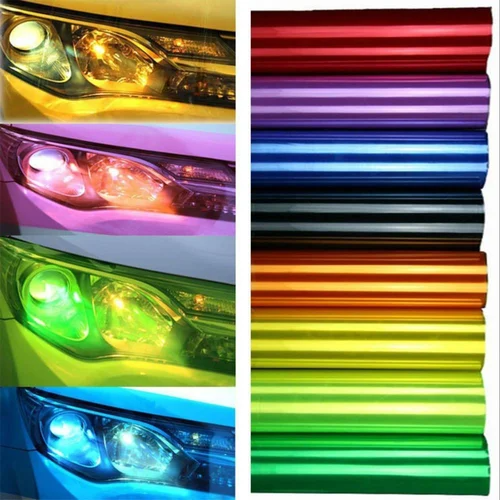
Clear Protection Film
Invisible protection that preserves factory appearance. Ideal if you want defense without changing your car’s look . Clear film maintains 100% light output and is legal everywhere.
Smoked Tint
From light smoke to deep black, smoked films add a sleek, aggressive appearance. Light smoke (70–80% VLT) maintains good visibility; darker shades may reduce light output . Popular on sports cars, trucks, and custom builds.
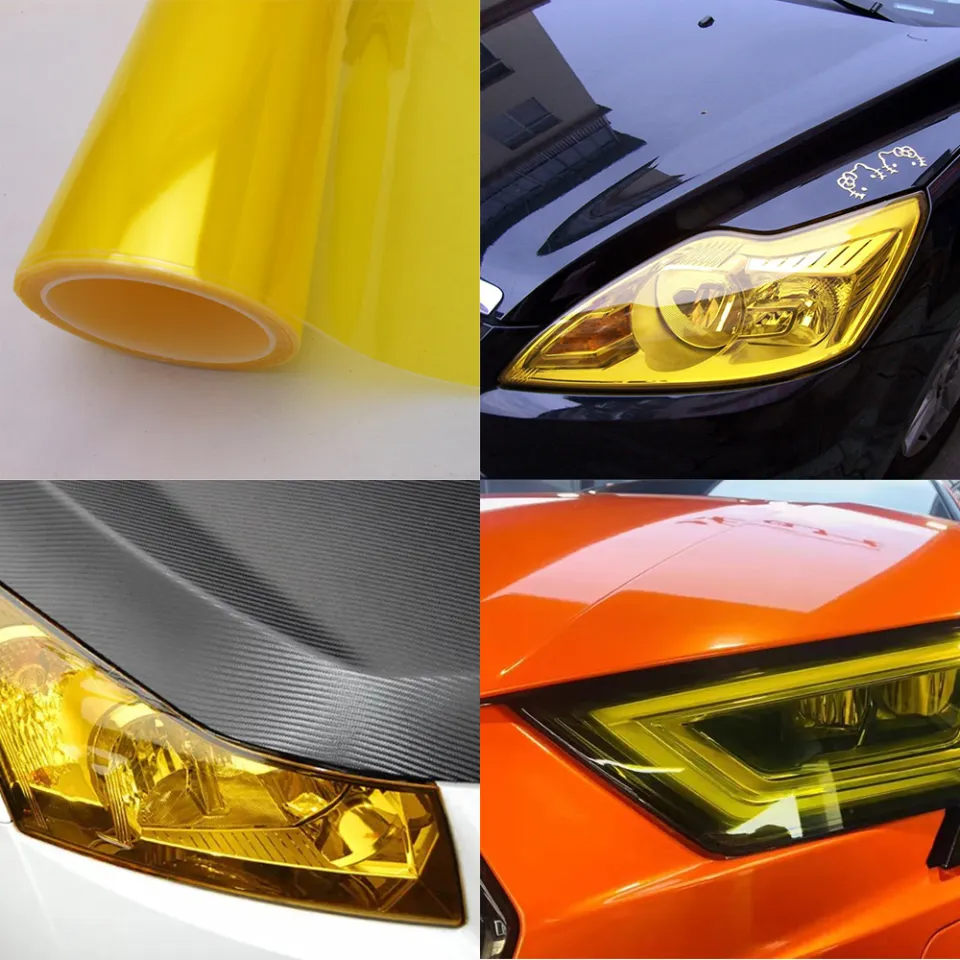
Yellow Film
Inspired by endurance racing, yellow film improves contrast in foggy or low-light conditions. Often called “fog light style” tint, it adds character while serving a functional purpose . Perfect for rally-inspired builds and performance vehicles.
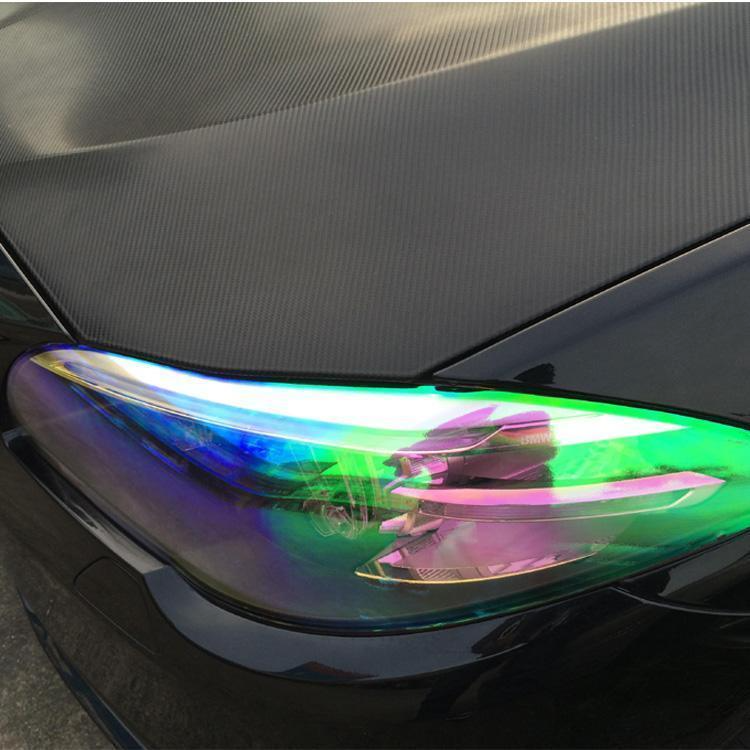
Color-Shift / Iridescent
Changes color depending on viewing angle—purple to blue to green as light hits it . Bold, eye-catching effect for show cars and custom builds. Check local laws before using on street-driven vehicles.
Matte Black
Modern, understated finish that completely transforms headlight appearance. Popular on trucks, off-road vehicles, and murdered-out builds.
Photochromic Film
Advanced TPU film that automatically adjusts tint based on UV exposure—darker in bright sunlight, clearer at night . Cutting-edge technology for maximum versatility.
Why Install Headlight Protection Film? The Real Benefits
1. Protection from Physical Damage
Every mile puts your headlights at risk. Small rocks, gravel, road salt, and sand blast the lenses, creating tiny pits that scatter light and reduce effectiveness . Over time, these micro-damages add up. Headlight film acts as a shock absorber, taking the impact so your lenses don’t have to .
High-quality TPU films can withstand 500–1000+ abrasion cycles in testing, compared to just 200 cycles for unprotected lenses .
2. UV Defense That Prevents Yellowing
Polycarbonate headlights are vulnerable to UV radiation. Without protection, they oxidize and turn yellow within 2–5 years, depending on sun exposure . Quality headlight film blocks up to 99% of UV rays, preserving clarity and transparency for years .
3. Cost Savings vs. Replacement
Let’s run the numbers:
| Scenario | Typical Cost |
|---|---|
| Replace OEM headlights | $500–$2,500 per assembly |
| Headlight restoration | $150–$400 (temporary fix) |
| DIY headlight film | $20–$60 |
| Professional installation | $100–$350 |
Headlight film at under $60 is one of the best ROI upgrades you can make . Even professional installation is a fraction of replacement cost.
4. Aesthetic Customization
Your car should reflect your personality. Headlight film lets you change the look without permanent modification—smoked for sleeker appearance, yellow for racing heritage, color-shift for show car status .
5. Glare Reduction
Tinted films, especially light smoke, help diffuse harsh light and reduce glare for oncoming drivers. This improves safety for everyone on the road .
6. Easy Maintenance
Film-coated headlights clean up easily with mild soap and water. The smooth surface resists bug splatter and road grime, so you spend less time scrubbing .
7. Preserves Original Lenses
Once headlights yellow or pit, restoration only polishes away material—you can only do that so many times before the lens is compromised. Film protects the original surface, keeping it in like-new condition indefinitely .
Is Headlight Tint Legal? What You Need to Know
This is the million-dollar question. Laws vary significantly by location, and getting it wrong can mean tickets or failed inspections .
The General Rule
Headlights must illuminate the road effectively—typically at least 100 meters (about 330 feet). Any film that significantly reduces light output or changes beam color may be illegal .
US State Regulations
Clear film is legal everywhere—it doesn’t alter light output or color.
Light smoke and yellow are often permitted, especially when light transmission remains above 70% VLT (Visible Light Transmission) .
States where headlight tint is illegal: Florida, Illinois, Michigan, New Hampshire, Texas, Vermont, and Washington DC .
States requiring minimum 70% VLT: Alabama, Alaska, Hawaii, Kansas, Iowa, Louisiana, Minnesota, North Dakota, Ohio, Pennsylvania, Virginia, Wisconsin, and Utah .
California: Requires 70% light transmission for any headlight modification .
New York: No tint allowed on headlights .
Color Regulations
In the US, the only legal colors for forward-facing lights are white or amber. Purple, blue, or red lights are illegal for street use—they can blind other drivers or mimic emergency vehicles .
International Regulations
UK/Europe: Headlight film is permitted as long as illumination meets standards (100m for high beam). White, orange, or yellow light is acceptable for front position lights .
Always check local laws before purchasing or installing tinted film. When in doubt, choose lighter tints—you’ll still get style and protection without legal headaches.
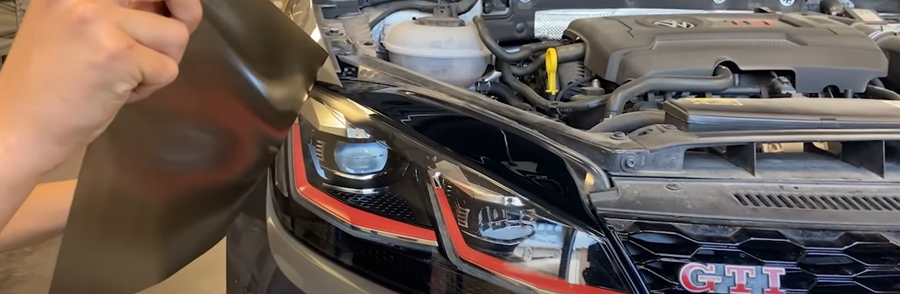
How to Install Headlight Film: Step-by-Step Guide
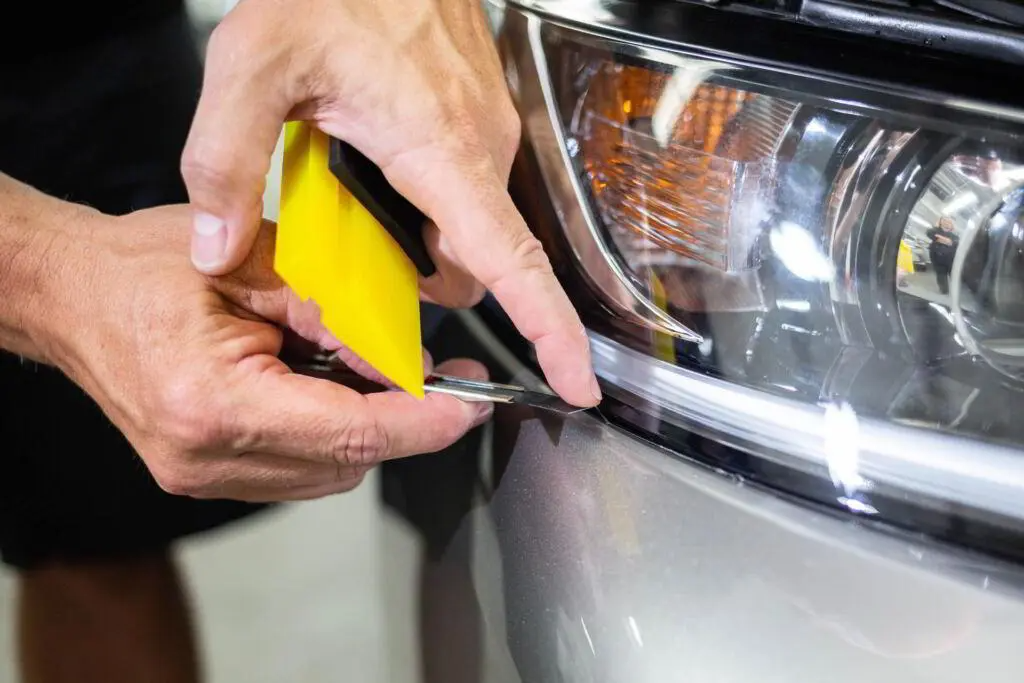
Installing headlight film is absolutely DIY-friendly. Professional installation costs $100–$350, but with patience and the right technique, you can achieve professional results at home for under $50 .
Tools and Materials You’ll Need
High-quality headlight film (pre-cut or roll)
Spray bottle with slip solution (few drops of mild soap in water)
Isopropyl alcohol (70% or higher)
Microfiber towels (multiple)
Squeegee with felt edge
Heat gun or hairdryer
Precision knife or razor blade
Gloves (optional, to prevent fingerprints)
Preparation: The Key to Success
Step 1: Clean Thoroughly
Wash the headlight with soap and water, then wipe with isopropyl alcohol. Remove all wax, oil, and contaminants. A perfectly clean surface is non-negotiable .
Test for readiness: Apply masking tape to the headlight. If it curls or falls off, contaminants remain. Keep cleaning .
Step 2: Control Your Environment
Work indoors or in shade—avoid dust, wind, and direct sun. Ideal temperature: 70–80°F (21–27°C). Avoid high humidity .
Step 3: Warm the Surface
Turn on headlights briefly before starting. Slight warmth helps film conform .
Wet Installation Method (Recommended)
Step 1: Spray Lubricant
Generously spray the headlight with slip solution. This allows repositioning .
Step 2: Prepare the Film
Peel the liner carefully, spraying both sides of the film with slip solution as you go. This prevents adhesive from sticking to itself .
Step 3: Position the Film
Place the wet film on the wet headlight. Slide it into perfect position—the water layer keeps it movable .
Step 4: Squeegee from Center Out
Starting at the center, push water and air bubbles toward edges with firm, overlapping strokes .
Step 5: Heat to Conform
Use heat gun on medium setting to warm the film. Stretch gently around curves—TPU can stretch 2–5% when heated . Keep the film slightly warm throughout.
Step 6: Trim Excess
With film set, carefully trim excess material along edges using a sharp blade .
Step 7: Final Squeegee and Cure
Give one last pass with the squeegee. Let film cure for 24–48 hours—avoid rain or car washes .
Dealing with Complex Curves
For deeply curved headlights:
Spray outside of film with slip solution
Anchor at center first
Have someone hold loose ends
Apply heat gradually while stretching
Work in spiral motion outward
Air Bubbles?
If bubbles appear, you can often push them to edges with the squeegee. For stubborn bubbles, lift film slightly, apply more slip solution, and re-smooth .
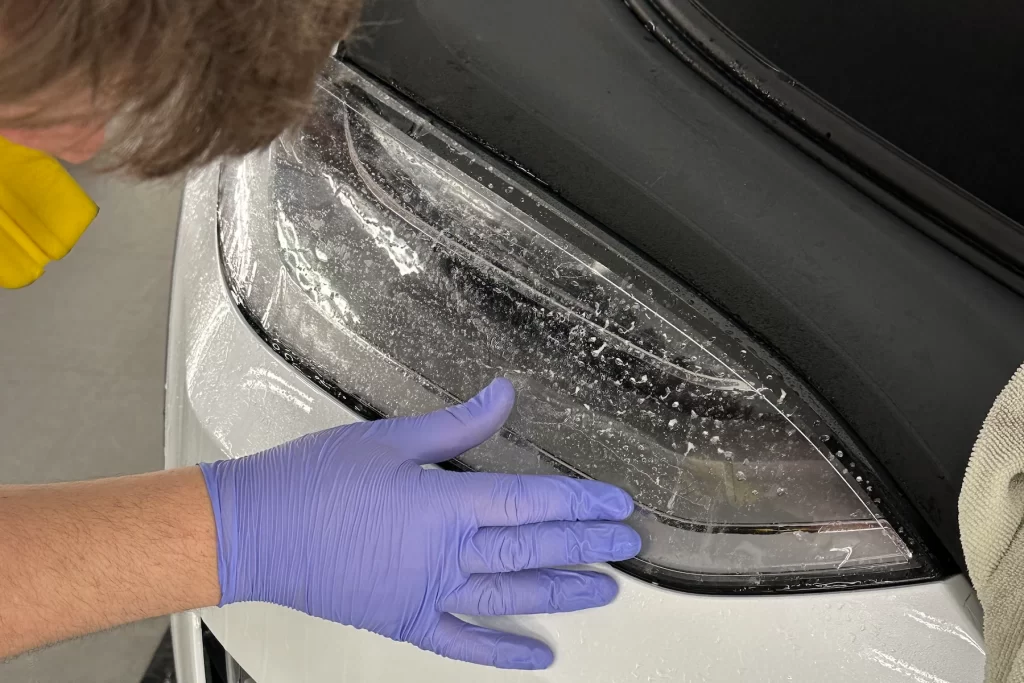
How to Remove Headlight Film
Eventually, every film needs replacement. Removal is straightforward.
Step 1: Apply Heat
Use heat gun or hairdryer to warm the film. Heat softens adhesive .
Step 2: Lift an Edge
Gently lift a corner using fingernail or plastic card—avoid metal tools that could scratch .
Step 3: Peel Slowly
Pull at 45-degree angle while continuing to apply heat. Slow and steady prevents tearing.
Step 4: Remove Adhesive Residue
Leftover glue comes off with isopropyl alcohol, adhesive remover, or white vinegar on soft cloth .
Step 5: Clean and Inspect
Wash thoroughly. If lens is undamaged, you’re ready for new film.
Note: If headlights were already oxidized, removal might pull off additional material. Assess condition before applying film .
Headlight Film Maintenance
Good news: film-protected headlights are easier to maintain than bare lenses.
Do:
Wash with pH-neutral car shampoo and soft microfiber
Rinse regularly to remove bug residue and road salt
Inspect edges periodically for lifting
Use alcohol-free cleaners
Don’t:
Use abrasive pads or harsh chemicals
Hit with pressure washer nozzles directly
Wax over film (wax can yellow some films)
Ignore lifting edges—re-seal with heat if needed
For TPU Self-Healing Films:
Minor scratches disappear with heat—from sunlight, warm water, or careful heat gun use .
Frequently Asked Questions About Headlight Film
Q: How long does headlight film last?
A: Depends on material. Quality vinyl: 2–5 years. Premium PVC: 3–5 years. TPU with self-healing: 5–10 years . Garage-kept cars with regular maintenance see longest life.
Q: Will tinted film reduce my night visibility?
A: Clear film—no reduction. Light smoke (70–80% VLT)—minimal impact. Dark smoke (below 50% VLT)—significant reduction. Always prioritize safety .
Q: Can I apply film over already hazy headlights?
A: No. Film won’t fix existing oxidation—it may trap moisture and make things worse. Restore headlights first with polishing kit, then apply film .
Q: Is headlight film removable?
A: Yes. Heat and peel. Quality films leave minimal residue .
Q: Can I wash my car after installing film?
A: Wait 24–48 hours for curing, then hand wash gently. Avoid pressure washers for first few weeks .
Q: Does headlight film affect my car’s warranty?
A: Generally no, but check with manufacturer. Film is protective accessory, not modification that typically voids warranties .
Q: What’s the difference between headlight tint and headlight protection film?
A: Often same product marketed differently. “Protection film” emphasizes durability and UV blocking. “Tint” emphasizes appearance. Many films do both .
Q: Can I use window tint on headlights?
A: Not recommended. Window tint isn’t designed for external automotive lighting—may not withstand UV, heat, or impact. Use purpose-made headlight film .
Q: How do I choose the right shade?
A: Consider driving conditions and local laws:
Light smoke: subtle style, minimal light reduction
Dark smoke: aggressive look (check legality first)
Yellow: fog performance, rally style
Clear: invisible protection, 100% legal everywhere
Q: Will headlight film turn yellow over time?
A: Quality films with UV inhibitors resist yellowing. Cheap films may yellow within months. Buy from reputable brands .
Q: Does headlight film work with LED or HID headlights?
A: Yes. Quality films are heat-resistant and designed for normal operating temperatures of LED, HID, and halogen lights .
TPU vs. Vinyl: Which Should You Choose?
Choose TPU If You Want:
Maximum protection for daily driver
Self-healing properties that keep film looking new
5–10 year lifespan
Best optical clarity
Premium vehicle or long-term ownership
Resistance to yellowing and environmental damage
Choose Vinyl If You Want:
Budget-friendly option
Frequent color changes (every 2–3 years)
Wide variety of colors and finishes
Temporary looks or show cars
Easy DIY installation
Why Decowell TPU Headlight Film Stands Out
At Decowell, we believe your headlights deserve the same quality protection as the rest of your vehicle. That’s why our TPU Headlight Film delivers premium performance at an accessible price.
Advanced TPU Technology
Decowell films are crafted from high-quality thermoplastic polyurethane—the same material trusted by luxury automakers and professional detailers . Our TPU formulation offers:
Self-healing properties: Minor scratches disappear with heat exposure
Superior impact resistance: Protects against rock chips, gravel, and road debris
UV protection: Blocks 99% of harmful rays to prevent yellowing
Optical clarity: Crystal-clear transmission maintains full light output
Professional-Grade Features
Scratch Resistance: Our TPU film withstands 500+ abrasion cycles—2.5x industry standard for basic films .
Flexibility: Conforms smoothly to complex headlight curves without lifting or cracking.
Temperature Tolerance: Performs from -30°C to 95°C, handling extreme climates with ease .
Easy Installation: Air-release adhesive technology makes bubble-free application achievable for DIY enthusiasts .
Available Options
Clear Protection Film: Invisible defense that preserves factory appearance. 100% legal everywhere.
Light Smoke Tint: Subtle style with minimal light reduction (approx. 80% VLT).
Yellow Film: Classic rally look with fog-light functionality.
Color-Shift: Dynamic iridescent effect for custom builds.
Quality You Can Trust
Every roll of Decowell TPU Headlight Film undergoes rigorous testing to ensure:
Consistent thickness (6.5–8 mil optimal range)
Uniform adhesive application
No yellowing or discoloration
Strong, residue-free removal when needed
The Decowell Difference
While big-name brands charge premium prices, Decowell delivers equivalent quality at sensible prices. We believe protection shouldn’t be a luxury—it should be accessible to every car owner who cares about their vehicle.
Fast Shipping: Your film arrives quickly, carefully packaged to prevent damage.
Satisfaction Guaranteed: We stand behind our products with responsive customer support.
Installation & Maintenance Tips for Decowell Film
For Best Results:
Clean thoroughly with isopropyl alcohol—surface must be pristine
Use plenty of slip solution—wet application is recommended
Work from center outward with steady squeegee pressure
Apply heat gradually to conform to curves—don’t overheat
Allow 24–48 hours cure time before exposing to heavy rain or car washes
Maintenance:
Wash with mild soap and soft microfiber
Avoid automatic car washes with abrasive brushes
For TPU self-healing film, minor scratches disappear with heat
Inspect edges periodically—re-seal with heat if needed
Protect Your Headlights Today
Your headlights take a beating every mile you drive. Rock chips, UV rays, road salt, and bug acids slowly degrade those expensive polycarbonate lenses until one day you’re looking at yellowed, hazy lights that barely cut through the night.
You have two choices:
Wait until they’re damaged and pay $500–$2,500 for replacement
Protect them now with quality headlight film for under $50
Seems like an easy decision, right?
Decowell TPU Headlight Film gives you professional-grade protection without the professional price tag. Whether you want invisible clear protection, sleek smoked tint, classic yellow styling, or bold color-shift effects, we have the right film for your vehicle.
Ready to protect your investment and upgrade your look?
Browse Decowell Headlight Film Collection
View Installation Guide
Contact Our Team