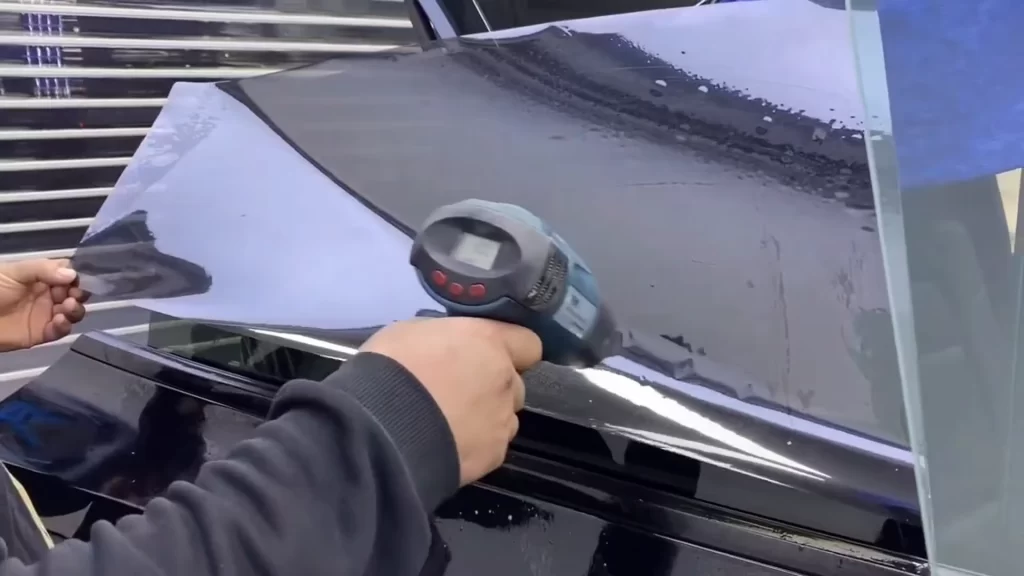
Home » Why Every Driver Needs a High-Quality Windshield Clear Film
Recent Posts
Why Every Driver Needs a High-Quality Windshield Clear Film
If you’ve ever driven into the sun and felt that blast of heat hit your face—even with the AC cranked—you know exactly what I’m talking about. Your side windows might be tinted, the rear glass might be dark, but that big piece of glass in front of you? It’s letting in a shocking amount of heat, UV radiation, and glare. And here’s the thing most drivers don’t realize: your windshield is actually the single biggest source of heat entering your vehicle.
Let’s run a quick mental test. Park your car outside on a sunny afternoon for a couple of hours. When you come back, put your hand near the side window glass—then put it near the windshield. Which one feels hotter radiating into the cabin? For most vehicles, the windshield is the main culprit. It faces the sun directly for much of the day, and it’s usually the largest piece of glass on the car.
Enter windshield clear film. This nearly invisible upgrade is quietly becoming one of the most popular automotive modifications in 2026—and for good reason. It blocks heat, stops UV damage, reduces glare, adds shatter protection, and does it all without changing how your car looks or getting you pulled over.
The global automotive tinting film market reached about USD 8.26 billion in 2025, and analysts expect it to climb toward USD 17.64 billion by 2034, driven largely by rising demand for advanced ceramic and clear films. More and more drivers are realizing that you don’t need dark windows to stay cool. You just need the right technology.
In this guide, we’ll walk through everything you need to know about windshield clear film—what it is, how it works, whether it’s legal where you drive, and why Decowell Film should be your go-to choice for this upgrade. Let’s get into it.
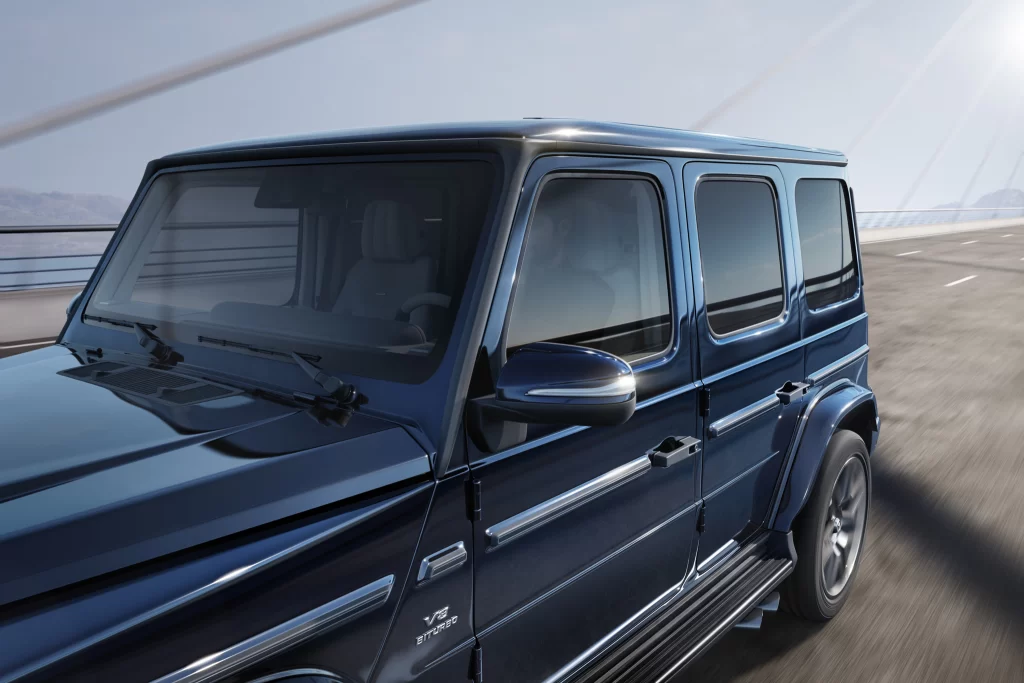
Table of Contents
What Is Windshield Clear Film?
Let’s start with the basics. Windshield clear film is a transparent or nearly transparent layer of high-performance material applied to the inside of your vehicle’s front windshield. Unlike traditional window tints that darken your glass, a quality windshield clear film maintains the natural look of your windshield while still delivering serious protection against heat, UV radiation, and glare.
The key technology behind modern windshield clear film is nano-ceramic construction. Instead of using dyes that fade or metal particles that interfere with electronics, nano-ceramic films use microscopic ceramic particles embedded into multiple layers of polyester film. These particles interact with sunlight in a very specific way: they allow visible light to pass through clearly while blocking or reflecting the parts of the solar spectrum that cause heat and damage.
This is a big deal because the sun’s energy isn’t all the same. Sunlight is made up of three main components: ultraviolet (UV) light, visible light (what you see), and infrared (IR) radiation (what you feel as heat). A cheap dyed film mostly absorbs visible light to make the glass look darker, but it doesn’t do much to stop IR heat. A high-quality windshield clear film, on the other hand, is engineered to block the specific wavelengths that matter without changing how the glass looks.
Decowell’s windshield clear film uses advanced nano-ceramic particles to achieve this balance. You get crystal-clear visibility day and night, plus impressive heat and UV rejection that you can feel the moment you get behind the wheel.
Windshield clear film is not the same as a vinyl wrap or a basic dyed tint. Vinyl wraps change your car’s color but offer almost no heat protection. Dyed tints fade and turn purple over time. And metalized films—while effective at heat rejection—can block GPS signals, cell reception, and radio frequencies. Windshield clear ceramic film gives you the best of all worlds: protection, clarity, and signal compatibility.
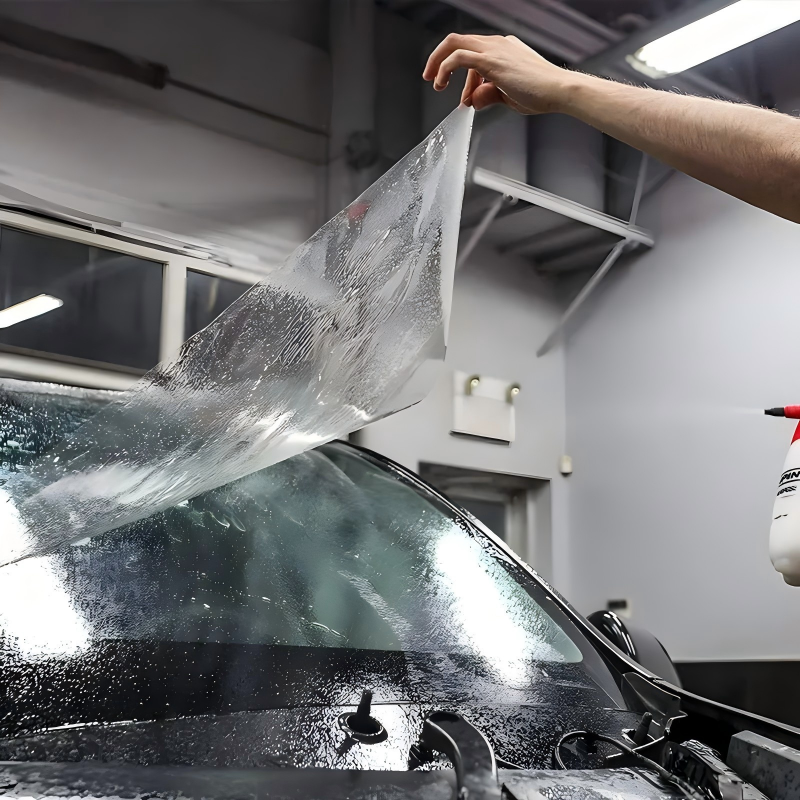
Key Benefits of Windshield Clear Film
Now that you know what windshield clear film actually is, let’s talk about why you’d want it on your car. The benefits go way beyond just keeping the cabin a little cooler.
Benefit #1: Serious Infrared Heat Rejection
Here’s a number that might surprise you. A quality nano-ceramic windshield clear film can reject anywhere from 80% to over 95% of infrared heat, depending on the specific product and formulation. That’s not a typo. We’re talking about blocking the vast majority of the heat that would otherwise pour through your windshield and bake your dashboard, steering wheel, and front seats.
What does that mean for your daily drive? A significantly cooler cabin. Less reliance on your air conditioning. And in electric vehicles, better range because your HVAC system isn’t working overtime to fight against solar heat gain. Manufacturers and professional installers alike note that films with high IR rejection can dramatically reduce cabin temperatures and improve overall comfort, especially during peak daylight hours.
Decowell’s windshield clear film is engineered with maximum infrared rejection as a priority. The nano-ceramic particles are precisely calibrated to target the near-infrared (NIR) portion of the spectrum—where most solar heat actually lives—while leaving visible light untouched. The result is a cooler car without a darker windshield.
Benefit #2: Maximum UV Protection (This One’s a Health Issue)
Here’s something most drivers don’t think about until it’s too late. Ultraviolet radiation doesn’t stop at your side windows. It comes through your windshield, too, and prolonged exposure adds up over years of driving.
A high-quality windshield clear film blocks 99% or more of harmful UVA and UVB rays. That’s not just about keeping your dashboard from cracking—though it absolutely helps with that. It’s about protecting your skin. Studies have consistently linked cumulative UV exposure during driving to increased risk of skin damage, premature aging, and skin cancers on the left side of the face and left arm (for drivers in left-hand-drive countries).
The Skin Cancer Foundation has awarded its Seal of Recommendation to automotive window films that achieve 99% or greater UV protection. Decowell’s windshield clear film meets that standard, giving you one less thing to worry about on long road trips and daily commutes alike.
And while we’re talking about interior protection, UV radiation is also one of the main reasons dashboards fade, crack, and discolor over time. Leather seats, fabric upholstery, and plastic trim all suffer from UV exposure. By blocking over 99% of UV rays, windshield clear film helps your car’s interior look newer for longer.
Benefit #3: Glare Reduction Without Darkness
Glare is more than an annoyance. On bright days, reflections off the road, other vehicles, and surrounding surfaces can create eye strain that makes driving genuinely uncomfortable. At sunrise or sunset, direct sunlight through the windshield can be blinding.
Windshield clear film helps reduce glare without darkening your view. The nano-ceramic particles in the film diffuse and filter harsh light wavelengths while allowing soft, usable light to pass through. The result is a more comfortable visual experience behind the wheel—less squinting, less eye fatigue, better focus on the road.
This is especially valuable for drivers who spend a lot of time on the road during early morning or late afternoon hours. The glare reduction benefits are noticeable immediately after installation.
Benefit #4: Shatter Resistance and Safety
Here’s a benefit that doesn’t get talked about enough. When you apply a quality windshield clear film to your glass, you’re not just adding heat protection. You’re adding a physical layer that helps hold broken glass together in the event of an accident or impact.
Windshields are already made of laminated glass, which is designed to stay intact during collisions. But adding a high-performance film creates an extra layer of security. The adhesive and polyester layers bond to the glass surface, so if something strikes the windshield hard enough to crack it, the film helps contain the fragments rather than letting them spray into the cabin.
This shatter-resistant property isn’t just for accidents. It also provides a measure of theft deterrence. A window with high-quality film is harder to smash through, which means more time and noise for a potential thief—often enough to make them move on to an easier target.
Decowell’s windshield clear film is engineered with automotive-grade polyester and high-bond adhesives specifically for this purpose. You get an extra layer of safety without any visible change to your windshield.
Benefit #5: Zero Signal Interference (Crucial for Modern Cars)
If you’ve ever had metallic window tint on a car, you’ve probably experienced the frustration of a GPS signal that cuts out, a radio station that crackles, or a phone call that drops as soon as you drive into certain areas. Metalized films use actual metal particles to reflect heat, but those same particles also reflect radio frequencies.
Windshield clear film uses nano-ceramic particles, not metal. That means zero interference with your cell phone, GPS, satellite radio, Bluetooth, toll transponders, or any other electronic device in your vehicle.
This is critically important in modern cars, which rely on clear signals for everything from navigation to hands-free calling to advanced driver assistance systems. You shouldn’t have to choose between staying cool and staying connected. With Decowell’s nano-ceramic windshield clear film, you don’t have to.
Benefit #6: Preserves Your Factory Look and Resale Value
Here’s a point that resonates with a lot of car owners. You might love the look of your car exactly as it came from the factory. You don’t want a dark tinted windshield that changes the appearance or attracts unwanted attention from law enforcement. But you still want the protection.
Windshield clear film delivers on both counts. Once installed correctly, it’s virtually invisible. The glass looks exactly the same as it did before. No darkening. No reflective sheen. No “modified” appearance that might raise eyebrows during a traffic stop or vehicle inspection.
And because the film protects your dashboard and interior from UV damage and heat cycling, it helps preserve your car’s condition over time. When it comes time to sell or trade in your vehicle, a well-maintained interior and a crack-free dashboard are significant value points that buyers notice.
Decowell windshield clear film gives you all the benefits of advanced nano-ceramic technology without compromising the factory look you love.
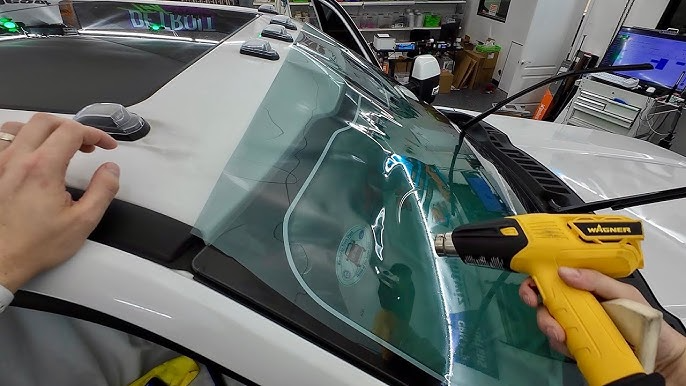
TSER vs IRR: The Numbers That Actually Matter
If you’ve done any research on car window films, you’ve probably seen terms like IRR and TSER thrown around. Let’s demystify those real quick, because understanding them will help you make a smarter choice.
IRR (Infrared Rejection) is exactly what it sounds like—the percentage of infrared radiation that the film blocks. That’s the heat you feel radiating from the sun. A high IRR number is good.
TSER (Total Solar Energy Rejected) is a broader measure. It accounts for all three components of solar energy—UV, visible light, and infrared—combined. TSER is actually the more honest measure of a film’s overall performance, because it looks at the full picture, not just one slice of the spectrum.
Here’s the catch. Some films advertise eye-catching IRR numbers like “95%” or “99%” without mentioning that those numbers were measured at a narrow wavelength range—often a range where the film happens to perform well. The same film might perform poorly across other IR wavelengths or fail to address heat carried by visible light. That’s why TSER is considered the “real” performance number by industry professionals.
When you’re evaluating a windshield clear film, look for both numbers. A truly high-performance film will have strong IR rejection and respectable TSER. Decowell’s windshield clear film is engineered to perform across the full solar spectrum, giving you balanced, real-world protection rather than just a headline number.
Windshield Clear Film vs. Other Options
Not all window films are created equal, and the differences go way beyond price. Here’s a quick breakdown of the main types so you can see why nano-ceramic windshield clear film stands above the rest.
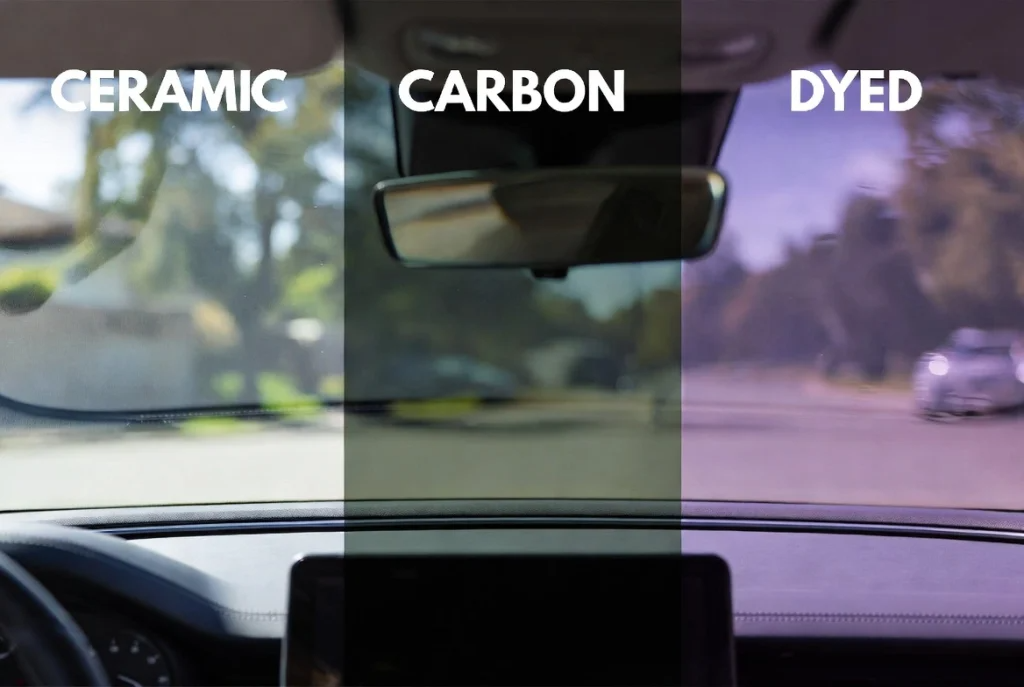
Dyed Film — The most basic option. Uses pigment layers to absorb light and darken the glass. Offers minimal heat rejection. Fades and can turn purple after a couple of years. Limited UV protection. Low durability.
Metalized Film — Uses microscopic metal particles to reflect heat. Better heat rejection than dyed film. Adds some shatter resistance. Major drawback: interferes with GPS, cell signals, and radio reception. Can also create a reflective appearance that looks modified.
Carbon Film — Uses carbon particles rather than metal. No signal interference. Good heat rejection and UV protection. No fading over time. A solid middle-tier option, but doesn’t reach the performance ceiling of ceramic.
Nano-Ceramic Film — The premium choice. Uses advanced nano-ceramic particles to block heat and UV without darkening the glass or interfering with signals. Exceptional durability. Excellent clarity. The best heat rejection of any film type. No fading, no bubbling, no purple tint over time.
Decowell uses advanced nano-ceramic technology in its windshield clear film, giving you top-tier performance without the drawbacks of cheaper film types.
Is Windshield Clear Film Legal?
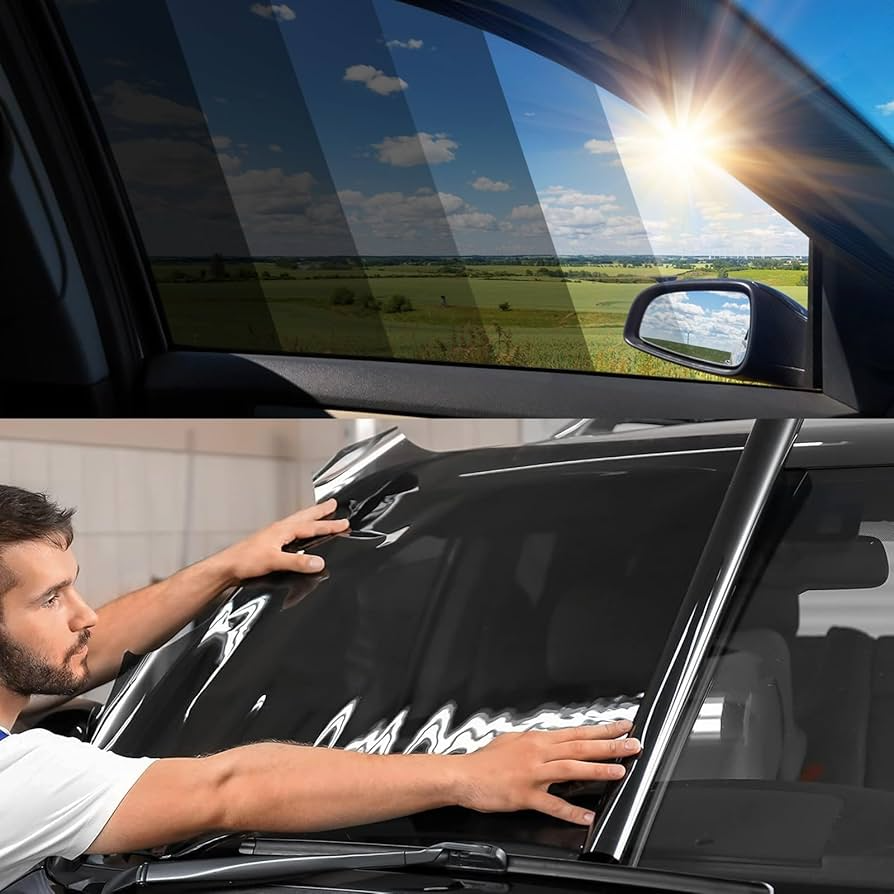
This is the question almost everyone asks, and for good reason. Windshield tinting regulations exist to maintain safe visibility for drivers, and the rules vary by jurisdiction. But here’s the good news: because windshield clear film maintains a high Visible Light Transmission (VLT)—typically 70% or higher—it is legal for full windshield application in many regions.
VLT stands for Visible Light Transmission. It’s the percentage of visible light that passes through your glass. A completely clear piece of glass has 100% VLT. A very dark limo tint might have 5% VLT.
Most state laws require windshields to maintain a minimum of 70% VLT. That means no more than 30% of visible light can be blocked. If you look at the specifications for most quality windshield clear films, they’re designed to stay at or above that 70% threshold.
For example, many premium nano-ceramic windshield films report VLT values between 70% and 80%, positioning them well within legal limits for full windshield application in most regions. Some jurisdictions also have restrictions on reflectivity (usually below 20-25%) and disallow certain colors like red, amber, or blue on front-facing glass.
A few important notes: Some states allow clear or nearly clear film on the entire windshield, while others only permit a small “eyebrow” strip across the top 4–6 inches. Regulations also differ between passenger vehicles and commercial vehicles. Medical exemptions are available in some places for individuals with photosensitivity conditions.
The bottom line: Check your local laws before installation. But for the vast majority of drivers, a high-quality windshield clear film with 70%+ VLT is fully legal. Decowell recommends consulting with a certified installer in your area who understands regional regulations and can ensure your installation stays compliant. Most reputable professional installers will not install any film that violates local laws, so that’s an extra layer of protection for you as well.
Professional Installation Matters
Here’s a truth that a lot of DIY car enthusiasts don’t want to hear: windshield clear film is not a DIY job. At least, not if you want professional results.
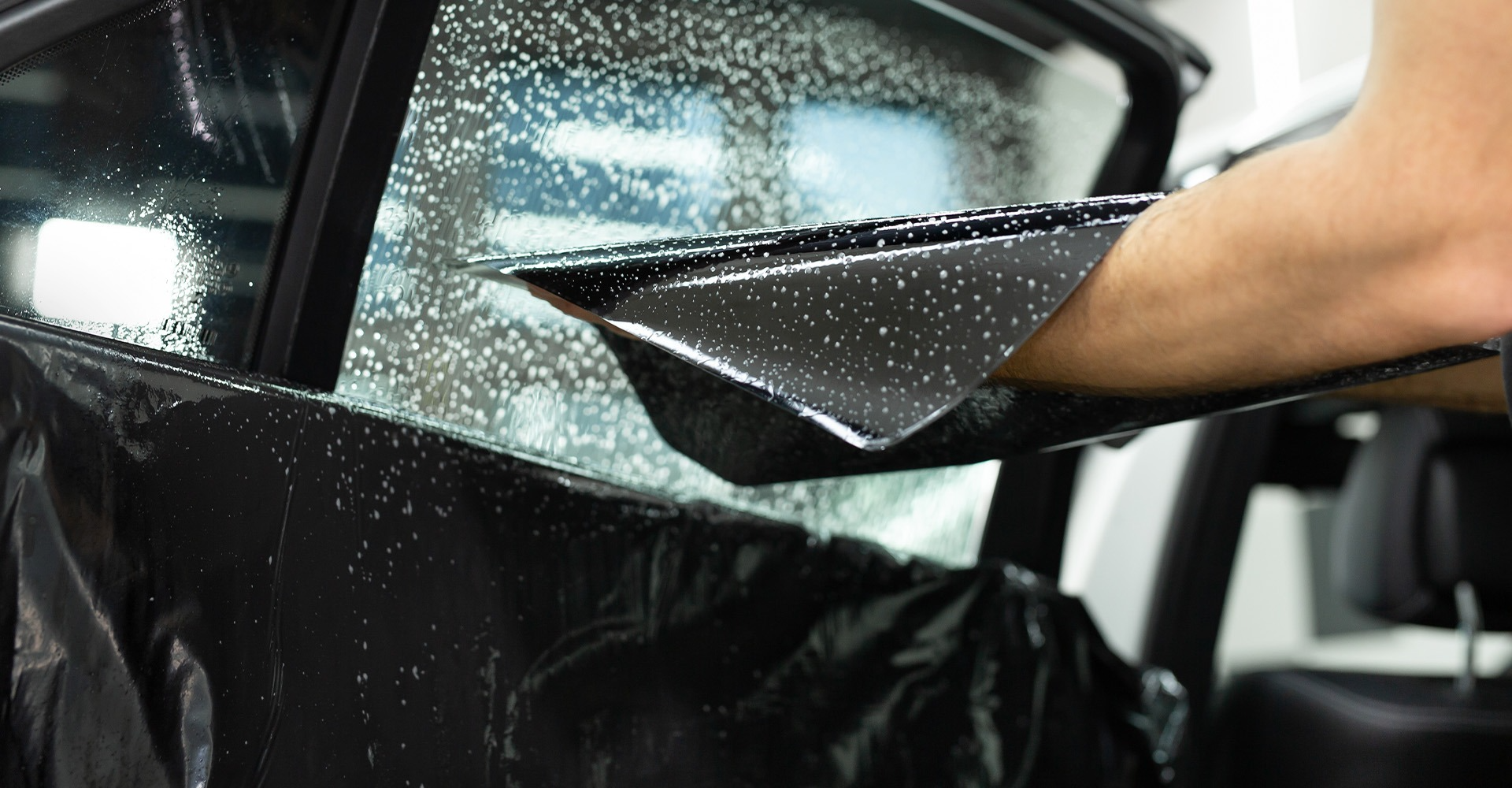
Windshields are large, curved pieces of glass with complex contours. Installing a film without bubbles, dust particles, lifting edges, or visual distortion requires skill, experience, and a clean, temperature-controlled environment. Professional installers use specialized tools—squeegees, heat guns, slip solutions—and techniques like heat-shrinking to conform film to curved glass surfaces without stress or wrinkles.
The installation process typically involves several critical steps. First, the technician thoroughly cleans the glass interior surface, using tools like 0000 steel wool and razor blades to remove invisible contaminants that can cause “fisheyes” or bubbles under the film. The interior is protected with drop cloths, and the workspace is cleaned of airborne dust. The film is precisely cut to match the windshield dimensions. A slip solution is applied to both the glass and the film’s adhesive side. The film is positioned carefully, then squeegeed from the center outward to remove air bubbles and excess solution. Edges are pressed and sealed. And finally, the film is allowed to cure.
Post-installation care matters, too. Most installers will advise you not to roll down your windows or clean the interior glass for 3 to 5 days after installation to allow the adhesive to fully bond. When you do clean, use only pH-neutral, ammonia-free cleaners and soft microfiber cloths. Harsh chemicals or abrasive materials can damage the film’s topcoat and reduce its performance and longevity.
Why choose Decowell? Decowell partners with certified professional installers who understand the unique properties of nano-ceramic films. Decowell also provides training and technical support to installation partners, ensuring that every Decowell windshield clear film installation meets the highest standards for quality and durability.
Don’t cut corners on installation. A premium film installed poorly will perform worse and look worse than a budget film installed professionally. Decowell windshield clear film is engineered for professional application to deliver optimal clarity, adhesion, and long-term performance. Trust it to trained hands.
Frequently Asked Questions About Windshield Clear Film
Q1: What exactly is windshield clear film, and how is it different from regular window tint?
Windshield clear film is a nearly transparent, high-performance film applied to the inside of your front windshield. Unlike traditional window tint, which uses dyes or metals to darken the glass, windshield clear film uses nano-ceramic particles to block heat and UV radiation without changing the glass’s appearance. It’s designed specifically for windshields—where maximum visibility is a legal and safety requirement—while still delivering serious protection.
Q2: Will windshield clear film make my glass look different?
No. A quality windshield clear film is virtually invisible once professionally installed. The glass looks exactly the same as it did before—no darkening, no reflective sheen, no blue or purple hue. Someone standing outside your car won’t be able to tell you have film on the windshield at all.
Q3: Is windshield clear film legal everywhere?
Most jurisdictions allow clear or nearly clear film (70% or higher visible light transmission) on windshields, but specific regulations vary by state, province, or country. Some regions permit full windshield application, while others only allow a top strip of 4–6 inches. Always check your local laws before installation. Decowell films are designed to meet or exceed standard VLT requirements, and your professional installer can advise you on compliance in your area.
Q4: How much heat can windshield clear film actually block?
A high-quality nano-ceramic windshield clear film can block 80% to over 95% of infrared radiation—the part of sunlight responsible for heating your car’s interior. That translates into a dramatically cooler cabin, especially during summer months or in sunny climates. You’ll notice the difference immediately after installation.
Q5: Does windshield clear film affect GPS or cell phone signals?
No. Unlike metalized films that use actual metal particles, nano-ceramic films contain no metal. Decowell’s windshield clear film will not interfere with GPS, satellite radio, Bluetooth, cellular signals, toll transponders, or any other electronic device in your vehicle.
Q6: How does windshield clear film protect my skin and interior?
Windshield clear film blocks over 99% of harmful UVA and UVB rays. That means your skin is protected during every drive, reducing long-term risks of sun damage and skin cancer. It also means your dashboard, seats, and trim won’t fade, crack, or discolor from UV exposure. Many premium films carry the Skin Cancer Foundation’s Seal of Recommendation.
Q7: Does windshield clear film help with glare from the sun or oncoming headlights?
Yes. Windshield clear film diffuses harsh light wavelengths while allowing soft, usable light to pass through. The result is reduced glare from direct sunlight, reflected glare from the road, and even reduced glare from oncoming headlights at night. Drivers often report less eye strain and better visual comfort after installation.
Q8: Will windshield clear film make my windshield safer?
It adds an important safety benefit. The film’s adhesive and polyester layers help hold glass fragments together if your windshield is cracked during an accident or impact. While windshields are already laminated for safety, adding a high-performance film provides an extra layer of protection. It also makes the glass harder to smash, which can deter would-be thieves.
Q9: How long does windshield clear film last?
A high-quality nano-ceramic windshield clear film from a reputable manufacturer like Decowell is engineered for long-term durability. The film resists fading, yellowing, bubbling, and peeling. With proper professional installation and routine maintenance (regular cleaning with pH-neutral products, avoiding harsh chemicals), Decowell windshield clear film maintains its performance and appearance for years.
Q10: Can I install windshield clear film myself, or do I need a professional?
Professional installation is strongly recommended. Windshields are large, curved surfaces, and installing film without bubbles, dust particles, or distortion requires skill, experience, and a clean environment. Professional installers use specialized tools, slip solutions, and heat-shrinking techniques to achieve a flawless, long-lasting result. DIY attempts almost always lead to visible imperfections, reduced performance, and premature failure.
Q11: Does windshield clear film require special maintenance?
Not really. You can clean your windshield as you normally would, using a mild, pH-neutral glass cleaner and a soft microfiber cloth. Avoid ammonia-based cleaners, abrasive sponges, or stiff brushes, as these can damage the film’s topcoat. After installation, avoid rolling down windows or cleaning the interior glass for 3–5 days to allow the adhesive to fully cure.
Q12: Is windshield clear film worth it if I already have factory-tinted glass?
Yes. Factory-tinted glass typically provides privacy and some UV protection, but it doesn’t offer the same level of infrared heat rejection as a dedicated nano-ceramic windshield clear film. Adding a high-performance windshield clear film gives you heat blocking and glare reduction that factory glass alone cannot deliver.
Why Choose Decowell Windshield Clear Film?
After reading through all of this, you might be wondering: with so many options available, why should you choose Decowell?
Here’s what sets Decowell apart.
Advanced Nano-Ceramic Technology. Decowell’s windshield clear film uses state-of-the-art nano-ceramic particles precisely engineered to block infrared heat and UV radiation while maintaining crystal-clear visibility. You get the performance of top-tier ceramic films without the drawbacks of cheaper alternatives.
Exceptional Heat and UV Rejection. Decowell windshield clear film delivers industry-leading infrared heat rejection and blocks over 99% of harmful UV rays. Your cabin stays cooler. Your skin stays protected. Your interior stays preserved.
Zero Signal Interference. Because Decowell uses nano-ceramic particles rather than metal, your GPS, cell phone, radio, and other electronic devices work exactly as they should. No dropped calls. No lost navigation signals. No static.
Crystal-Clear Optics. Decowell windshield clear film is formulated for maximum optical clarity. No distortion. No haze. No darkening. Your view out the front windshield remains exactly as it was—just cooler and more comfortable.
Professional-Grade Construction. Decowell films are engineered for professional installation and long-term durability. The material resists fading, yellowing, bubbling, and peeling. When installed correctly, a Decowell windshield clear film maintains its performance and appearance for years.
A Brand You Can Trust. Decowell has established itself as a reliable name in the automotive film industry, delivering products that combine real-world performance with honest specifications. No marketing gimmicks. No inflated IR claims measured at convenient narrow bands. Just genuine protection that works the way it’s supposed to.
When you choose Decowell windshield clear film, you’re choosing a product that’s been developed with the needs of actual drivers in mind. Whether you’re commuting through city traffic, taking long road trips across sunny states, or simply want to protect your vehicle and your family from the sun’s harmful effects, Decowell delivers.
Ready to upgrade your drive?
Contact Decowell today to learn more about our windshield clear film and other premium automotive protection products. Visit our website to explore specifications, request samples, or connect with a Decowell specialist who can help you choose the right film for your vehicle. Protect your car. Protect your skin. Protect your comfort. Choose Decowell—where performance meets clarity.