
Home » PPF Purpose and How Paint Protection Film Protects Your Car
Recent Posts
PPF Purpose and How Paint Protection Film Protects Your Car
The purpose of PPF is to help protect a car’s paint from stone chips, light abrasion and some everyday contamination by putting a replaceable film over the painted surface. PPF stands for paint protection film. Clear versions preserve the visible colour, while other finishes can change the appearance as they add protection.
Think about a motorway journey. The bonnet meets grit kicked up by the vehicle ahead; later, a fingernail catches the paint behind a door handle. These are small contacts, but they leave marks in places owners notice. PPF gives those exposed areas another surface to take the wear.
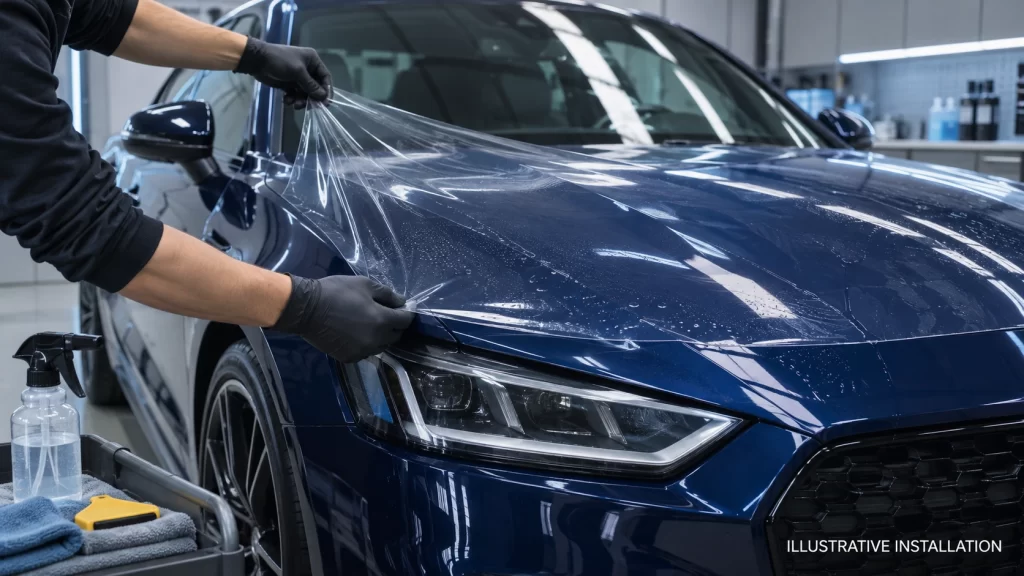
Table of Contents
A replaceable surface over the paint
The useful comparison is a screen protector, with one important difference: automotive PPF is a flexible film that follows the curves of body panels. A suitable film can take damage that might otherwise reach the paint. If it becomes badly marked, the affected piece may be replaced after an installer checks the panel beneath it.
That is the main reason to consider PPF before damage occurs. It does not refill a paint chip, smooth a dent or make a weak repaint sound. The aim is to help preserve paint that is already in suitable condition, rather than use film as a repair.
How the film works
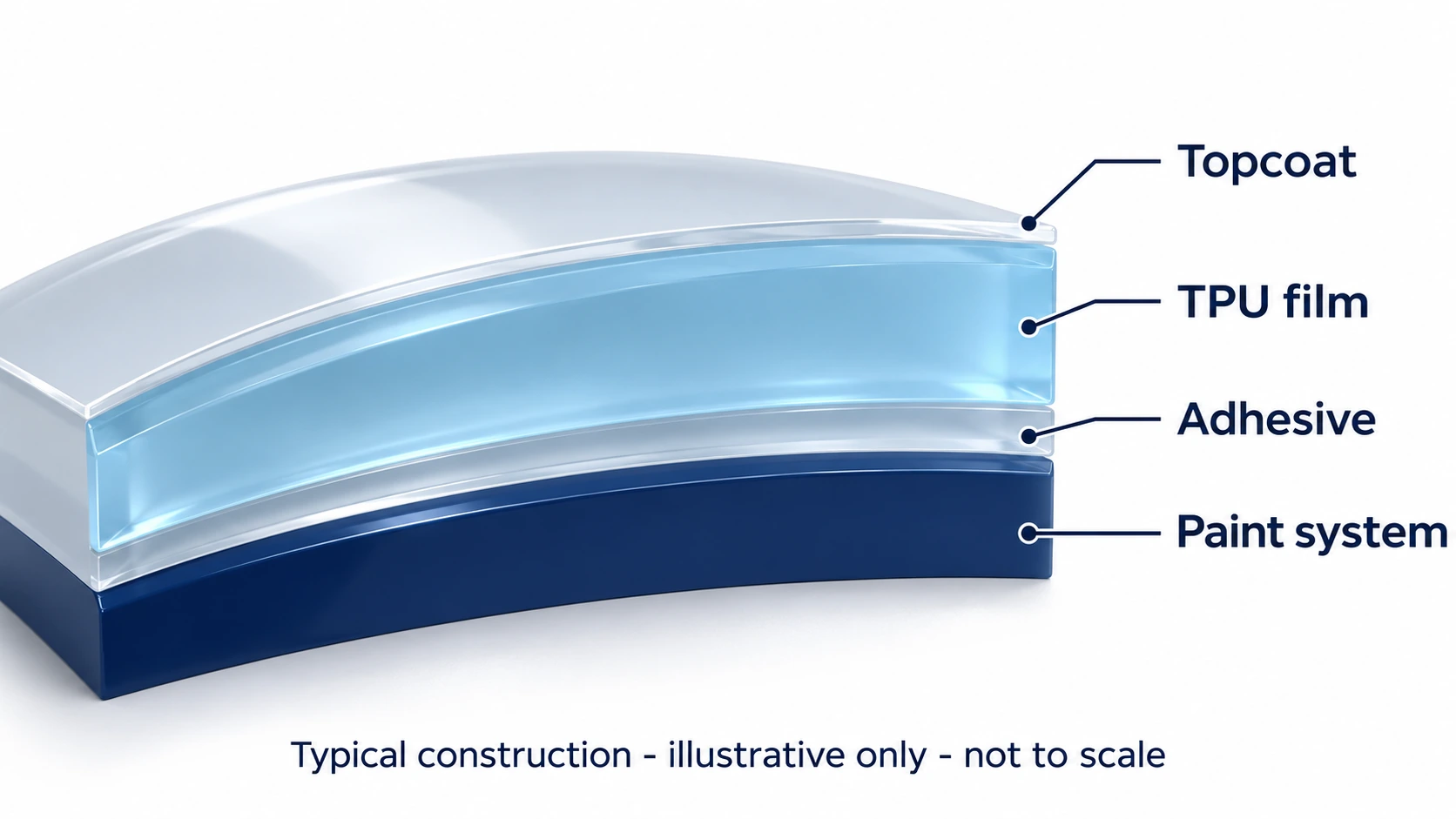
Many automotive PPF products use thermoplastic polyurethane, usually shortened to TPU. A typical construction combines a surface topcoat, a flexible film body and an adhesive that holds it to the paint. The film provides a physical barrier; the topcoat influences surface behaviour such as stain resistance and, in suitable products, the recovery of fine marks.
Match the benefit to the kind of damage
Stone chips and light scuffs are different from heavy impacts. PPF can help reduce damage from road debris and minor contact, but a sharp stone can still penetrate it. A door hitting the panel hard enough to dent the metal can leave a dent even when the film remains intact. Film performance also depends on the particular product and the impact, not simply on whether the car is covered.
Self-healing refers to fine surface marks in a suitable film topcoat. Under the conditions specified for that product, some of those marks can become less visible or disappear. It does not mean that cut material grows back, or that paint underneath the film repairs itself. Ask the installer to assess a persistent mark before trying heat or strong chemicals.
Contamination still needs attention. Bird residue, insects and hard-water spots can mark a film if left on it. A water-repellent surface may make routine cleaning easier, but water beading alone does not prove stone-chip resistance. Treat self-healing, stain resistance and impact protection as separate properties when comparing products.
Choose coverage around how you drive
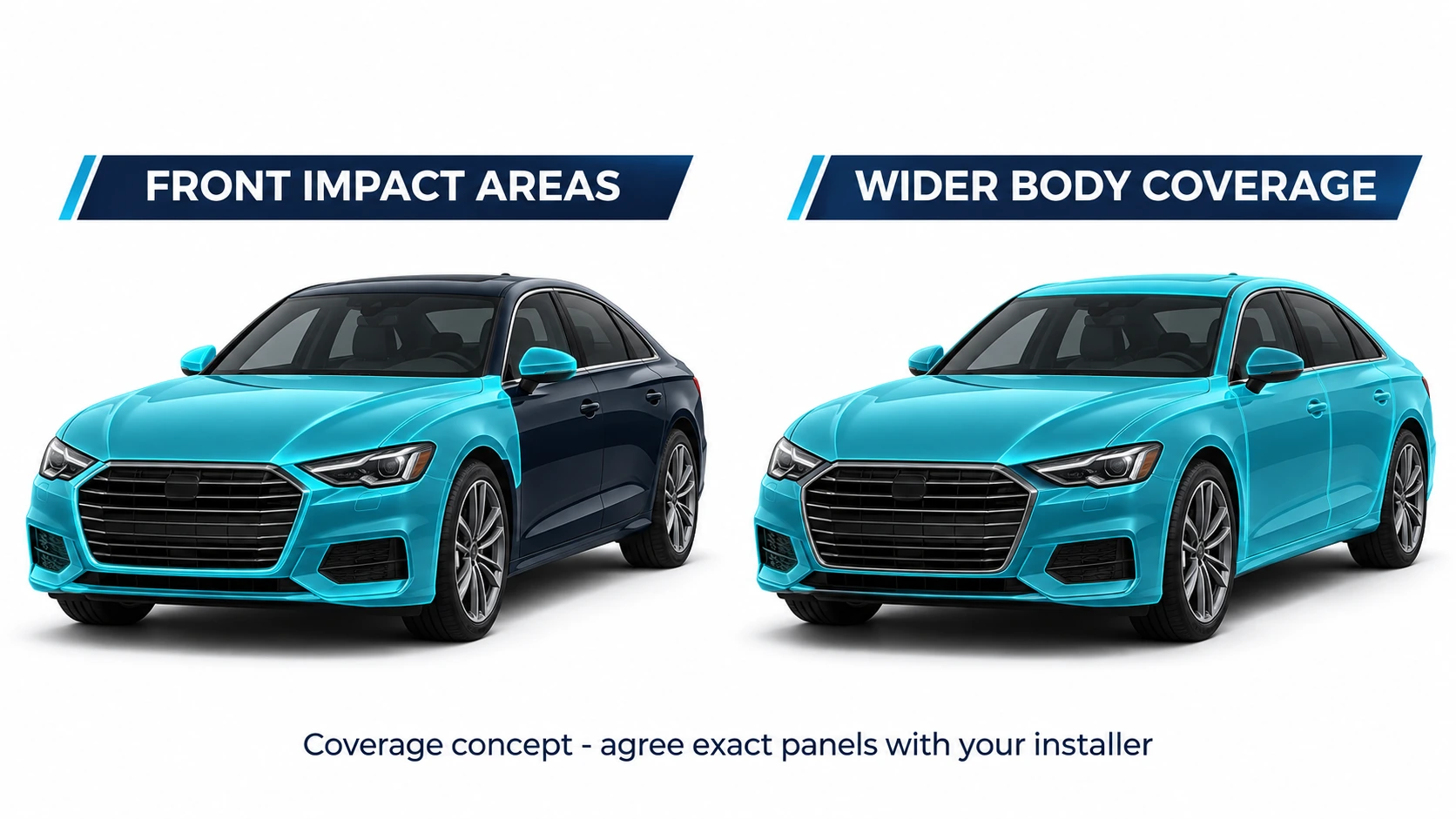
A regular motorway commuter might start by discussing the front bumper, bonnet, front wings and mirror housings. For a family car, door-handle recesses and the painted loading edge near the boot may deserve attention too. Look at where your previous car collected wear; that often gives a more useful starting point than choosing the largest package by default.
Wider body coverage extends the protected area, but package names do not define every detail. Ask which panels are included, where seams will sit and whether edges can be wrapped. Glass, lamps, textured trim and door openings should be discussed separately. The illustration above shows a coverage concept, not an installation specification.
PPF ceramic coating and vinyl have different jobs
Treatment | Main role | What to keep in mind |
Paint protection film | Physical barrier over paint | Can help reduce chips and light abrasion; protection has limits. |
Ceramic coating | Surface treatment for easier cleaning and finish maintenance | Does not provide the same physical barrier against stone chips. |
Conventional vinyl wrap | Change colour or add graphics | Some surface protection; do not assume performance equivalent to PPF. |
Choose the treatment around the problem. For road-debris protection, start with PPF. For easier routine cleaning, a coating may be relevant, including an approved coating over compatible PPF. For a different colour, compare a conventional wrap with coloured PPF and check the actual material and protective performance of each product.
Decide whether PPF suits your car
PPF is worth considering when keeping the existing paint in good condition matters to you and the vehicle regularly encounters road debris or contact wear. Compare installation, maintenance and eventual replacement costs with your plans for the car. Better-preserved paint can be attractive to a future buyer, but PPF does not guarantee a higher selling price or that you will recover its cost.
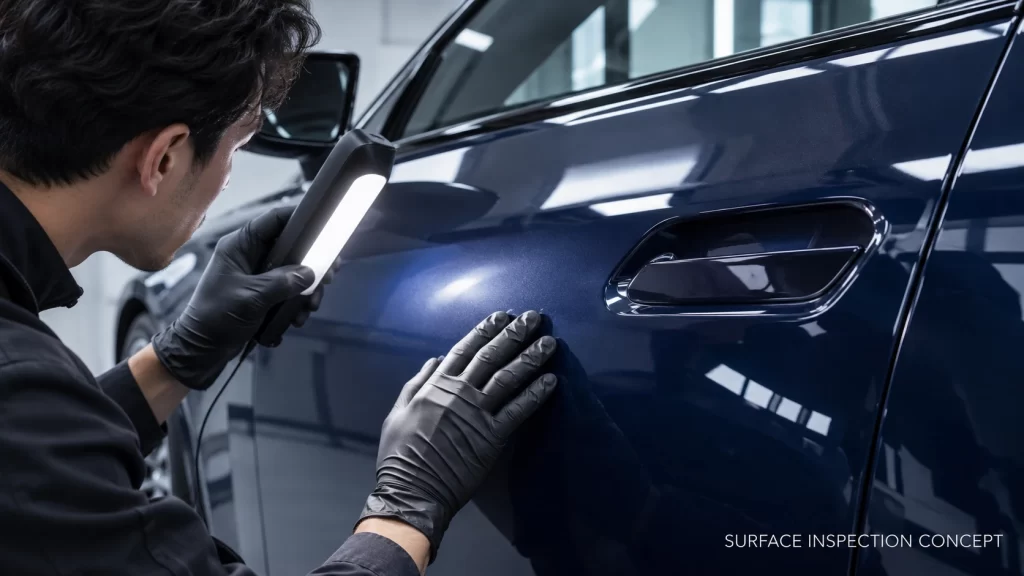
Have the installer inspect chips, repairs and repainted panels before fitting film. Agree on any preparation first, and ask for aftercare and removal guidance. Paint condition, adhesion and removal technique all affect the result. Follow the approved first-wash interval, use suitable cleaning products and avoid directing pressure-washer jets into exposed film edges.
Find the right PPF option with DECOWELL
DECOWELL’s paint protection film range includes transparent and matte options, while its coloured PPF range serves projects that combine protection with a change of appearance. Start with the finish and coverage you need, then confirm the specific product’s construction, technical data and written warranty. The term PPF alone does not establish a particular thickness, lifespan or healing time.
Installers and distributors planning a product range can contact DECOWELL with their target market, preferred finish and expected order quantity. Individual owners can work with their installer to choose the film and agree the work. The purpose of PPF is practical: give vulnerable painted surfaces a protective layer that can be maintained and, when necessary, replaced. The best specification begins with how the car will actually be used.