
Carbon Fiber PPF Guide to Style Protection and Choosing the Right Film
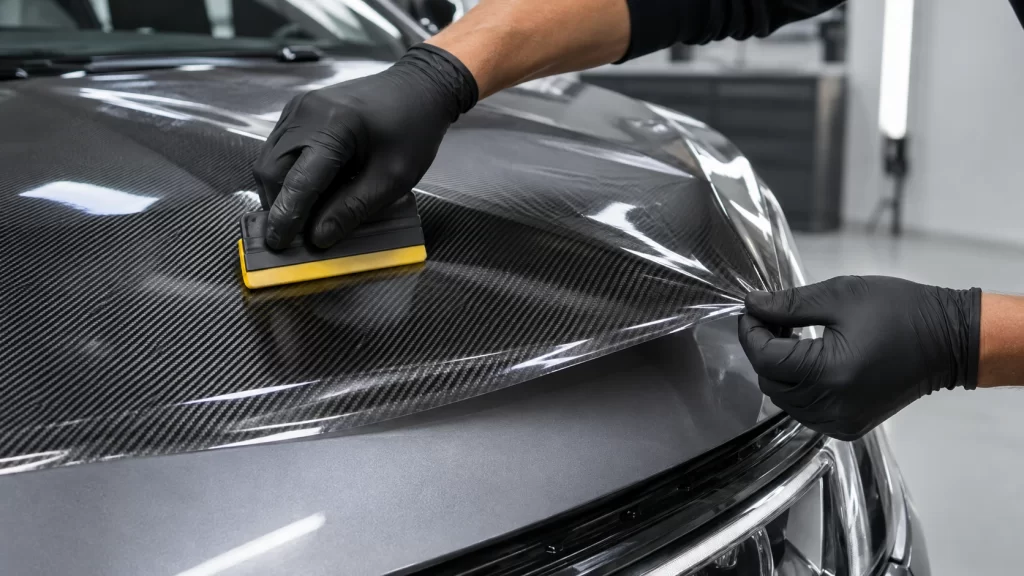
A carbon weave can change the character of a car without changing a single body panel. On a hood, it becomes the main feature. On a roof or a pair of mirror caps, it adds a quieter detail. Carbon fiber PPF brings that appearance together with a protective film, which makes it an interesting option for drivers who want a different finish and for installers building a wider service menu.
Choosing it takes more than finding a convincing photograph. Two rolls can look similar on a screen and behave differently around a mirror, along a hood edge, or after months outdoors. The film construction, pattern, adhesive, installation method, and written warranty all matter.
This guide explains how carbon fiber paint protection film differs from vinyl wrap and actual carbon fiber parts, what to check before buying, and how to plan a job that looks good up close. For trade buyers, it also covers sample evaluation and the information that makes a quotation useful. If you are exploring the category for your business, start with the Decowell colored PPF range and use the checks below to narrow down the specification.
PPF Purpose and How Paint Protection Film Protects Your Car
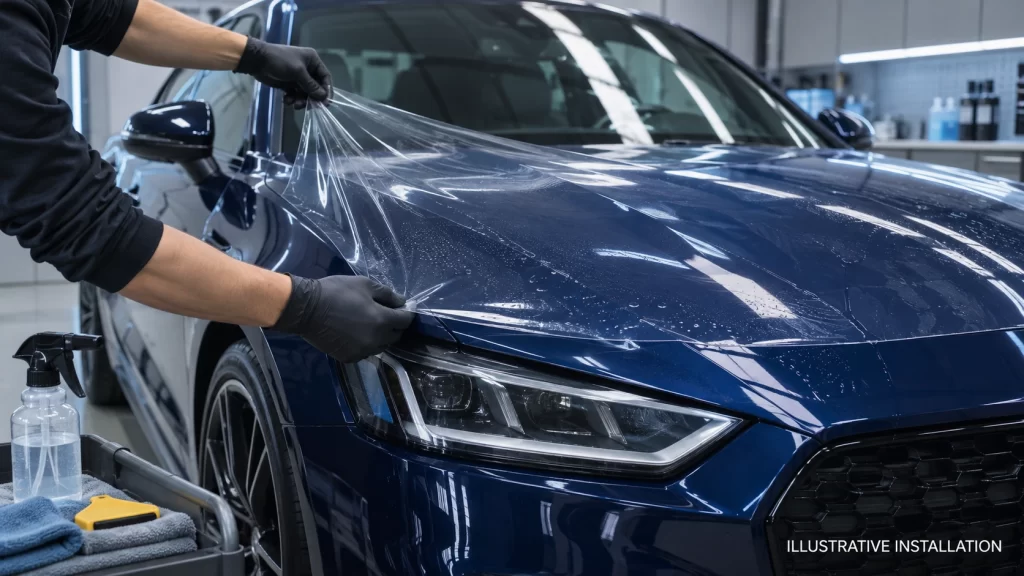
The purpose of PPF is to help protect a car’s paint from stone chips, light abrasion and some everyday contamination by putting a replaceable film over the painted surface. PPF stands for paint protection film. Clear versions preserve the visible colour, while other finishes can change the appearance as they add protection.
Think about a motorway journey. The bonnet meets grit kicked up by the vehicle ahead; later, a fingernail catches the paint behind a door handle. These are small contacts, but they leave marks in places owners notice. PPF gives those exposed areas another surface to take the wear.
Battleship Grey PPF for a Sharper Look and Everyday Paint Protection
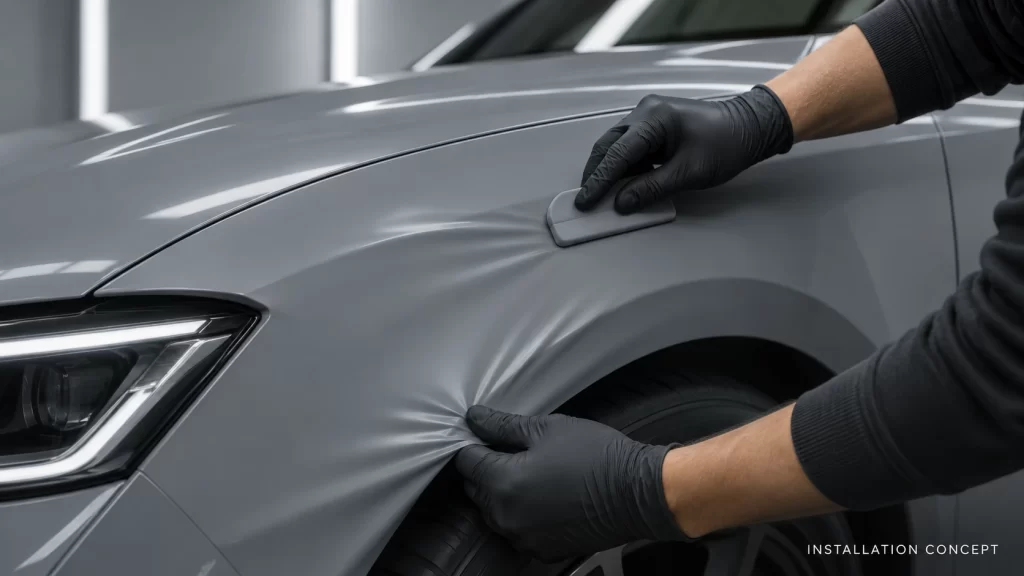
A grey car can look surprisingly different as you walk around it. A bright reflection traces the bonnet, the doors settle into a deeper tone, and a wheel arch suddenly looks more pronounced. That is much of the appeal of battleship grey: a restrained colour that gives the shape of the car room to speak.
For drivers considering that look, coloured paint protection film offers a way to change the visible colour while adding a protective layer over suitable paint. The useful questions go beyond the name on a swatch. Which grey do you actually like, what finish suits the car, and what protection does the selected film provide?