Home » Carbon Fiber PPF: The Armor That Turns Your Ride Into a Head-Turning Machine
Recent Posts
Carbon Fiber PPF: The Armor That Turns Your Ride Into a Head-Turning Machine
What Exactly Is Carbon Fiber PPF?
Let’s cut through the jargon right away.
Carbon fiber PPF is exactly what it sounds like — a paint protection film that looks like woven carbon fiber. But here’s the thing: it’s not just a pretty face. This stuff is built from thermoplastic polyurethane (TPU), the same heavy-duty material used in premium clear PPF, with a carbon fiber pattern embedded right into the film. Underneath that aggressive texture sits a genuine protective layer that stops rock chips, scratches, and road debris dead in their tracks.
Think of it as an armored suit with a designer pattern for your vehicle. It gives you that high-performance, motorsport-inspired look without the eye-watering cost of real carbon fiber parts — and without sacrificing an ounce of protection.
The global paint protection film market has exploded, jumping from USD 537.4 million in 2023 to a projected USD 971.5 million by 2033. Automotive applications alone made up over 68% of that market. And carbon fiber PPF? It’s riding that wave straight to the top of every car enthusiast’s wishlist.
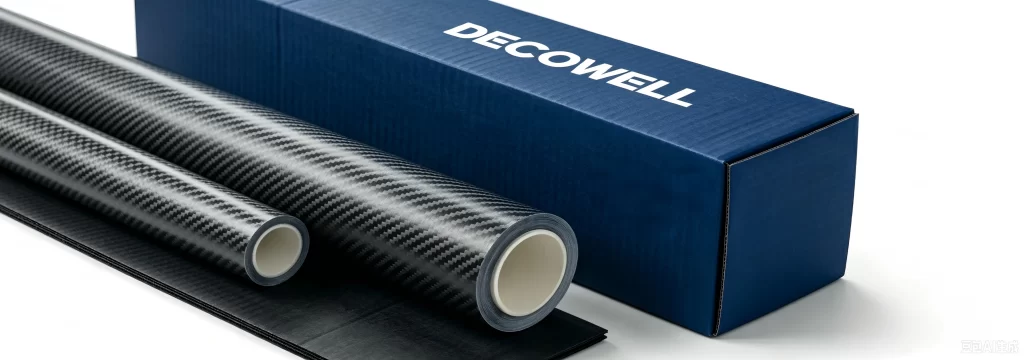
Table of Contents
Carbon Fiber PPF vs. Vinyl Wrap: The Difference Is Night and Day
Here’s where a lot of people get confused. And honestly? I don’t blame you. They look similar from a distance. But once you understand what’s actually going on under the surface, you’ll never confuse them again.
Vinyl carbon fiber wraps were never designed for long-term performance. They were designed for appearance — short-term appearance. Most are made from PVC, measure around 3-4 mils thick, and offer minimal protection against impacts. A stone can punch right through them and damage your paint underneath.
Carbon fiber PPF, on the other hand, is a completely different animal. It’s TPU-based, typically 7.5 to 8.5 mils thick, and engineered to absorb impacts, resist UV damage, and heal itself from light scratches. It’s more than twice the thickness of standard vinyl, which means it has way more depth, more gloss, and a much more realistic carbon fiber appearance.
Here’s a quick breakdown:
| Feature | Carbon Fiber Vinyl Wrap | Carbon Fiber PPF |
|---|---|---|
| Material | PVC | TPU polyurethane |
| Thickness | ~3-4 mil | ~7.5-10 mil |
| Primary purpose | Appearance only | Protection + appearance |
| Scratch resistance | Minimal | High |
| Stone chip protection | Very limited | Excellent |
| Self-healing | No | Yes (heat-activated) |
| UV resistance | Moderate | High |
| Lifespan | 2-3 years | 5-10+ years |
The bottom line? If you want a temporary look for a car show or a photoshoot, vinyl might do the job. But if you actually care about protecting your paint while looking amazing, carbon fiber PPF is the only real choice.
How Does Carbon Fiber PPF Actually Work?
Let me break down the science without making your eyes glaze over.
The TPU Foundation
Thermoplastic polyurethane is the backbone of any serious PPF. It’s flexible, impact-resistant, and incredibly durable. When a rock hits your hood at highway speed, the TPU layer absorbs that energy and disperses it across a wider area. Your paint underneath? Completely untouched.
Premium carbon fiber PPF typically uses aliphatic TPU — the good stuff that resists yellowing and stays clear (or in this case, stays beautifully carbon-textured) for years.
The Self-Healing Top Coat
This is where things get really cool.
Modern carbon fiber PPF features a self-healing top layer with something called “elastic memory”. When you get light scratches or swirl marks — you know, the kind that makes you cringe every time you walk up to your car — the film can actually repair itself.
Here’s how: apply heat. Sunshine works. Warm water works. A heat gun works. The polymer molecules in the top coat relax and flow back into their original position, effectively erasing those minor imperfections. It’s like the film has a built-in eraser for everyday wear and tear.
The Carbon Texture Layer
That gorgeous carbon fiber look isn’t printed on top of the film like a cheap sticker. It’s embossed into the material itself. High-quality carbon fiber PPF uses advanced 5D or 6D embossing technology that creates actual depth and dimension. Run your finger across it — you can feel the weave.
The pattern catches light differently from every angle, creating that shifting, layered effect that makes real carbon fiber so desirable. Flat vinyl prints can’t touch this level of realism.
Hydrophobic Surface
Water beads up and rolls right off. Dirt doesn’t stick as easily. Bird droppings and tree sap? They’re way less likely to etch into the surface. This hydrophobic property means your car stays cleaner longer and is much easier to wash.
UV and Weather Resistance
Carbon fiber PPF is built to handle the elements. It blocks UV rays to protect your paint from fading and prevents the film itself from yellowing over time. Rain, sun, snow, road salt — this stuff takes it all.
Why Car Enthusiasts Are Obsessed With Carbon Fiber PPF
1. You Get the Look Without the Cost
Real carbon fiber body parts are expensive. We’re talking thousands of dollars for a hood, hundreds for mirror caps. Carbon fiber PPF gives you that same aggressive, performance-inspired aesthetic at a fraction of the cost.
2. Your Paint Stays Perfect
Modern vehicles often have expensive factory finishes — metallic paints, matte clears, special edition colors. A repaint after stone chips or scratches can easily run into the thousands. Carbon fiber PPF acts as a sacrificial layer. Rocks hit the film, not your paint.
3. It Preserves Resale Value
Buyers pay a premium for vehicles with pristine factory paint. A car with protected body panels and professional PPF installation is simply more attractive to future buyers than one covered in chips and swirl marks.
4. Low Maintenance
The hydrophobic surface means less washing. The self-healing properties mean fewer visible imperfections. You spend less time stressing about your paint and more time actually enjoying your car.
Where Should You Apply Carbon Fiber PPF?
Carbon fiber PPF works beautifully on both exterior and interior surfaces. Here are the most popular applications:
Exterior:
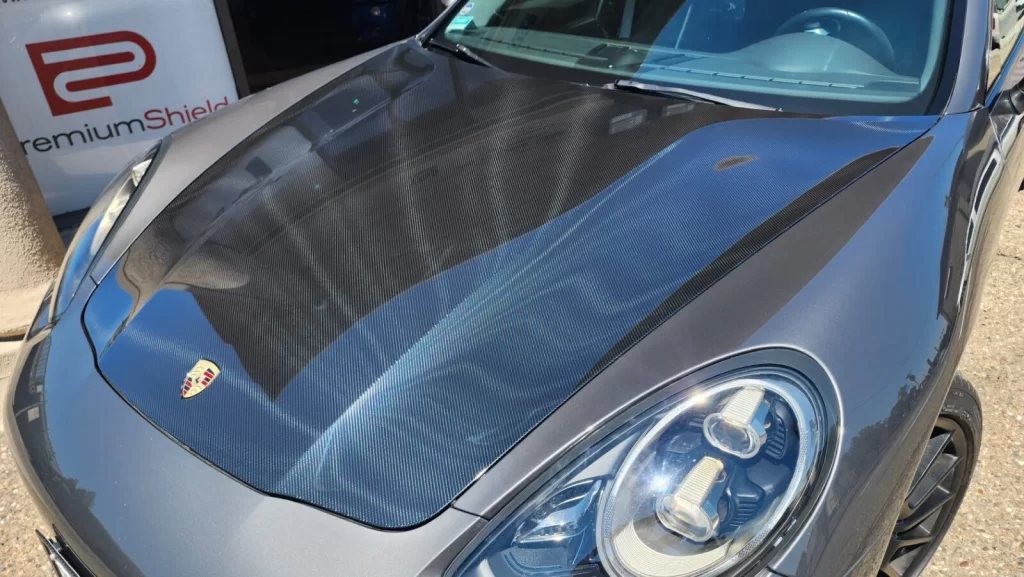
Hood — The most common choice. That aggressive carbon look right in your line of sight
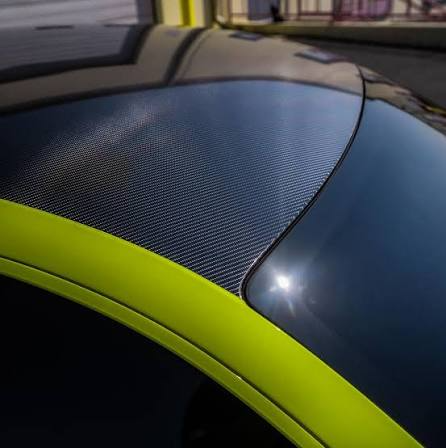
Roof — Creates a stunning two-tone effect, especially on lighter-colored cars
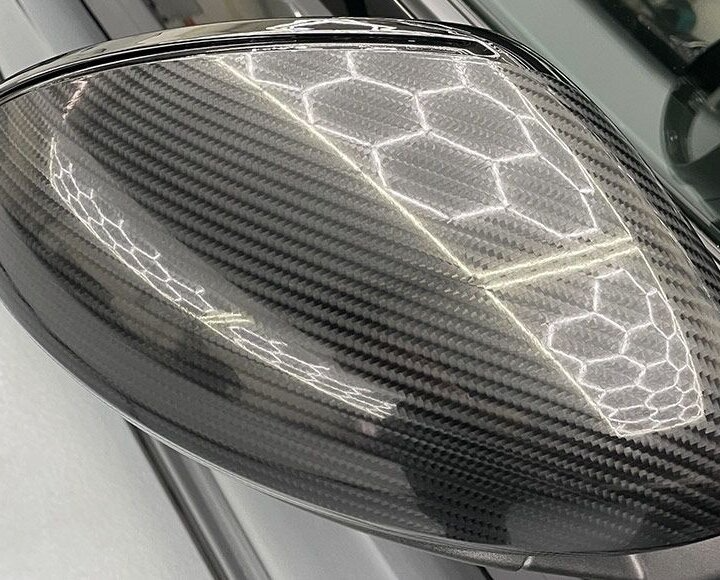
Mirror caps — Small accent that makes a big visual impact
Spoilers and diffusers — Emphasizes the sporty character of your vehicle
Front bumper and fenders — High-impact zones that need the most protection
Side skirts — Adds visual depth along the lower body
Interior:
Dashboard trim — Gives the cabin a premium, race-inspired feel
Door cards and center console — Protects high-touch surfaces from wear
Gear shift surrounds — Small detail that elevates the whole interior
Many owners choose a hybrid approach: carbon fiber PPF on accent panels where the visual impact matters most, and clear PPF everywhere else to maintain the factory color while still getting full protection.
What Does Real Carbon Fiber PPF Look Like?
Quality matters. A lot.
Premium carbon fiber PPF uses deep embossing technology that creates actual three-dimensional texture. The weave pattern has depth. Light reflects differently across each cell. Run your finger across it, and you can feel the raised weave pattern.
Cheap films? They print the pattern on a flat surface. No depth. No texture. No realism.
High-end carbon fiber PPF typically comes in several finish options:
Gloss carbon — Deep, reflective, wet-look finish with visible weave pattern
Satin carbon — Softer sheen, less reflection, still shows the weave
Matte carbon — Stealthy, low-sheen look, pattern still present but subdued
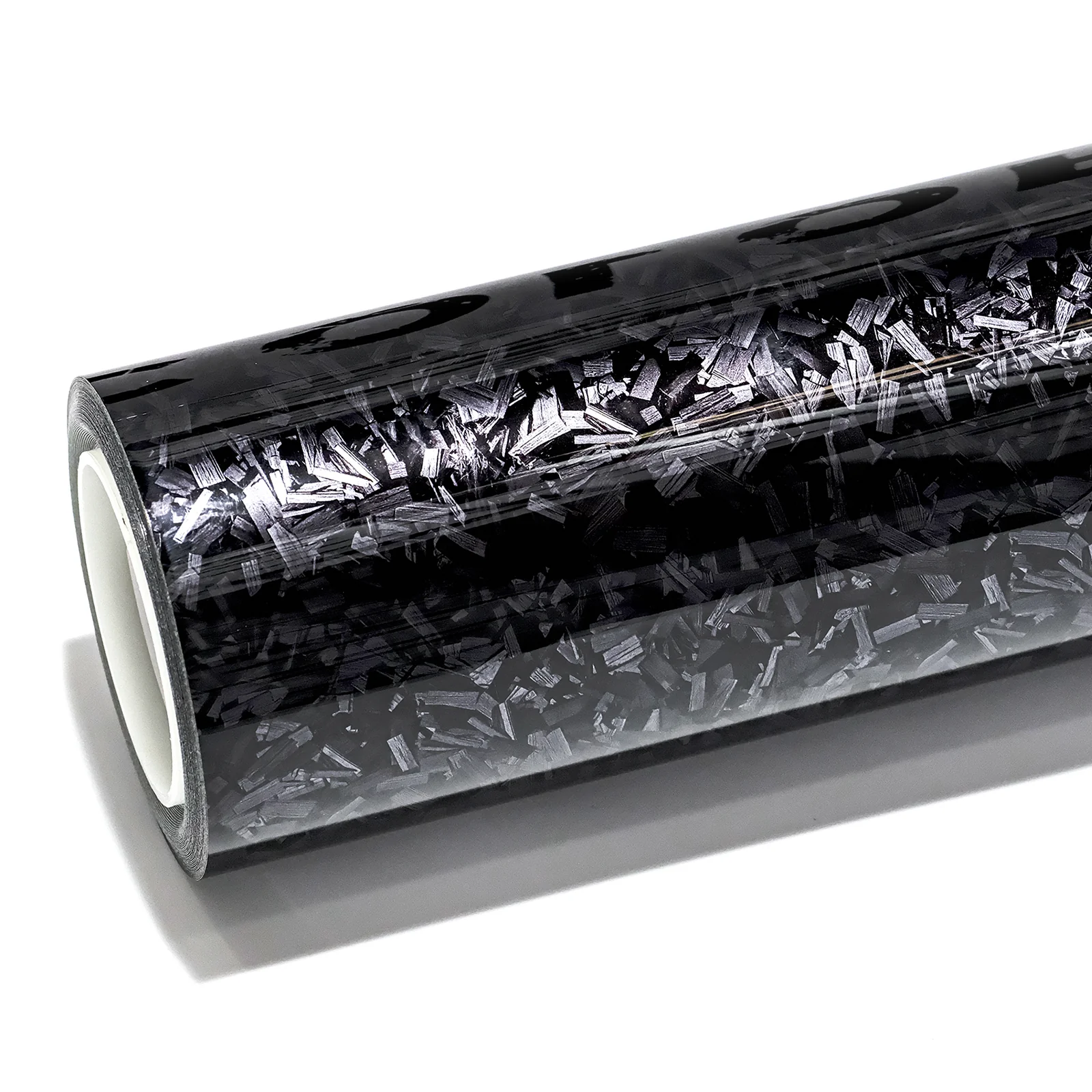
Forged carbon — Irregular, randomized pattern that looks more modern and high-tech than traditional woven carbon
The best films feature a single-layer TPU construction without lamination, which means no delamination issues down the road.
Is Carbon Fiber PPF Right for You?
Let’s be honest. Carbon fiber PPF isn’t for everyone. But if you check any of these boxes, it’s probably worth a serious look:
✅ You own a performance or luxury vehicle
✅ You want that aggressive carbon fiber look
✅ You drive frequently on highways (hello, rock chips)
✅ You want paint protection without permanent modification
✅ You want significantly better protection than vinyl wrap
✅ You care about preserving your vehicle’s resale value
If your main goal is just changing your car’s color, traditional vinyl wrap might be a more budget-friendly option. But if you want style and substance — if you want your car to look amazing and stay protected — carbon fiber PPF is the way to go.
How to Maintain Carbon Fiber PPF
Taking care of carbon fiber PPF is straightforward, but there are a few rules:
Do:
Hand wash regularly with pH-neutral car shampoo
Use microfiber towels for drying
Remove bird droppings, tree sap, and bug splatter promptly
Inspect edges periodically for any lifting
Don’t:
Use automatic car washes with abrasive brushes
Apply harsh solvents or aggressive polishes
Use waxes that contain silicones (they can build up and create haze)
Use sharp tools anywhere near film edges
For the self-healing properties to work their magic, occasional exposure to heat helps. Park in the sun. Use warm water during washing. The heat activates the polymer memory and keeps those minor scratches at bay.
Why More Shops Are Switching to Carbon Fiber PPF
Professional installers are moving away from vinyl carbon wraps for one simple reason: they fail. Edges lift. Texture flattens. Colors fade under UV exposure. And customers come back unhappy.
Carbon fiber PPF solves all of these problems. It stays put. It stays vibrant. It actually protects the paint underneath. Shops that offer carbon fiber PPF are able to upsell premium accent packages, replace low-margin vinyl jobs, and position themselves as protection experts — not just wrappers.
The demand is here. The technology is proven.
Frequently Asked Questions
Q1: Is carbon fiber PPF made from real carbon fiber?
No. Carbon fiber PPF is made from TPU (thermoplastic polyurethane) with a carbon fiber pattern embossed into the film. It looks like carbon fiber and protects like PPF — but it’s not a structural carbon fiber component.
Q2: Can carbon fiber PPF self-heal?
Yes. Premium carbon fiber PPF features a self-healing top coat that repairs light scratches and swirl marks when exposed to heat — from sunlight, warm water, or a heat gun. Deep cuts that penetrate the film cannot be repaired.
Q3: How long does carbon fiber PPF last?
With proper care, premium TPU-based carbon fiber PPF typically lasts 5 to 10 years. The actual lifespan depends on film quality, installation quality, climate conditions, and maintenance habits.
Q4: What’s the difference between carbon fiber PPF and carbon fiber vinyl wrap?
Carbon fiber vinyl wrap is primarily for appearance — it’s thinner, offers minimal protection, and typically lasts 2-3 years. Carbon fiber PPF is a TPU-based protective film that offers real impact resistance, self-healing properties, and 5-10+ years of durability.
Q5: Can I install carbon fiber PPF myself?
Professional installation is strongly recommended. Carbon fiber PPF is thicker and less forgiving than vinyl, requiring proper surface preparation, controlled environment, and experience handling TPU material. Poor installation can result in edge lifting, contamination, or visible seams.
Q6: Can carbon fiber PPF be removed without damaging paint?
Yes. When professionally installed and removed, carbon fiber PPF should not damage factory paint. The adhesive is designed to release cleanly.
Q7: Can I use carbon fiber PPF on the entire vehicle?
Yes, full vehicle coverage is possible. However, many owners choose to apply it to accent panels like hoods, roofs, mirror caps, and spoilers where the carbon fiber look makes the biggest visual impact.
Q8: Does carbon fiber PPF protect against rock chips?
Absolutely. That’s one of its primary functions. The TPU layer absorbs impact energy and disperses it, preventing damage to the paint underneath.
Q9: Will carbon fiber PPF yellow over time?
Premium carbon fiber PPF uses aliphatic TPU with UV inhibitors to resist yellowing. Cheap films may yellow, but quality products maintain their clarity and color for years.
Q10: Can I wax or ceramic coat carbon fiber PPF?
You can apply ceramic coatings specifically designed for PPF, but traditional car waxes containing silicones should be avoided as they can build up on the surface and create an inconsistent appearance.
Ready to Upgrade Your Ride?
Carbon fiber PPF represents the perfect intersection of style and substance. It delivers the aggressive, motorsport-inspired look that turns heads everywhere you go — while simultaneously protecting your vehicle’s paint from the daily abuse of the open road.
Decowell Film offers premium carbon fiber PPF solutions engineered for real-world performance. Our films feature advanced TPU construction, deep 5D carbon texture, heat-activated self-healing, hydrophobic surface technology, and UV resistance that keeps your car looking showroom-fresh for years.
Whether you’re protecting a daily driver or building a show car, Decowell Film has the carbon fiber PPF solution that fits your needs.
Explore Decowell Film’s carbon fiber PPF collection and discover how style and protection can finally work together.