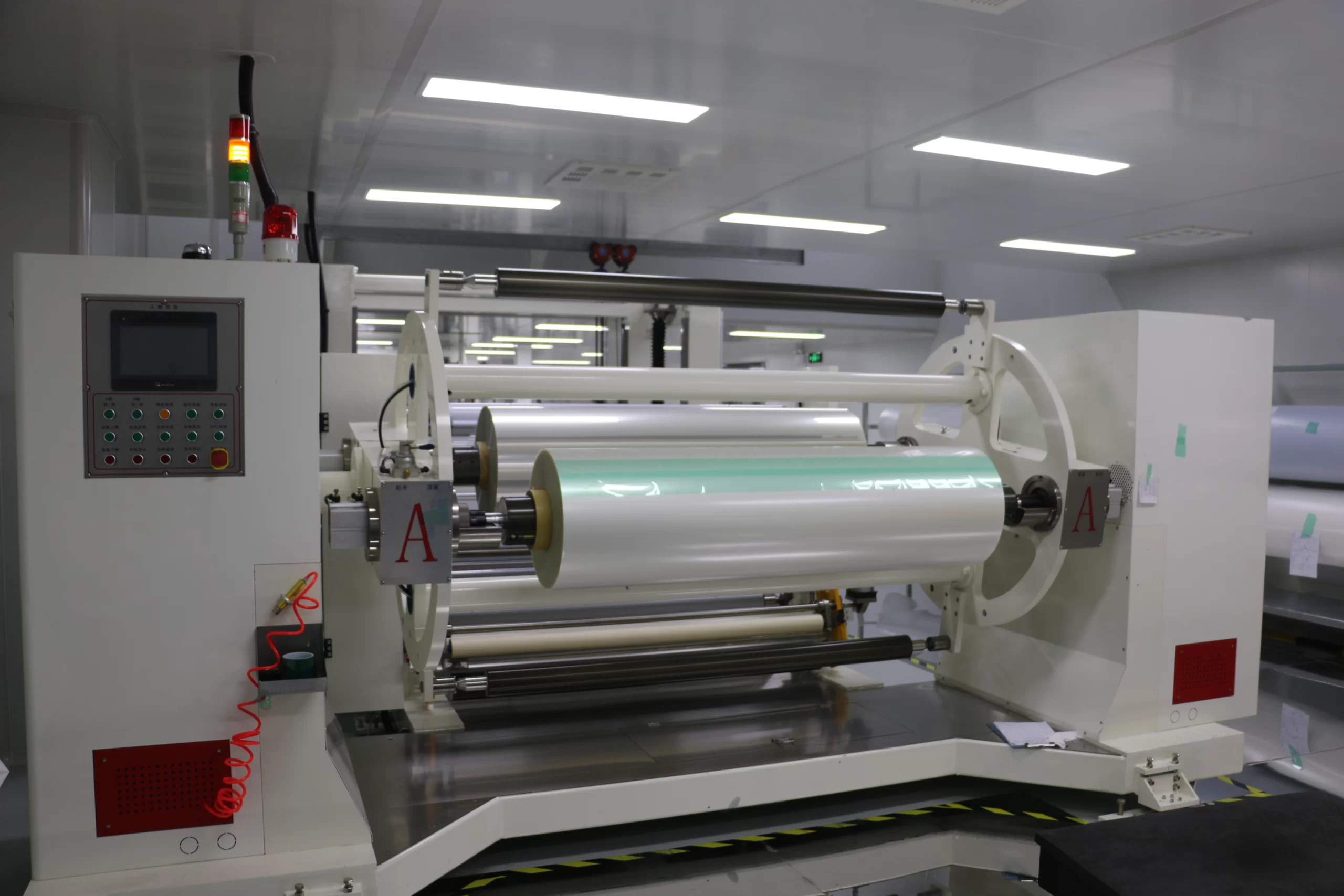
Home » Everything You Need to Know About Car Clear Film Protection
Recent Posts
Everything You Need to Know About Car Clear Film Protection
If you have ever wished you could protect your car‘s paint without changing how it looks, you’re not alone. Every day, thousands of drivers face rock chips, shopping cart dings, swirl marks from car washes, and bird droppings that eat through clear coat. The good news? Car clear film protection exists. It’s one of the smartest investments you can make to keep your paint looking showroom-fresh for years.
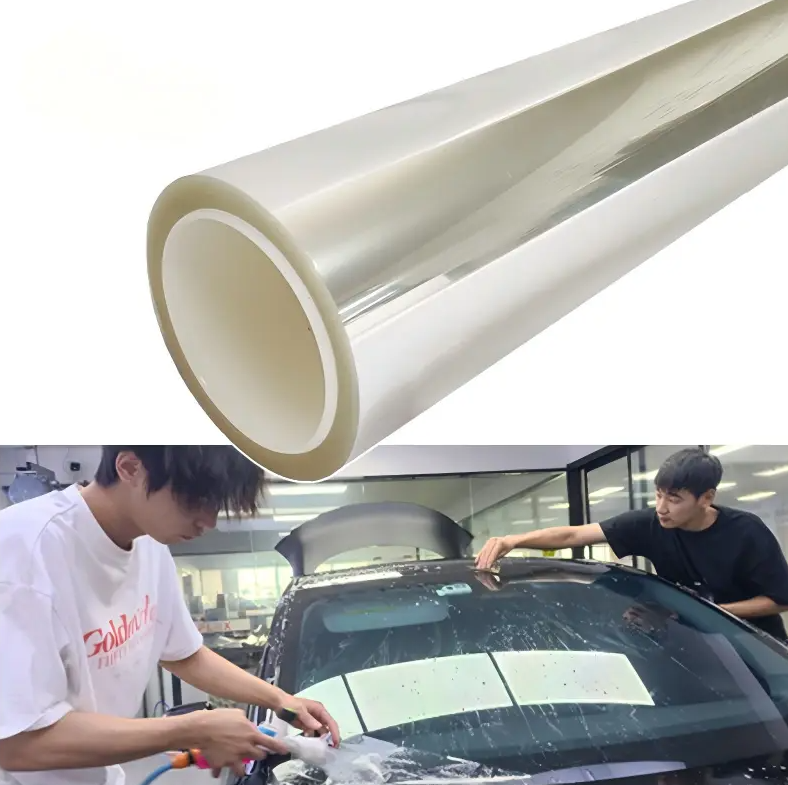
Table of Contents
What Is Car Clear Film Protection?
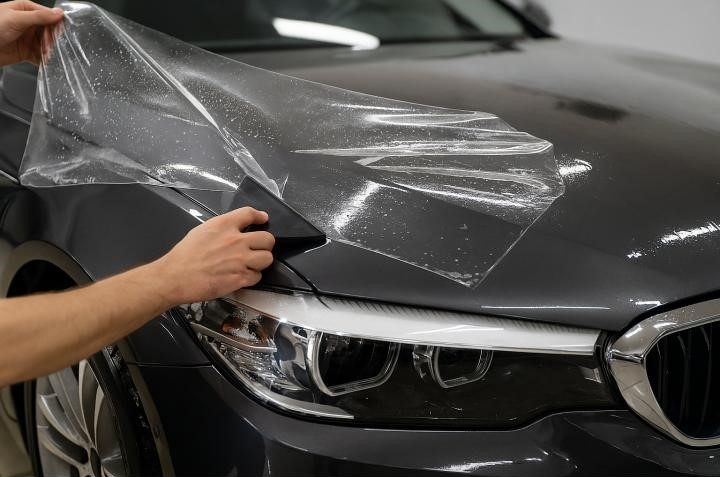
Car clear film protection — also known as paint protection film, clear PPF, or clear bra — is a transparent polyurethane layer applied directly to your vehicle‘s painted surfaces. Think of it as an invisible suit of armor. Once installed, it acts as a sacrificial barrier, absorbing impacts and blocking contaminants so your factory paint never has to take the hit.
Most people won’t even know it’s there — until it saves their paint from a nasty rock chip.
Modern car clear film protection has come a long way from the thick, yellowing “clear bras” of the early 2000s. Those old films were made from PVC, which turned brittle and discolored after a couple of years. Today’s premium films use thermoplastic polyurethane (TPU), a completely different material that is flexible, optically clear, and engineered to last.
How Does Self-Healing Paint Protection Film Work?
One of the most exciting advancements in car clear film protection is self-healing technology. And no, it’s not just marketing hype — it’s real polymer chemistry.
Self-healing PPF uses an elastomeric top coat with polymer chains that have “shape memory.” When a light scratch or swirl mark disrupts the surface, the polymers get displaced but not broken. Introduce a little warmth — from sunlight, warm water, or your engine heat — and those polymer chains relax back into their original arrangement, effectively closing the scratch.
The self-healing layer lives in the top coat, which is about 0.5 to 1 mil thick. Beneath it, the TPU core takes the impact from rocks and debris, while a pressure-sensitive acrylic adhesive bonds everything securely to your paint without leaving residue when removed.
Here‘s what self-healing can fix:
Swirl marks from automatic car washes
Light scratches from keys or fingernails
Bush and branch marks from tight parking
Shopping cart scuffs
Wash mitt marring
And here’s what it can‘t fix:
Deep gouges that cut through the full film
Punctures from sharp impacts
Cuts from blades
Chemical etching from prolonged exposure to bird droppings or bug splatter
So the key takeaway is this: self-healing handles the small stuff beautifully, but it’s not a magic shield against everything. For that, you need quality film and proper maintenance.
What Does Car Clear Film Protection Guard Against?
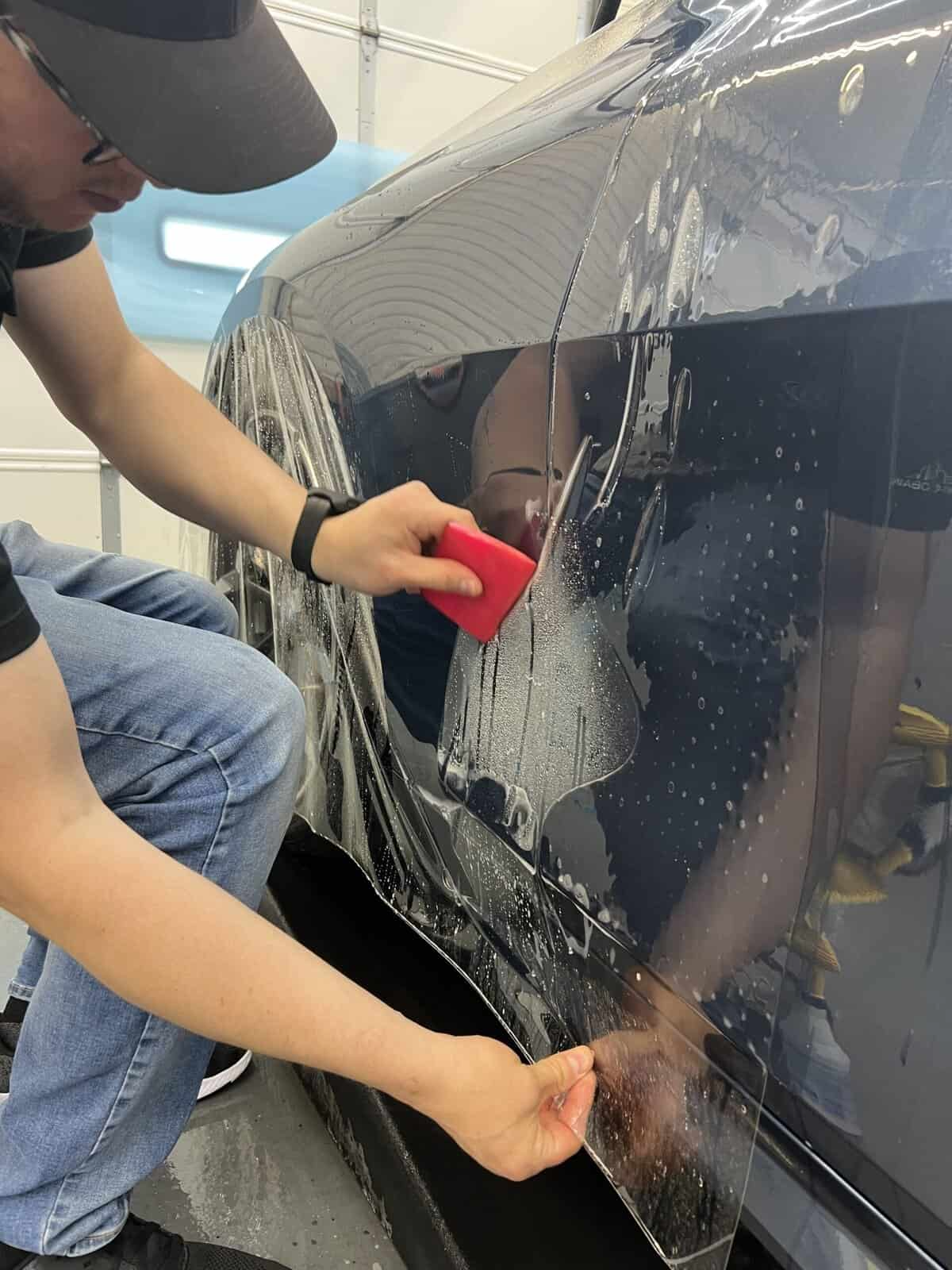
A transparent car skin film is designed to protect against the everyday hazards that slowly destroy your paint over time:
Rock chips and gravel — the number one enemy of highway-driven cars
Scratches and swirl marks — from car washes, brushes, and careless hands
Road debris — sand, salt, and small particles that sandblast your front bumper
Bug splatter and bird droppings — these contain acids that etch paint within hours
Tree sap and road tar — sticky stuff that bonds aggressively to clear coat
UV fading and oxidation — the sun slowly bleaches and dulls factory paint
Instead of your paint taking the hit, the film does. It’s like physical insurance for your vehicle’s finish.
And here’s something many car owners don‘t realize: ceramic coating won’t stop rock chips. Ceramic coating is a liquid polymer that bonds to your clear coat. It offers excellent hydrophobicity and chemical resistance, but it provides virtually zero impact protection. For that, you need a physical barrier — and that‘s exactly what car clear film protection delivers.
The smartest strategy? Many owners combine both: install PPF on high-impact areas like the hood, bumper, and side mirrors, then top it with a ceramic coating for easier cleaning and extra gloss.
Does Car Clear Film Protection Change the Look of Your Car?
Not at all — when installed properly.
High-quality TPU-based PPF is optically clear, meaning the depth of your metallic or pearlescent paint shines right through. The film is designed to preserve your original color and gloss, not dull it.
That said, you do have finish options:
Gloss finish — the most popular choice. It’s truly invisible and enhances your paint‘s natural shine.
Matte or satin finish — this gives your car a stealth, non-reflective look. Perfect if you want to convert a glossy factory finish into a frozen or matte appearance without repainting.
So whether you want invisible protection or a custom matte transformation, there’s a car clear film protection option for you.
How to Care for Your Clear Paint Protection Film
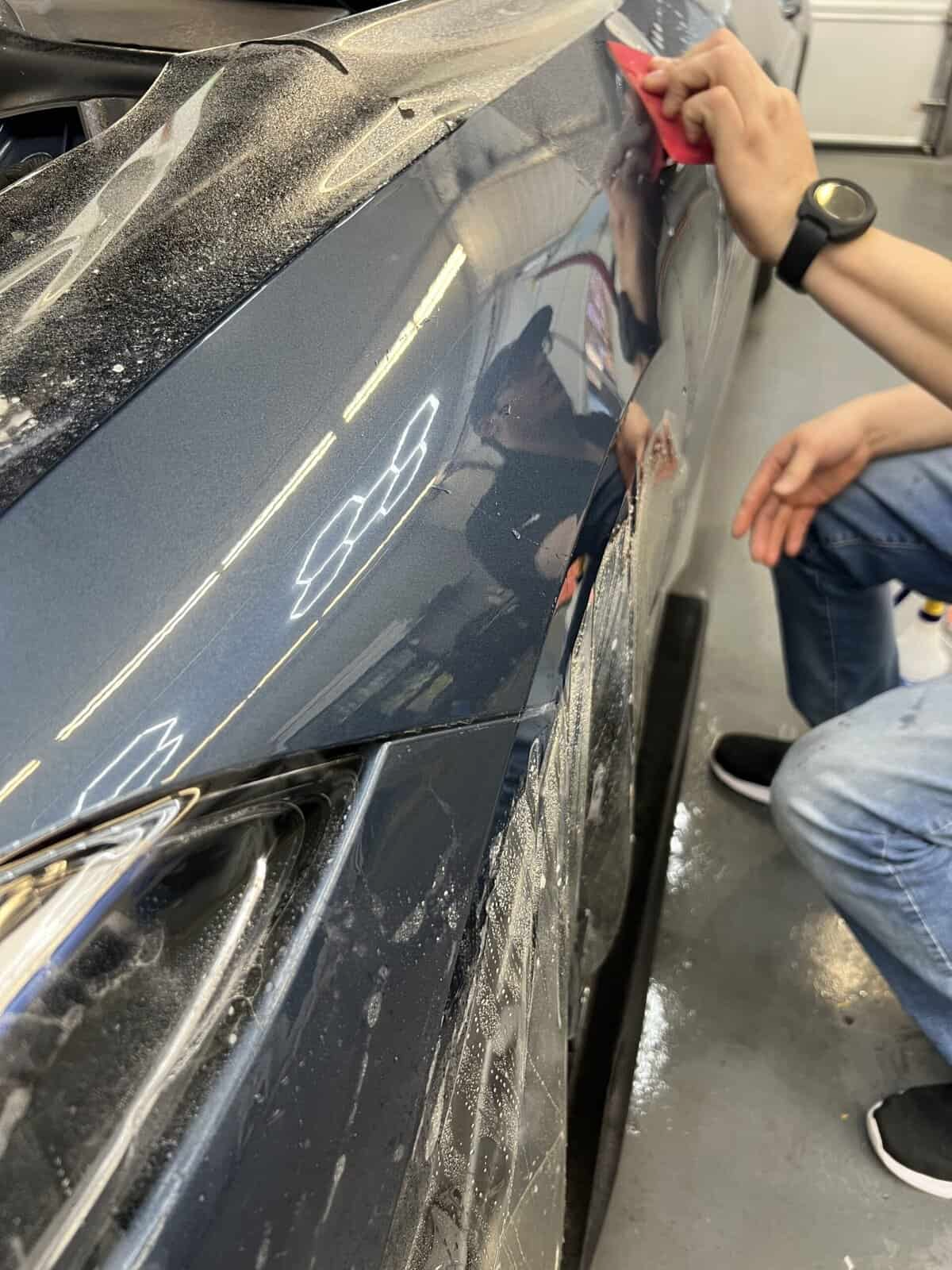
One common misconception is that once car clear film protection is installed, you can forget about it. Not quite. While PPF is more robust than paint, it still needs proper care to stay clear and durable over the long haul.
Here‘s what you need to know about PPF maintenance:
Wait before washing. After installation, don’t wash your car for at least seven days. This gives the adhesive time to fully bond to your paint. If you see any bubbles or lifted edges during this time, contact your installer to fix them. Washing too soon can cause peeling.
Use pH-neutral cleaning products. Aggressive solvents and alcohol-based cleaners can damage PPF over time. Stick with shampoos specifically labeled as PPF-safe.
Follow the two-bucket wash method. Fill one bucket with clean water and the other with water mixed with PPF-safe shampoo. Dip a microfiber mitt into the soapy bucket, wash a small section, then rinse the mitt in the clean water bucket before dipping it back. This prevents dirt particles from scratching the film.
Avoid high-pressure washing on edges. High-pressure water can lift the film and cause peeling. If you use a pressure washer, keep the nozzle at least three feet away and never spray directly at the edges. Use a wide spray setting instead of a sharp, concentrated jet.
Clean stains immediately. Bird droppings, tree sap, bug splatter, and fuel spills can damage even the best PPF if left too long. Wipe them off as soon as you spot them using a damp microfiber cloth and a PPF-safe cleaner.
Dry gently. After washing, avoid letting the car air dry, which can leave water spots. Use a clean, soft microfiber towel to pat the surface dry, or use a car blower to remove water without touching the film.
Inspect edges regularly. Make it a habit to check the edges of your PPF for any lifting or peeling. Catching issues early makes them much easier to fix.
For glossy PPF, you can even apply a light polish to remove fine scratches, followed by a protective wax designed specifically for PPF. For matte PPF, never use polishes — they‘ll add unwanted gloss. Instead, use products formulated for matte finishes that won’t alter the satin appearance.
Taking care of your car clear film protection isn‘t complicated, but it does require consistency. A little regular maintenance goes a long way toward keeping your investment looking flawless for years.
Is Car Clear Film Protection Worth It?
Here’s the honest answer: it depends on how much you care about your car‘s appearance.
If you’re the kind of owner who parks far away from other cars to avoid door dings, washes your car by hand, and notices every little imperfection in your paint — then yes, car clear film protection is absolutely worth it.
If you view your car as a tool that‘s going to get beat up anyway, then maybe it’s not for you.
But for most car enthusiasts — and even for everyday drivers who plan to keep their vehicles for a while — the math works out in PPF‘s favor. It maintains resale value, avoids costly paint repairs, and keeps your car looking newer for longer.
The global paint protection film market is growing fast. It was valued at over $630 million in 2025 and is projected to exceed $1 billion by 2034, driven by increasing sales of premium vehicles and growing consumer awareness about paint preservation. More and more car owners are realizing that protecting their paint isn’t just about vanity — it‘s about protecting their asset.
Why Car Clear Film Protection from Decowell?
When it comes to protecting your vehicle‘s finish, the quality of the film matters. Not all PPF is created equal, and the difference between a budget film and a premium TPU-based film shows up over time — in clarity, durability, and how well it resists yellowing.
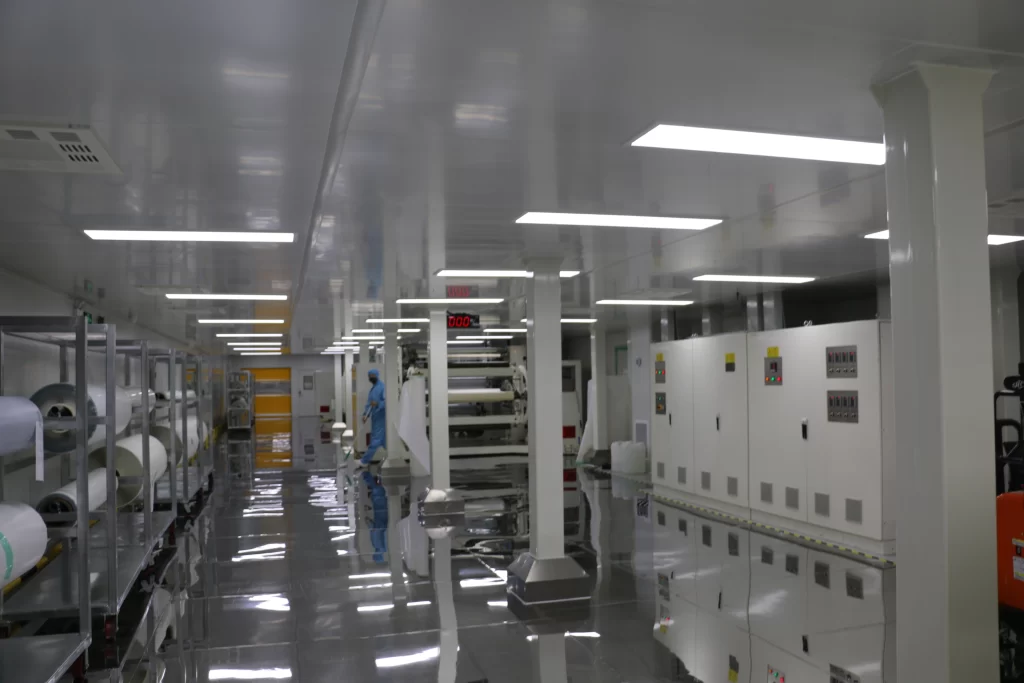
Decowell offers professional-grade car clear film protection engineered for real-world driving conditions. With advanced self-healing topcoats that erase light scratches and swirl marks using nothing more than the sun’s warmth, Decowell PPF keeps your paint looking flawless without constant maintenance.
Decowell provides both gloss and matte finish options, so you can either preserve your factory shine or transform your car with a stealth satin look. The film is constructed from premium thermoplastic polyurethane with strong optical clarity, letting your paint’s true color and metallic depth shine through. UV inhibitors help prevent fading and discoloration over time, keeping your finish vibrant years down the road.
Whether you want to protect just the high-impact areas — hood, bumper, mirrors, fenders — or go for full-body coverage, Decowell has solutions tailored to your needs. The film is engineered to be durable yet flexible, conforming smoothly to curves and contours without lifting or peeling.
And Decowell understands that application matters just as much as the film itself. That‘s why they support both professional installation and carefully designed DIY kits for confident car owners who prefer to take on the project themselves. Either way, you get the same high-quality material and the peace of mind that comes with knowing your paint is protected.
Your car deserves protection that works as hard as you do. With Decowell car clear film protection, you get an invisible shield that takes the hits — rocks, scratches, bugs, sun, and all the other everyday hazards — so your paint doesn’t have to.
Frequently Asked Questions
How long does car clear film protection last?
Premium TPU-based PPF can last many years when properly cared for. The exact lifespan depends on factors like driving conditions, climate, and maintenance habits. But quality film stays clear, doesn‘t yellow, and continues protecting your paint through years of daily use.
Does car clear film protection yellow over time?
Old PVC films had a notorious yellowing problem. Modern TPU-based films are engineered with advanced UV inhibitors that prevent yellowing and discoloration, keeping the film optically clear for the long haul.
Can I apply car clear film protection myself or do I need a professional?
Both options are available. Professional installation offers a flawless, bubble-free finish with tucked edges and minimal seams — ideal for high-end or show cars. DIY pre-cut kits allow you to install at your own pace and save on labor costs, perfect for budget-conscious owners who enjoy hands-on projects. Choose whatever fits your comfort level and budget.
Can you put paint protection film on headlights?
Yes. Headlights are actually one of the most vulnerable parts of your car. They get sandblasted by road debris and can yellow or cloud over time. Applying clear PPF to your headlights protects them from chips, cracks, and UV damage while maintaining perfect optical clarity.
Does car clear film protection stop rock chips?
Absolutely. That‘s arguably its most important job. The TPU core absorbs the kinetic energy of small impacts, preventing rock chips from ever reaching your paint. It’s the only paint protection solution that offers meaningful impact resistance.
Can I wash my car normally with PPF installed?
Yes, with a few adjustments. Use pH-neutral shampoos, avoid aggressive solvents, follow the two-bucket wash method, and be careful with pressure washer spray around the edges. No harsh brushes or abrasive polishes on matte PPF. Stick to these simple habits and your film will stay looking great.
Does PPF need to be waxed or coated?
Not necessarily, but you can. Many owners apply a ceramic coating on top of their PPF for even better hydrophobicity and easier cleaning. If you prefer wax, use one specifically formulated for PPF. For matte PPF, avoid regular waxes — they‘ll add unwanted gloss. Use matte-specific products instead.
What’s the difference between car clear film protection and ceramic coating?
This is one of the most common questions. Ceramic coating is a liquid polymer that bonds to your paint. It offers excellent chemical resistance and makes your car easier to clean, but it provides almost no impact protection. PPF is a physical urethane barrier. It stops rock chips and scratches. The best setup? PPF on high-impact areas, ceramic coating over everything for easier maintenance.
Your car’s paint is constantly under attack. From gravel on the highway to bird droppings in the parking lot, the threats are everywhere. Car clear film protection from Decowell gives you an invisible shield that takes those hits so your paint doesn’t have to. Whether you choose gloss for invisible protection or matte for a custom look, Decowell PPF keeps your car looking newer for longer — preserving your investment, your resale value, and your peace of mind.
Ready to protect what matters? Reach out to Decowell today and discover how car clear film protection can transform the way you care for your vehicle.