Home » Clear Automotive Film: How It Works, Why You Need It, and How to Choose
Recent Posts
Clear Automotive Film: How It Works, Why You Need It, and How to Choose
1. Introduction: Why Clear Automotive Film Is Gaining Ground
If you’ve been paying attention to the car care scene lately, you’ve probably noticed more and more people talking about clear automotive film. And honestly, the numbers speak for themselves. The global paint protection film market was valued at around 630 million dollars in 2025, and projections show it could hit over 1.08 billion by 2034, growing at a steady annual rate of about 6.2%. That’s a lot of car owners investing in this stuff.
So what’s driving all that growth? For starters, people are keeping their cars longer and want them to stay looking fresh. Whether you drive a luxury sedan, a rugged SUV, or a daily commuter, the factory paint underneath is constantly under attack — from road debris, UV radiation, bird droppings, tree sap, and those tiny stones that kick up on the highway. PPF works as a clear protective layer that absorbs impacts and prevents direct contact between the paint and harmful elements, keeping your car looking new for years to come.
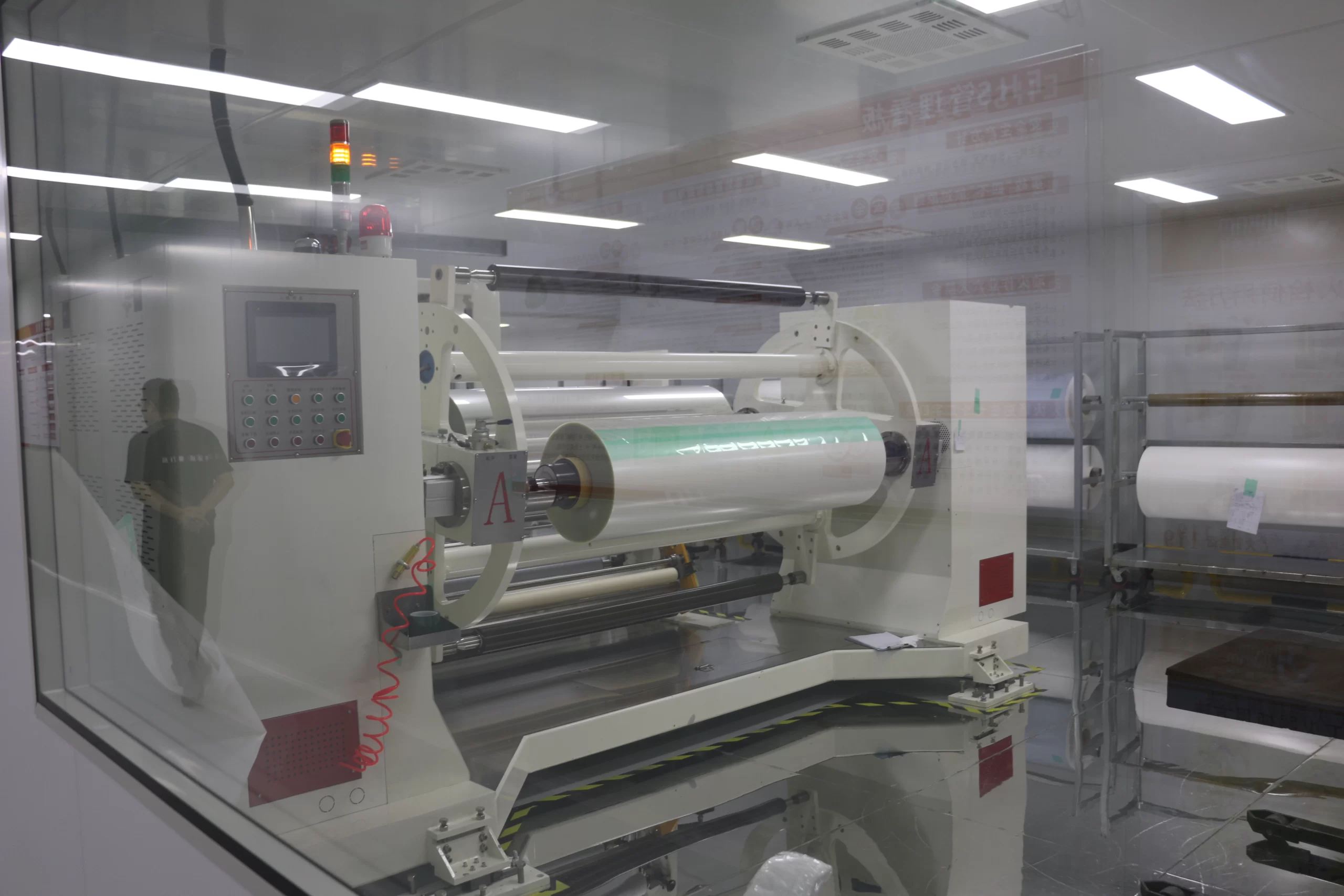
Enter Decowell. As a trusted name in automotive surface protection, Decowell specializes in high-performance clear automotive film designed to deliver exceptional clarity, self-healing capability, and long-term durability. Engineered using advanced TPU technology, Decowell clear automotive film helps preserve your car’s original paint while repelling physical and environmental damage — without altering the factory color or finish.
In this guide, we’ll walk you through everything you need to know about clear automotive film: what it is, how to choose the right one for your vehicle, how it compares to ceramic coating and vinyl wrap, and how to keep it in top shape for years to come.
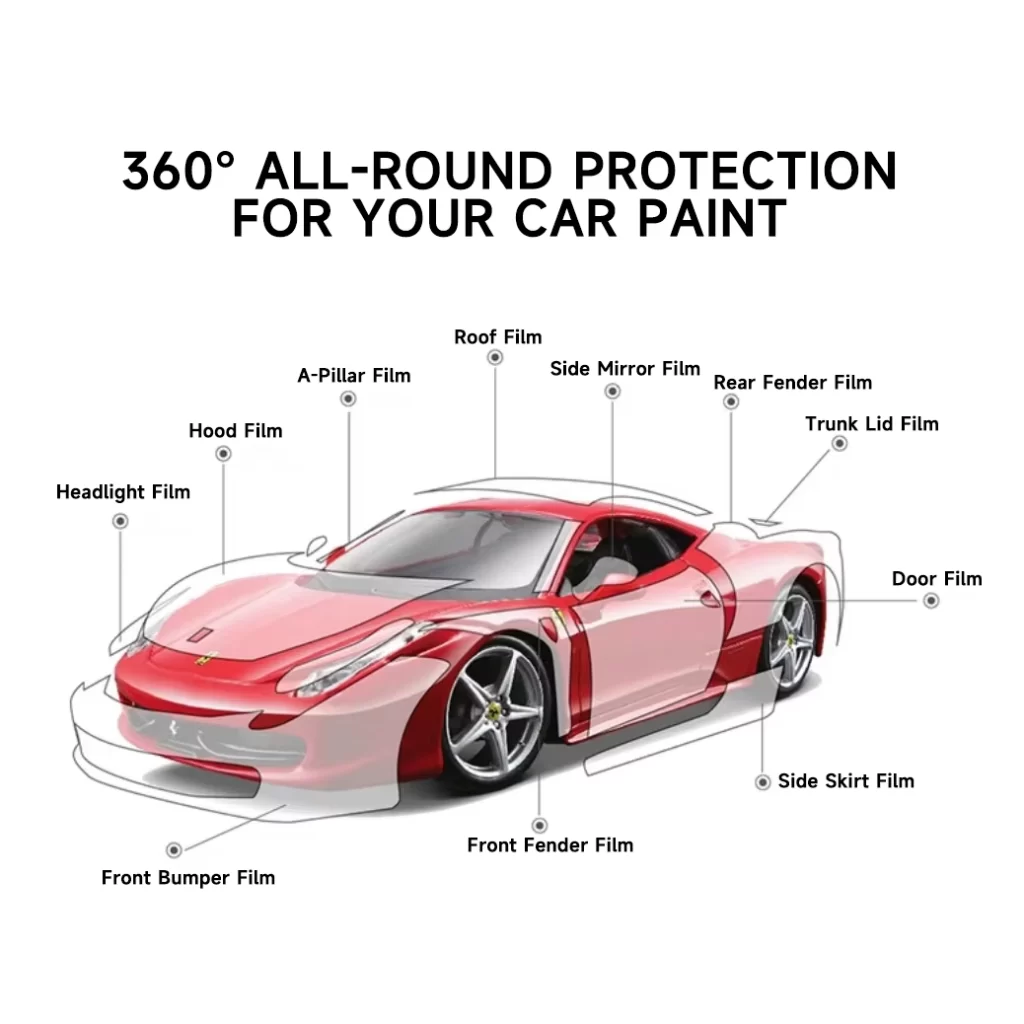
Table of Contents
2. What Exactly Is Clear Automotive Film?
Let’s start with the basics. Clear automotive film — often referred to as paint protection film (PPF), clear bra, or car clear protective film — is a transparent, durable polymer layer applied directly to a vehicle’s painted surfaces. Think of it as an invisible shield. It’s typically made from a flexible, high-strength polyurethane material that gets bonded to the paint using a specially formulated adhesive.
Here’s how it works. The film acts as a physical barrier that sits between your car’s paint and everything the outside world throws at it — tiny pebbles, road salt, bug splatter, even careless shopping carts. Modern clear automotive film comes with self-healing properties, meaning that if the film gets a light scratch or swirl mark, a bit of heat (from sunlight or a heat gun) makes those imperfections disappear. The film also absorbs UV radiation, preventing the paint underneath from fading or oxidizing over time.
Most quality clear automotive films on the market today are around 6 to 10 mils thick. For reference, that’s roughly four times thicker than a typical vinyl wrap and thousands of times thicker than a ceramic coating layer. That thickness is what gives PPF its ability to physically stop rocks and debris before they hit your paint.
3. The Big Three: Clear Automotive Film vs. Ceramic Coating vs. Vinyl Wrap
One of the most common points of confusion among car owners is understanding the difference between PPF, ceramic coating, and vinyl wrap. They’re often lumped together, but they actually serve completely different purposes.
Clear Automotive Film (PPF) is designed for physical protection. It stops rock chips, scratches, and road debris from reaching your paint. It’s thick, it’s tough, and it self-heals minor scratches with heat.
Ceramic coating, on the other hand, is a liquid polymer that chemically bonds to your paint. It creates a hydrophobic surface, making water bead up and roll off — carrying dirt and contaminants with it. Ceramic coating also adds gloss and provides some UV protection. But here’s the key difference: it will not stop rock chips or scratches from physical impacts. It’s a microscopic layer, not a physical shield.
Vinyl wrap is primarily about looks. It changes your car’s color or finish and offers some light scratch resistance, but it doesn’t absorb impacts like PPF does. Vinyl wraps are thinner and not engineered to stop rocks or debris.
So which one do you need? If you want to change your car’s color, go with vinyl wrap. If you want easy cleaning and extra gloss, consider ceramic coating. But if you care about keeping your paint free from rock chips and scratches — especially if you do a lot of highway driving — clear automotive film is the answer. And here’s the best part: you can actually use all three together. Many owners apply PPF to high-impact areas, then top it with ceramic coating to get the best of both worlds — physical protection on the front end, and hydrophobic ease everywhere else.
4. Top Benefits of Installing Clear Automotive Film on Your Vehicle
Still on the fence? Here’s a closer look at what clear automotive film actually does for your car.
Prevents rock chips and scratches. This is the number one reason people buy PPF. Stone chips are inevitable if you drive on highways or rural roads. The clear film absorbs those impacts instead of your clear coat.
Blocks UV damage. Sun exposure is brutal on paint. Over time, UV rays cause fading, oxidation, and dullness. Premium clear automotive film blocks the majority of UV radiation, keeping your paint vibrant for longer .
Self-healing surface. Light scratches and wash-induced swirl marks can vanish with a bit of heat. Park your car in the sun, and minor blemishes repair themselves automatically.
Preserves resale value. A car with flawless original paint is worth significantly more. The film keeps the factory finish intact, so when it’s time to sell, your paint looks as good as the day you bought it.
Removable without damage. Unlike repainting, clear film can be professionally removed with no residue, leaving the original paint untouched.
Easy maintenance. The film creates a smooth, low-friction surface that’s easier to clean than bare paint. Dirt and grime don’t stick as easily, and you can wash it just like you normally would — with a few precautions we’ll cover later.
5. How to Choose the Best Clear Automotive Film: Key Factors to Consider
Not all clear automotive films are created equal. When you’re shopping around, here’s what you should keep an eye on.
Material. The best clear films are made from TPU (thermoplastic polyurethane). TPU is flexible, durable, and resistant to yellowing over time. Some lower-end films use PVC or TPH, which are cheaper but more prone to discoloration and less flexible.
Thickness. Films typically range from 6 to 10 mils. Thicker films generally offer better protection against rocks and debris, but they can be slightly harder to install on complex curves. For most daily drivers, an 8 mil film strikes a good balance.
Self-healing properties. This is a big one. High-quality films can repair light scratches and swirl marks when exposed to heat. This keeps your car looking new with minimal effort.
UV resistance and anti-yellowing. The film should contain UV inhibitors that prevent the material itself from yellowing under prolonged sun exposure. Good films stay crystal-clear for years.
Clarity. A good clear automotive film should be virtually invisible once installed. You shouldn’t be able to tell it’s there unless you’re standing right next to the car.
Finish match. If your car has a glossy paint job, you want a glossy film. If you have matte or satin paint, there are films designed specifically for those finishes so the texture remains consistent.
6. Understanding PPF Thickness: What’s Right for You?
Thickness is measured in mils — one mil equals one-thousandth of an inch. Here’s a simple breakdown of what different thickness levels offer.
| Thickness | Best For | Key Characteristics |
|---|---|---|
| 6-7 mil | Light protection, easier installation on complex shapes | More flexible, conforms well to tight curves |
| 8 mil | Daily driving, balanced protection | The industry standard — good impact resistance without too much installation difficulty |
| 8.5-10 mil | Off-road, harsh environments, high-risk front areas | Maximum rock and debris protection, but requires more skill to install |
For the majority of drivers, an 8 mil film hits the sweet spot — strong enough to stop rock chips, yet flexible enough to wrap around bumpers and side mirrors. If you take your car off-road or live somewhere with gravel roads, consider going thicker on high-impact panels like the hood and front bumper.
7. The Self-Healing Car Film Advantage: How Heat Repairs Minor Scratches
Self-healing technology is one of the coolest features of modern clear automotive film. Here’s how it works.
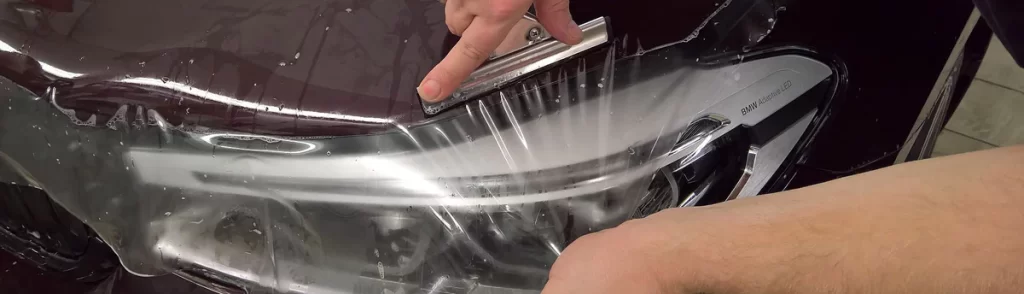
The top coat of the film contains specialized elastomeric polymers that have a “memory” property. When a light scratch or swirl mark appears on the surface, it’s actually a temporary deformation of the coating, not a cut through the material. When heat is applied — from sunlight, warm water, or a heat gun — the polymer chains relax and the surface flows back to its original smooth state.
This means that a lot of the minor wear and tear that would normally accumulate on your paint — car wash swirls, accidental fingernail scratches, light brushing against bushes — just disappears. Park your car in the sun for an afternoon, and those small imperfections heal themselves.
Of course, self-healing has its limits. Deep scratches that penetrate through the top coat won’t disappear. But for the day-to-day stuff that makes paint look dull over time, self-healing clear automotive film is a real game-changer.
8. UV Protection and Anti-Yellowing: Why It Matters for Long-Term Clarity
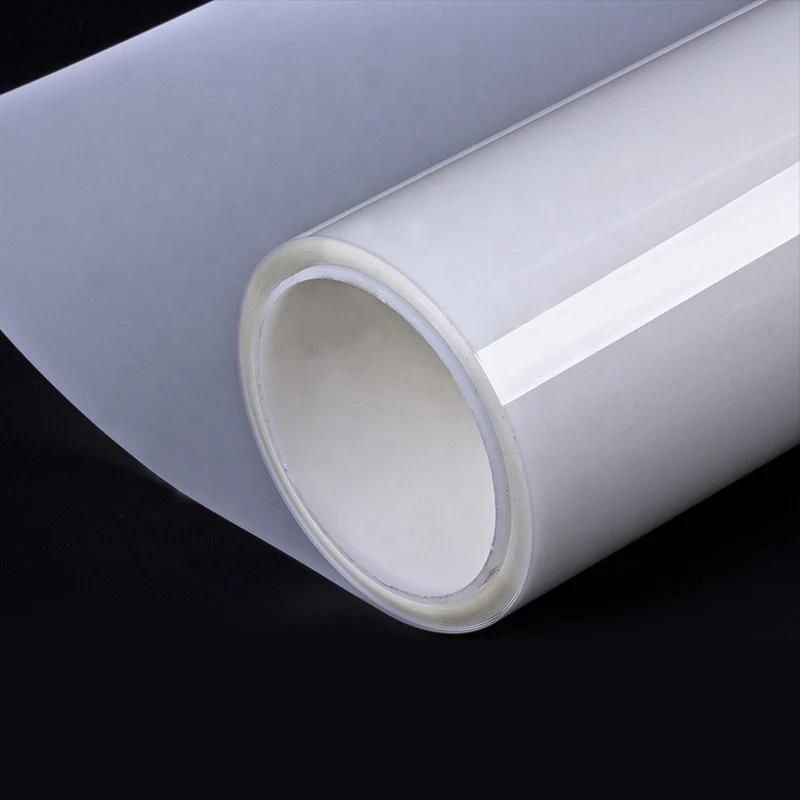
One of the biggest fears with clear film is yellowing. Older-generation PPF had a reputation for turning yellowish after a few years in the sun. Modern high-quality films have solved that problem. Premium clear automotive film contains UV-stabilizing additives that absorb and dissipate harmful rays, protecting both the film itself and the paint underneath.
Why does this matter for you? First, it keeps the film looking completely transparent. No yellow tint, no hazy appearance — just the original color of your car showing through perfectly. Second, it protects your paint from the gradual fading and oxidation that come with sun exposure.
If you live somewhere with strong year-round sunlight, don’t skip on UV protection. It’s the difference between a film that looks invisible for years and one that starts looking tired after a couple of summers.
9. TPU vs. TPH: Which Clear Automotive Film Material Performs Better?
When you start shopping for clear automotive film, you’ll run into two main material categories: TPU and TPH.
TPU (Thermoplastic Polyurethane) is the premium choice. It’s flexible, highly durable, resistant to yellowing, and works well with self-healing top coats. TPU material handles extreme temperatures without becoming brittle, and it conforms smoothly to complex curves. Most importantly, TPU provides superior impact resistance — the kind that stops a rock from chipping your hood paint.
TPH (Thermoplastic Polyolefin) is a lower-cost alternative. It’s less flexible, more prone to discoloration over time, and doesn’t offer the same level of protection against physical impacts. Some lower-tier films use TPH as a budget option, but you’ll get less longevity and performance.
The short version? Go with TPU if you care about long-term protection. It costs more upfront, but you’ll get more years of reliable service and better clarity throughout the life of the film. Decowell clear automotive film uses advanced TPU construction to deliver lasting performance, self-healing properties, and exceptional transparency — without the yellowing that plagues budget options.
10. Professional Installation vs. DIY PPF: Which Route Should You Take?
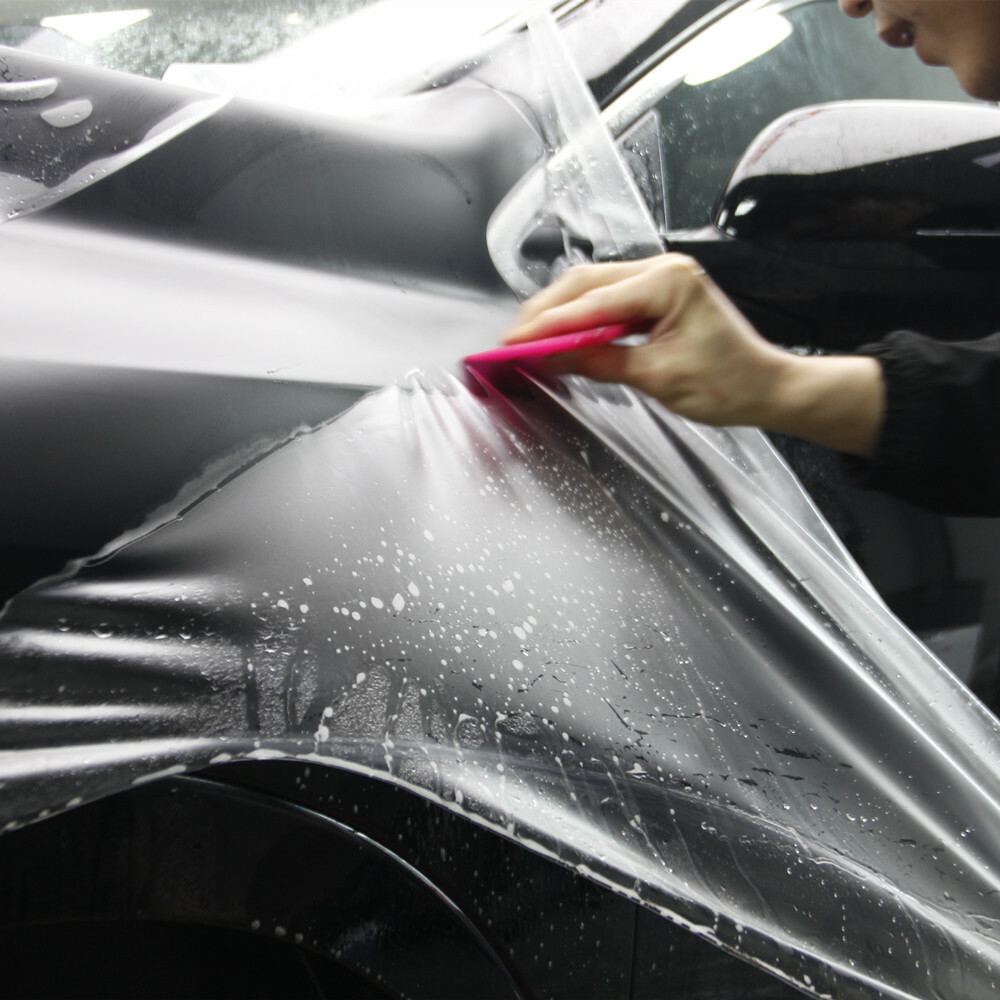
This is a big decision. Installing clear automotive film isn’t the same as slapping on a phone screen protector. It takes patience, skill, and the right environment.
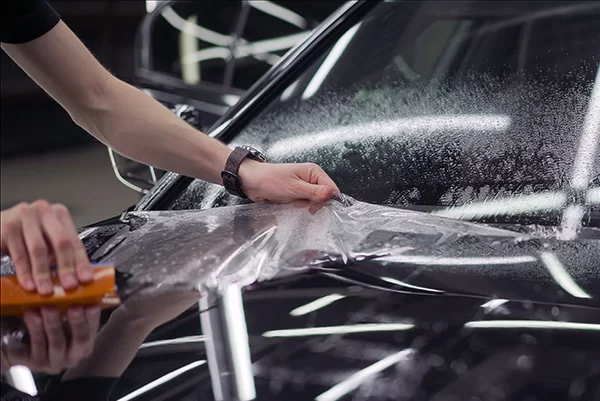
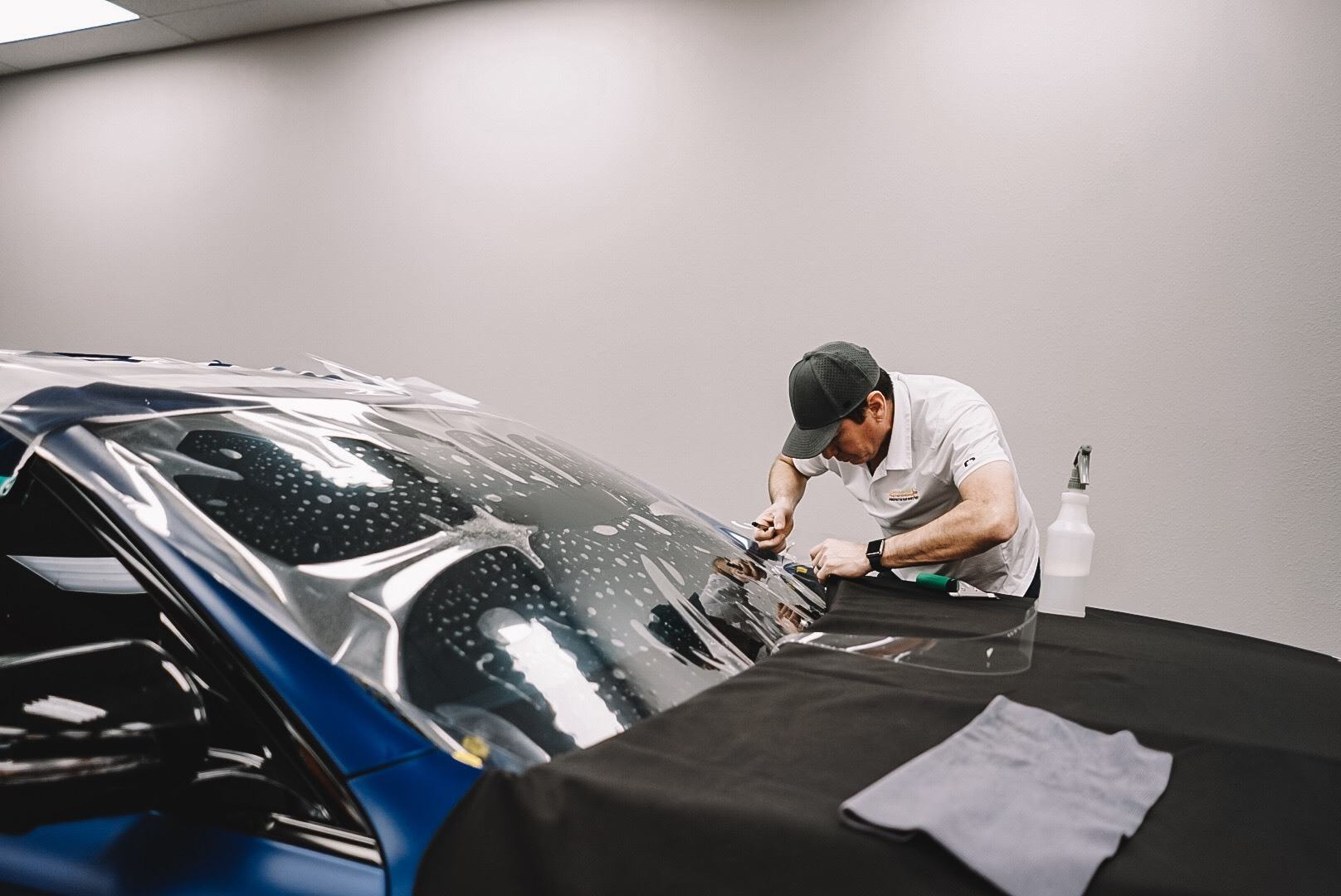
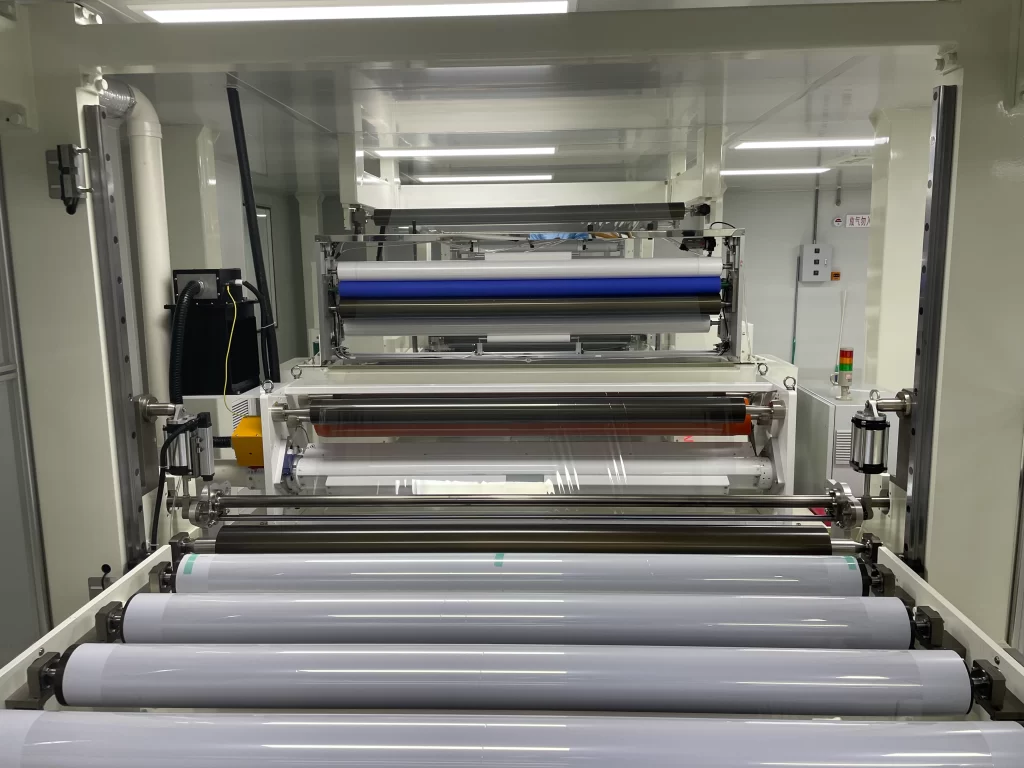
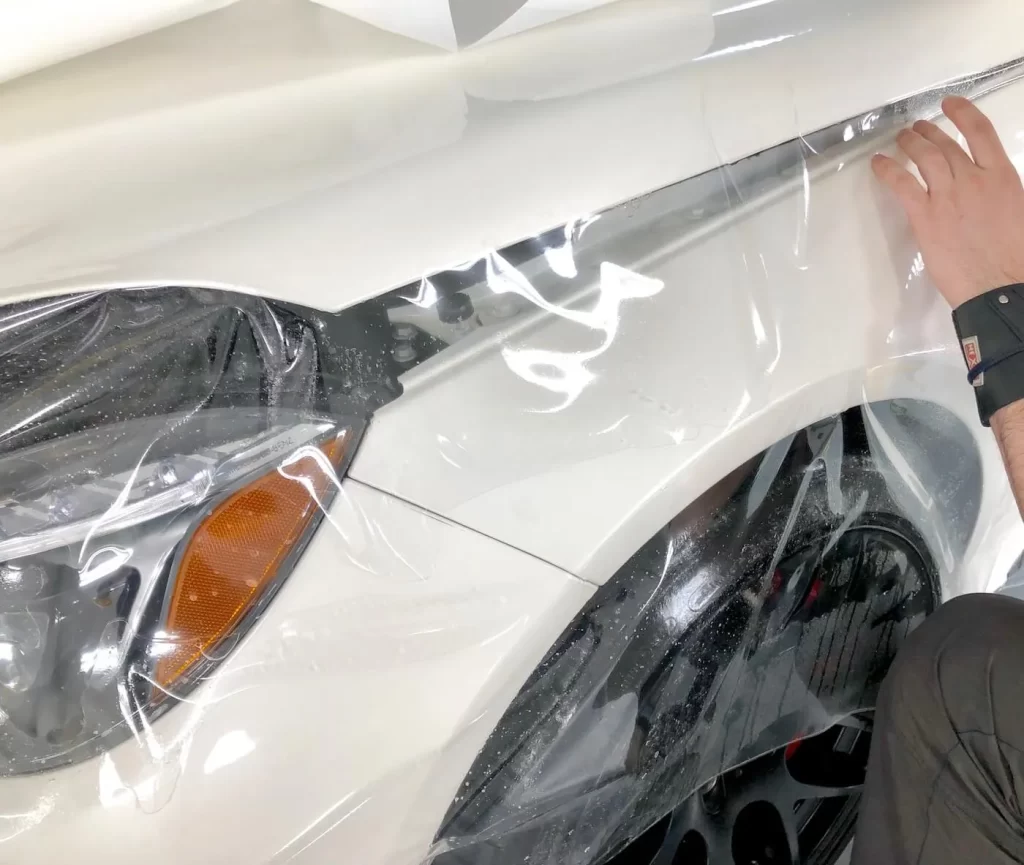
Professional installation is the recommended route for most vehicle owners. A trained installer works in a dust-free bay, uses specialized tools, and knows how to stretch and mold the film around complex curves — things like bumper intakes, side mirrors, and door handles. The result is almost invisible, with edges tucked neatly into panel gaps. Minimizing dust, removing all contaminants, and proper edge wrapping are all things professionals do that are very hard to replicate at home [17†L7-L10].
The film itself is only half the battle. Professional installation protects the film and, by extension, your car, for years to come.
DIY installation is cheaper — you’re paying for just the film and basic tools. Pre-cut kits designed for specific vehicle models make the process more approachable. However, the learning curve is steep, and mistakes are often permanent. Dust particles trapped under the film, air bubbles, misaligned panels, and stretched film that pulls away from edges are common issues with first-time installs.
| Professional Installation | DIY PPF | |
|---|---|---|
| Cost | Higher (includes labor) | Lower (material only) |
| Finish Quality | Flawless, invisible | Varies with skill |
| Complexity Handling | Handles all curves | Difficult on complex panels |
| Time | Typically a few days | Variable (weekend+), risk of redo |
If your vehicle is brand new, luxury, or custom-painted, professional installation is worth the investment. If you’re comfortable with hands-on projects and have a clean, climate-controlled space to work, a DIY pre-cut kit on a simpler vehicle can be a rewarding experience.
11. How to Properly Measure and Prepare Your Vehicle for Clear Film Application
Whether you’re installing yourself or hiring a professional, the prep work determines the final result. A dirty surface or trapped contaminants will show up under the clear film forever.
Start by giving your car a thorough wash to remove all dirt and grime. After washing, use a clay bar treatment to pull out embedded contaminants that washing alone won’t remove. The finish needs to be completely smooth to the touch — any bump or imperfection will be visible through the film.
Next, measure each panel carefully before cutting the film. Use a soft tape measure and note the width, height, and contours of each area you plan to cover. Many people forget to add extra material around curves and edges. Always cut slightly larger than the panel — you can trim excess afterward, but you can’t add back what’s missing.
Any scratches or imperfections in the paint should be addressed before the film goes on. Once the clear automotive film is applied, it will seal those imperfections underneath. If you want the paint to look perfect, fix the paint first.
12. Clear Automotive Film Maintenance: Best Practices to Extend Its Life
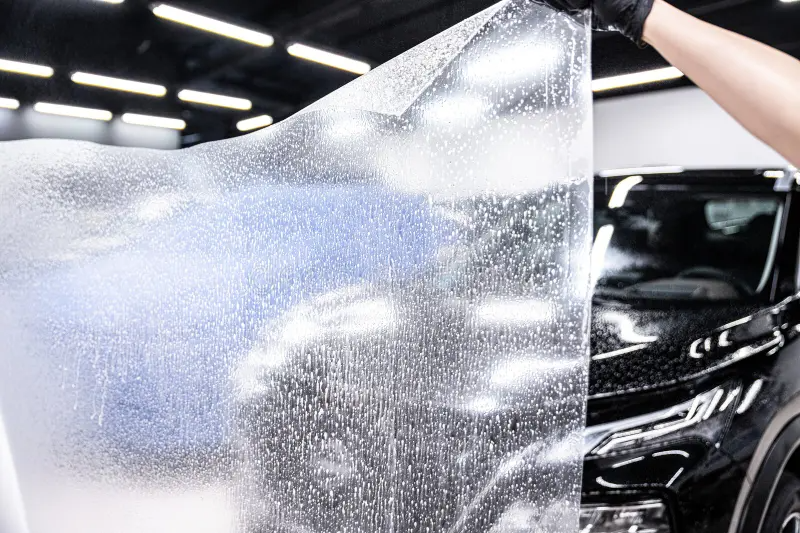
A quality clear automotive film installed correctly will last for years, but like anything else, it needs the right care to stay looking its best. When it comes to washing, there are a few golden rules.
Stick to hand washing with a soft microfiber wash mitt and pH-balanced car shampoo. Avoid automatic car washes with abrasive brushes — they can lift the film’s edges and create micro-scratches on the surface. If you must use a pressure washer, keep the nozzle at least 12 inches from the film and avoid spraying directly at edges for extended periods.
For drying, use a soft microfiber towel or an air blower to avoid dragging dirt across the surface. Water spots left to dry on the film can be stubborn to remove, so dry thoroughly after each wash.
Bird droppings and bug splatter need to be cleaned off quickly. The acids in these contaminants can etch into the film if left unattended for too long. A quick wipe with a damp microfiber cloth and some PPF-safe cleaner handles the job without damage.
Don’t use waxes or polishes unless they’re specifically labeled as safe for PPF. Many traditional automotive waxes contain solvents or abrasives that degrade the film’s top coat over time. If you want extra protection, consider applying a ceramic coating formulated for PPF — it adds hydrophobic properties and UV resistance without harming the film [21†L8-L13].
Proper tire pressure during washing and vehicle handling also matters. Check that your tires are not underinflated before any long trip, as this can impact vehicle dynamics and potentially affect how the film behaves at the edges around the wheel wells. Washing your car every 7 to 10 days is recommended in most driving conditions to prevent contaminants from building up.
13. Where to Apply PPF: Full Car Coverage vs. Partial Protection
You don’t necessarily have to cover your entire car in clear automotive film. Most owners choose a partial coverage strategy that focuses on the most vulnerable areas.
The most common partial coverage includes the front bumper, hood, fenders, side mirrors, and door edges — basically, everything that faces forward and takes the brunt of road debris. Some people also add coverage to the rear bumper loading area (to protect against scuffs from loading and unloading cargo) and the rocker panels (lower door areas that catch kicked-up gravel).
Full car coverage does exactly what it sounds like — the entire painted surface gets protected. This is more expensive and takes longer to install, but it ensures that every inch of your paint stays flawless, including areas that could get scratched in parking lots or from things brushing against the sides of the car.
If you’re trying to decide, think about your driving habits. Mostly highway driving? Front coverage is a must. Lots of tight city parking? Consider adding coverage for bumpers and door edges. Show car or long-term keeper? Full coverage gives you complete peace of mind.
14. Clear Automotive Film for Different Finishes: Glossy, Matte, and Satin
Not all clear films look the same on different paint finishes. Here’s what you need to know about matching the film to your car.
Glossy clear automotive film is the most common option. It’s optically clear, preserves the original high-shine finish of your paint, and even enhances gloss slightly with its smooth top coat. This is the right choice for most modern factory paints, which have a glossy finish from the factory.
Matte / satin clear film is specifically designed for cars with matte or satin factory paint. If you have a luxury car with a low-gloss finish, applying a standard glossy PPF would completely change the look. Matte clear film preserves that unique texture while still providing the same rock chip and scratch protection.
The important thing is to match the film’s finish to your car’s finish. Applying the wrong one will give you an inconsistent look that’s immediately noticeable.
15. Testing Clear Film Before Full Installation: A Simple Quality Check
Before you commit to covering your entire car, there’s a simple test you can do to make sure you’re getting good material.
Take a small sample piece of the clear automotive film and apply it to a piece of clear glass or a small, inconspicuous area of your car’s paint. Look at it from different angles, in different lighting conditions. Check for any distortion, haziness, or color shift. Stretch the film slightly to see how it conforms — good TPU material stretches evenly without turning white at the edges.
You can also test the self-healing claim. Lightly scratch the sample surface with a fingernail or soft brush, then apply heat with a hair dryer or simply leave it in direct sunlight. The scratch should disappear within a minute or two if the film has genuine self-healing properties.
This quick test takes almost no time but can save you from a disappointing long-term result.
16. Decowell Clear Automotive Film: Engineered for Superior Protection
After reviewing all the key factors — material quality, thickness, self-healing capability, UV resistance, installation ease, and long-term clarity — one name stands out for car owners who want real protection without sacrificing appearance.
Decowell has established itself as a reliable provider of high-performance clear automotive film, using advanced TPU technology to deliver a durable, optically transparent shield for vehicle paint. Whether you’re looking to protect a daily driver, a luxury car, or a specialty vehicle, Decowell’s clear automotive film is engineered to absorb impacts, resist UV yellowing, and self-heal minor surface scratches with heat exposure.
What sets Decowell apart is the attention to detail in the material construction. The TPU base layer provides the impact resistance that stops rock chips and debris. The self-healing top coat keeps the surface looking clean and new without constant upkeep. And the high-clarity adhesive bonds securely to your paint without leaving residue when it’s time for removal.
Decowell clear automotive film is also designed to be installer-friendly — flexible enough to wrap around complex curves, strong enough to stay put for years, and crystal-clear enough to be virtually invisible once applied.
For car owners, shop owners, and professional installers who need reliable, cost-effective paint protection, Decowell delivers the performance you need and the clarity you expect.
17. Frequently Asked Questions (FAQ)
Q: How long does clear automotive film last?
With proper care and quality materials, clear automotive film can last anywhere from 5 to 10 years, depending on climate conditions and how well it’s maintained. Parking in a garage and regular hand washing help extend its lifespan.
Q: Will the clear film change the look of my car’s paint?
High-quality clear automotive film is designed to be optically transparent. It won’t alter the color, depth, or finish of your original paint. In fact, it often enhances gloss slightly.
Q: Can I apply ceramic coating over PPF?
Yes, and many car owners do exactly that. A ceramic coating applied over clear automotive film adds hydrophobic properties, making the surface even easier to clean. Just make sure the coating is formulated to be safe for PPF.
Q: How do I wash a car with PPF installed?
Hand wash using a soft microfiber mitt and pH-balanced car shampoo. Avoid automatic car washes with abrasive brushes. Dry thoroughly with a clean microfiber towel or air blower. Clean off bird droppings and bug splatter promptly to prevent etching.
Q: Does the film protect against rock chips?
Yes. This is the primary purpose of clear automotive film. The flexible TPU layer absorbs the energy of small impacts, stopping rocks and debris from chipping your paint.
Q: Will the film yellow over time?
High-quality TPU-based films with UV inhibitors will not yellow significantly for many years. Decowell clear automotive film uses advanced UV-stabilizing additives to maintain optical clarity and resist discoloration, even under intense sun exposure.
Q: Can I remove the film myself?
Professional removal is recommended. With the right tools and technique — typically using controlled heat to soften the adhesive and a low pull angle — the film can be peeled off without damaging the paint. Trying to remove it dry or with improper tools could harm the clear coat.
Q: Is clear automotive film worth it for an older car?
Absolutely. If you plan to keep the car for a few more years and care about how it looks, PPF can protect against further paint degradation. Just be aware that the film will seal any existing imperfections underneath — so address paint flaws before install.
Q: Will the film make my car look matte if my paint is glossy?
No. Clear automotive film comes in different finishes. A glossy film maintains your glossy paint. A matte or satin film is designed specifically for cars with matte factory finishes. Match the film finish to your car‘s paint finish for a seamless look.
Q: How soon after painting a car can I apply clear film?
Fresh paint needs time to fully cure before PPF application. Typically, you should wait at least 30 to 90 days depending on the type of paint and curing conditions. Check with your painter for specific guidance.
18. Conclusion
Your car’s paint takes a beating every single day — from tiny rocks on the highway, from the sun’s UV rays, from bird droppings left too long in the heat. Clear automotive film is the most effective way to stop that damage before it starts, preserving your vehicle’s factory finish and keeping it looking showroom-new for years.
Choosing the right film comes down to a few key decisions: TPU over budget materials, proper thickness for your driving conditions, self-healing capability for low-maintenance appearance, and professional installation for invisible results. And once the film is on, regular hand washing and prompt contaminant removal will keep it performing at its best.
For car owners who want reliable, high-performance clear automotive film without overcomplicating the decision, Decowell offers a compelling combination of advanced TPU engineering, self-healing technology, UV resistance, and crystal-clear transparency. Whether you’re protecting a brand-new vehicle or giving an older car a second life, Decowell’s clear automotive film is built to take the hits — so your paint doesn’t have to.
Ready to keep your car’s paint looking flawless? Explore Decowell clear automotive film options for your vehicle and drive with confidence, knowing the road ahead won’t leave its mark on your finish.