
Home » Color Change PPF Wrap: A Practical Guide to Color, Protection and Cost
Recent Posts
Color Change PPF Wrap: A Practical Guide to Color, Protection and Cost
A color change PPF wrap brings a new appearance and a protective film layer into one project. Getting it right means looking beyond the color chart. This guide covers material choices, finishes, installation details, costs and the questions worth asking before booking a wrap or ordering film.
Table of Contents
What is a color change PPF wrap?
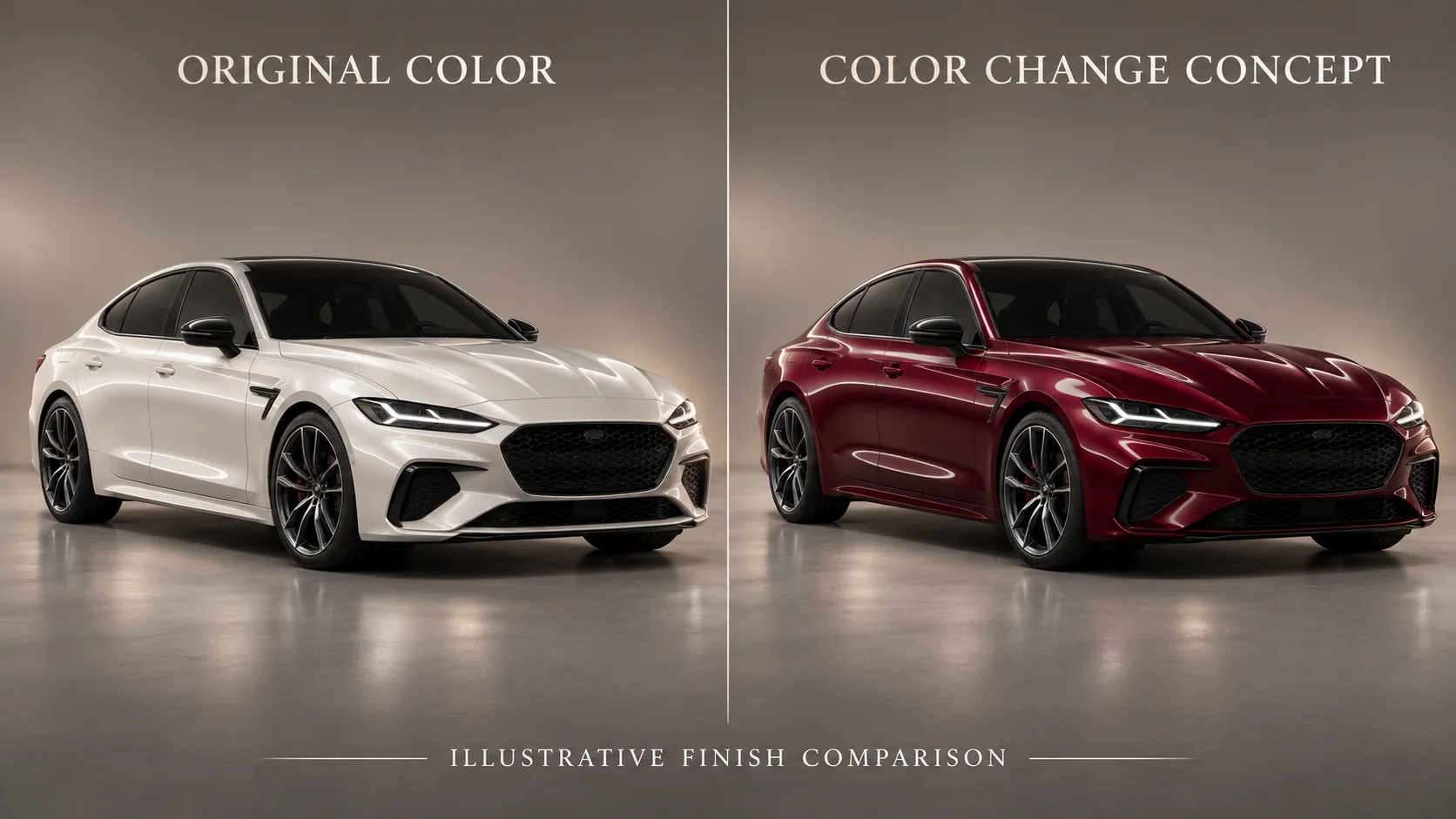
A color change PPF wrap uses colored paint protection film to alter a vehicle’s appearance while adding a replaceable layer over suitable painted surfaces. Unlike transparent PPF, which lets the existing paint color remain visible, a colored product introduces its own color or visual effect. The finished result depends on the film, the substrate and the installation.
Many protective automotive films use thermoplastic polyurethane, commonly called TPU, together with an adhesive and a surface coating. However, a category name is not a material specification. Products marketed under similar wrap or colored-film descriptions can have different constructions. Ask for the exact product code and technical information before comparing performance or price.
Color can be incorporated through different film constructions, so do not assume every colored PPF has the same layer arrangement. The useful question is how the complete product behaves in its intended application: appearance, handling, surface protection, maintenance and eventual removal. A glossy sample alone cannot answer all of those questions.
It also helps to distinguish a color change from a color shift. A solid burgundy wrap changes a white car to burgundy. A color-shifting or chameleon finish changes its perceived hue with viewing and lighting conditions. Both are appearance choices, but the sample approval and installation planning may differ.
Colored PPF vs vinyl wrap, clear PPF and repainting
Start with the result you want. If the existing color is right and protection is the priority, clear paint protection film may suit the project. If the color is right but you want softer reflections, transparent matte or satin film may be worth evaluating. If both color and surface appearance need to change, a colored PPF wrap becomes relevant.
A conventional vinyl color-change wrap is primarily selected for decorative transformation. It can add a covering over the paint, but its construction and protective performance should not be treated as automatically equivalent to automotive TPU PPF. Equally, the word PPF does not justify assuming every product will perform better in every situation. Compare the actual specification and supported use.
Repainting is a different type of project. It changes the painted finish itself and may be appropriate when the bodywork already needs repair or refinishing. A wrap applies a film over an existing surface; it does not repair corrosion, restore loose paint or correct poor adhesion underneath. Choosing film to avoid addressing an unsuitable substrate can create problems later.
There is no single choice that wins for every owner. Someone seeking a decorative look for a short campaign has different priorities from a driver planning a long-term protective installation. Write down the desired appearance, expected ownership period, current paint condition and available budget. Those four details make the comparison much more useful than a simple “PPF versus wrap” argument.
How much protection can colored PPF provide?
Suitable paint protection film can help reduce damage from minor road debris and light surface abrasion. It creates a layer that can be replaced when damaged, subject to the installation and condition of the underlying paint. That is useful protection, but it is not an assurance against every stone strike, deep scratch or collision.
Self-healing colored PPF needs an equally clear explanation. Where the topcoat supports it, certain fine surface marks may become less visible under specified conditions. A cut through the film, a missing piece of material or a scratch in the paint below is a different problem. Ask what the feature covers and which procedure the manufacturer supports.
Hydrophobic behavior can help with some cleaning tasks, but water beading is only one characteristic. It does not prove impact resistance, long-term color stability or immunity to staining. Bird droppings, insect remains and mineral deposits still need appropriate attention. A film with an easy-care surface still needs care.
For a trade buyer, each feature should connect to evidence for the selected product. A small demonstration can illustrate appearance or handling, while technical test information addresses specific performance questions. Neither should be stretched into a promise that the vehicle will remain flawless under all conditions.
Choosing a color you will still like outside the showroom
A phone screen is a good place to build a shortlist and a poor place to approve the final shade. Camera processing, screen settings and surrounding light can make the same film look warmer, darker or more saturated. A color that appears almost black indoors may reveal a strong red or green tone outdoors.
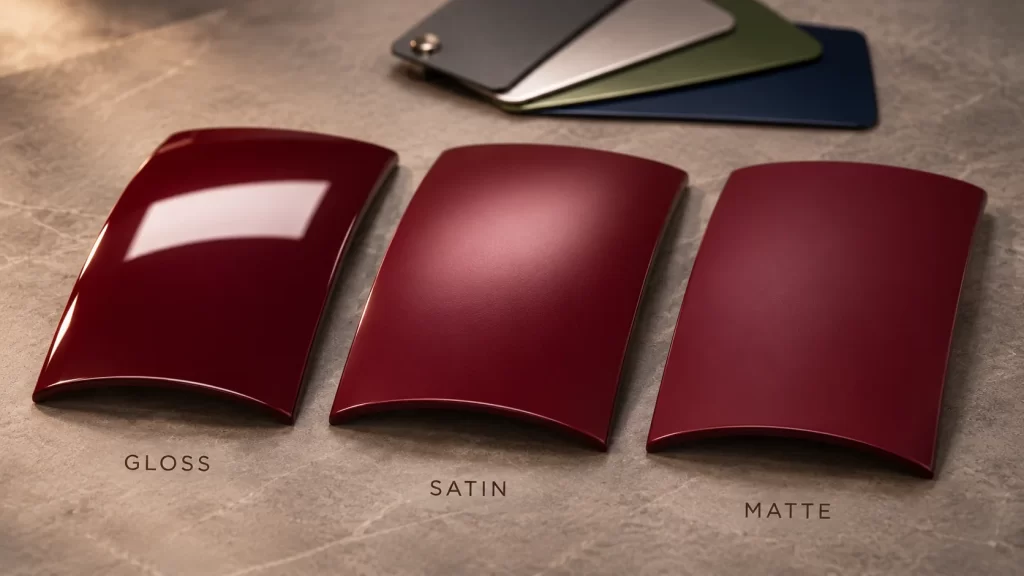
Ask to see a physical sample and, where possible, a larger curved sample panel. View it in daylight and under indoor lighting. Move around it. The shape of the surface affects how gloss, metallic effects and highlights appear. A flat swatch offers less information about the look of an entire bonnet, door or bumper.
Consider the parts that will remain unchanged: glass, wheels, trim and any exposed original paint. These influence the finished combination. If the car has bright contrasting paint underneath, discuss edges and openings before choosing the new color. A strong contrast can make an otherwise small uncovered area more noticeable.
Record the approved color code, finish and sample reference. Descriptions such as “dark green” or “liquid silver” are too broad for repeat orders. For a business purchase, keep the approved sample with the order information. That creates a reference for future deliveries and avoids relying on a photograph taken under unknown lighting.
Gloss, satin, matte and special-effect finishes
Gloss colored PPF creates a more reflective appearance, with clearer highlights and reflections. Satin typically has a softer sheen, while matte produces a flatter visual effect. These labels are useful starting points, but they are not universal grades. Two products with the same finish name can look noticeably different beside one another.
For low-sheen products, check the sample at several angles rather than judging it from directly above. If a supplier gives a gloss measurement, ask for the method and measurement angle. The number can help describe the surface, but an approved physical sample remains important for judging the complete appearance.
Metallic, pearlescent and color-shifting films deserve additional planning. Some products have a directional appearance, so panel orientation needs to follow the selected film’s instructions. Ask the installer how consistency will be maintained across adjoining panels. A finish that looks intentional on one panel should look coherent across the whole vehicle.
The Decowell colored PPF range provides categories for exploring different appearance requirements, while the Decowell matte colored film selection is a useful starting point for lower-sheen options. Confirm the exact construction, color availability and application requirements for the item you shortlist.
Full-body coverage, panel edges and door jambs
“Full wrap” can mean different things in different quotations. One price may cover the visible exterior panels, while another includes more detailed work around openings. Ask for a written coverage description that identifies the roof, bumpers, mirrors, painted trim and any areas excluded from the job.
Door jambs and inner returns deserve a separate conversation. An exterior color change does not automatically include every painted surface visible when a door or tailgate opens. If the original and new colors contrast strongly, decide whether that contrast is acceptable. Additional coverage can change the workload, cost and practicality of the project.
Wrapped edges can improve the visual result where the panel design and film instructions allow them. They do not mean every seam or original-color glimpse can be eliminated. Ask where the film will finish and where a join, inlay or visible boundary may be needed. Clear expectations are more helpful than an unconditional promise of a paint-like result everywhere.
Keep the discussion tied to real use. Open the doors, look around the fuel or charging flap, and inspect the angles from which the car is normally seen. A short walk around the actual vehicle can resolve questions that a generic package description leaves unanswered. Agree on those details before installation begins.
Paint condition comes before the new color
The installer should inspect the existing finish before deciding whether it is suitable for a color change PPF wrap. Loose clear coat, damaged paint, contamination and previous repairs may affect the result. Film can change appearance, but it should not be offered as a repair for an unstable painted surface.
Tell the installer about repainting, body repairs and any existing coating or film. Fresh paint needs to meet the requirements of both the paint system and the film before coverage is considered. There is no universal waiting period that makes every refinished panel ready. Some products also have specific restrictions for non-original paint.
Texture and defects can remain visible through a wrap, even when the film introduces an opaque color. Decide which preparation work is appropriate for the substrate, and have any necessary repairs assessed before committing to the installation. Record the condition of questionable areas so that both parties understand the starting point.
This inspection also matters when the film is eventually removed. Removal behavior depends partly on the paint beneath it. A sound original finish and a poorly bonded repair are not equivalent situations, so a blanket promise of risk-free removal is not a reliable basis for choosing a product.
Installing a color change PPF wrap
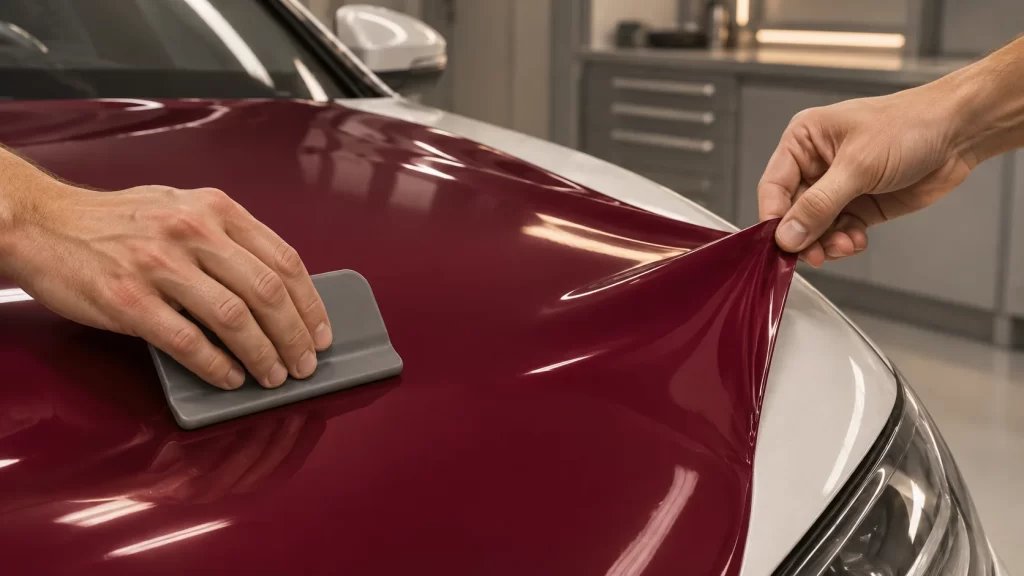
Installation begins with a clean, suitable surface and a plan for panel layout. The shop needs the chosen product’s instructions before deciding how to position, stretch and finish it. Some colored PPF products use wet application and others use dry application. The correct method comes from the specific film, not from the fact that it changes color.
A careful installer considers difficult curves, film orientation and where edges will terminate before committing material. Excessive stretching or repeated unsuitable handling can affect appearance and performance. The aim is a consistent finish that the team can repeat across the vehicle, including the less obvious areas around corners and openings.
Ask how cutting and trim work will be managed. Pre-cut patterns and bulk fitting each have practical uses, but neither removes the need for skill. The vehicle version, desired edge coverage and pattern accuracy all matter. Any disassembly should be discussed as part of the project scope rather than assumed to be either essential or unnecessary on every car.
Plan for preparation, application, finishing and inspection when discussing timing. A demonstration on a flat panel is not a reliable schedule for a full vehicle. Ask when the car can be collected, what settling behavior is expected and whether a follow-up inspection is recommended. A realistic handover plan helps the customer use and care for the wrap correctly from the start.
What affects color change PPF wrap cost?
A useful quotation reflects the actual car and the expected finish. Vehicle size, panel complexity, preparation, film selection and coverage all affect the work involved. Door-jamb coverage, removal of old film and additional trim handling can also change the price. A universal full-car figure would hide these differences.
Compare quotations using the same brief. Specify the vehicle, product or approved sample, exterior coverage and any inner areas to include. Ask whether preparation, taxes, follow-up inspection and existing-film removal are included. If two quotes differ significantly, identify the scope difference before deciding that one simply charges more for the same job.
For wholesale colored PPF, roll price is only part of the calculation. Usable yield, cutting layout, installation time, freight and rework influence the cost of a completed project. Directional finishes may also constrain how pieces are arranged. Ask your installer to evaluate the planned layout instead of assuming the largest nominal roll area gives the best value.
For example, a lower-priced roll is not automatically economical if a difficult application repeatedly consumes extra time or replacement material. Use your own trial observations to compare options. A supplier quotation becomes more meaningful when it is paired with an installation record and a realistic estimate of usable material.
How to inspect the completed wrap
Inspect the car in more than one lighting condition where practical. Look along adjacent panels for consistent color and sheen, and view special-effect finishes from different angles. Check the agreed coverage around doors, mirrors and openings. Confirm that the visible boundaries match what was discussed before the job.
Look for contamination, lifted edges, conspicuous stretch marks and other areas that need explanation. Some products and application methods can show temporary changes while settling; the installer should identify what is expected and when it should resolve. Do not assume every irregularity is temporary without a product-specific explanation.
Keep the product identification, relevant batch details and warranty information with your vehicle records. Obtain the aftercare instructions and agree on a contact for concerns. Photographs taken at handover can provide a shared reference for the appearance and coverage accepted on that day.
Caring for colored PPF without changing the finish
Follow the selected product’s instructions for the first wash and ongoing maintenance. Start ordinary cleaning by removing loose dirt, then use an approved wash product and clean, soft tools. Work on a cool surface where practical and dry it carefully to reduce the chance of mineral-rich rinse water leaving deposits.
Address bird droppings and insect remains promptly using a compatible method. Soften stubborn material rather than scraping it or repeatedly rubbing one small spot. If normal approved cleaning does not remove a mark, ask the installer for the next suitable step. Stronger chemicals are not automatically a better solution.
Gloss, satin and matte finishes can have different care requirements. Avoid treating a low-sheen surface with an ordinary abrasive polish or a product intended to add shine. Waxes, sealants and ceramic coatings should be checked for compatibility with the exact film and desired appearance. A treatment may affect sheen, leave residue or change the applicable care requirements.
If pressure washing is permitted, follow the supplier’s directions and avoid forcing water into film edges. Leave lifting edges for professional assessment rather than peeling them back to clean underneath. Keeping the surface clean and addressing small concerns early is more useful than relying on claims that a wrap needs no maintenance.
Service life, removal and replacing a damaged panel
There is no single service-life number that applies to every colored PPF wrap. Product construction, exposure, maintenance and the position of the covered surface all matter. Ask for the durability information and warranty applicable to the selected product, installation conditions and sales territory.
Read the terms behind the warranty period. Confirm what defects are covered, what evidence is required and whether any labor or replacement material is included. External damage and installation workmanship may be handled differently from a manufacturing defect. Knowing the process is more useful than comparing the number of years alone.
A damaged section may be replaceable, depending on the installation layout, but new film and weathered film may not look identical. Keep the color code and batch information where available. Have the installer compare the proposed replacement with adjacent panels before promising a seamless visual match.
Professional removal should be planned with the condition of the underlying paint in mind. A wrap is a removable film layer, but that does not guarantee effortless removal or an unaffected surface in every case. Repainted areas, weak adhesion and ageing material need particular assessment. Include eventual removal in the ownership discussion before buying.
A buying checklist for installers and distributors
For a business purchase, turn the preferred appearance into a written specification. Identify the color code, finish, base material, thickness measurement basis, roll size and installation method. Establish whether the thickness includes the adhesive or any removable liner, so competing offers can be compared fairly.
Agree on the sample evaluation before ordering larger quantities. Use a representative substrate and curve, follow the instructions and record the product and batch. Assess appearance, positioning, finishing and behavior after the recommended settling period. Keep the approved reference with the order records.
Ask how repeat supply will be identified, whether particular colors require different order quantities and what lead time applies to your chosen item. For colored film, matching the approved appearance can matter as much as obtaining the same nominal thickness. Discuss how specification changes and potential appearance differences will be communicated.
Finally, request clear commercial terms: delivery basis, destination, packaging, storage requirements and the route for reporting concerns. These are practical purchasing questions, not evidence of a product fault. Addressing them before the order helps both sides understand what a successful delivery should look like.
Frequently asked questions about color change PPF wrap
1. Is color change PPF the same as a vinyl wrap?
No. Similar colors do not establish equivalent material construction or protection. Compare the particular products’ base materials, specifications and intended applications. Conventional vinyl wraps are commonly chosen for decoration, while colored automotive PPF combines an appearance change with a protective-film function. Confirm what the selected product actually offers.
2. Can colored PPF cover any original paint color?
That depends on the product’s opacity, finish and the installation. Ask to see a representative sample over the intended substrate rather than assuming complete hiding. Also discuss exposed edges and door openings, where the original paint may remain visible even when the covered exterior panels have a different color.
3. Does color change PPF mean color-shifting PPF?
Not necessarily. Color change usually means changing the vehicle’s apparent color. A color-shifting finish is a particular effect in which the perceived hue changes with viewing or lighting conditions. State which result you want when requesting samples, because the terms can otherwise lead to different product recommendations.
4. Is a colored PPF wrap worth the cost?
It may be suitable when you want both a new appearance and a protective film layer on compatible paint. Compare that goal with the alternatives, actual installation scope and ownership plans. Value depends on the selected product and completed work; there is no guaranteed resale gain or universal payback calculation.
5. Does a full wrap include door jambs?
Not automatically. Some quotations cover visible exterior panels only. Ask for a coverage description and discuss the areas exposed when doors or other openings are used. Inner-area work can change cost and complexity, and the installer should explain what is practical for the chosen vehicle and film.
6. Should colored PPF be installed wet or dry?
Use the method specified for the exact product. Both types exist, and a technique suitable for one film may be unsuitable for another. The installer should check preparation, positioning, finishing and aftercare instructions before the job. Do not choose the method solely from the appearance or marketing name.
7. Can color change PPF hide bad paintwork?
It can change color, but it does not repair an unstable surface. Existing texture, chips or other defects may still affect the appearance, while weak paint adhesion can cause problems. Have the car inspected first, disclose previous repairs and resolve any unsuitable areas before approving the installation.
8. Will self-healing remove all scratches?
No. A supported self-healing topcoat may improve certain fine surface marks under the specified conditions. It cannot replace missing film or repair the paint underneath. Deep scratches and cuts may require professional assessment and replacement. Ask for the product’s exact care instructions rather than using uncontrolled heat or abrasive polishing.
9. Can a ceramic coating be applied over colored PPF?
Only after confirming compatibility with the film and finish. Ask whether the treatment changes appearance, affects warranty terms or requires particular preparation. A coating suitable for gloss paint is not automatically appropriate for satin or matte film, and it does not replace the physical protective film layer.
10. How long will the wrap last?
Use the selected product’s documentation as a starting point, then consider exposure and maintenance. Warranty duration is not a promise that every installation will look unchanged throughout that period. Follow care instructions, inspect the film and discuss signs of deterioration with the installer rather than relying on one universal lifespan.
11. Can one panel be replaced after damage?
Often it can, subject to the original layout and paint condition. The main visual issue is matching new material with film already in use. Keep the approved color code and batch records where available, then compare the replacement sample beside adjacent panels before deciding the repair scope.
12. What should a wholesale color PPF enquiry include?
Include your business type, destination, target color and finish, intended application and estimated quantity. Request the exact product specification, installation instructions, care guidance and warranty terms. Add your purchasing timeline and ask about sample or trial-order arrangements so the response can support a practical sourcing decision.
Discuss your color change PPF project with Decowell
Decowell’s colored-film categories offer a starting point for exploring a new vehicle appearance, from lower-sheen finishes to metallic and other visual effects. Bring a clear brief: the color you want, the surface being covered, the expected protective role and the volume you plan to buy. Ask for the exact item’s specification rather than relying on a broad category description.
For installers, distributors and bulk trade buyers, contact Decowell about your color change PPF requirements. The contact page focuses on industrial bulk enquiries, so include your destination, intended application and purchasing timeline. Request the current product details and appropriate business evaluation arrangements before finalising the order.
A successful color change begins with an approved appearance and a clear installation plan. Use the questions in this guide to move from a color you like to a film, finish and supply arrangement that fit the project.