
Home » Matt PPF: How to Choose a Matte Finish That Works Beyond the Showroom
Recent Posts
Matt PPF: How to Choose a Matte Finish That Works Beyond the Showroom
The first thing people notice about a matte car is the way light moves across it. Sharp reflections become softer. Creases in the bodywork stand out differently. A familiar paint colour suddenly has a quieter, more sculpted appearance. That is often what starts the search for matt PPF. The next question is more practical: can you get that finish while protecting the paint and keeping everyday ownership manageable?
Matt PPF, also written as matte PPF, is paint protection film with a low-sheen surface. A clear version lets the underlying paint colour show through while changing its reflected appearance. A coloured version also introduces a different colour. Choosing between them is only the beginning. Finish consistency, installation quality, maintenance and the exact product specification all affect whether the result still feels right after the first few washes.
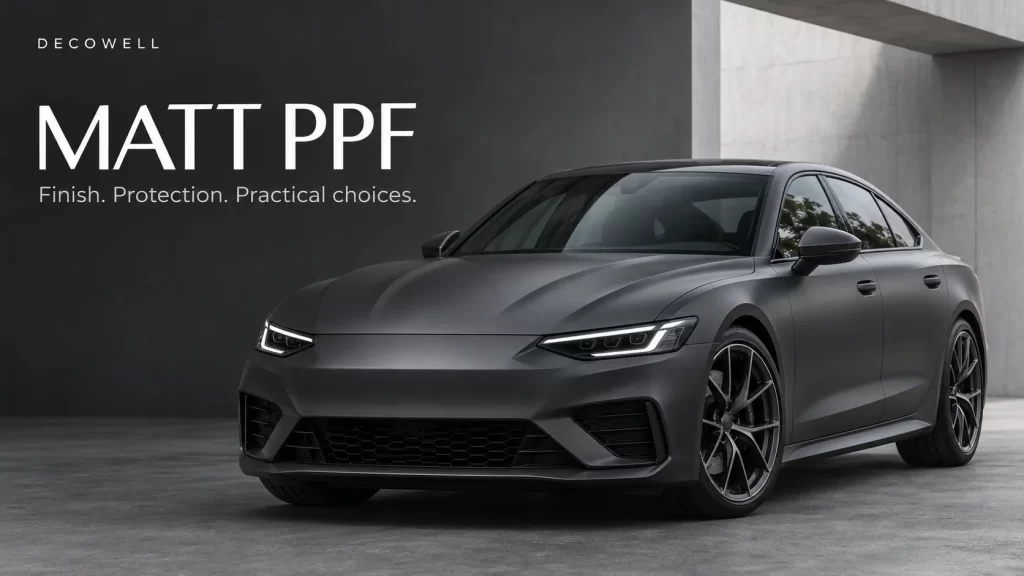
Table of Contents
What is matt PPF, and what does it actually change?
Paint protection film is an adhesive film applied over suitable automotive surfaces to create a replaceable protective layer. Many automotive PPF products use thermoplastic polyurethane, or TPU, with a surface coating and an adhesive layer. The matte appearance comes from the film’s surface design. It is not simply clear gloss film with the shine removed during installation.
On a glossy vehicle, transparent matte paint protection film changes the way light reflects from the finished surface. The original red, blue, silver or grey paint remains visible, but its apparent depth, brightness and metallic sparkle can change. “Clear” therefore does not mean visually identical to the uncovered paint. A sample on your actual colour is much more useful than a photograph of someone else’s car.
On factory matte paint, the aim is usually to preserve a similar low-sheen appearance while adding protection. Similar is the important word. The film can still alter the finish, especially where a covered panel sits beside an uncovered one. Approve a representative sample before treating the film as an exact match to the factory surface.
Clear matte PPF, coloured PPF and matte vinyl wrap
These products can look similar in a photograph, yet they answer different buying questions. Transparent matte PPF suits someone who likes the existing colour and wants a softer sheen. Coloured matte PPF suits a project that also needs a colour change. A matte vinyl wrap is generally selected primarily for decorative transformation; its construction and protective performance should not be assumed equivalent to a TPU paint protection film.
The phrase “matte black PPF” needs particular care. It may mean clear matte film installed over black paint, or a black coloured film installed over another paint colour. Those are different orders. A transparent matte product will not turn a white car into a solid black car. Put the desired colour and transparency in writing before discussing roll prices.
For a trade enquiry, start with the relevant category: Decowell paint protection film for transparent protection options, or Decowell matte coloured PPF for a colour-change discussion. Confirm the construction of the particular item rather than assuming everything within a broad product category uses the same base material.
Matte vs satin vs gloss PPF: choose by sample, not the name
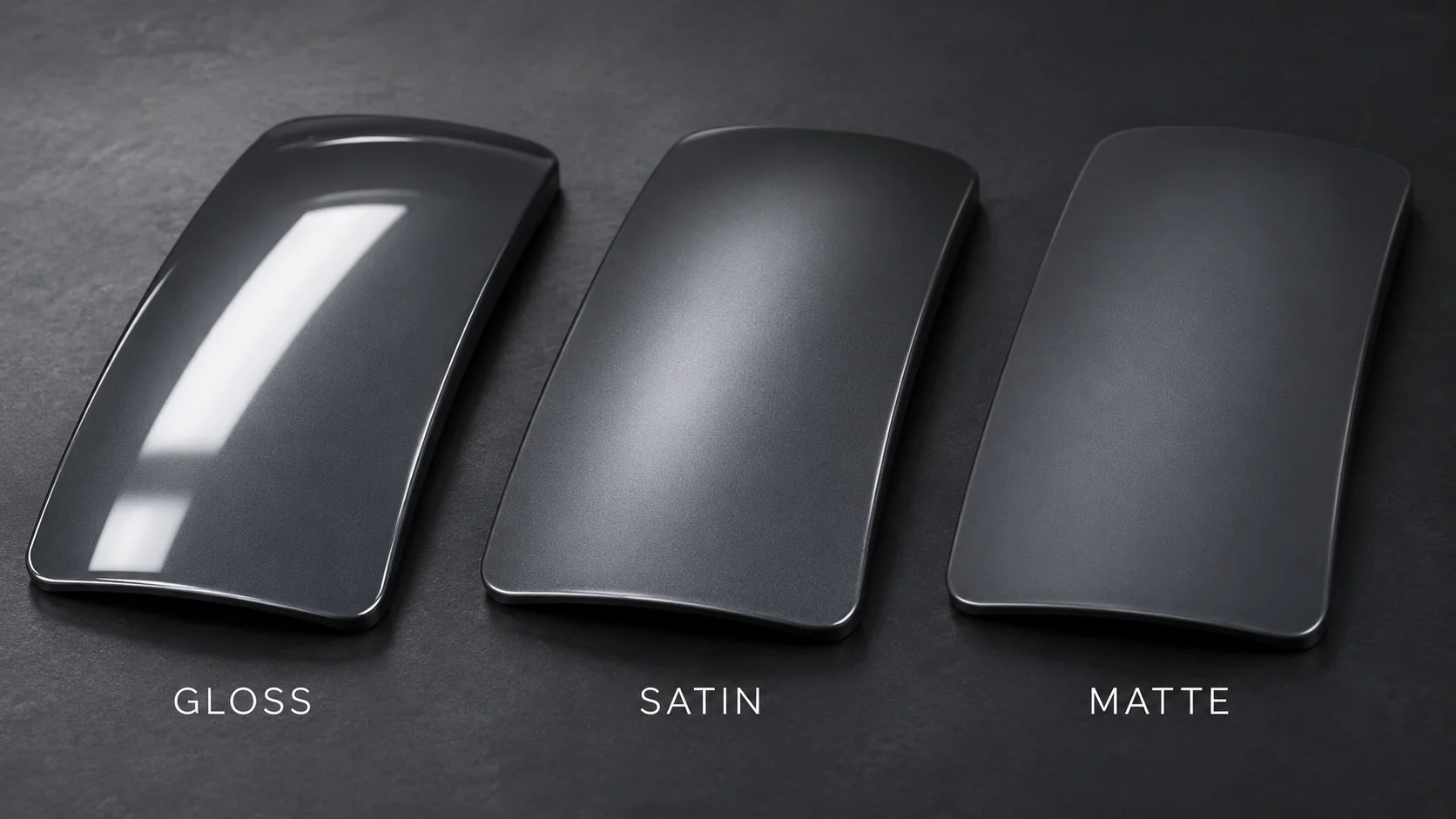
Gloss PPF is intended to maintain or create a more reflective appearance. Matte PPF produces a flatter look, while satin is commonly used for a finish with some soft sheen between the two. However, these names are not a universal grading system. One supplier’s satin may look close to another product sold as matte.
A simple way to compare samples is to place them over matching painted panels under the same light. Look at the outline of a reflected window or strip light. On a glossy surface, the reflection is more defined; on a low-sheen surface, it spreads and becomes less distinct. Then move the samples outdoors. A finish that looks flat under workshop lighting may show more sheen in direct daylight.
For repeat orders, ask whether the supplier can report gloss measurements with the test method and measurement angle. A number without that context is difficult to compare. Keep an approved reference sample as well: instrumental gloss is useful, but it does not describe every visible difference in texture, haze or colour appearance.
How much protection should you expect?
The practical appeal of matte car protection film is that the exposed layer can take some everyday wear before it reaches the paint. Appropriate PPF can help reduce damage from minor road debris and light surface abrasion. Its performance depends on the complete construction, installation and the severity of the contact. The word “matte” describes appearance; it does not establish an impact rating.
Self-healing also needs a precise explanation. In products designed with a self-healing topcoat, certain fine surface marks may become less visible under the specified conditions. A cut through the film, a missing piece of material or damage in the paint underneath is a different problem. Do not expect a deep scratch to disappear because the film is advertised as self-healing.
Likewise, stain resistance does not mean contamination can stay indefinitely. Insects, bird droppings, tree deposits and mineral-rich water can leave marks if neglected. Hydrophobic behaviour can make some cleaning tasks easier, but water beading alone does not establish stain resistance, durability or stone-chip performance. Evaluate each claim separately, preferably with information for the exact film you plan to purchase.
Full-body matte PPF or partial coverage?
For a gloss-to-matte conversion, full-body coverage offers the most coherent appearance across the painted panels. A matte bonnet beside glossy front wings will usually read as a deliberate contrast. That may be exactly the desired style, but it should be a design decision rather than a surprise at collection.
Partial paint protection film can still make sense when the priority is selected impact areas, such as the front end, lower doors or loading edge. On an already matte vehicle, check how closely the chosen film matches the surrounding paint. A small protected section may show a visible boundary even when the colour itself appears unchanged.
Define “full body” before accepting a quotation. Ask which painted surfaces, trim pieces, mirror sections and bumper areas are included. Discuss visible edges, recesses and any areas the installer recommends leaving uncovered. Protection for headlights, windscreens or textured trim requires its own suitability assessment; a bodywork film should not automatically be treated as an approved product for every surface on the vehicle.
Buying matte PPF: the specification behind the finish
A useful specification starts with the product code, base material, finish, thickness definition, roll dimensions and intended application. Thickness figures deserve attention because suppliers may report the film alone, film plus adhesive, or a larger stack that includes a removable liner. Comparisons only become meaningful when the measurement basis is the same.
Ask about the topcoat and adhesive as well. Does the selected version have documented self-healing behaviour? Which cleaning chemicals are approved? What installation conditions and storage requirements apply? Is there a written warranty for your market and sales channel? These questions help connect the supplied roll to the expectations you will set with your own customers.
For distributors, request traceable product and batch identification. If a replacement roll is needed months later, a description such as “our usual matte film” is not enough. Record the approved finish and keep the paperwork associated with the original order. A consistent purchasing process is easier to manage than trying to diagnose a visual mismatch after the film is already on a customer’s car.
Installing matte PPF: why preparation and handling matter
Installation begins with the surface, not the roll. The installer should identify repainted panels, existing coatings, chips, loose paint and previous repairs before deciding whether the vehicle is suitable. New paint must be ready according to the paint system and film requirements; there is no universal waiting period that makes every repair safe to cover.
On sound glossy paint, appropriate correction may be useful before a matte conversion, but the preparation method must suit the substrate. Factory matte paint needs a different approach because abrasive polishing can change its sheen. Film should not be used as a promise to hide poor paintwork, and a low-sheen finish can still reveal trapped dirt or uneven application.
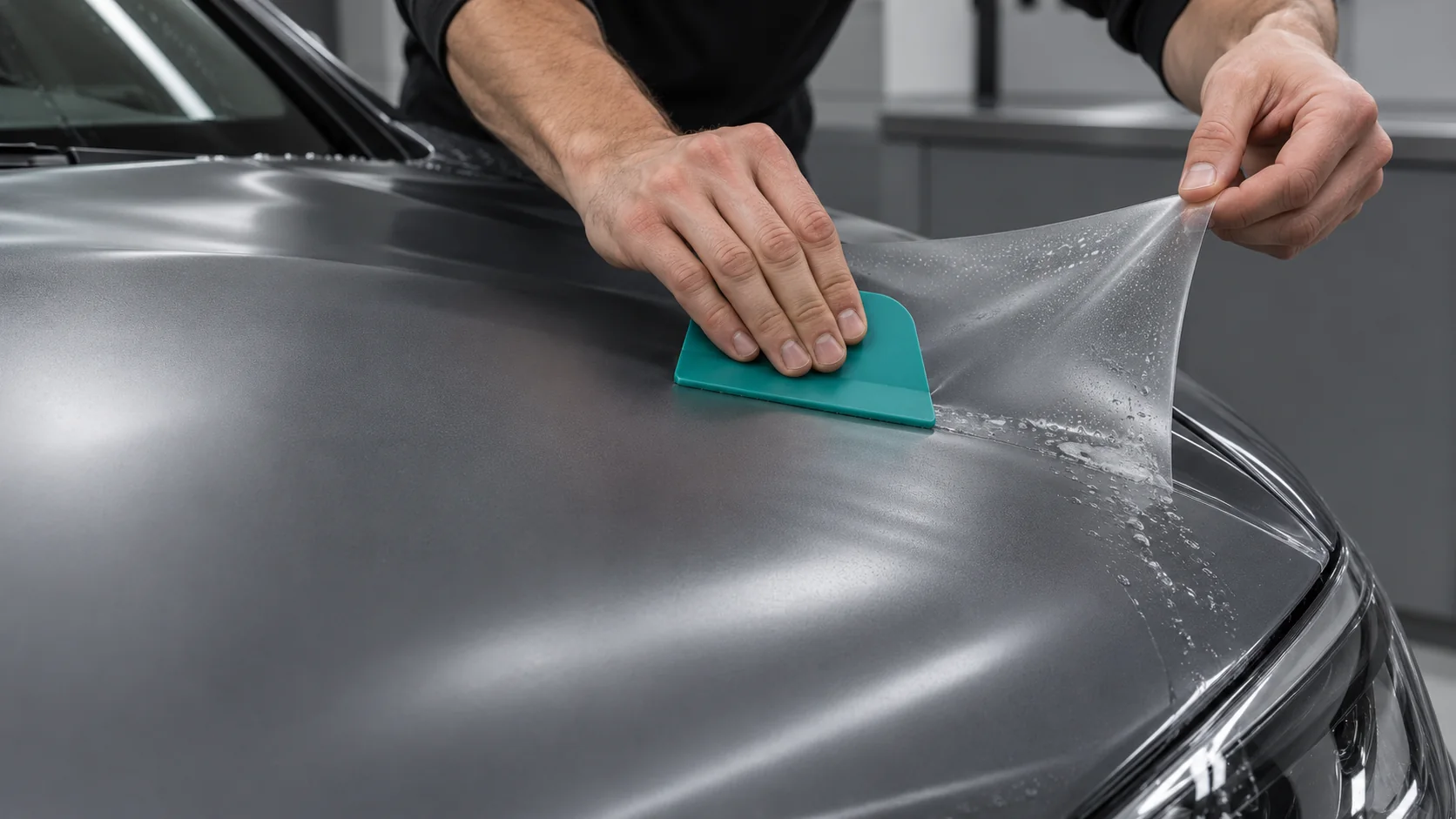
During fitting, controlled stretching, clean working conditions and careful fluid removal help maintain an even appearance. Excessive tension or unsuitable handling may leave visible differences that are difficult to correct. The installer should follow the selected film’s application instructions rather than borrow a solution recipe, heating temperature or stretching limit from an unrelated product.
Discuss pre-cut patterns and bulk fitting in terms of the actual vehicle. Either approach requires skill, and neither automatically guarantees invisible edges. The important questions are where the film ends, how difficult curves will be handled, how cutting risks are controlled and what the completed job will look like in normal daylight.
What should you inspect before collecting the vehicle?
Walk around the car from several angles, preferably in both diffuse daylight and the workshop. Look for a consistent sheen across neighbouring panels and around curves. Check whether the agreed coverage is complete. Pay attention to conspicuous seams, contamination, lifted edges and areas where the film appears unusually stretched or shiny.
Some temporary moisture-related appearance changes can occur during the settling period of a wet installation. The installer should explain what is expected for that product, when it should resolve and which signs require a return visit. Do not accept a blanket promise that every bubble, line or patch will disappear by itself.
Leave with written care instructions and a clear contact for follow-up. Ask when washing is permitted, which products are suitable and when the first inspection should take place. Taking a few delivery photographs also creates a useful shared record of the finish and the coverage that was accepted.
Matte PPF care: keep the finish even
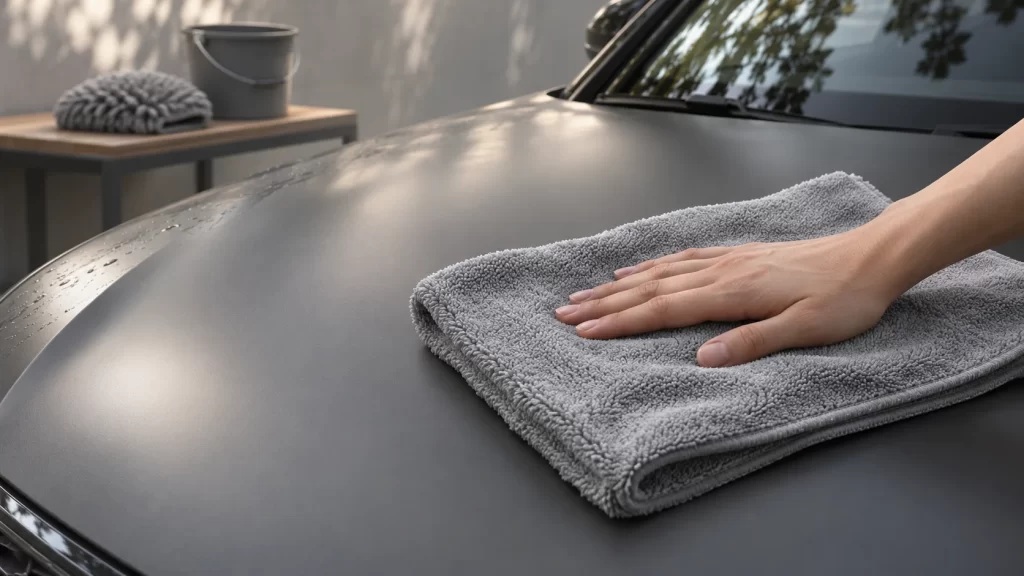
Good matte PPF maintenance is largely about avoiding unnecessary abrasion and residue. Rinse away loose dirt, use a cleaning product approved for the film and work with clean, soft wash materials. Wash on a cool surface out of strong direct sun where practical, and dry carefully so that rinse water does not simply evaporate and leave mineral deposits.
Treat bird droppings and insect residue promptly. Soften contamination using a compatible cleaning method instead of scraping or rubbing hard at a small area. Repeated aggressive attention to one spot can create a different-looking patch. If a mark remains, ask the installer for the next approved step before experimenting with stronger chemicals.
Ordinary polish, cutting compounds and products designed to increase gloss are poor default choices for a matte finish. A product described as a wax, sealant or ceramic coating needs explicit compatibility with the selected matte film. Even a non-abrasive treatment can change appearance or leave uneven residue. Test compatibility as instructed and assess the result in more than one lighting condition.
If pressure washing is permitted, follow the film supplier’s directions and avoid driving water directly into edges. Do not lift a corner to clean beneath it. An edge that collects dirt or starts to rise is a reason to contact the installer. Keep the aftercare sheet somewhere accessible rather than relying on memory months after installation.
Matte PPF cost: compare the job behind the price
There is no useful universal price for a matte PPF wrap. Vehicle size and shape, coverage, surface preparation, labour rates, film selection and the finish expected at edges all affect the quote. A full conversion on a complex body is a different project from protecting a few straightforward panels.
Ask each installer to quote the same scope. Specify the vehicle, desired finish and panels to cover, then ask what preparation, removal of existing film, trim work, follow-up inspection and taxes are included. If one offer is much cheaper, identify the difference rather than assuming the material alone explains it.
For wholesale matte PPF, distinguish the price per roll from the cost of supplying usable jobs. Freight, import charges, storage losses, cutting waste and rework can alter the outcome. Compare like-for-like roll specifications and delivery terms. A slightly lower purchase price offers little benefit if inconsistent appearance creates repeat labour or makes replacement panels difficult to match.
Service life, warranty and eventual removal
Expected service life depends on the product and its environment. Outdoor exposure, heat, contamination, washing habits and the location of the covered panel all matter. A warranty period is a contractual term with conditions; it is not a promise that every vehicle will look unchanged for that length of time.
Read what the warranty actually covers, who handles the claim and what records are required. Manufacturing defects, impact damage and installation workmanship are not necessarily handled through the same process. Clarify whether labour or replacement material is included, and whether the terms apply in the country where the film will be sold or installed.
Removal should also be planned as a professional job, particularly on repainted or ageing surfaces. Paint adhesion and previous repair quality affect the risk. No responsible purchase decision should depend on an unconditional promise that film removal can never affect paint. If one panel needs replacement, compare the new film with the surrounding aged material before assuming a perfect visual match.
A practical sample evaluation for shops and distributors
Begin with a small, documented evaluation before committing to a larger order. Select a representative paint colour and a test panel with a curve similar to the work you expect to perform. Record the product code, batch, preparation method and installation conditions. Photograph the finished panel under repeatable lighting, while also keeping the physical sample for reference.
Assess the finish after the supplier’s recommended settling period. Check clarity over the paint colour, evenness of sheen, adhesive appearance, edge behaviour and response to the approved wash routine. Have the installer record handling observations. A showroom swatch can reveal colour and sheen, but it cannot tell you everything about how a larger piece behaves on a shaped panel.
Separate appearance checks from performance claims. A short workshop trial is not a substitute for weathering or impact testing. If durability data is supplied, ask for the test method, conditions and acceptance criteria. Laboratory exposure hours should not be casually converted into a fixed number of outdoor years. Use the trial to answer practical questions and the documentation to understand the limits of the evidence.
Frequently asked questions about matt PPF
1. Are matt PPF and matte PPF different products?
Usually, the spelling does not signal a technical difference. Both terms describe a low-sheen paint protection film. The product code and specification matter more than the spelling. When ordering, identify whether you need transparent or coloured film and approve the actual finish instead of relying on the word alone.
2. Does clear matte PPF change the colour of a car?
It allows the underlying paint colour to remain visible, but it changes surface reflection. This can affect perceived brightness, depth and metallic appearance. It should not be presented as a completely invisible layer. Evaluate a sample on the intended paint colour, especially when covering only part of a vehicle.
3. Can matte PPF be installed over gloss paint?
Yes, suitable transparent matte film can create a lower-sheen appearance over compatible glossy paint. The paint must be in suitable condition and prepared correctly. For a uniform conversion, discuss coverage across all visible painted panels; a partial installation will leave areas with different reflective characteristics.
4. Is matte PPF suitable for factory matte paint?
It can be, provided the selected film is suitable for the paint system and the appearance is approved. Factory matte finishes vary, so a matching name does not guarantee a matching sheen. Avoid preparation methods that polish the paint to a shine, and review repaired areas separately with the installer.
5. Is matte PPF harder to clean than gloss PPF?
It requires different attention rather than one universal difficulty rating. You need to preserve an even sheen, avoid gloss-enhancing products and deal with contamination promptly. The particular topcoat, paint colour and local conditions influence cleaning behaviour. Matte film should not be purchased on a promise that it hides all dirt or fingerprints.
6. Can you polish scratches out of matte PPF?
Do not use conventional abrasive polishing as a routine fix. It may change the local sheen and make the repair more noticeable. Follow the film’s care instructions for minor marks, including any supported self-healing procedure. Deep scratches, cuts or permanently damaged areas may require professional assessment and panel replacement.
7. Can a ceramic coating go over matte PPF?
Only use a coating confirmed compatible with the exact film and the desired finish. Ask whether it changes gloss, affects the warranty or requires special preparation. A coating is not a replacement for the physical film layer, and a product suitable for glossy paint is not automatically suitable for matte PPF.
8. Does matte PPF turn yellow or become stained?
Resistance varies by construction, exposure and maintenance. No general category name guarantees that a film can never discolour or stain. Review the selected product’s documentation and warranty, and remove contamination promptly using approved methods. Avoid applying the warranty of one series to every matte product a supplier sells.
9. Is thicker matte PPF always better?
Thickness is one factor, not a complete quality score. Film construction, coating, adhesive, optical appearance and installation behaviour also matter. First establish what the stated thickness includes. Then compare products against the intended application and relevant performance evidence rather than choosing the largest number on a quotation.
10. How long does a matte PPF installation take?
Timing depends on coverage, vehicle complexity, preparation and the settling or inspection process required by the product. Ask for a project-specific schedule that includes handover and follow-up. A short application estimate should not be mistaken for the time needed to complete every stage of a full-body conversion.
11. Can one damaged section be replaced?
Often a damaged panel or section can be replaced without replacing all the film, subject to the installation layout. However, new and weathered material may differ in appearance. Keep the original product and batch details, and have the installer assess the boundary and sheen before agreeing on the repair scope.
12. What should I include in a wholesale matte PPF enquiry?
Include your business type, destination, transparent or coloured requirement, target finish, preferred roll specification and estimated order quantity. Explain the intended market and installation use. Request the exact product code, technical information, warranty terms and delivery conditions so that the reply can support a genuine purchasing decision.
A practical sample evaluation for shops and distributors
Begin with a small, documented evaluation before committing to a larger order. Select a representative paint colour and a test panel with a curve similar to the work you expect to perform. Record the product code, batch, preparation method and installation conditions. Photograph the finished panel under repeatable lighting, while also keeping the physical sample for reference.
Assess the finish after the supplier’s recommended settling period. Check clarity over the paint colour, evenness of sheen, adhesive appearance, edge behaviour and response to the approved wash routine. Have the installer record handling observations. A showroom swatch can reveal colour and sheen, but it cannot tell you everything about how a larger piece behaves on a shaped panel.
Separate appearance checks from performance claims. A short workshop trial is not a substitute for weathering or impact testing. If durability data is supplied, ask for the test method, conditions and acceptance criteria. Laboratory exposure hours should not be casually converted into a fixed number of outdoor years. Use the trial to answer practical questions and the documentation to understand the limits of the evidence.
Discuss your matte PPF project with Decowell
Decowell lists a transparent matte TPU protective film within its PPF range and also provides a matte coloured film category. These give trade buyers a useful starting point for separating paint-colour preservation from colour-change projects. Ask for the current specification of the exact item that fits your market, then evaluate the finish before committing to production quantities.
If you are sourcing film for an installation shop, distribution business or larger purchasing project, send your matte PPF requirements to Decowell. Include your destination, desired finish, application and estimated volume. Decowell’s contact page focuses on bulk industrial enquiries, so a clear business brief is the best way to begin a relevant conversation.
A good matte finish should look right in daylight, fit the way the vehicle will be used and arrive with care instructions the customer can follow. Bring those priorities into the enquiry, and the discussion becomes about the right film for the job—not just another roll labelled matte.