Home » Carbon Fiber PPF Guide to Style Protection and Choosing the Right Film
Recent Posts
Carbon Fiber PPF Guide to Style Protection and Choosing the Right Film
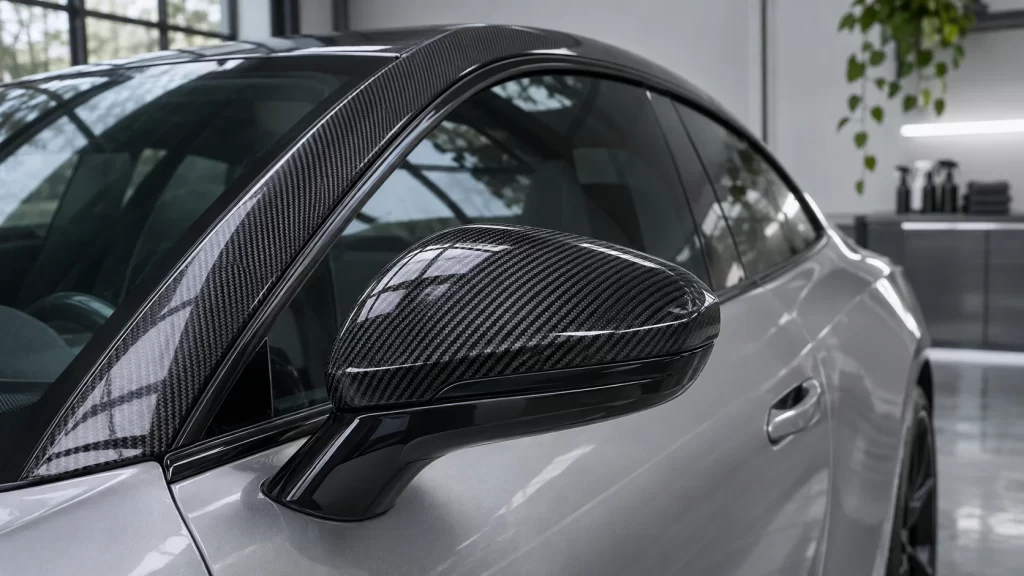
A carbon weave can change the character of a car without changing a single body panel. On a hood, it becomes the main feature. On a roof or a pair of mirror caps, it adds a quieter detail. Carbon fiber PPF brings that appearance together with a protective film, which makes it an interesting option for drivers who want a different finish and for installers building a wider service menu.
Choosing it takes more than finding a convincing photograph. Two rolls can look similar on a screen and behave differently around a mirror, along a hood edge, or after months outdoors. The film construction, pattern, adhesive, installation method, and written warranty all matter.
This guide explains how carbon fiber paint protection film differs from vinyl wrap and actual carbon fiber parts, what to check before buying, and how to plan a job that looks good up close. For trade buyers, it also covers sample evaluation and the information that makes a quotation useful. If you are exploring the category for your business, start with the Decowell colored PPF range and use the checks below to narrow down the specification.
Carbon Fiber PPF Guide to Style Protection and Choosing the Right Film
What is carbon fiber PPF
Carbon fiber PPF is a decorative paint protection film with a carbon fiber appearance. In the TPU products discussed here, a flexible thermoplastic polyurethane film carries a patterned finish and an adhesive system that bonds it to a suitable vehicle surface. The pattern may be created in different ways, so the supplier should identify the construction of the actual product being quoted.
The phrase describes the appearance of the film. It does not mean that the vehicle has gained a structural carbon fiber panel. Applying carbon look PPF to a metal hood leaves the original hood in place. It does not provide the weight reduction or engineering properties associated with replacing that panel with a properly designed composite part.
There is another useful distinction. Clear PPF applied over an existing carbon fiber component is intended to preserve the appearance beneath it. Carbon fiber patterned PPF creates its own appearance on the surface. Someone searching for carbon fiber protection film may mean either product, so make the application clear when requesting a quote.
Do not rely on a category name to identify the polymer. Sellers sometimes use terms such as wrap, colored PPF, and protection film loosely. Ask whether the selected construction is TPU, PVC, or another material, and request the finished film thickness excluding removable liners. A film that looks like carbon does not automatically offer the properties you expect from TPU paint protection film.
Carbon fiber PPF vs vinyl wrap
The most useful comparison starts with what you want the material to do. A carbon fiber vinyl wrap is usually selected primarily to change appearance. A TPU carbon fiber PPF is selected for a combination of appearance and paint protection. Both need a suitable surface and competent installation.
Vinyl can be a sensible choice for a styling project when its stated performance matches the job. It would be misleading to describe every vinyl film as temporary or every PPF as equally protective. Products vary within both categories. Compare the exact films, including the substrate, coating, adhesive, thickness, application guidance, and warranty.
A thicker number alone does not settle the decision. Thickness measurements may include different layers, and two films with the same nominal thickness can have different coating behavior and handling characteristics. If a quotation gives a value in mil, remember that one mil means one thousandth of an inch, or 25.4 micrometers. It is not one millimeter.
Installation also deserves a separate comparison. The film may require wet application, dry application, or another product-specific procedure. A familiar vinyl technique is not automatically suitable for a patterned PPF. Ask for the installation guide before choosing tools or estimating labor.
For an owner, the question is whether the extra protection and preferred finish justify the installed cost. For a shop, it is also whether the material gives a repeatable result within a workable installation time. A small saving on a roll can disappear if the pattern distorts and a visible panel has to be redone.
Gloss matte and forged carbon finishes
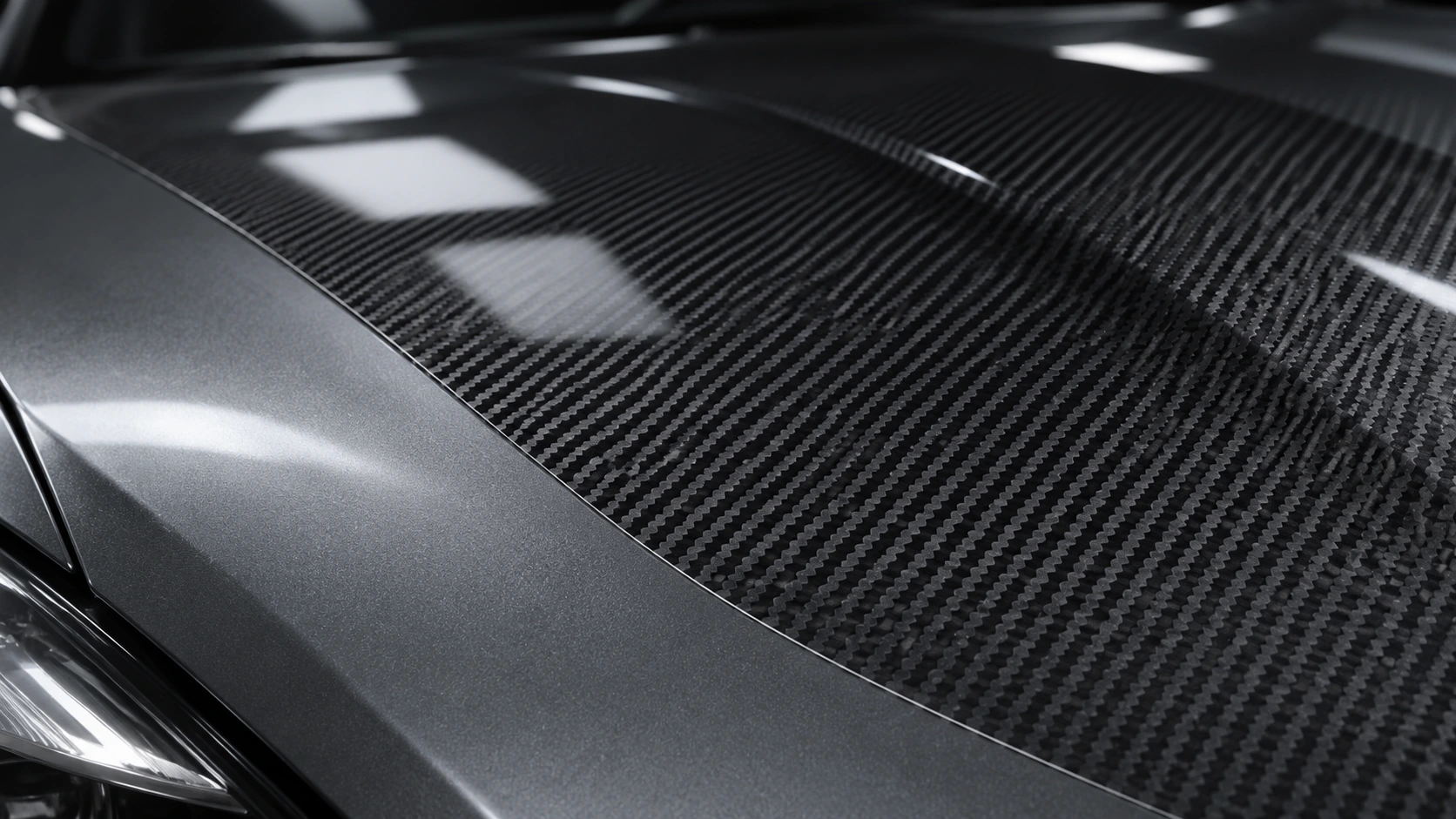
Gloss carbon fiber PPF gives the pattern a clear, reflective surface. It can work well with metallic paint and polished trim, although strong reflections also make surface defects easier to notice. View a sample under a broad light source and then outdoors. A weave that looks deep in a studio image may appear quite different in daylight.
Matte carbon fiber PPF produces a softer appearance, while satin finishes sit between matte and full gloss. Those names do not define a universal gloss level. Compare samples directly instead of assuming that two products described as satin will match. If gloss measurements are supplied, check the measurement angle and method before comparing the figures.
Forged carbon PPF uses an irregular visual pattern rather than the familiar repeating weave. It is another styling option, not evidence that the film contains structural forged carbon. Labels such as 3D, 5D, and 6D are also insufficient specifications by themselves. Ask what the label means for that product and judge the sample on the car.
Pattern direction matters. Decide how the weave should run across the hood and how it should relate to the roof, mirrors, and adjacent trim. Make that decision before cutting. Turning a piece to save material can create a mismatch that becomes obvious once the vehicle is outside.
Where carbon fiber PPF works best
A carbon fiber PPF hood is an obvious starting point because the panel gives the pattern room to read clearly. Before ordering, check the usable film width against the actual panel and the required edge allowance. A nominal roll width does not guarantee a seamless result on every hood.
A roof treatment can create a two-tone appearance while leaving the body color visible. Roof channels, antennas, seals, and glass borders affect the work involved. Ask the installer where the film will stop and whether any trim needs to be removed. Those details belong in the quotation.
Mirror caps and small accents use less material, but tight curves make them demanding. A mirror is a useful test of how the pattern behaves when the film is formed. Straight-looking lines on a flat sample do not tell you how the weave will look around a curved edge.
For a balanced package, consider carbon-patterned accents alongside clear protection on other painted panels. The Decowell paint protection film range provides a starting point for discussing the wider coverage plan. Treat each film as a separate product with its own instructions. Do not assume that the same material is suitable for paint, textured plastic, interior trim, glass, or lighting lenses.
What protection can you reasonably expect
Paint protection film provides a sacrificial surface over the finish beneath it. Depending on its construction and the impact involved, it can help reduce damage from some road debris and everyday abrasion. It cannot guarantee that a sharp stone, severe scrape, or collision will leave the paint untouched. Damage can pass through the film, and an impact can still dent the panel.
Self-healing is another term that needs a clear boundary. On products with a suitable topcoat, fine surface marks may become less visible under specified conditions. This does not rebuild torn film, replace missing material, repair damaged paint, or correct a stretched carbon pattern. Follow the supplier’s care instructions rather than experimenting with concentrated heat.
Aliphatic TPU is often chosen for applications where color stability matters. The finished film, however, contains more than a TPU base. Coatings, pigments, adhesive, processing, and exposure all contribute to its appearance over time. Ask for weathering information for the complete patterned product, not a general statement about the raw polymer.
Hydrophobic behavior can help water release from a surface, but water beading is not proof of stain immunity. Contaminants can remain on the film, and water can leave mineral deposits as it dries. A dark glossy finish still needs sensible washing and prompt attention to bird residue or insect remains.
Technical reports are more useful when they identify the test method, sample, conditions, and result. Peel adhesion, tensile behavior, gloss, and weathering assess different properties. None of those measurements alone proves stone-chip resistance or predicts a fixed service life. A report that names a recognized method is also not the same thing as certification of every claim in a sales brochure.
How much does carbon fiber PPF cost
Carbon fiber PPF cost depends on whether you are buying film or a completed installation. A roll price excludes much of the work an owner sees in a shop quotation. Preparation, panel complexity, pattern alignment, edge finishing, trim access, and local labor all affect the installed price.
Compare quotations for the same coverage. A hood with exposed cut edges is a different scope from a hood with agreed wrapped edges and additional preparation. A roof with several fittings may require more work than its area suggests. Ask what happens if a panel needs another attempt or if an inspection finds a finishing issue.
For wholesale carbon fiber PPF, compare usable material cost rather than headline roll price alone. Confirm width, length, thickness basis, order quantity, packaging, freight terms, and the treatment of defective material. Account for pattern direction when estimating yield; usable offcuts from an unpatterned film may not work as well in a matched carbon layout.
An illustrative example shows why this matters. Suppose a shop saves a small amount on each hood but needs extra fitting time to keep the weave straight. If that extra time regularly removes capacity for another paid job, the cheaper film may have the higher business cost. Record material use and labor during a trial installation before placing a larger order.
Installation details that make the finish look convincing
Start with the surface. A film can follow the shape of a chip or scratch rather than conceal it, and loose paint or failing clear coat creates a poor foundation. Refinished panels need particular attention to coating condition and compatibility. Agree on necessary preparation before discussing the final appearance.
Next, lay out the pattern. Identify a visual reference on the vehicle, check the direction on every intended panel, and allow for edge wrapping where suitable. Photograph the proposed alignment if the customer has a strong preference. A few minutes spent agreeing on the layout is easier than debating the direction after installation.
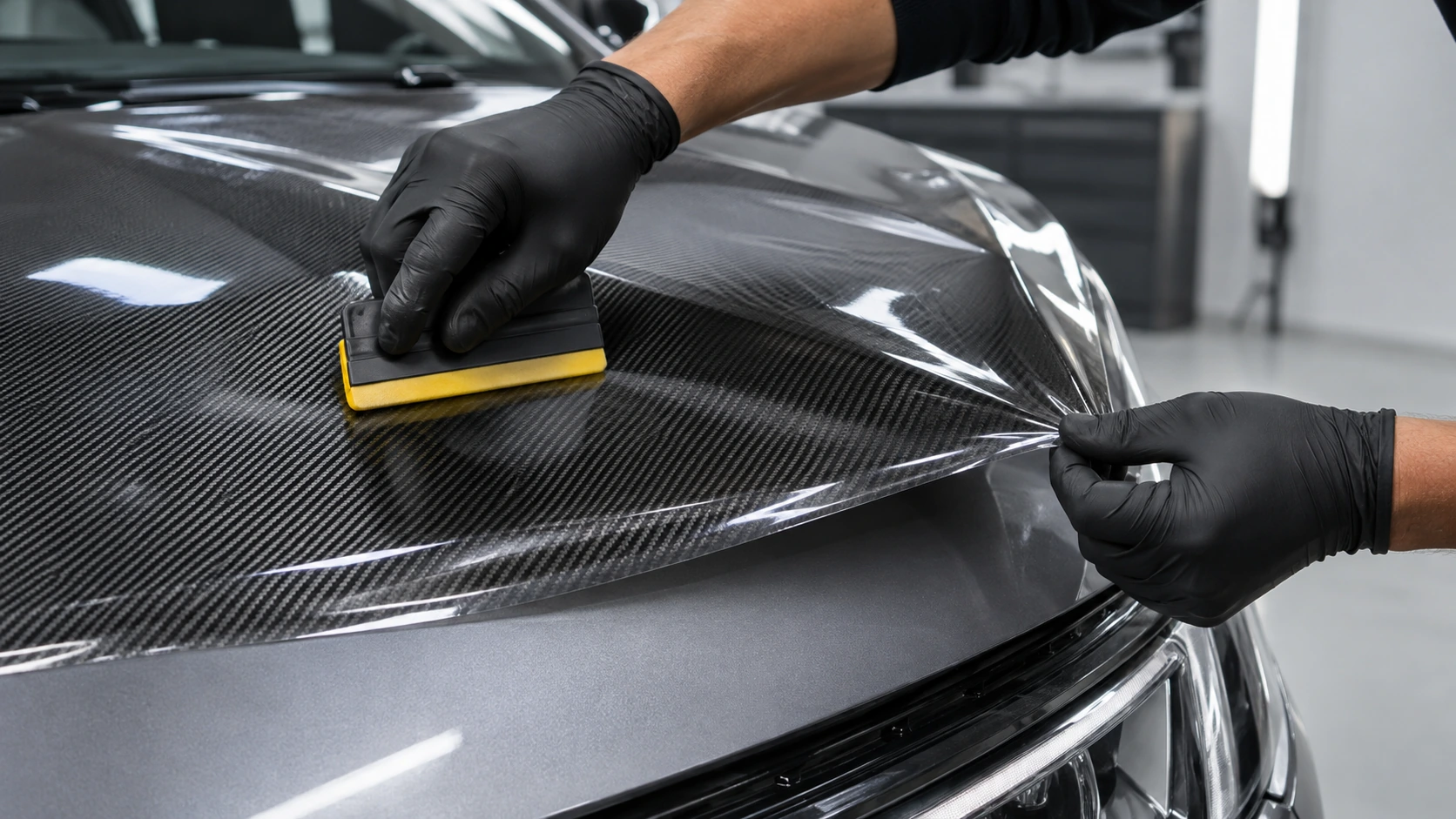
Use the application procedure for the specific film. Wet and dry systems can require different handling, and the adhesive may react differently to repositioning. Solution recipes, heat limits, working conditions, and settling time should come from the product instructions. A general online tutorial cannot supply those details for every construction.
During fitting, watch the weave as well as the surface. Pattern distortion can appear before an installer reaches the film’s physical stretch limit. Pulling harder may make the edge reach while leaving the visible design uneven. Work within the approved forming limits and plan difficult sections instead of using tension to solve every curve.
Before handover, inspect under several lighting conditions and at normal viewing distance. Look for contamination, unexpected seams, inconsistent pattern direction, stressed corners, and lifting edges. Some installation moisture may need time to settle on applicable products; the installer should distinguish that from issues requiring correction. Record the product, batch, installation date, and care instructions with the job.
Looking after carbon fiber paint protection film
Get the aftercare instructions when the installation is completed. In particular, confirm when the vehicle can first be washed and when the shop wants to inspect the edges. Waiting periods vary by adhesive system and conditions, so a number borrowed from another film may be inappropriate.
For routine care, remove loose grit before touching the surface and use compatible cleaning products with clean, soft equipment. Work on a cool panel where practical. Avoid dry scrubbing and aggressive abrasives, especially if you are trying to preserve an even matte or satin appearance.
Remove contamination promptly using an approved method. Do not assume that a solvent suitable for painted metal is safe for a patterned film or its coating. If a stain persists, ask the installer before escalating to stronger chemicals or mechanical polishing.
Take care around film edges when washing. A concentrated water jet directed into an edge can encourage lifting. If an edge begins to lift, avoid pulling it back to investigate. Photograph the area and let the installer assess it before dirt collects beneath the adhesive.
Durability removal and warranty questions
There is no single lifespan that applies to all carbon look PPF. Outdoor exposure, orientation, climate, cleaning, installation quality, and the film construction affect service conditions. A horizontal hood and a sheltered vertical accent may age differently even on the same car.
Read the written warranty for the exact product and market. Ask which defects are covered, which surfaces are eligible, what installation records are required, and whether a remedy includes material, labor, or both. Product warranty and installation workmanship coverage may come from different parties.
Accelerated weathering helps evaluate materials under controlled conditions. Test hours cannot simply be converted into an equal number of years on a vehicle without supporting correlation. For buyers, the useful question is what changed during testing and how the tested construction relates to the roll being supplied.
Removal also needs planning. Film age, adhesive behavior, paint condition, and previous repairs can affect the outcome. A professional should assess the surface and use an appropriate procedure. Avoid promises that removal is always effortless or cannot damage paint. For a fleet or resale program, keep installation and removal records so that the next owner understands what was covered.
How installers and distributors can evaluate a sample
A sample should answer a purchase question. Before testing, decide which vehicle areas you intend to offer, which finish your customers prefer, and which installation method your team can support. This turns a sample request into a practical evaluation instead of a collection of attractive swatches.
Check the appearance on a representative painted panel under consistent lighting. Record pattern direction, visible texture, gloss, color, and any defects. Then use a suitable curved test panel to assess handling within the supplier’s instructions. Compare the flat and formed areas for visible pattern distortion.
For a production trial, record the product code and lot, panel dimensions, material consumed, installation time, and any corrections. Follow the specified settling period before assessing final adhesion or edges. Keep photographs from the same viewpoint so that comparisons are useful rather than dependent on lighting.
Ask how a bulk shipment will match the approved sample. Clarify batch identification, acceptable appearance variation, storage conditions, and the process for reporting a problem. A distributor may also need packaging details and written permission for product claims used in local marketing.
These are proposed buying checks, not a claim that every supplier offers identical tests or service terms. Agree on a manageable evaluation with the supplier, then document the outcome before scaling an order. A satisfactory sample is a starting point for purchasing controls, not a substitute for them.
FAQ
Is carbon fiber PPF real carbon fiber
The name generally refers to a carbon fiber appearance on a protective film. It does not establish the presence of load-bearing carbon reinforcement. For decorative TPU PPF, the purpose is to change the visible finish and add a protective layer while retaining the existing panel. Ask for the construction if composition is important to your project.
Is carbon fiber PPF better than vinyl wrap
It depends on the job. A suitable TPU PPF is worth considering when paint protection is part of the requirement. Vinyl may meet a styling brief at a different cost. Compare the exact products and installed scope instead of treating either category name as a quality guarantee. Installation skill matters with both.
Can carbon fiber PPF protect against rock chips
It can help reduce some impact damage when the product and application are suitable, but protection has limits. Stone shape, impact energy, angle, and the underlying surface all matter. The film may be marked or punctured, and the panel can still be damaged. Treat it as a replaceable protective layer rather than an assurance against every impact.
Will scratches disappear from carbon fiber PPF
Some products have a topcoat designed to reduce the visibility of fine surface marks. Confirm whether that feature applies to the selected film and what conditions it requires. A deep cut, torn edge, damaged pattern, or scratch beneath the film needs a different remedy. Do not use uncontrolled heat to chase a mark.
Can I put PPF over genuine carbon fiber parts
Potentially, if the component’s finish and the selected film are compatible. Clear protection film is usually the option to discuss when you want the original weave to remain visible. The installer should assess the coating and condition first. A carbon-patterned film changes the appearance and may conceal the original design.
Can carbon fiber PPF be installed at home
A small, simple area may look manageable, but pattern alignment and curved edges make this material less forgiving than a flat sample suggests. For prominent panels, an experienced installer is a sensible choice. If you plan to learn, obtain the product instructions and practice on an appropriate test panel before working on the vehicle.
Does carbon fiber PPF damage paint when removed
Removal risk depends partly on the paint beneath the film. Weak, repaired, or deteriorating coatings deserve particular caution. Film condition and removal technique also matter. Have the surface assessed before installation and seek professional advice for removal. A promise of zero risk on every paint system would be unrealistic.
Can I apply ceramic coating over carbon fiber PPF
Only use a coating approved for the selected film and finish. Compatibility, changes to appearance, aftercare, and warranty terms need checking first. On matte or satin surfaces, even a small change in gloss can be noticeable. A coating also does not replace the physical protection supplied by the film itself.
How do I choose the best carbon fiber PPF
Start with the surface, desired finish, and protection requirement. Confirm material construction, inspect a physical sample, review installation instructions, and read the warranty. For commercial orders, add a controlled installation trial and batch documentation. The best choice is the one that meets your defined job and can be installed consistently.
What should I include in a wholesale inquiry
Include your company, country, business type, intended application, preferred appearance, trial quantity, expected purchasing volume, and delivery location. Specify that you need carbon fiber patterned PPF and ask for confirmation of the substrate. These details help the supplier recommend an appropriate option and explain the quotation basis.
Request a carbon fiber PPF quotation from Decowell
If you are expanding a detailing service, sourcing a new finish for a distribution catalog, or planning repeat vehicle projects, give Decowell a clear picture of the work. Browse the Decowell colored film collection and ask which current carbon-patterned options match your application. Confirm the selected material rather than assuming that every finish shares the same construction.
A useful RFQ should request the current technical data sheet, available patterns and finishes, thickness basis, roll dimensions, installation method, care guidance, and warranty conditions. Add your required quantity and destination, then ask for the minimum order, lead time, packaging, freight basis, and any applicable customization terms. Sample arrangements should be discussed in the context of the intended commercial order.
You can adapt this inquiry:
“We are a [distributor or installation business] based in [country]. We are evaluating carbon fiber patterned PPF for [hoods, roofs, mirror caps, or other specified panels]. Our preferred finish is [gloss, satin, or matte], with an initial requirement of [quantity] and an estimated repeat volume of [quantity and period]. Please confirm available constructions, including whether a TPU option is suitable, and send the current specifications, installation guidance, warranty terms, MOQ, lead time, and quotation to [delivery location]. Please also advise on a sample evaluation linked to this project.”
Decowell’s inquiry channel focuses on bulk industrial business. For installers, wholesalers, and distributors, that makes a project-based inquiry the right starting point. Contact Decowell for a product recommendation and quotation with your application and purchasing plan. A clear specification helps turn an attractive carbon finish into a product your business can confidently evaluate, install, and offer to customers.