Home » Paint Protection Film Cutting Software: How Precision Pre-Cutting Is Redefining PPF Installation in 2026
Recent Posts
Paint Protection Film Cutting Software: How Precision Pre-Cutting Is Redefining PPF Installation in 2026
The PPF industry has a cutting problem — and everyone knows it
Walk into any busy PPF shop and you will see the same scene: an installer hunched over a hood, blade in hand, trying to trim a film edge without nicking the clear coat underneath. It takes years to develop that kind of hand control, and even then, one slip means a repaint. That is not a sustainable way to grow a business.
The numbers back this up. The global paint protection film market was estimated at USD 525.17 million in 2026 and is projected to reach USD 683.63 million by 2031, growing at a 5.41% CAGR. More vehicles are getting wrapped, more shops are opening, and more customers expect flawless results. Yet the installation side of the business is still heavily dependent on manual skill and trial-and-error cutting.
Something has to change. And it is changing — through paint protection film cutting software that turns pattern selection, material optimization, and plotter output into a single streamlined workflow.
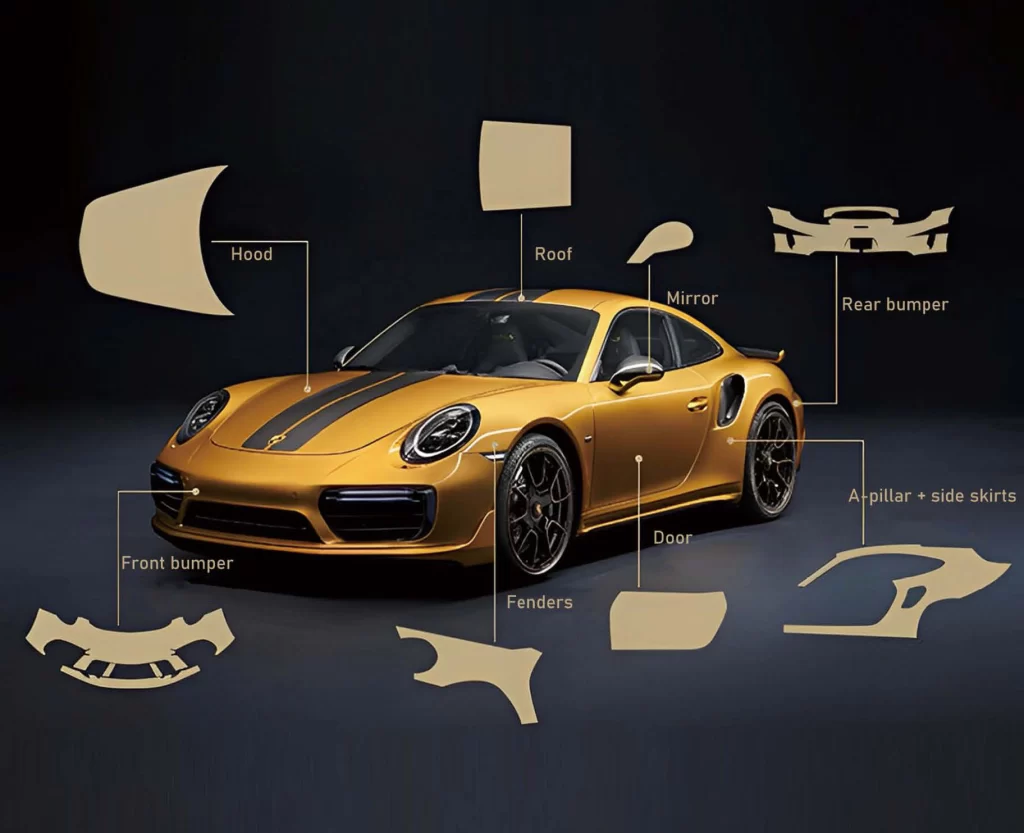
Table of Contents
What paint protection film cutting software actually does
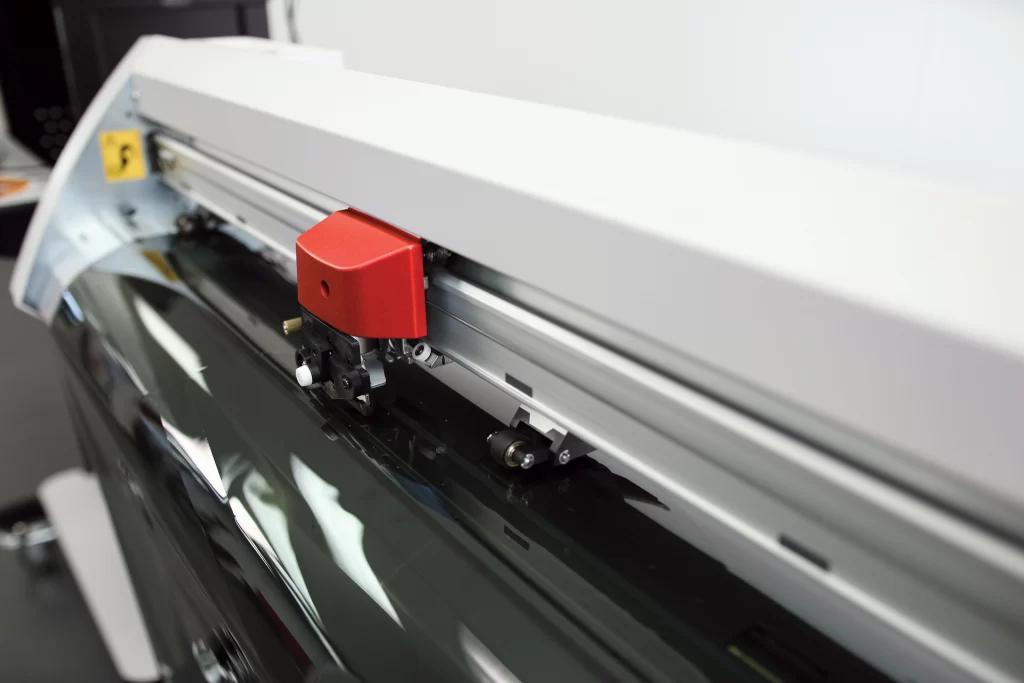
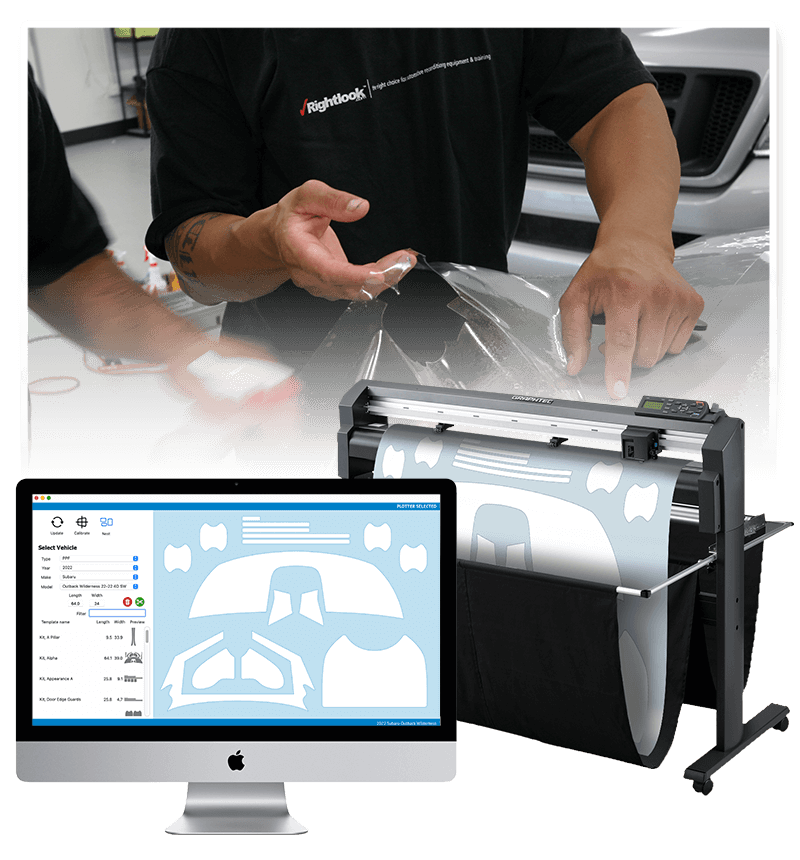
If you are new to this category, here is the short version: PPF cutting software is a digital pattern library combined with a cutting layout engine. You select a vehicle by make, model, year, and trim, choose the panels you want to cover, adjust the layout if needed, and send the file to a plotter. The plotter cuts the film to the exact shape before it ever touches the car.
That sounds simple, but the difference between a basic template library and a professionally engineered cutting platform is enormous. The best paint protection film cutting software does several things simultaneously:
Pattern accuracy. A pattern that is 2mm too wide on a bumper edge means you either stretch the film (risking adhesive failure) or trim on the vehicle (risking paint damage). High-quality pattern libraries are built from 3D scanning and iterative installer feedback, not from tracing paper.
Material optimization. PPF is expensive. Every square centimeter of waste directly reduces your margin. Modern cutting software uses nesting algorithms to arrange patterns on the film roll in the most efficient configuration possible.
Workflow integration. The software should talk to your plotter without drama. Whether you run a Graphtec, a Zünd, a Roland, or a Summa, compatibility matters more than most buyers realize until they are stuck with a platform that only works with one machine brand.
Consistency across installers. A shop with three installers should produce the same cut quality from all three. Software-driven cutting removes the human variability that causes rework and customer complaints.
Why hand-cutting is losing ground
Let us be direct about this. Hand-cutting PPF is not just slower — it is riskier, and the risk compounds as your business grows.
When an installer cuts film directly on a vehicle, every blade pass carries a chance of contacting the clear coat. Even experienced professionals occasionally leave fine scratches that only become visible under certain lighting conditions. Those scratches are permanent. The film was supposed to protect the paint, not damage it.
Beyond the paint damage risk, manual cutting creates three other problems that drain shop profitability:
Material waste. Cutting pieces larger than necessary “just in case,” re-cutting patterns after measurement mistakes, and discarding leftover sections that cannot be reused — these add up quickly across a week of installations.
Inconsistent results. Two installers cutting the same bumper by hand will produce two slightly different shapes. One might fit perfectly; the other might have a visible gap at the edge.
Training bottleneck. Teaching a new installer to hand-cut PPF to professional standards takes months. During that period, their output is slow and their error rate is high. Most shops cannot afford that learning curve at full production volume.
Pre-cut workflows address all three issues at once. The pattern is fixed and verified. The material is optimized by algorithm. And a new installer can produce a plotter-ready cut on their first day because the software handles the geometry.
Inside a professional cutting platform: features that actually matter
Not all PPF cutting software is built to the same standard. When you are evaluating options — whether you are a shop owner, a distributor, or an OEM looking to standardize your installation network — here are the capabilities that separate a serious platform from a basic template viewer.
Pattern library depth and update speed
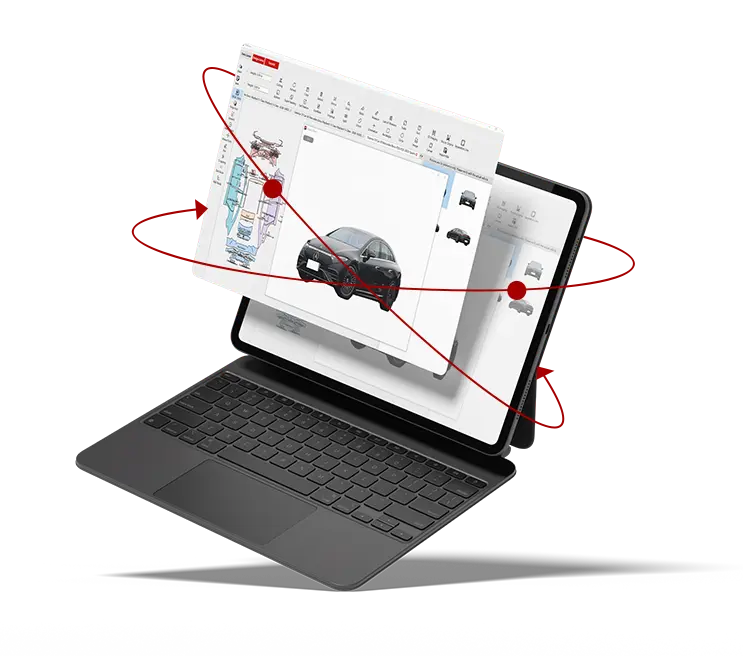
The pattern library is the core asset. A library with 10,000 patterns might cover mainstream vehicles well but leave you without templates for newer models, rare trims, or motorcycles. A library with 40,000+ patterns covers a much broader range, including full vehicle kits, bumper sections, headlights, interior components, and even non-automotive applications.
Update speed matters just as much. When a new model year hits dealerships, installers need the pattern within days, not weeks. Platforms that rely on manual pattern design and periodic updates will always lag behind. The best systems use 3D scanning technology to digitize new vehicle contours quickly, turning a process that used to take weeks into one that takes hours.
Nesting and material optimization
Nesting is where the math gets interesting. The software takes all the patterns you need for a job — say, a full front-end kit with bumper, hood, fenders, mirrors, and headlights — and arranges them on the film roll to minimize unused space.
Modern nesting engines use AI-driven algorithms to evaluate thousands of possible arrangements in seconds. The result is material utilization that manual layout cannot approach. Shops using advanced nesting report material waste reductions of up to 30% compared to manual cutting and layout. Over a year of production, that is not a minor saving — it is the difference between a profitable shop and a struggling one.
Plotter compatibility
Your cutting software is only as useful as the machine it talks to. If you already own a plotter, you need software that works with it. If you are buying both, you want flexibility to change hardware later without changing software.
Professional platforms typically support the major plotter brands — Graphtec, Zünd, Roland, Summa — and can export in standard formats like SVG, EPS, AI, DXF, and PDF. Cloud-based platforms add another layer of flexibility: you can access patterns and prepare jobs from any computer in the shop, not just the one with the software installed.
Pattern editing and customization
Standard patterns cover most jobs, but real-world installations sometimes require adjustments. Maybe a customer has an aftermarket bumper that does not match the OEM pattern. Maybe you want to extend coverage on a high-impact area. Or maybe you prefer to leave a slightly larger overlap at panel edges for a particular installation style.
Good editing tools let you move, scale, slice, and weld pattern segments without starting from scratch. Some platforms also include a “pattern ghost” function that lets you compare your modified version against the original template, so you can see exactly what changed.
Training and support
Software is only valuable if your team can use it. Look for platforms that include video tutorials, searchable documentation, and responsive technical support. A pattern request system — where installers can submit a vehicle model that is missing from the library and get a pattern added — is a strong signal that the platform is actively maintained and responsive to user needs.
How software-based cutting changes the economics of a PPF shop
Let us put the numbers in perspective. A full vehicle PPF wrap involves dozens of individual film pieces, each requiring accurate cutting and careful installation. Without software-driven pre-cutting, the preparation phase alone can consume 40% or more of total project time.
When you shift to a pre-cut workflow, several things happen simultaneously:
Preparation time drops. Instead of measuring, tracing, and trimming, the installer selects the pattern, nests the layout, and sends it to the plotter. The cutting happens while the installer preps the vehicle surface — parallel workflow instead of sequential.
Material waste drops. Precision nesting means less offcut. According to industry data, pre-cut workflows save 30–50% of installation time compared to hand-cutting and significantly reduce material waste through digital nesting.
Rework drops. A pattern that fits correctly the first time eliminates the re-cut loop. Installers spend their time on application technique, not on fixing geometry problems.
Training time drops. New hires can produce plotter-ready cuts immediately. Their learning curve shifts to installation technique — stretching, squeegeeing, edge wrapping — which is where it should be.
Scalability improves. A shop with one plotter and one software seat can support multiple installers. As volume grows, you add plotters, not highly skilled hand-cutters. That is a fundamentally more scalable business model.
Choosing the right platform for your operation
If you are evaluating paint protection film cutting software for the first time, here is a practical framework:
Start with your volume. A single-bay shop doing two to three vehicles per week may be fine with a basic template library and a mid-range plotter. A multi-location operation processing dozens of vehicles daily needs enterprise-grade nesting, batch cutting queues, and cloud-based access for multiple workstations.
Check the pattern library against your actual customer base. If you work primarily with European luxury vehicles, a library that skews heavily toward North American trucks will leave you requesting patterns constantly. If you serve a diverse market — daily drivers, exotics, motorcycles, commercial fleets — you need broad coverage.
Test the workflow, not just the feature list. Ask for a demo or trial version. Select a vehicle you know well. Run through the full sequence: search, select, edit, nest, export. If any step feels unnecessarily complicated, it will feel worse under production pressure.
Consider the film ecosystem. Some software platforms are designed to work best with specific film brands, while others are film-agnostic. If you use multiple film types — standard clear PPF, colored PPF, matte finish — film-agnostic software gives you more flexibility.
Ask about pattern requests. How quickly are new patterns added? Is there a formal request process? What is the typical turnaround? A platform that cannot answer these questions clearly is not built for professional use.
Where Decowell Film fits into the picture
Decowell has been supplying paint protection film to installers and distributors who need reliable, consistent material that performs well with modern cutting workflows. The film is designed to work with the pattern libraries and plotters that professional shops already use — no proprietary lock-in, no compatibility surprises.
What makes Decowell worth a closer look is the alignment between film performance and cutting precision. When a film is engineered for clean plotter cutting, the edge quality after cutting is noticeably better. You get fewer ragged edges, less adhesive ooze at the cut line, and a cleaner starting point for the installation. That translates directly into faster installs and better-looking results at the edges — which is where customers judge quality most closely.
Decowell’s TPU-based paint protection film offers the durability characteristics that modern installations demand: impact resistance, resistance to yellowing, and a surface that maintains clarity over time. It is available in configurations suited to both full-body coverage and partial front-end protection, and it works with the pattern libraries that professional PPF cutting software platforms maintain.
For shops that are already running a cutting software workflow — or that are planning to adopt one — Decowell Film is designed to integrate smoothly. You select your pattern, nest your layout, cut your film, and install. The film does not fight the software; it complements it.
Decowell also supports installers who are new to pre-cut workflows. The team can help with material selection based on your typical job mix and can advise on the film specifications that work best with different plotter settings. If you are making the transition from bulk film hand-cutting to a software-driven pre-cut process, having a film supplier who understands that transition makes the learning curve considerably shorter.
The bigger picture: standardization is coming to PPF
The automotive aftermarket has a habit of professionalizing slowly and then all at once. Window tint went through this transition. Vinyl wrapping went through it. PPF is in the middle of it right now.
The shops that adopt digital cutting workflows early will have a structural advantage: lower material costs, faster turnaround, more consistent output, and a business model that scales without a proportional increase in skilled labor. The shops that wait will find themselves competing against operations that can quote lower prices and deliver faster because their cutting process is optimized.
The film itself matters, but the process around the film matters just as much. A premium PPF installed with a hand-cut workflow will always be limited by the geometry of that workflow. A good PPF installed with precise pre-cutting reaches its full potential because the fit is exact and the material is used efficiently.
That is the case for investing in paint protection film cutting software — and for choosing a film partner like Decowell who understands that the material and the method are inseparable.
Frequently Asked Questions
Q: What is paint protection film cutting software?
Paint protection film cutting software is a digital platform that provides pre-designed film patterns for specific vehicle makes, models, and years. Installers select the desired panels, optimize the layout for material efficiency, and send the file to a plotter that cuts the film to shape before installation. The goal is to eliminate manual measuring and hand-cutting, which reduces material waste and eliminates the risk of cutting on the vehicle.
Q: Is paint protection film cutting software worth the investment for a small shop?
For a small shop doing consistent volume — even just a few vehicles per week — yes. The material savings alone often justify the cost, and the time savings free up installer hours for additional jobs. If your shop is still in the startup phase and doing fewer than two PPF installations per week, a basic template library and a mid-range plotter may be sufficient. But as volume grows, software-driven cutting becomes increasingly difficult to compete without.
Q: Can I use paint protection film cutting software with my existing plotter?
It depends on the software platform. Most professional-grade cutting software supports major plotter brands, including Graphtec, Zünd, Roland, and Summa, and can export in standard vector formats. Before committing to a platform, confirm plotter compatibility explicitly. Some platforms are cloud-based and work with any plotter that accepts standard file formats; others have more limited hardware compatibility.
Q: How large should a pattern library be for a professional PPF shop?
A library of 10,000 to 15,000 patterns will cover the majority of mainstream vehicles on the road today. If you work with a diverse customer base — luxury vehicles, older models, motorcycles, commercial fleets — you will benefit from a library in the 40,000+ range, which includes full-body kits, individual panels, interior components, and non-automotive applications. More important than raw numbers is update speed: how quickly new model-year patterns are added after a vehicle launch.
Q: What is nesting in PPF cutting software, and why does it matter?
Nesting is the process of arranging multiple pattern pieces on a single film roll to minimize unused space. Manual nesting relies on the installer’s judgment; software nesting uses algorithms to evaluate thousands of possible arrangements in seconds. Better nesting means less wasted film. In a production environment, even a 10% improvement in material utilization translates to meaningful cost savings over a year of operations.
Q: Does paint protection film cutting software eliminate the need for skilled installers?
No. It eliminates the need for hand-cutting skill, which is different. Installation technique — stretching, squeegeeing, edge wrapping, surface preparation — remains critical. What software does is remove one variable from the installation process, allowing installers to focus their attention on the application rather than the geometry. This makes training faster and results more consistent across a team.
Q: What film types work best with pre-cut PPF workflows?
TPU-based paint protection films are the standard for pre-cut workflows because they maintain dimensional stability through the cutting process and produce clean edges when cut by a plotter. Film thickness, adhesive formulation, and topcoat composition all affect how a film performs during plotter cutting and installation. Decowell Film is engineered with these considerations in mind, so it behaves predictably in a software-driven cutting workflow.
Q: How often are PPF patterns updated for new vehicle models?
Update frequency varies significantly between platforms. Some providers add new patterns within 24–72 hours of a vehicle hitting dealerships, while others take two to four weeks or longer. If you frequently work on new model-year vehicles, update speed should be a primary evaluation criterion. A pattern request system — where you can submit a missing vehicle and receive a pattern within a defined timeframe — is a good indicator of a responsive platform.
Q: Can I edit patterns if a standard template does not fit perfectly?
Yes, most professional platforms include editing tools that let you move, scale, slice, and weld pattern segments. Some also include a comparison feature that shows your modified pattern alongside the original template. Custom pattern creation is also possible for specialized applications that are not covered by the standard library.
Q: How does software-driven cutting affect the overall quality of a PPF installation?
The most visible impact is at the edges. A precisely cut pattern fits the panel contours without gaps or excessive overlap, which reduces the chance of edge lifting and makes the installation look cleaner. A secondary benefit is consistency: every vehicle of the same make, model, and year gets the same cut, regardless of which installer is doing the job. That consistency is what builds a reputation for quality.
Q: What should I look for in a film partner if I am adopting a pre-cut workflow?
Look for a film supplier who understands the cutting process, not just the film itself. Ask whether the film has been tested with the plotter and software you plan to use. Ask about cut edge quality — does the film produce a clean edge or does it fray or smear? Ask about adhesive behavior at the cut line. A supplier who can answer these questions with specific data is a partner worth working with. Decowell Film is built for this kind of workflow and the team welcomes questions about compatibility, cutting behavior, and material selection.
Ready to see the difference a precision-cut workflow makes?
If your shop is still hand-cutting PPF, you are leaving money on the table every single job — in wasted film, in rework, and in hours that could be spent on the next vehicle. If you are already using cutting software but not getting the edge quality or consistency you expect, the film you are using may be the missing variable.
Decowell Film supplies TPU paint protection film engineered for modern pre-cut workflows. The film cuts cleanly, installs predictably, and performs the way professional installers need it to. If you want to explore how Decowell can support your shop’s transition to software-driven cutting — or if you are simply looking for a reliable film partner who understands the PPF industry from the installer’s perspective — reach out to the Decowell team.