Home » Beyond Protection: Why Colored PPF is the Smartest Upgrade You’ll Make for Your Vehicle
Recent Posts
Beyond Protection: Why Colored PPF is the Smartest Upgrade You'll Make for Your Vehicle
Picture this: You’ve just parked your brand-new BMW after a long highway drive. As you walk away, you notice a fresh chip on the front bumper—right there, near the grille. That sinking feeling? We’ve all been there.
Now imagine walking back to a car that still looks showroom fresh after three years of daily driving. The color is exactly what you wanted—a deep, satin finish that turns heads—and the original paint underneath is absolutely pristine.
This isn’t a fantasy. It’s the reality of colored paint protection film (PPF) , and it’s changing how car owners think about customization.
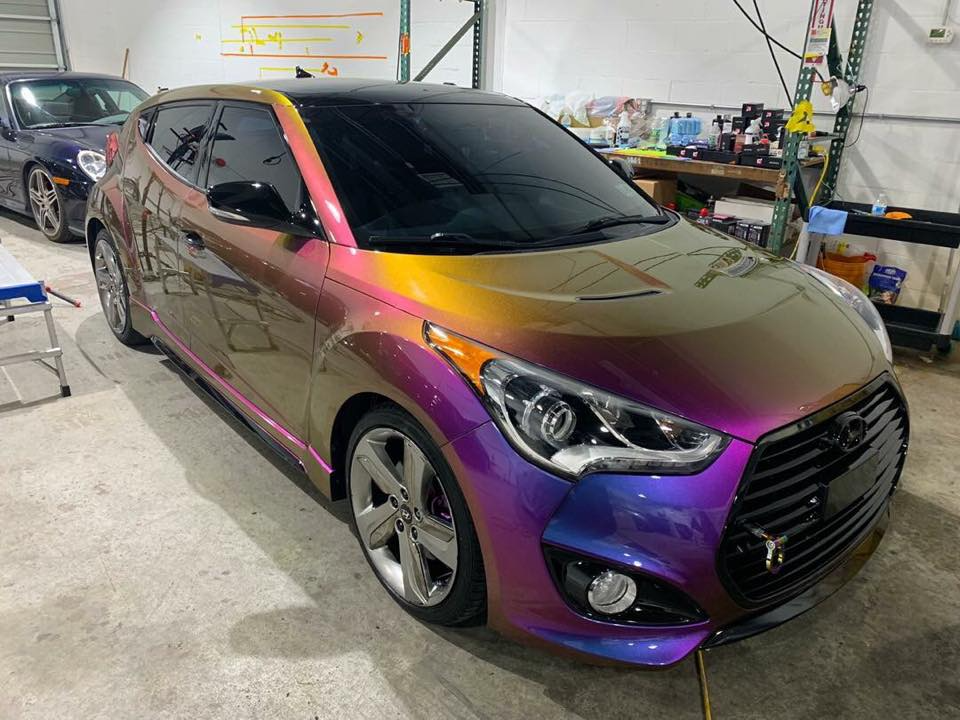
Table of Contents
The End of the Compromise
For decades, car enthusiasts faced an impossible choice: protect your paint with clear film, or transform your look with a vinyl wrap. You couldn’t have both—until now.
Colored PPF represents the single biggest leap forward in automotive surface protection since clear bra technology first appeared. It delivers the impact absorption, self-healing properties, and durability of premium TPU film, combined with the aesthetic transformation that car lovers crave .
And here’s the part that surprises most people: when you factor in longevity, a quality colored PPF installation actually costs less over time than repeatedly wrapping a car in vinyl .
But we’re getting ahead of ourselves. Let’s start at the beginning.
What Exactly Is Colored PPF?
If you’re searching for terms like “what is colored paint protection film” or “color PPF vs vinyl wrap,” here’s the straight answer:
Colored PPF is a multi-layered thermoplastic polyurethane (TPU) film with pigment integrated directly into the material . Unlike clear PPF, which acts as an invisible shield, colored PPF changes your vehicle’s appearance while providing the same rugged protection.
The construction matters. Premium colored PPF—the kind we manufacture at Decowell—uses a single-layer casted color TPU technology. This means the color runs through the entire film, not just a printed top layer . The result? No fading, no peeling, and color consistency that lasts for years.
A typical high-quality colored PPF stack-up includes:
Self-healing clear coat – Repairs minor scratches with heat
Pigmented TPU layer – Delivers rich, consistent color
TPU base layer – Absorbs impact and provides durability
High-grade acrylic adhesive – Ensures secure bonding and clean removal
Total thickness? Usually 7 to 9 mils—roughly three times thicker than standard vinyl wrap .
Why Colored PPF Is Taking Over in 2026
Walk into any reputable installation shop in the U.S. or Europe today, and you’ll notice something: colored PPF is everywhere. According to industry experts, this isn’t just a trend—it’s a fundamental shift in how vehicle owners approach customization .
The Protection Factor
Here’s what sets colored PPF apart from every other customization option: it actually protects your car.
Traditional vinyl wraps are essentially decorative. At 2–4 mils thick, they might shield against light scratches, but a rock chip at highway speed? The vinyl tears, and your paint takes the damage .
Colored PPF, by contrast, is engineered to absorb impact. That extra thickness—combined with TPU’s natural elasticity—means road debris, gravel, and even minor abrasions hit the film, not your paint . The self-healing top coat then works its magic: apply heat from the sun, warm water, or a heat gun, and surface scratches literally disappear .
The Market Is Speaking
Industry projections show the PPF market growing at a 6–10% CAGR through 2028 . What’s driving this growth? Three things:
First, consumer education. Social media has demystified PPF—car owners now understand that protecting their vehicle’s finish maximizes resale value .
Second, rising vehicle prices. When you’re spending $50,000+ on a new car, investing in its preservation makes financial sense .
Third—and this is the big one—colored PPF has arrived. As one industry expert put it: “The introduction of products like colored PPF allows shops to capture the high-margin color change market while offering the superior protection of PPF” .
Colored PPF vs. Vinyl Wrap: The Real-World Differences
Let’s settle this debate once and for all. If you’re trying to decide between colored PPF and a traditional vinyl wrap, here’s what you need to know.
Material Matters
Vinyl wraps use PVC (polyvinyl chloride). It’s flexible, affordable, and available in countless colors and finishes . But PVC has limitations: it doesn’t absorb impact well, it won’t self-heal, and over time, it can become brittle and crack .
Colored PPF uses TPU (thermoplastic polyurethane)—the same material trusted for clear paint protection films. TPU is elastic, impact-resistant, and chemically stable. When combined with a self-healing top coat, it maintains its appearance and protective properties for years .
The Numbers Don’t Lie
Here’s a side-by-side comparison based on real-world performance:
| Feature | Colored PPF | Vinyl Wrap |
|---|---|---|
| Base Material | TPU (protective) | PVC (styling) |
| Typical Thickness | 7–9 mil | 2–4 mil |
| Rock Chip Protection | Excellent | Minimal |
| Self-Healing | Yes (with heat) | No |
| Lifespan | 5–10 years | 2–5 years |
| Finish Quality | Paint-like depth | Good, but thinner feel |
| UV Resistance | Superior | Moderate |
| Removal | Clean, within warranty | Can be difficult after 5+ years |
| Typical Cost (Full Vehicle) | $5,000–$10,000+ | $2,500–$4,500 |
Sources:
The Cost-Per-Year Reality
Here’s where the math gets interesting. Let’s say you plan to keep your vehicle for 8–10 years.
Vinyl wrap route: You spend $3,500 initially. By year 4, it’s showing wear—fading edges, minor tears. Another $3,500 for a new wrap. By year 8, you’re looking at a third installation. Total: $10,500+, plus the risk of paint damage during removal .
Colored PPF route: You invest $7,000 upfront in quality film and professional installation. Ten years later, the film still looks great. When you finally remove it (or sell the car), the original factory paint is in showroom condition .
Bottom line: The higher initial investment in colored PPF often pays for itself through longevity and preserved resale value .
What You’re Actually Paying For: The Technology Inside
When you invest in premium colored PPF, you’re not buying colored plastic. You’re buying years of materials science and engineering.
Quality films are a technological “sandwich” of specialized layers:
The self-healing top coat is an elastomeric urethane that repairs minor scratches when exposed to heat . This isn’t marketing hype—it’s real chemistry. Wash marring, swirl marks, even light scuffs literally vanish.
The colored TPU layer uses pigments integrated directly into the resin. This is critical: printed or multi-layer films can delaminate or fade. Single-layer casted color TPU maintains consistent appearance for the life of the film .
The adhesive system is engineered for ten-year durability and clean removal. Premium films use optically clear, pressure-sensitive acrylic adhesives that bond securely but release cleanly when properly removed .
UV inhibitors throughout the film prevent yellowing and degradation. Quality manufacturers test their films extensively—some putting them through 2,000+ hours of QUV testing to simulate years of sun exposure .
Popular Applications: Who’s Choosing Colored PPF?
Walk through any high-end car gathering today, and you’ll see colored PPF everywhere. Here’s who’s using it and why.
Tesla Owners
Tesla drivers have embraced colored PPF like no other group. The minimalist design of Models 3, Y, S, and X looks stunning in satin or matte finishes . Popular choices include:
Satin black for that “stealth” look
Frozen blue for something unique
Matte military green for off-road style
Metallic gray to accentuate those clean lines
Tesla owners tend to drive a lot—road trips, daily commutes, Supercharger runs. That highway mileage means rock chips are inevitable. Colored PPF solves this problem while letting them personalize their ride .
Luxury and Exotic Cars
Owners of Porsche, Lamborghini, Ferrari, Bentley, and high-end Mercedes and BMW vehicles are natural candidates for colored PPF . When you’ve invested six figures in a vehicle, protecting that investment while expressing personal style isn’t optional—it’s essential.
For these owners, colored PPF offers something vinyl simply can’t: the confidence that their car’s finish will remain flawless, whether it’s being driven hard on track days or parked at exclusive events.
Daily Drivers and Family Vehicles
Here’s a surprise: colored PPF isn’t just for exotics. Smart owners of everyday vehicles are discovering its value.
Think about it: SUVs face gravel roads. Family sedans endure parking lot door dings. Trucks haul gear that can scratch bedsides. For anyone planning to keep their vehicle for the long haul, colored PPF delivers protection that preserves both appearance and resale value .
Partial Coverage Options
Full-vehicle colored PPF is the ultimate protection, but it’s not the only option. Many owners choose partial coverage for high-impact areas:
Front bumper, hood, and fenders – Where rock chips happen most
Rocker panels – Sand and gravel from tires
Mirror backs – Frequent close calls
Door edges and cups – Parking lot protection
Rear bumper ledge – Loading and unloading damage
Partial installations typically run $800–$2,000 and provide targeted protection where vehicles need it most . Some owners even create two-tone effects—a gloss black roof on a matte gray car, for example—that add visual interest while protecting vulnerable areas .
Finish Options: Finding Your Look
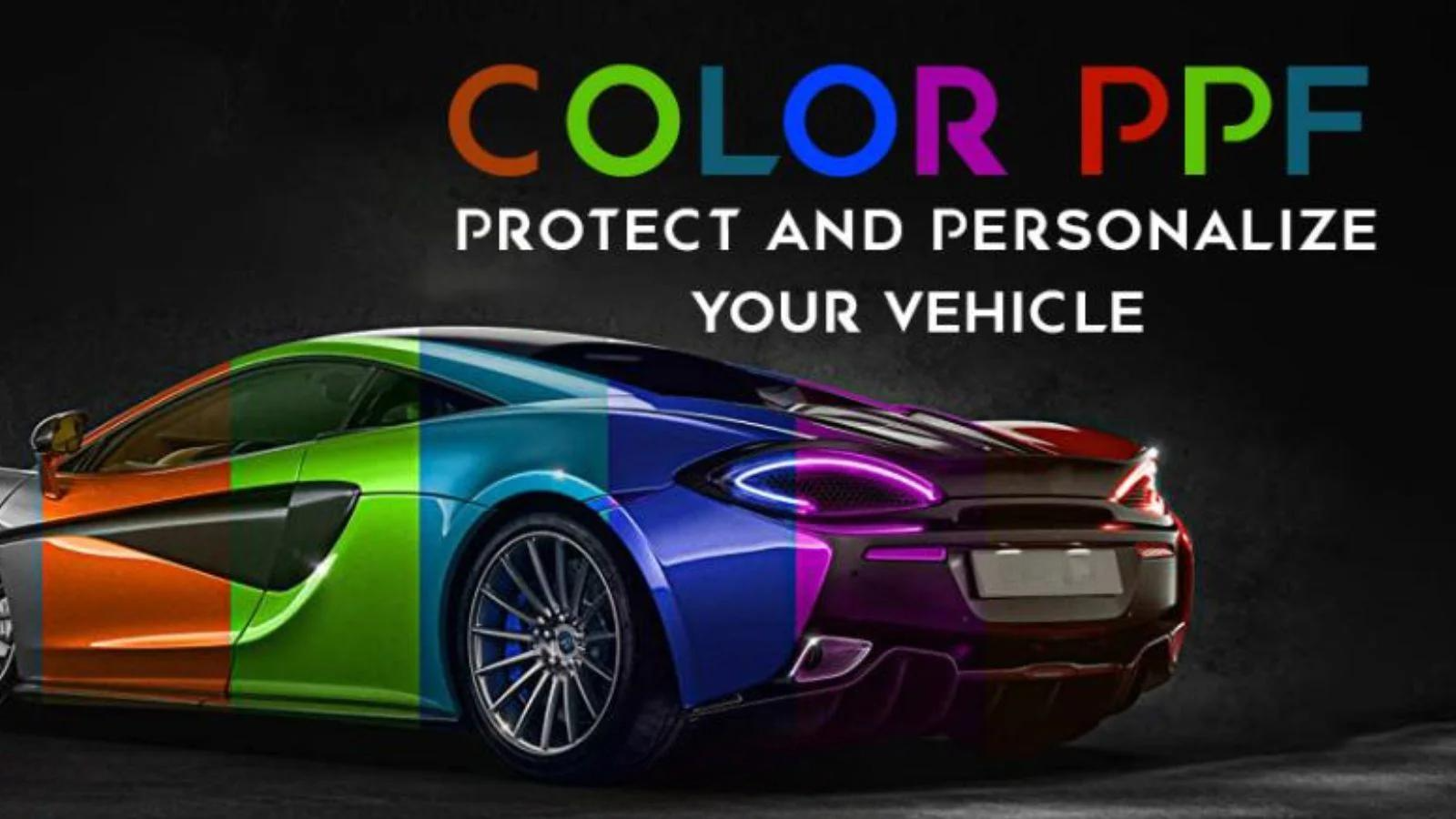
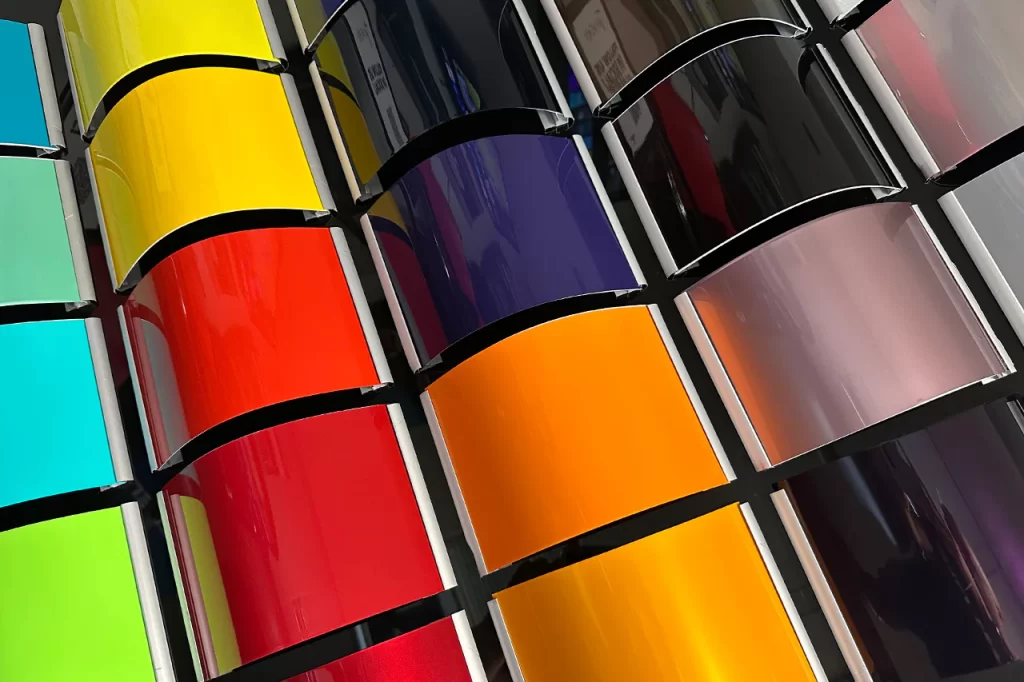
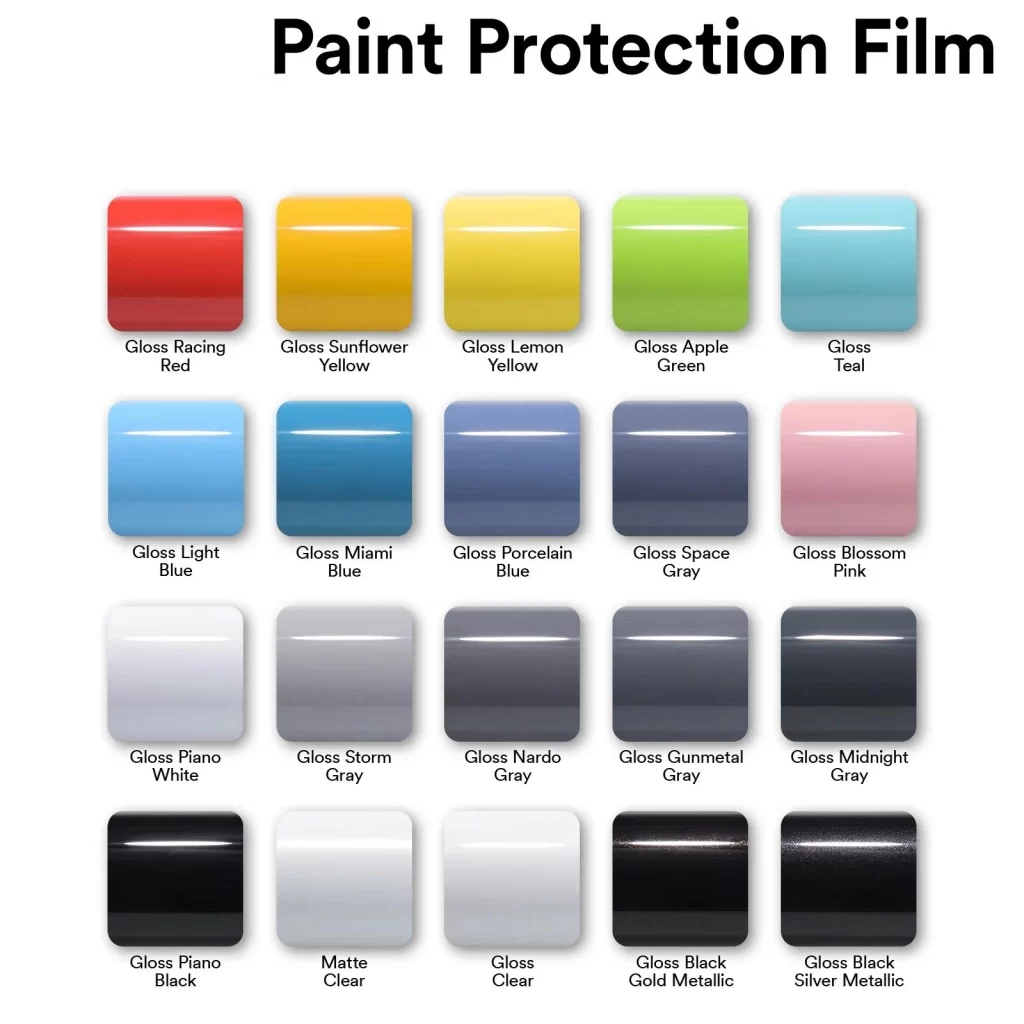
One of the most exciting aspects of colored PPF is the variety of finishes available. Modern films offer something for every taste.
Gloss finishes deliver that wet-look, showroom shine. They’re reflective, deep, and perfect for owners who want their vehicle to gleam .
Matte finishes have exploded in popularity. The flat, non-reflective surface gives vehicles a modern, understated appearance that screams “performance” without shouting .
Satin finishes split the difference—a soft sheen that’s not quite gloss, not quite matte. They add depth and sophistication while hiding minor imperfections better than high-gloss options .
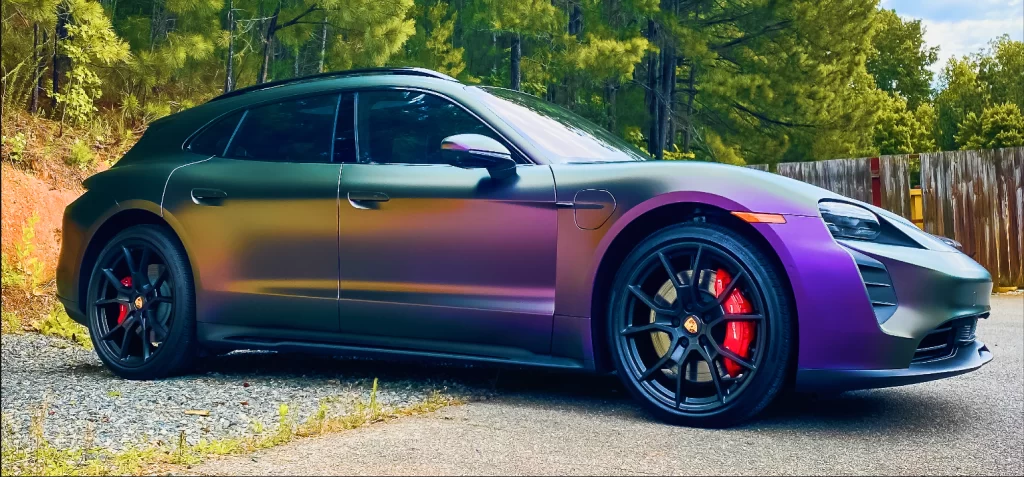
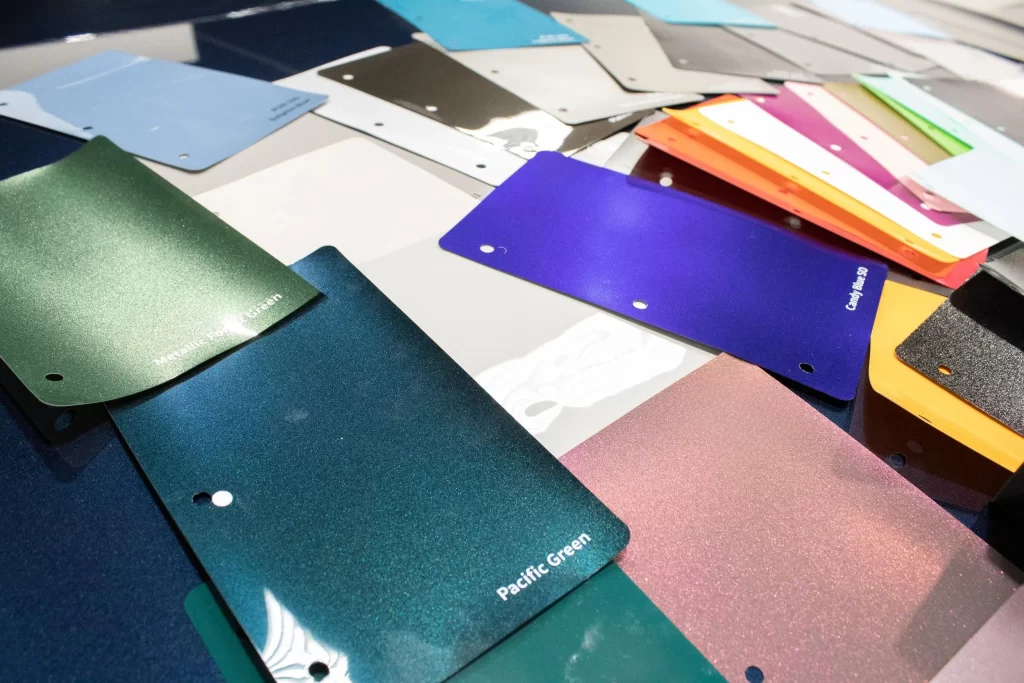
Metallic and color-shift films take customization to another level. These premium options use special pigments that change appearance depending on lighting and viewing angle .
Installation: Why Professional Matters
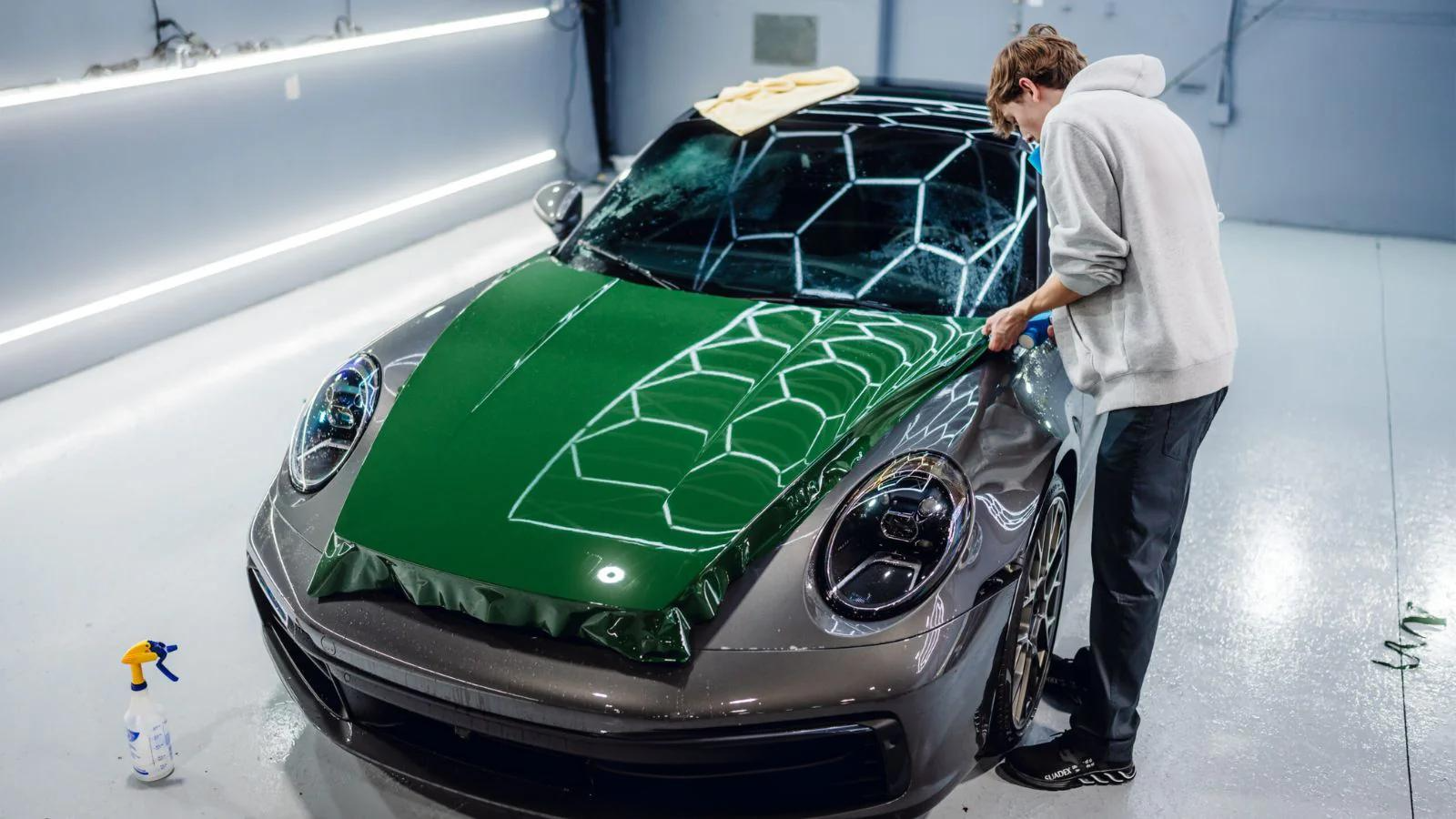
Here’s the honest truth: colored PPF installation isn’t a weekend DIY project. The material is thicker than vinyl, less forgiving during application, and requires a controlled environment to achieve flawless results .
Professional installers bring several advantages:
Proper preparation is critical. Paint must be meticulously cleaned, decontaminated, and sometimes lightly polished before film application . Any imperfection underneath will show through.
Skill and experience matter on complex curves. Bumpers, mirrors, and body lines require precise stretching and tucking to achieve seamless coverage . A professional knows how much heat to apply, how much to stretch, and when to stop.
Clean environments prevent contamination. Dust particles trapped under film ruin the finish. Professional shops use dedicated bays with positive air pressure and moisture control .
Warranty protection comes with professional installation. Quality films carry manufacturer warranties—typically 5–10 years—that require certified installation .
Maintenance: Keeping Your Film Flawless
The good news? Colored PPF is remarkably low-maintenance compared to bare paint or vinyl wraps.
Wash regularly with pH-neutral car shampoo and a soft microfiber mitt. Avoid automatic car washes with abrasive brushes .
Dry by hand to prevent water spots. The film’s hydrophobic surface makes this easy—water beads up and rolls off .
Avoid harsh chemicals like solvents, gasoline, or strong degreasers. These can damage the film’s top coat .
Park in shaded areas when possible. While quality films include UV inhibitors, extreme heat and sun exposure can still accelerate aging .
Inspect annually for edge lifting or damage. Most issues are easily caught and repaired early .
Frequently Asked Questions
Q: How long does colored PPF last compared to vinyl?
A: Quality colored PPF typically lasts 5–10 years with proper care. Premium films from reputable manufacturers carry warranties in this range. Vinyl wraps generally need replacement every 2–5 years .
Q: Is colored PPF worth the extra cost?
A: For long-term owners, absolutely. While the upfront investment is higher, colored PPF’s durability and paint protection often make it more economical over time than repeated vinyl wraps .
Q: Can colored PPF be removed without damaging paint?
A: Yes—when properly installed and removed within its warranty period, quality colored PPF should release cleanly without damaging factory paint . This is one advantage of TPU over aged PVC vinyl, which can be difficult to remove.
Q: Will colored PPF fade or yellow over time?
A: Premium films with UV inhibitors maintain color stability for years. Single-layer casted color TPU is particularly resistant to fading because the pigment runs through the entire material, not just a printed surface .
Q: Does colored PPF work on matte factory paint?
A: Yes, with the right product. Matte-finish colored PPF preserves the non-reflective appearance while adding protection. Some manufacturers offer films specifically formulated for matte finishes .
Q: Can I wax or ceramic coat colored PPF?
A: Many owners choose to apply ceramic coatings over colored PPF for enhanced hydrophobics and gloss. However, always check with your film manufacturer—some coatings may interact differently with colored versus clear films.
Q: What’s the most popular color for colored PPF?
A: Currently, satin and matte black finishes dominate the market, followed by various shades of gray, blue, and military green. Color-shift films are gaining popularity among enthusiasts seeking something truly unique .
The Decowell Difference
At Decowell, we’ve been manufacturing premium automotive films for years, serving customers across North America, Europe, and Asia. Our colored PPF represents the culmination of everything we’ve learned about protection, aesthetics, and durability.
Single-layer casted color TPU ensures your vehicle’s finish remains consistent and fade-free for years . No delamination. No discoloration. Just rich, stable color that looks as good on year five as it did on day one.
Self-healing technology means minor scratches disappear with heat—from the sun, warm water, or your garage’s heat gun. Your vehicle maintains that just-installed appearance with minimal effort .
7.5 mil total thickness provides real impact protection. Rock chips, road debris, parking lot encounters—Decowell film absorbs the abuse so your paint doesn’t .
UV and chemical resistance keeps your film looking fresh. We test our products rigorously—including 2,000+ hours of QUV testing—to ensure they withstand real-world conditions .
Professional-grade adhesive installs reliably and removes cleanly. Our repositionable adhesive system allows installers to achieve perfect alignment, while engineered release properties ensure clean removal within warranty periods .
Multiple finishes available—gloss, matte, satin, and metallic—so you can achieve exactly the look you want .
Ready to Transform and Protect Your Vehicle?
The era of choosing between protection and personalization is over. With Decowell colored PPF, you get both—the rugged durability of premium TPU film and the head-turning appearance of a custom color change.
Whether you’re protecting a daily driver, refreshing an older vehicle, or creating something truly unique with a high-end exotic, Decowell has the solution.
Contact our team today for:
Free quotes tailored to your vehicle and coverage needs
Color samples to see our finishes in person
Installer referrals in your area
Wholesale pricing for shops and distributors
Technical specifications and warranty information
Decowell specializing in high-performance polyurethane films for automotive, architectural, and industrial applications . Our products meet international quality standards and are trusted by installers worldwide.