Home » Clear Film on Car: The Invisible Armor That Keeps Your Paint Flawless
Recent Posts
Clear Film on Car: The Invisible Armor That Keeps Your Paint Flawless
You just bought a new car. The paint is flawless. The shine is deep and rich. Then, a few weeks later, you see it—a tiny chip on the hood from a rock kicked up on the highway. Then a scratch from a parking lot mishap. Then bug splatter that refuses to come off. Before you know it, your pristine finish starts showing signs of age.
This is where clear film on car paint comes in. You have probably heard people talk about “clear bra” or “PPF.” Maybe a friend recommended it. Maybe you saw a video online. But what exactly is this stuff? Does it actually work? And more importantly—is it worth the money?
Let us cut through the noise. Here is everything you need to know about clear film for car paint protection.
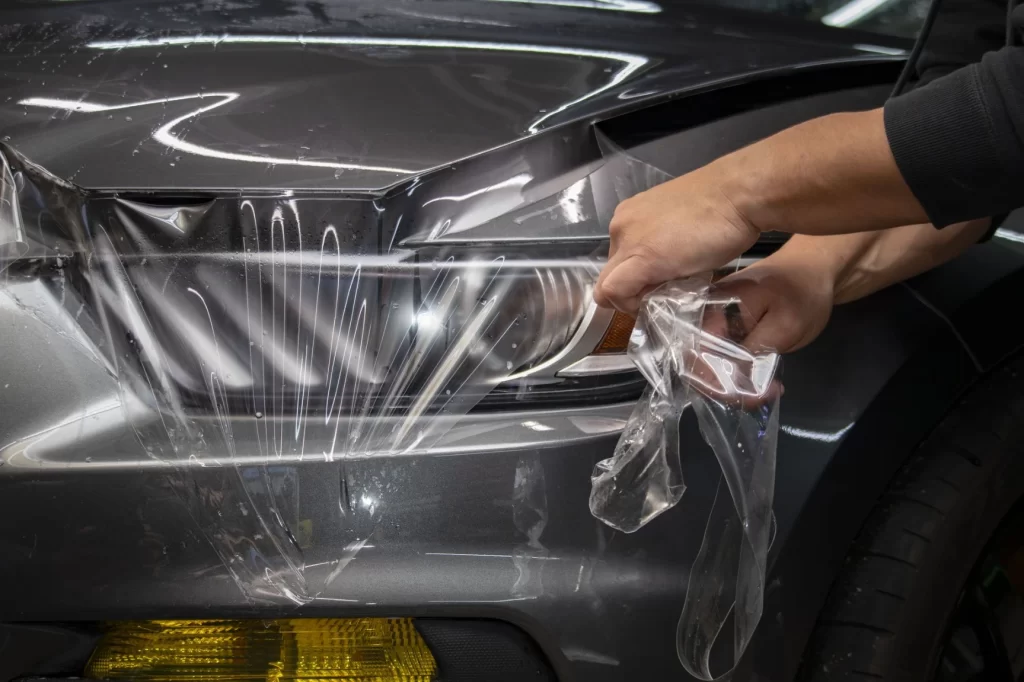
Table of Contents
What Exactly Is Clear Film on Car Paint?
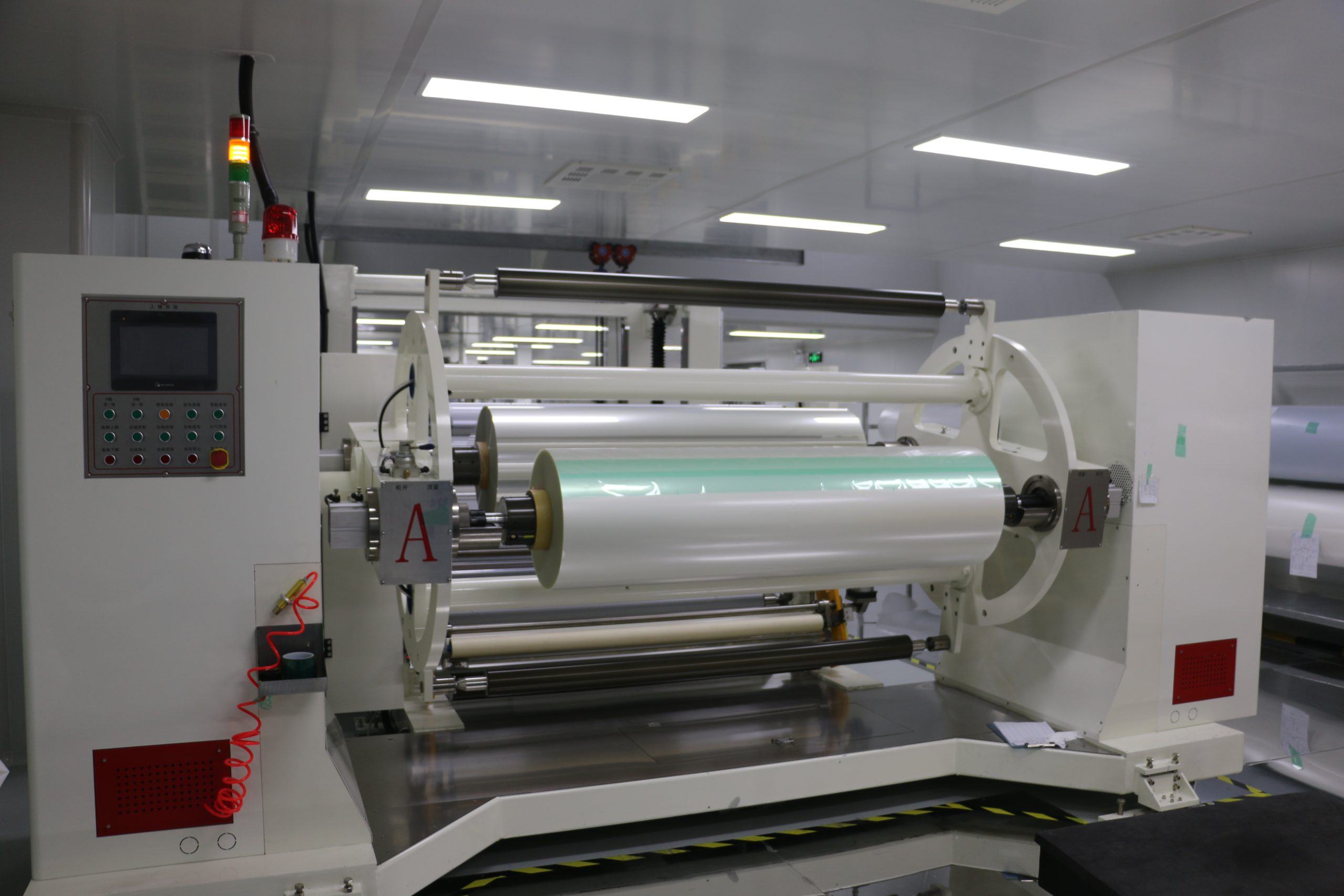
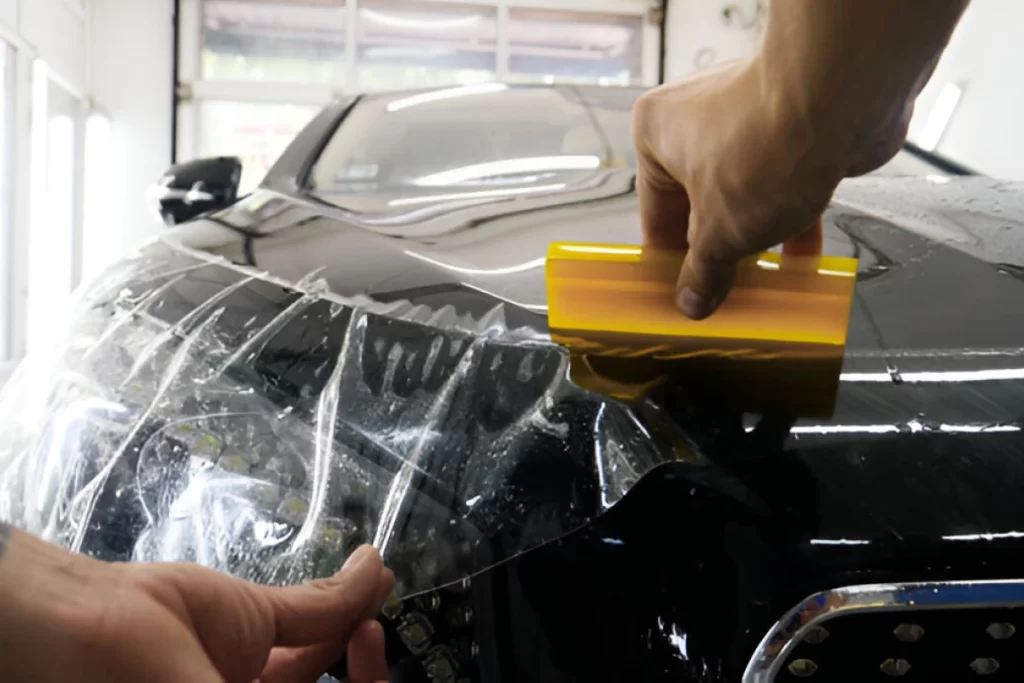
Let us start with the basics. Clear film, also known as paint protection film (PPF) or clear bra, is a transparent urethane-based material applied directly to your vehicle’s painted surfaces. Think of it as a sacrificial shield. Instead of your factory paint taking the damage from rocks, road debris, bug splatter, or bird droppings, the film takes it instead.
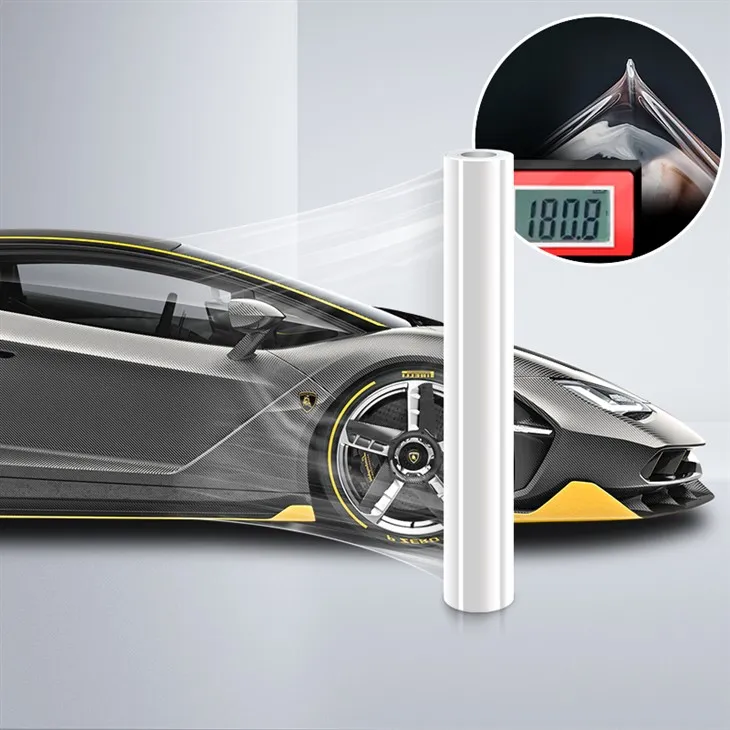
A quality clear film is typically around 8 mils thick—that is about the thickness of a few sheets of paper stacked together. But do not let the thinness fool you. This stuff is incredibly tough. It is made from thermoplastic polyurethane (TPU), a material that combines the transparency of plastic with the impact resistance of rubber. It is flexible enough to stretch around complex curves, yet strong enough to stop a rock traveling at highway speed.
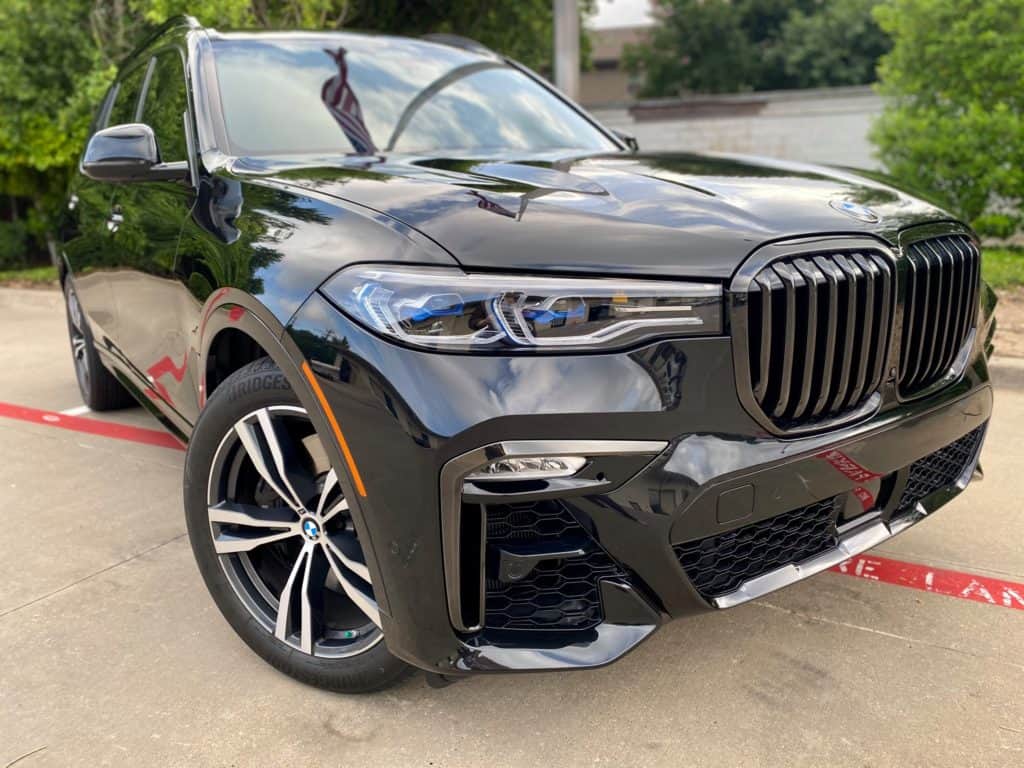
The best part? A properly installed clear film is virtually invisible. You cannot see it unless you are looking for it up close. Your car keeps its original color, its original gloss, its original beauty. The only difference is that your paint now has an invisible bodyguard.
Where Did Clear Film Come From? A Quick History Lesson
Here is something interesting. Clear film did not start in the automotive world at all. It came from the military.
During the Vietnam War, US helicopters were crashing because rotor blades were getting damaged by debris and shrapnel. The military worked with 3M to develop a lightweight, durable protective layer that could take hits without compromising performance. The solution? Urethane film. Helicopter tape, they called it.
In the 1970s, the military expanded its use to the noses of fighter jets. In the 1980s, NASCAR caught on, using the same technology to protect expensive decals on race cars from rock chips. By the 1990s, the technology had trickled down to everyday consumers.
Today, clear paint protection film is OEM-approved by virtually every major automaker. What started as a wartime innovation has become standard practice for anyone who truly cares about their car’s appearance.
How Does Clear Paint Protection Film Actually Work?
Let us get a little technical for a moment. A quality clear film is not just a single sheet of plastic. It is a multi-layer construction, typically made up of four distinct layers:
Polyester Release Liner (bottom layer). This is the backing that protects the adhesive before installation. You peel it off right before applying the film.
Acrylic Adhesive. This layer bonds the film to your car’s paint. It is designed to be strong enough to stay put for years, yet removable without damaging the factory finish.
Polyurethane Core Layer. This is the bulk of the film—usually around 6 to 8 mils thick. It provides the impact resistance and flexibility that makes PPF so effective.
Clear Coat Top Layer. This outermost layer is where the magic happens. It contains elastomeric polymers that give the film its self-healing properties and protect against UV damage, chemical staining, and environmental contaminants.
When light scratches occur in the top layer, heat—from sunlight, warm water, or a heat gun—causes the elastomeric polymers to return to their original shape. The scratch disappears. Your car looks new again without any intervention from you.
What Does Clear Film Actually Protect Against?
The list is long. And that is why people invest in clear paint protection film in the first place.
Rock chips and road debris. This is the number one reason people buy PPF. Those tiny rocks that get kicked up on the highway can wreak havoc on your hood and front bumper. A quality clear film stops them cold.
Light scratches and swirl marks. Automatic car washes, tree branches, careless parking lot neighbors—these are all sources of those annoying fine scratches that dull your paint over time. Self-healing PPF makes many of them disappear.
Bug splatter and bird droppings. Both are acidic. Both can etch into your clear coat if left too long. A good clear film creates a barrier that resists chemical staining, giving you more time to clean them off without permanent damage.
UV rays. The sun is relentless. Over time, UV exposure fades paint and causes discoloration. Premium clear films contain UV inhibitors that protect both the film and the paint underneath.
Acid rain and hard water spots. Environmental contaminants are everywhere. A hydrophobic clear film causes water to bead up and roll off, taking many contaminants with it.
Clear Film on Car vs Ceramic Coating: What Is the Difference?
This question comes up constantly. And it is easy to see why. Both products protect your paint. Both products are popular. But they do completely different things.
Clear film (PPF) is a physical barrier. It is thick. It is tough. It stops rocks and scratches by taking the hit itself. Think of it as armor.
Ceramic coating is a chemical barrier. It bonds with your paint at a molecular level to create a hydrophobic, easy-to-clean surface. It repels water, dirt, and contaminants. But it does not stop rock chips. A ceramic coating will not prevent a stone from chipping your paint. PPF will.
Here is the truth that many people miss. These products are not competitors. They work together perfectly. Install clear film on high-impact areas like your hood, bumper, fenders, and mirrors. Then apply a ceramic coating over the entire vehicle—including the PPF. The film provides the physical protection. The coating provides the hydrophobic properties and makes maintenance effortless.
If you have to choose one, ask yourself what you care about more. Rock chip protection? Get PPF. Ease of cleaning and water beading? Get ceramic coating. But the smart money gets both.
How Much Does Clear Paint Protection Film Cost?
Let us talk numbers. Clear film is not cheap. But neither is repainting your car.
For partial coverage—protecting just the front end (hood, bumper, fenders, mirrors, headlights)—you are typically looking at $1,500 to $2,500 professionally installed.
For full vehicle coverage—the entire car—prices generally run $4,000 to $8,000 or more, depending on the size and complexity of your vehicle.
Why such a wide range? Several factors come into play. Vehicle size matters—wrapping a full-size SUV costs more than wrapping a compact sedan. Film quality matters—premium brands cost more but offer better clarity, self-healing performance, and longer warranties. Installer expertise matters—a highly skilled professional will charge more, but the results are night and day compared to a budget installer.
For reference, wholesale rolls of quality clear PPF typically run $1,100 to $2,800 for a 60×50 foot roll, depending on the brand and finish. The material itself is expensive. The labor is even more expensive. A proper full-vehicle PPF installation takes 20 to 40 hours of meticulous work.
If that sounds like a lot, consider the alternative. A single repaint of your hood can cost $500 to $1,500. A full vehicle repaint can run $5,000 to $15,000 or more. And no repaint will ever match the quality of your factory finish. PPF preserves what you already have. That is the value proposition.
Self-Healing Technology: Does It Really Work?
Yes. But let us clarify what “self-healing” actually means.
When you get a light scratch in a quality clear film—from a car wash brush, a stray fingernail, a light scrape—the top layer of the film gets displaced. But the elastomeric polymers in that layer are designed to “remember” their original shape. When heat is applied—either from sunlight, warm water, or a heat gun—those polymers relax and flow back into place. The scratch disappears.
The key word here is “light.” Self-healing technology will not fix a deep gouge or a tear. It will not fix damage that goes through the film and into your paint. But for the vast majority of everyday wear and tear—the swirl marks, the light scratches, the surface-level blemishes that accumulate over time—self-healing PPF works remarkably well.
Some premium films on the market today feature what is called “instant healing” technology. These films heal scratches almost immediately upon exposure to heat, without requiring professional intervention. Others may take a bit longer or require a bit more heat. But the principle is the same. Your film protects itself, which means your paint stays protected longer.
Will Clear Film Yellow Over Time?
This used to be a real problem. Early paint protection films had a nasty habit of turning yellow after a few years, especially on white cars. The culprit? UV exposure was oxidizing the adhesive layer, causing discoloration.
Today, that issue has largely been solved—at least with quality films. Premium manufacturers now use UV-stabilized acrylic adhesives that resist oxidation and yellowing. Modern clear films also incorporate UV inhibitors directly into the TPU layers, further protecting against sun damage.
But here is the catch. Cheap films still yellow. Low-quality PPF that cuts corners on materials will absolutely discolor over time. The yellowing effect is especially noticeable on light-colored vehicles. This is one of those cases where you genuinely get what you pay for. A premium clear film from a reputable brand will stay crystal clear for years. A bargain film will look terrible after two summers.
How Is Clear Film Installed? Can I Do It Myself?
Let us be honest with you. Professional installation is strongly recommended. Installing clear film on a car is not like applying a screen protector to your phone. It is far more complex.
Here is roughly what professional installation looks like:
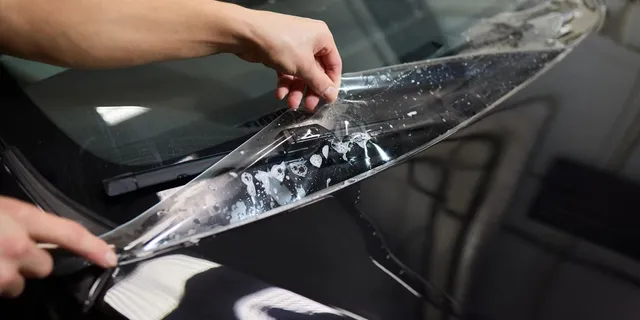
Step one: Decontamination and paint correction. The installer starts by thoroughly washing the vehicle, then using a clay bar to remove embedded contaminants. If the paint has swirl marks or light scratches, those are polished out. Any imperfection underneath the film will be visible through the film. So the paint needs to be as close to perfect as possible before installation begins.
Step two: Pre-cutting the film. Many professional installers use computer plotters to pre-cut film panels specific to your vehicle’s make and model. This ensures perfect fitment around curves, edges, and complex body panels.
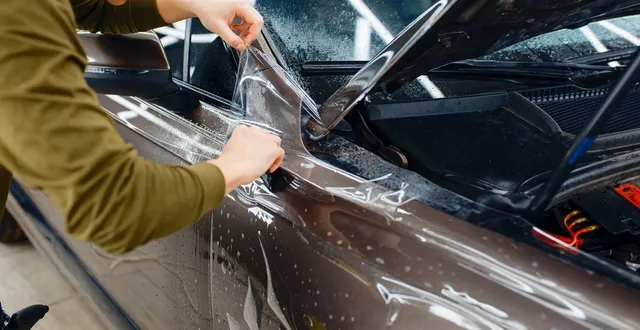
Step three: Application. The installer sprays a slip solution (typically water mixed with a small amount of baby shampoo) onto both the vehicle surface and the adhesive side of the film. This allows the film to be positioned and repositioned before final adhesion.
Step four: Squeegeeing. Once the film is perfectly aligned, the installer uses a squeegee to remove the slip solution and any air bubbles from underneath the film. The adhesive bonds to the paint as the solution is pushed out.
Step five: Heat and conform. For curves and edges, the installer uses a heat gun to soften the film, allowing it to stretch and conform to the vehicle’s contours. The film is then tucked around edges for a seamless finish.
Step six: Drying. The film is left to cure, typically for 24 to 48 hours, during which time the adhesive fully bonds and any remaining moisture evaporates.
Is DIY installation possible? Technically, yes. DIY kits are available for $200 to $500. But there is a reason professional installers charge what they do. Achieving a bubble-free, edge-tucked, perfectly aligned installation requires skill, experience, and a dust-free environment. One mistake can ruin an entire panel’s worth of expensive film. For most people, paying a professional is money well spent.
How Long Does Clear Film Last?
A quality clear paint protection film, professionally installed and properly maintained, typically lasts 5 to 10 years.
Several factors affect longevity. The quality of the film itself is the biggest factor—premium TPU films with UV-stabilized topcoats last far longer than cheap alternatives. Environmental exposure matters—a car parked outdoors in Arizona will see more UV degradation than a car garaged in Seattle. Maintenance habits matter—proper washing and care extend the life of any protective film.
Compare that to vinyl wrap, which typically lasts 3 to 5 years. Compare that to ceramic coating, which lasts 2 to 5 years. Clear film is the longest-lasting paint protection solution available.
What Are the Downsides? Let Us Be Real.
No product is perfect. Clear film has its drawbacks, and you deserve to know what they are.
Cost. Good PPF is expensive. Full vehicle coverage can easily run $5,000 to $8,000. That is a significant investment, even for a car enthusiast.
Not indestructible. A large rock traveling at highway speed can still puncture the film. A key dragged across your door can still cut through it. PPF dramatically reduces damage. It does not eliminate it entirely.
Edge lines. On a partial coverage installation—say, just the front end—you will see a line where the film ends. On light-colored cars, that line can accumulate dirt over time and become visible. Full vehicle coverage eliminates this issue but costs significantly more.
Installation quality matters. A poor installation looks terrible. Bubbles, lifted edges, visible contamination under the film—these are all signs of a bad job. Finding an experienced, reputable installer is just as important as choosing a quality film.
Yellowing risk with cheap film. As mentioned earlier, low-quality PPF will yellow. This is not a problem with premium brands, but it is a real risk if you try to save money on materials.
How Do You Maintain Clear Film?
The good news is that clear film is low-maintenance. Here is what you need to know:
Wash regularly with pH-neutral car shampoo. Avoid harsh detergents or automatic car washes with bristle brushes. Hand washing is always best.
Dry gently with a clean microfiber towel. This prevents water spots and reduces the chance of introducing scratches.
Clean off bug splatter and bird droppings promptly. Even with PPF, acidic contaminants left in the hot sun can eventually cause damage. The film gives you a larger window to clean them off, but do not leave them for weeks.
Avoid pressure washers directed at film edges. If you use a pressure washer, stay at least 12 inches away from the film surface and avoid blasting directly at exposed edges, which can cause lifting.
Optional but recommended: apply a ceramic coating on top. A professional-grade ceramic coating applied over your PPF adds hydrophobic properties, makes cleaning easier, and provides an additional layer of UV and chemical protection.
Do not wax or polish aggressively. The self-healing topcoat does not need polishing. If you want extra gloss, use a PPF-safe spray sealant or quick detailer.
Is Clear Film Worth It?
Here is the honest answer. Clear paint protection film is absolutely worth it if you fall into one of these categories:
You care about your car’s appearance. If you are the type of person who notices swirl marks and gets annoyed by rock chips, PPF will save you years of frustration.
You plan to keep your car for a long time. Over 5 to 10 years, the cost of PPF amortizes to a few hundred dollars per year. That is cheap insurance for preserving your paint.
You drive on highways regularly. The faster you go, the more rocks and debris hit your car. Highway drivers see far more paint damage than city drivers.
Your car has expensive or hard-to-match paint. Tri-coat finishes, metallic paints, and custom colors are expensive to repair. Keeping the factory paint intact is worth the investment.
You care about resale value. A car with flawless original paint commands a higher price than one with chips, scratches, and faded clear coat. PPF helps maintain that value.
On the other hand, clear film may not be for you if you lease your car and do not care about wear and tear charges. Or if you drive a beater that you do not care about cosmetically. Or if your budget simply does not allow for a $5,000+ investment in paint protection.
For everyone else? Clear film is one of the smartest automotive investments you can make.
What Is New in the PPF World? 2025 and Beyond Trends
The paint protection film market is growing fast. The global TPU automotive paint protection film segment alone was expected to reach around $1.18 billion in 2025, growing at a healthy pace. Colored PPF is exploding in popularity, with the global color-changing film market projected to nearly double from about $85 million to $165 million by 2030.
Major brands are entering the space or expanding their offerings. XPEL launched its COLOR PPF line in 2025 with 16 premium colors. BASF’s RODIM brand introduced R-Star PPF targeting the mass-premium segment. 3M released its Series 100 and Series 150 Gloss PPF products. The industry is moving toward higher performance, more options, and better value.
But clear film remains the foundation. No matter how many colors and finishes come to market, the core technology of transparent TPU protection continues to improve. Thinner films with better clarity. Stronger self-healing properties. Longer-lasting UV resistance. Easier installation for professionals. The best clear films today are genuinely better than anything available just a few years ago.
Why Choose Decowell for Your Clear Film Needs
At this point, you might be wondering where to find a clear film that balances quality, performance, and value. This is where Decowell comes in.
Decowell has established itself as a trusted name in advanced protective materials, with expertise spanning multiple industries including automotive, new energy, electronics, and industrial automation. Their experience across such diverse fields gives them a unique perspective on material science and surface protection that most PPF brands simply do not have.
What sets Decowell apart is their commitment to precision engineering and reliability. In the world of paint protection film, consistency is everything. A film that looks great on the sample roll but fails in real-world conditions is worse than useless. Decowell’s clear film products are engineered to deliver consistent performance across every roll, with attention to detail that shows in the final result.
Their clear paint protection film lineup features premium TPU construction, self-healing topcoats, UV-stabilized formulations, and optical clarity that preserves your paint’s original depth and shine. Whether you need full vehicle coverage or partial protection for high-impact areas, Decowell has solutions designed to meet the needs of professional installers and car enthusiasts alike.
The automotive aftermarket is moving toward products that deliver both protection and performance. Decowell is positioned right at the center of that shift. If you are ready to invest in clear film for your car, Decowell is a name you can trust.
Frequently Asked Questions
Q1: What is clear film on car paint?
Clear film on car paint, also known as paint protection film (PPF) or clear bra, is a transparent polyurethane layer applied to a vehicle’s painted surfaces. It protects against rock chips, scratches, bug splatter, bird droppings, UV rays, and environmental contaminants while remaining virtually invisible.
Q2: How long does clear paint protection film last?
A high-quality clear film typically lasts 5 to 10 years with proper care. Factors like film quality, UV exposure, climate, and maintenance habits affect longevity, but premium films are engineered with UV stabilizers and anti-yellowing formulas to maintain their appearance over the long term.
Q3: Does clear film prevent rock chips?
Yes. This is one of the primary benefits of PPF. The TPU material absorbs impact energy from small rocks and road debris, preventing them from reaching your factory paint. While extremely large or sharp objects can still penetrate the film, it stops the vast majority of everyday road hazards.
Q4: Is clear film the same as ceramic coating?
No. Clear film (PPF) is a physical barrier—a thick, impact-resistant layer that stops rocks and scratches. Ceramic coating is a chemical barrier—a thin, hydrophobic layer that repels water and contaminants but does not stop physical damage. They work best together. PPF provides the armor. Ceramic coating provides the easy-clean surface.
Q5: Can I wash my car normally with clear film installed?
Yes. Regular hand washing with pH-neutral car shampoo is recommended. Avoid automatic car washes with bristle brushes, which can scratch the film. Dry gently with a clean microfiber towel. The hydrophobic surface makes washing easier than unprotected paint.
Q6: Will clear film make my car look dull?
No. A quality clear film is optically clear and does not alter the appearance of your paint. If anything, modern PPF enhances gloss and depth. Cheap films can look hazy or cloudy, but premium films are virtually invisible once properly installed.
Q7: Does clear film yellow over time?
Cheap films can yellow. Quality films do not. Premium clear film uses UV-stabilized acrylic adhesives and TPU formulations that resist oxidation and discoloration. This is one area where you genuinely get what you pay for.
Q8: Can clear film be removed without damaging paint?
Yes. Professional removal using heat to soften the adhesive allows the film to be peeled away cleanly, leaving no residue and revealing the pristine factory paint underneath. This is one of the major advantages over permanent paint jobs.
Q9: How much does clear film cost?
Partial front coverage typically runs $1,500 to $2,500 professionally installed. Full vehicle coverage ranges from $4,000 to $8,000 or more, depending on vehicle size, film quality, and installer expertise.
Q10: Is clear film worth it?
For anyone who cares about their car’s appearance, plans to keep their vehicle for years, drives on highways regularly, or wants to maintain resale value—yes, absolutely. Clear film is the most comprehensive and longest-lasting paint protection solution available.
Q11: Can I install clear film myself?
Technically yes, but professional installation is strongly recommended. DIY installation is difficult, time-consuming, and prone to bubbles, contamination, and alignment issues. A professional installer has the experience, tools, and controlled environment to achieve flawless results.
Q12: Does clear film work on headlights?
Yes. Many people apply clear film to headlights to protect against yellowing, clouding, and rock damage. This is especially common on vehicles with expensive or hard-to-replace headlight assemblies.
Q13: Can clear film be applied over existing paint chips?
The film will adhere over small chips, but the damage underneath will still be visible. For best results, any paint damage should be repaired and the surface paint-corrected before PPF installation.
Q14: What is the difference between clear gloss and matte clear film?
Clear gloss PPF is completely transparent and preserves your factory paint’s original shine. Matte clear PPF converts glossy paint to a satin or matte finish while still providing full protection. Both are available from quality manufacturers.
Q15: Does clear film affect car sensors or cameras?
No. Modern clear film is designed to be compatible with parking sensors, radar systems, and backup cameras. The film is thin enough and transparent enough that it does not interfere with electronic systems.
Final Thoughts
Clear film on car paint is not magic. It will not make your car bulletproof. It will not fix bad driving habits. But it will do something that no other product can match. It will keep your factory paint looking like factory paint—for years longer than it would otherwise.
The technology has come a long way from its military origins. Today’s clear films are optically clear, self-healing, UV-resistant, and incredibly tough. They are installed by skilled professionals who take pride in their work. And for the people who invest in them, the peace of mind is worth every penny.
If you have been on the fence about clear film, now is the time to take a closer look. The products are better than ever. The installation techniques have been refined. And the value proposition keeps getting stronger.
So whether you are protecting a daily driver or preserving a weekend show car, clear paint protection film is worth serious consideration. And when you are ready to make the move, Decowell is here to help you get it right.