Home » Metallic Black PPF – The Ultimate Armor That Turns Heads for Years
Recent Posts
Metallic Black PPF – The Ultimate Armor That Turns Heads for Years
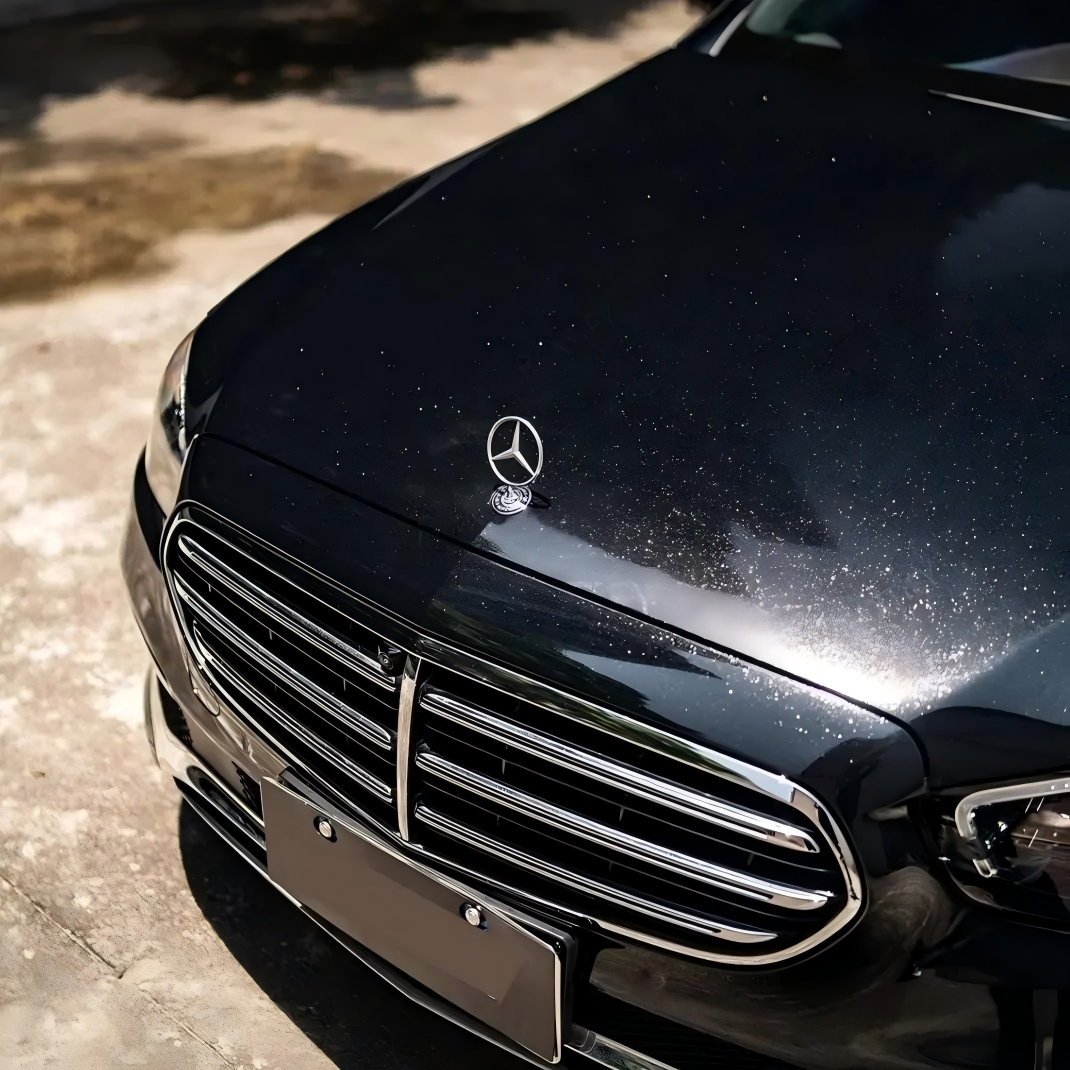
Let me ask you something. Have you ever seen a black car in the golden hour — the one where the paint almost looks liquid, with tiny flecks of silver catching the sun like stars? And then you walk closer, and not a single swirl mark in sight.
That car wasn‘t just polished. It wasn’t just waxed. Chances are, it was wrapped in a metallic black paint protection film.
Black cars have a serious love-hate relationship with their owners. You love the mirror-like depth and that commanding presence. You hate the fact that every single swirl, water spot, and stone chip screams at you from across the parking lot.
Enter metallic black PPF. It‘s not a compromise. It’s a one-up on the universe.
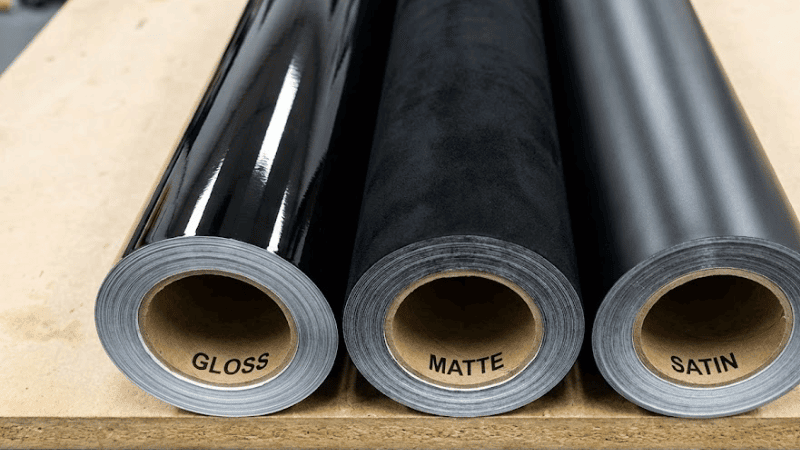
Table of Contents
What Exactly Is Metallic Black PPF?
Let‘s get the basics straight.
A standard paint protection film is a transparent thermoplastic urethane (TPU) layer designed to absorb impacts and self-heal minor scratches. Metallic black PPF takes the same protection DNA but infuses it with deep black pigments and fine metallic pearl particles.
So you’re not just adding a shield. You‘re adding a completely new paint job — one that looks wet, polished, and impossibly deep under any light.
Unlike a vinyl wrap that gives you style but minimal protection, metallic black PPF delivers both. It transforms your car’s exterior while building a physical barrier against rock chips, road debris, and UV fading.
This is where Decowell enters the conversation — but more on that later.
Why Metallic Black, Specifically?
Because flat black is fine. Matte black is moody. But metallic black? That‘s a statement.
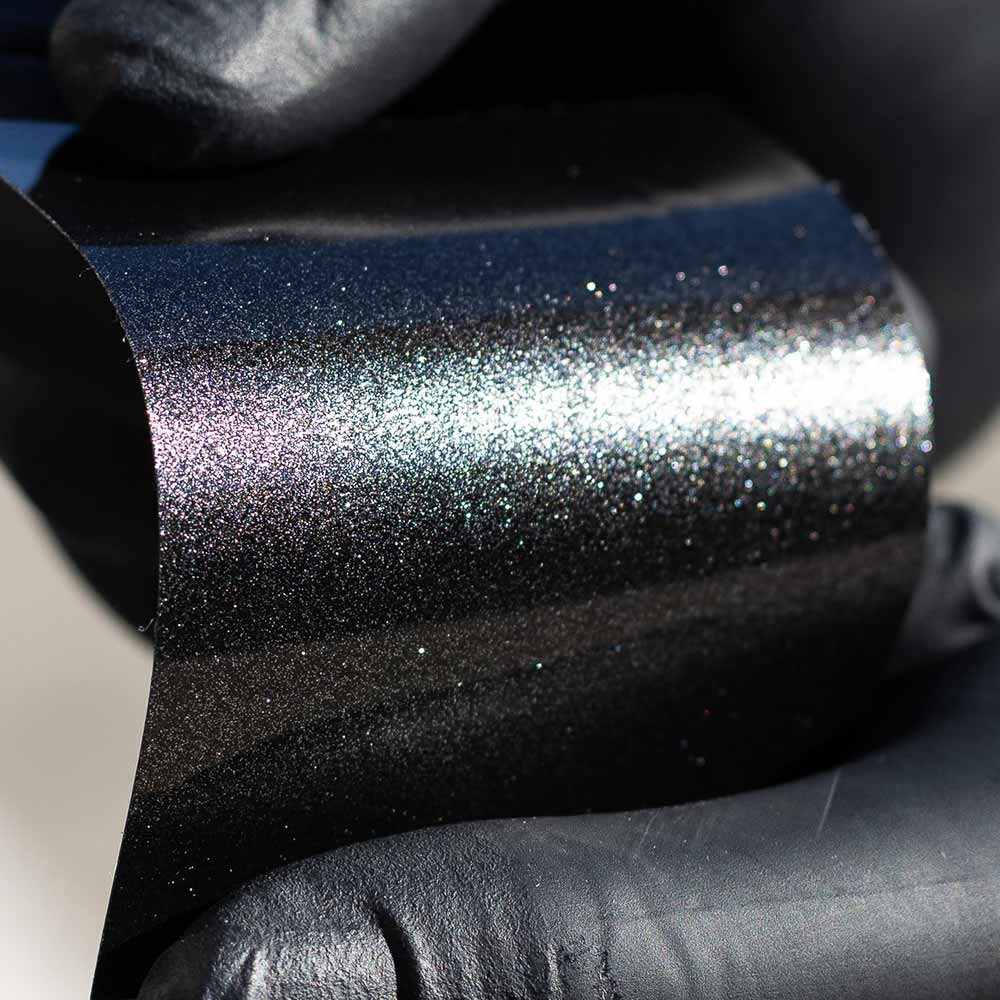
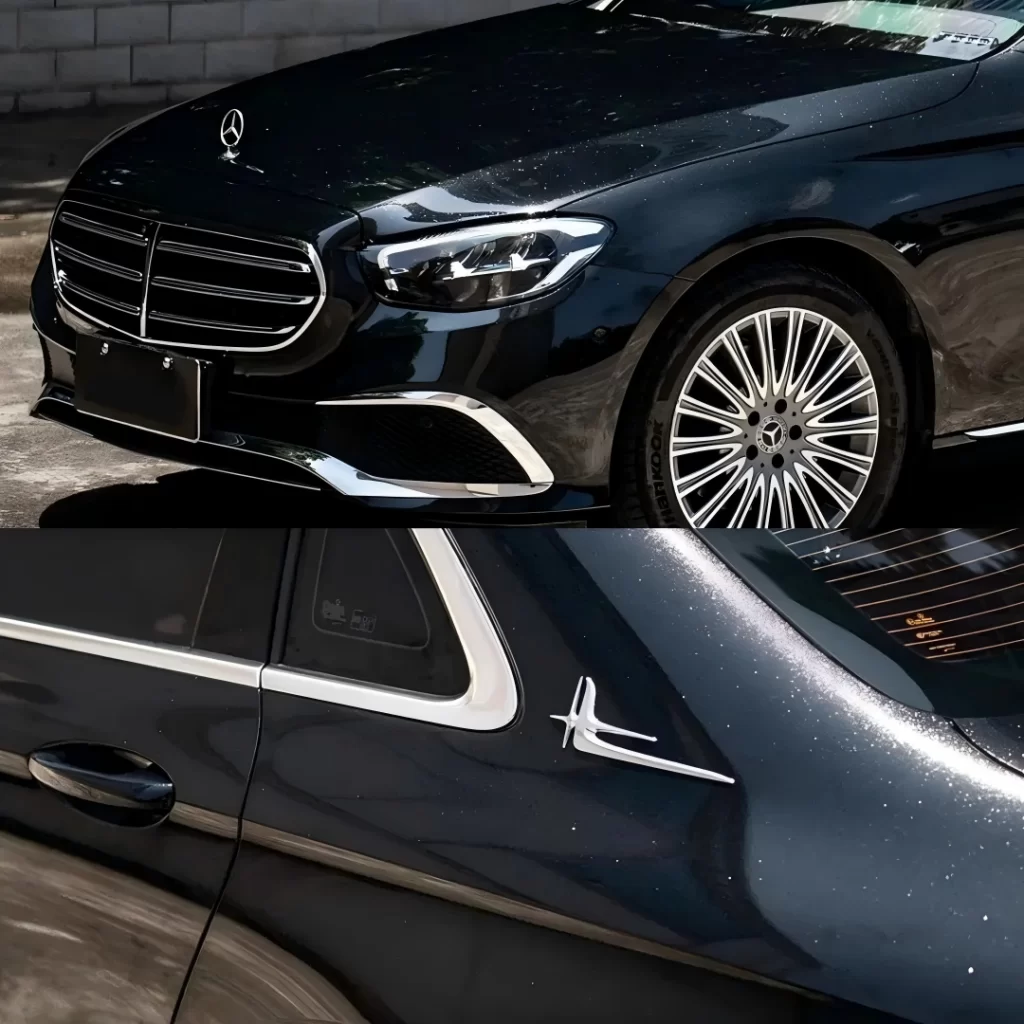
When light hits a surface wrapped in high-grade metallic black PPF, the embedded pearl and metallic particles reflect and refract at slightly different angles. You get depth. You get dimension. You get a finish that looks expensive because — let’s be honest — it is.
Car enthusiasts and daily drivers alike are increasingly choosing colored PPF over traditional vinyl because the durability gap is enormous.
And metallic finishes specifically are trending hard in 2025–2026. Industry reports highlight a strong demand for “liquid metal” effects, satin metallics, and deep black with shimmer undertones. People aren‘t just protecting their cars anymore. They’re curating them.
Self-Healing Science That Actually Works
One of the most misunderstood features of modern PPF is self-healing. Some people think it‘s magic. It’s not. But it‘s close enough to feel like magic.
The top coat of a high-quality metallic black PPF is engineered with flexible polymer chains that don‘t lock into a rigid structure. When a light scratch or swirl mark occurs — say from a careless car wash mitt or a stray branch — the molecules get displaced but not broken.
Here’s where heat comes in.
Sunlight, warm water, or even a heat gun excites those polymers. They relax back into their original low-energy state. The scratch closes. The surface smooths out. You don‘t polish, you don’t buff, you don‘t cry into a microfiber towel.
This isn’t marketing speak. TPU material combined with a self-healing topcoat can recover from minor damage repeatedly, keeping your metallic black finish flawless.
Does it fix deep gashes from a flying rock at highway speed? No. But for 90% of the microscopic abuse your car‘s paint faces every day — washing swirls, dust abrasion, light contact — it’s a game-changer.
And because metallic finishes make every micro-imperfections stand out more than lighter colors, self-healing isn‘t a luxury. It’s a necessity.
Hydrophobic & Stain-Resistant: Because You Have Better Things to Do
Let‘s talk about maintenance for two seconds.
If you’ve ever owned a black car, you know the drill. Wash it. Drive it. Admire it for four hours. Then watch dust settle like it has a personal grudge against you.
A quality metallic black PPF dramatically changes that relationship.
The hydrophobic top coat forces water to bead up and roll off the surface, taking dirt, mud, and road grime with it. That means fewer washes, less drying time, and a much lower chance of water spots baking into the finish.
Beyond water repellency, the same surface resists stains from:
Bird droppings (yes, the enemy)
Tree sap
Industrial fallout
Acid rain
The film‘s non-porous construction prevents these contaminants from etching into the clear coat. Wipe them off quickly, and the finish underneath stays pristine.
For drivers who park outdoors or live in areas with harsh weather or heavy pollen seasons, this is where metallic black PPF really separates itself from a standard clear bra or vinyl wrap.
One Layer. Two Jobs. Aesthetic + Armor.
Here’s the part most people don‘t talk about enough.
Traditional clear PPF is excellent at protection. But it leaves your car looking exactly the way it came from the factory — which is great if you love your original color.
Vinyl wraps give you any color imaginable. But they’re thin (typically 3–4 mil) and offer little resistance to rock chips or impact damage.
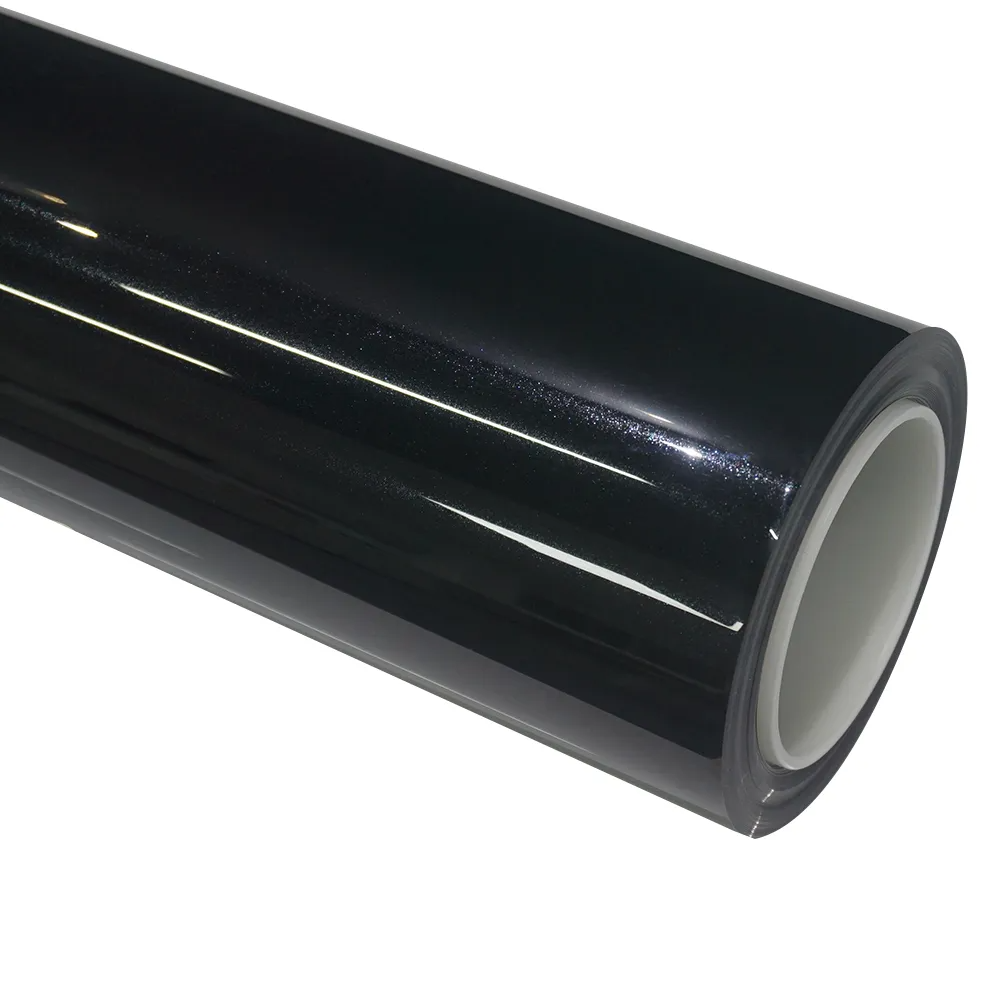
Metallic black PPF sits in the sweet spot. It‘s 7–9 mil thick, made from TPU rather than PVC, and designed to both protect and transform. You get the impact absorption and self-healing of a premium PPF, plus a deep, rich metallic black finish that turns your car into a completely different visual experience.
Think of it this way. Vinyl is a costume. Colored PPF is a full-body upgrade.
Does Metallic Black PPF Work on Any Car?
Yes. But the results vary in the best way.
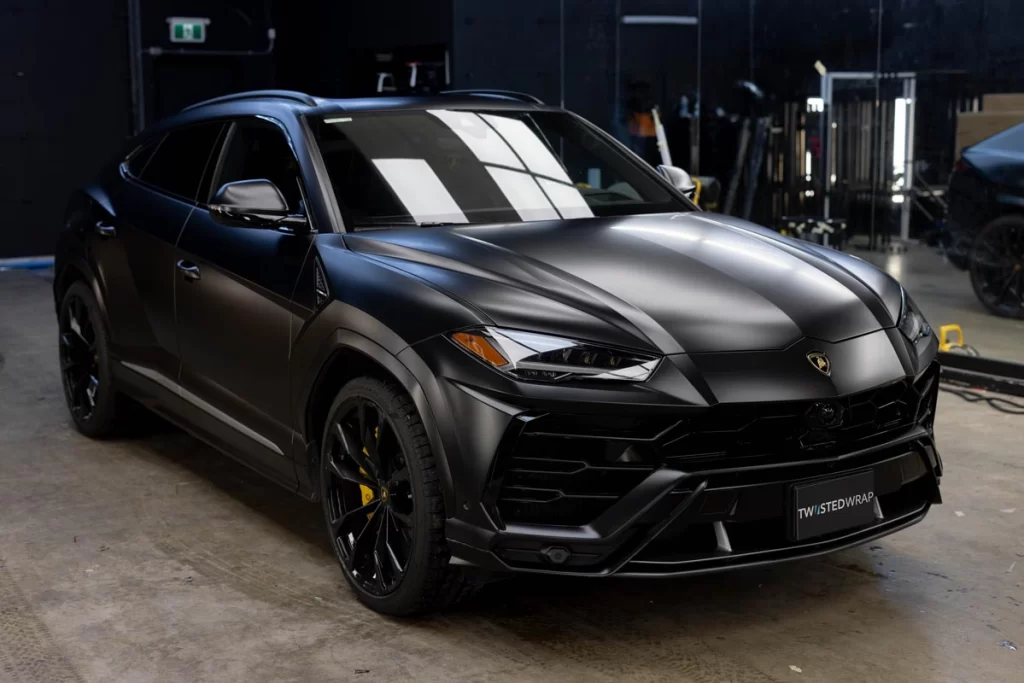
On a sleek sedan, metallic black PPF adds sophistication. On a boxy SUV, it adds presence. On a sports car with aggressive body lines, it makes every curve and crease pop because the metallic particles catch light differently across angled surfaces.
It also works over existing paint — even if your current paint isn‘t black. The pigmented layer is fully opaque, so you’re essentially changing your car‘s color while protecting the original finish underneath.
That last part matters more than you might think. When you eventually sell or trade the vehicle, you can remove the film to reveal factory-fresh paint underneath. No fading. No discoloration. Just clean, untouched clear coat.
Resale value stays intact. Actually, it gets better.
Why Installers and Shop Owners Prefer Quality Metallic Black PPF
If you run a detailing shop, wrap studio, or auto customization business, you already know that not all films are created equal.
Cheap films fight you during installation. They don’t stretch cleanly around bumpers. They lift at the edges after a few months. They yellow under UV exposure.
High-quality TPU-based metallic black PPF — the kind Decowell specializes in — behaves differently.
It conforms smoothly to complex curves. The adhesive is aggressive enough to stay put but repositionable enough to let you dial in the alignment during application. Air-release channels prevent bubbles, which saves you time and frustration on every job.
For professionals, that translates directly to higher margins and fewer do-overs.
For car owners, that translates to a finished product that doesn‘t look like a DIY experiment gone wrong.
Metallic Black PPF vs Ceramic Coating — Know the Difference
This confusion comes up constantly, so let’s settle it.
A ceramic coating bonds to your paint at the molecular level to create a hydrophobic, chemical-resistant layer. It makes your car easier to clean and protects against UV rays and mild contaminants. But it provides almost zero impact resistance against rock chips, gravel, or door dings.
Metallic black PPF is a physical barrier — a thick urethane layer that absorbs kinetic energy from debris. It‘s the only thing that actually stops a rock from chipping your paint.
The best setup?
Apply metallic black PPF to high-impact areas — or the whole car if budget allows — and top it with a ceramic coating for maximum hydrophobics and gloss. You get the best of both worlds.
How to Choose the Right Metallic Black PPF
Not all metallic black films are the same. Here‘s what matters.
Material: Look for premium-grade aliphatic TPU. It resists yellowing, maintains clarity, and stretches without tearing.
Finish: Gloss metallic gives you that deep, mirror-like shine. Satin metallic offers a muted, sophisticated sheen. Choose based on how aggressive or subtle you want the final look to be.
Self-healing capability: A functional self-healing topcoat should respond to heat and repair light scratches within seconds to minutes.
Hydrophobic properties: Good water beading and dirt-shedding ability means less maintenance and cleaner appearance between washes.
Installation characteristics: Adhesives should be repositionable during installation and bubble-free. Air-release technology makes a real difference.
This is where Decowell has built its reputation. Not by shouting the loudest, but by delivering films that perform consistently under real-world conditions. Industrial-grade reliability in an automotive aesthetic package.
Is Metallic Black PPF Worth It?
Let‘s be practical.
A high-quality metallic black PPF costs more upfront than a vinyl wrap. But consider what you’re getting.
7–9 mil TPU thickness vs 3–4 mil PVC
Self-healing surface vs permanent scratching
5–10 years of durability vs 2–4 years before fading and peeling
Protection against rock chips, not just surface abrasion
Colored PPF generally outlasts vinyl by years. It resists yellowing, cracking, and edge lifting far better, especially in harsh climates with intense sun or road salt.
If you plan to keep your car for more than two years, metallic black PPF is the smarter financial decision. You‘re not paying for a temporary look. You’re paying for years of protection and a finish that stays deep, dark, and dazzling.
Why Choose Decowell for Metallic Black PPF
Look, there are dozens of PPF brands out there. Some have great marketing. Some have great prices.
Decowell has something else — a track record of performance in demanding environments.
Their industrial automation products have been tested under extreme heat conditions (up to 60–64°C) and continued performing without distortion or failure. That same engineering discipline carries over into their PPF solutions.
Decowell focuses on delivering high-value, differentiated products that help installers and distributors move beyond competing purely on price. For a metallic black PPF, that means consistent color depth from batch to batch, reliable self-healing across the life of the film, and adhesive performance that doesn‘t cut corners.
In practical terms? Less rework for installers. Fewer complaints from customers. And a metallic black finish that actually looks as good two years later as it did on day one.
For shop owners and distributors, Decowell represents a partnership — not just a transaction.
For car owners, Decowell means the confidence that your metallic black wrap will protect what matters and turn heads doing it.
Frequently Asked Questions
1. Can metallic black PPF be applied over existing paint that isn’t black?
Yes. Metallic black PPF is fully opaque, so it completely changes your car‘s appearance regardless of the original paint color underneath. When removed, the factory finish remains protected.
2. Will the metallic effect fade over time?
High-quality TPU-based metallic black PPF includes UV inhibitors that resist fading and yellowing. The metallic pearl particles themselves are stable and will continue to shimmer for years.
3. Is metallic black PPF difficult to install compared to clear PPF?
It requires similar skills to clear PPF, though the pigmented layer means you won‘t see the paint underneath during alignment. High-quality films with air-release channels and repositionable adhesive make the process smooth for experienced installers.
4. Does metallic black PPF need special maintenance?
No. Wash it like you would a normal car — pH-neutral soap and soft microfiber tools. Avoid harsh chemicals and automatic car washes with abrasive brushes. The hydrophobic surface makes routine cleaning noticeably easier than bare paint.
5. Can I apply ceramic coating over metallic black PPF?
Yes, and many enthusiasts do. A ceramic coating on top adds even more hydrophobicity and gloss, creating a maintenance-friendly surface while the PPF underneath handles impact protection and self-healing.
6. How does metallic black PPF handle extreme heat or freezing conditions?
TPU-based films maintain flexibility and adhesion across a wide temperature range. Self-healing remains functional, and the film won‘t crack in cold climates or soften excessively in high heat.
7. What’s the difference between metallic black and pearl black PPF?
Metallic black uses fine metallic particles for a subtle, reflective shimmer. Pearl black uses pearl pigments for a softer, deeper, more diffused glow. Both fall under the broader metallic black PPF category.
8. Will the film damage my original paint when removed?
No. Premium TPU-based PPF with quality acrylic adhesive releases cleanly without residue or paint damage — assuming the original paint was in good condition before application.
Final word: Your car takes a beating every single day. Stone chips. UV rays. Bad car washes. Parking lots. A metallic black PPF gives you armor and style in one package. It‘s not about hiding the damage. It’s about preventing it — while making your car look like a million dollars in the process.
Explore Decowell‘s range of premium metallic black PPF solutions. Built for real roads. Engineered for real protection.