Home » Black PPF: Transforming and Protecting Your Ride
Recent Posts
Black PPF: Transforming and Protecting Your Ride
Let‘s be real for a second. Owning a black car is like having a love-hate relationship on four wheels.
When it’s clean and polished, there‘s nothing sharper on the road. That deep, mirror-like shine turns heads at every corner. But the moment a tiny swirl mark appears, a water spot dries in the wrong place, or a random rock chip lands on the hood — you notice it immediately. Black paint doesn’t forgive. It doesn‘t hide anything. Every little imperfection screams for attention.
That’s exactly why more and more black car owners are turning away from traditional clear film and going straight for black paint protection film. Not just clear protection. Not a simple vinyl color change. A real, purpose-built protective layer that keeps your black paint looking flawless while actually making it tougher than ever.
In this guide, we‘ll break down everything you need to know about black PPF — what it is, how it works, why it beats vinyl wraps in every meaningful way, and which brands are leading the charge. And if you’re looking for a reliable supplier that balances factory-direct pricing with real quality, stick around until the end. You might be surprised.
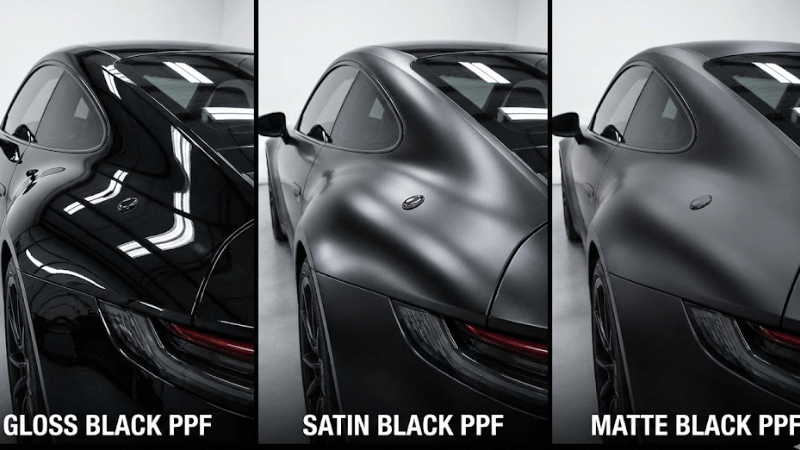
Table of Contents
Why Black Paint Needs More Than Just Clear Protection
Let‘s start with an uncomfortable truth. Factory black paint is softer than you think. Many manufacturers use formulations that prioritize depth and gloss over sheer hardness. That’s great for showroom appeal, but terrible for real-world driving.
Here‘s what happens to unprotected black paint over time:
Swirl marks from improper washing. Even a clean microfiber towel can leave micro-scratches if there’s a speck of dirt trapped in it. On white or silver cars, you‘d never notice. On black? It looks like someone took steel wool to your hood.
Water spots that etch into the clear coat. Hard water evaporates, leaves minerals behind, and those minerals bond with your paint. Soon enough, you’ve got permanent little circles that no amount of polishing can fully remove.
Rock chips that stand out like sore thumbs. A tiny chip on a silver bumper blends in. On a black bumper, it‘s a bright white dot screaming for attention. Touch-up paint never matches perfectly.
Bird droppings and tree sap that stain almost instantly. The acidity in bird droppings can eat through clear coat in a matter of hours. On black paint, the damage shows up as a dull, hazy spot that’s impossible to ignore.
Clear PPF helps with all of this. But here‘s the thing — clear film doesn’t solve the root aesthetic problem. It protects what‘s underneath, sure. But if your paint already has swirls, chips, or fading, clear film just seals those imperfections in. You’re protecting damage instead of preventing it from showing.
That‘s where black PPF changes the game entirely.
What Exactly Is Black PPF?
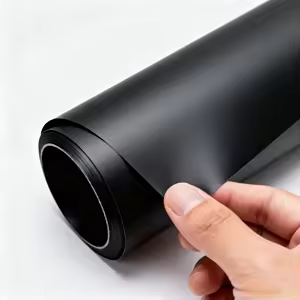
Black paint protection film is exactly what it sounds like — a high-performance thermoplastic polyurethane film infused with deep, consistent black pigment. It’s not a sticker. It‘s not a vinyl wrap. It’s a genuine protective layer engineered to take the kind of abuse that would destroy factory clear coat.
Think of it as a second skin for your car. Once applied, it bonds directly to your original paint and becomes the new surface that the world actually sees. The underlying factory paint stays pristine, untouched by UV rays, road debris, bird droppings, or anything else.
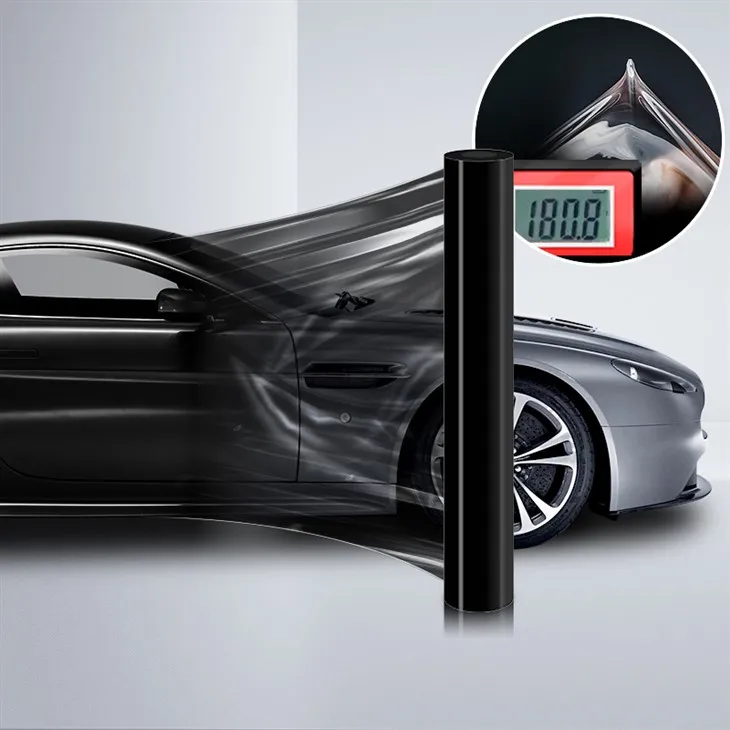
Most premium black PPF comes in thicknesses around 8 mil (about 0.2mm). That doesn‘t sound like much, but it’s significantly thicker and more impact-resistant than any vinyl wrap on the market. Some manufacturers now offer films up to 185 microns or more, giving you an even stronger barrier against daily wear and tear.
But thickness alone doesn‘t tell the whole story. The real magic happens in the engineering — self-healing topcoats, hydrophobic surfaces, UV-resistant formulations, and deep black pigments that don’t fade or yellow over time.
Self-Healing Technology: The Game-Changer for Black Cars
Let‘s talk about the feature that makes modern PPF completely different from anything that came before — self-healing.
Here’s how it works. The top layer of quality black PPF is formulated with elastomeric polymers that have “memory.” When the film gets scratched — say, from a car wash brush, a tree branch, or even just a careless passerby — those polymers get displaced. But when heat is applied, either from the sun‘s warmth, hot water, or a heat gun, those polymers relax and flow back into their original position. The scratch disappears.
For black car owners, this is huge. Swirl marks are basically inevitable with regular washing. But if those swirls happen on the PPF instead of your clear coat, they can literally vanish the next time your car sits in the sun for an hour.
Some premium films, like the ones offered by leading manufacturers, even feature ambient-temperature self-healing. That means minor scratches disappear without any external heat source — just the warmth of your engine or a mild sunny day is enough to trigger the healing process.
Does this mean black PPF is indestructible? No. Deep gouges and major impacts can still damage it. But for the kinds of micro-scratches and swirl marks that plague black paint on a daily basis? It’s practically a miracle.
Hydrophobic Technology: Keeping That Deep Shine Cleaner for Longer
A hydrophobic surface is one that actively repels water. On a quality black PPF, water doesn‘t spread out and sit there. It beads up into tight little spheres and rolls right off, taking dirt and grime with it.
Why does this matter for black cars?
Because water spots are the enemy. On any other color, a dried water spot is barely noticeable. On black, it’s an eyesore. And once those mineral deposits etch into your clear coat, they‘re permanent without aggressive polishing — which, by the way, removes a layer of your clear coat every time.
With a hydrophobic topcoat, water doesn’t get a chance to sit and dry. It sheds instantly. That means fewer water spots, less dirt accumulation, and easier washing overall. Some advanced films even incorporate ceramic-infused topcoats that take hydrophobicity to the next level — water contact angles of 110 degrees or more, meaning water practically bounces off on its own.
For anyone who‘s spent a Saturday afternoon painstakingly drying a black car only to find new water spots the next morning, this alone makes black PPF worth considering.
UV Protection and Anti-Yellowing: Keeping Black Black
Here’s something most car owners don‘t think about. The sun’s UV rays don‘t just fade paint — they break down the molecular structure of the clear coat over time. On black cars, this shows up as a dull, hazy, almost grayish appearance that no amount of waxing can fix.
Premium black PPF includes UV inhibitors built directly into the film. These compounds block harmful UV radiation before it ever reaches your factory paint. Your original color stays vibrant and fresh underneath, even after years of exposure.
But what about the film itself? Does black PPF turn yellow over time?
On older-generation films, yes — yellowing was a real problem. But today’s high-quality black PPF uses non-yellowing TPU formulations and advanced topcoats that remain optically clear for years. The best manufacturers back this with warranties of five, seven, or even ten years against yellowing, cracking, and peeling.
When you‘re dealing with black paint, color stability isn’t a luxury. It‘s a necessity. A film that shifts even slightly toward brown or gray over time will ruin the deep, rich look that made you buy a black car in the first place.
Black PPF vs. Vinyl Wrap: Not Even Close
This is where a lot of people get confused. They see a black vinyl wrap and think, “That’s basically the same thing, right?”
Wrong. Very wrong.
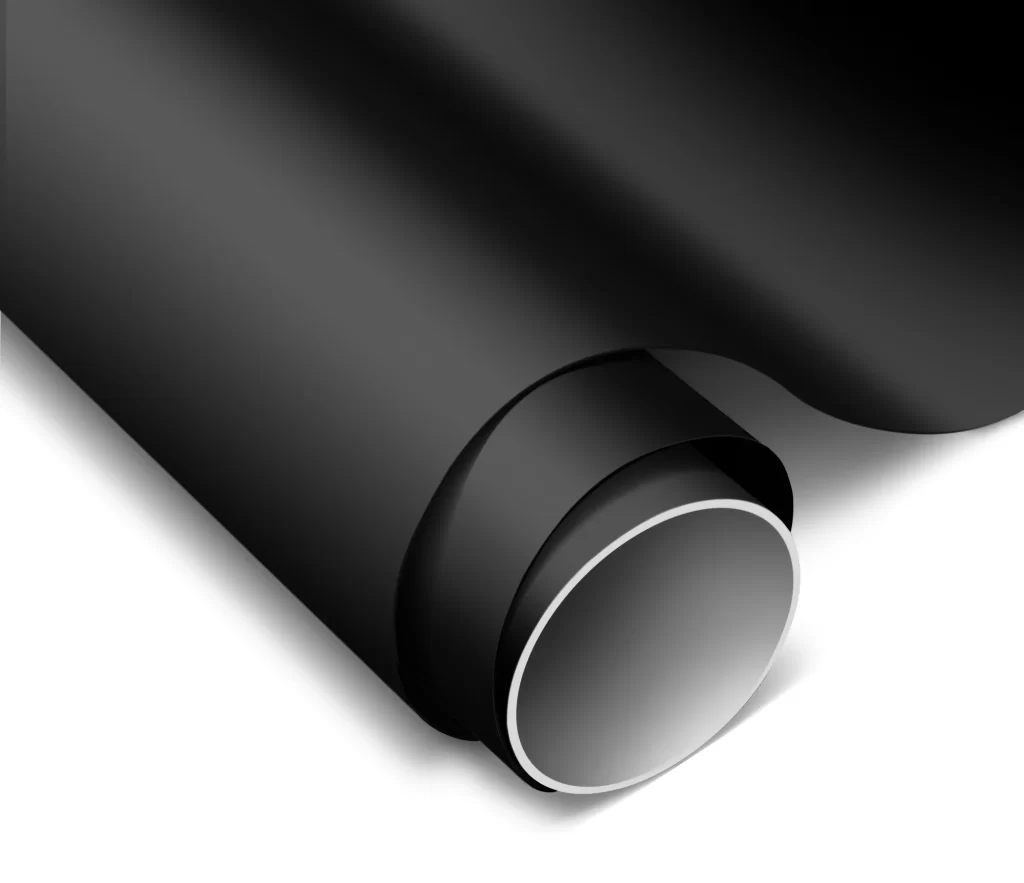
Vinyl wrap is made from PVC — polyvinyl chloride. It‘s designed primarily for color change and aesthetic customization. Protection is an afterthought at best. Most vinyl wraps are thin, around 75 to 100 microns, and they offer almost no real defense against rock chips, scratches, or UV damage.
Black PPF, on the other hand, is made from TPU — thermoplastic polyurethane. It’s engineered from the ground up for impact resistance, self-healing, and long-term durability. Typical black PPF thickness ranges from 150 to 190 microns, sometimes even thicker.
Here‘s a quick breakdown of the key differences:
| Feature | Black PPF | Vinyl Wrap |
|---|---|---|
| Material | TPU | PVC |
| Thickness | 150–190+ microns | 75–100 microns |
| Self-Healing | Yes | No |
| Impact Protection | Excellent | Minimal |
| UV Resistance | High, non-yellowing | Low, fades over time |
| Lifespan | 7–10+ years | 2–5 years |
| Primary Purpose | Protection + style | Style only |
Vinyl wraps have their place. If you want to change your car’s color every couple of years and don‘t care much about protection, vinyl is cheaper upfront. But if you’re serious about keeping your black paint in showroom condition while giving it a deep, flawless finish, black PPF is the only real answer.
The upfront cost is higher — usually 30 to 50 percent more than a vinyl wrap. But black PPF lasts twice as long, protects your paint instead of just covering it, and maintains its appearance without fading, cracking, or peeling. Over the life of your vehicle, it‘s actually more cost-effective.
Glossy Black vs. Matte Black vs. Satin Black
Not all black PPF looks the same. Depending on the finish you choose, your car can take on a completely different personality.
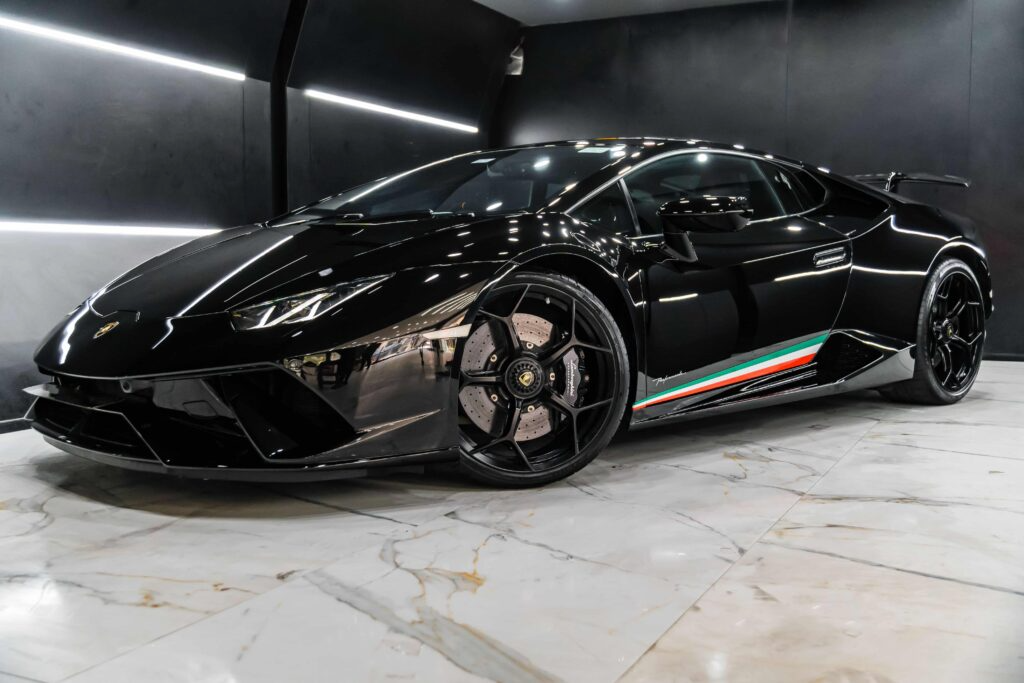
Glossy Black PPF is what most people think of when they imagine a black car. It’s deep, reflective, and wet-looking. High-quality glossy black PPF eliminates the orange-peel texture that plagues many factory paint jobs and even some vinyl wraps. The result is a mirror-like surface that looks better than fresh clear coat.
Matte Black PPF gives your car a stealthy, non-reflective appearance. It‘s aggressive, modern, and increasingly popular among luxury and performance car owners. Matte finishes don’t show swirl marks nearly as easily as gloss, but they require specific care routines to avoid introducing unwanted shine spots.
Satin Black PPF sits right in the middle. It has a low-sheen finish that‘s not completely flat like matte, but not reflective like gloss. Satin has been gaining serious traction in recent years, with many car enthusiasts preferring its understated, sophisticated look over both gloss and matte.
Which one is right for you? That depends entirely on the look you want. Gloss is classic and timeless. Matte is bold and aggressive. Satin is refined and modern. All three offer the same core protection — self-healing, hydrophobic properties, UV resistance, and impact defense. The only difference is the surface finish.
The Two-Tone Trend: Why Black PPF Is Everywhere Right Now
Walk into any major auto show in 2025 or 2026, and you‘ll notice something interesting. Two-tone paint jobs are back in a big way. Automakers are offering contrasting roofs, hoods, mirror caps, and spoilers straight from the factory.
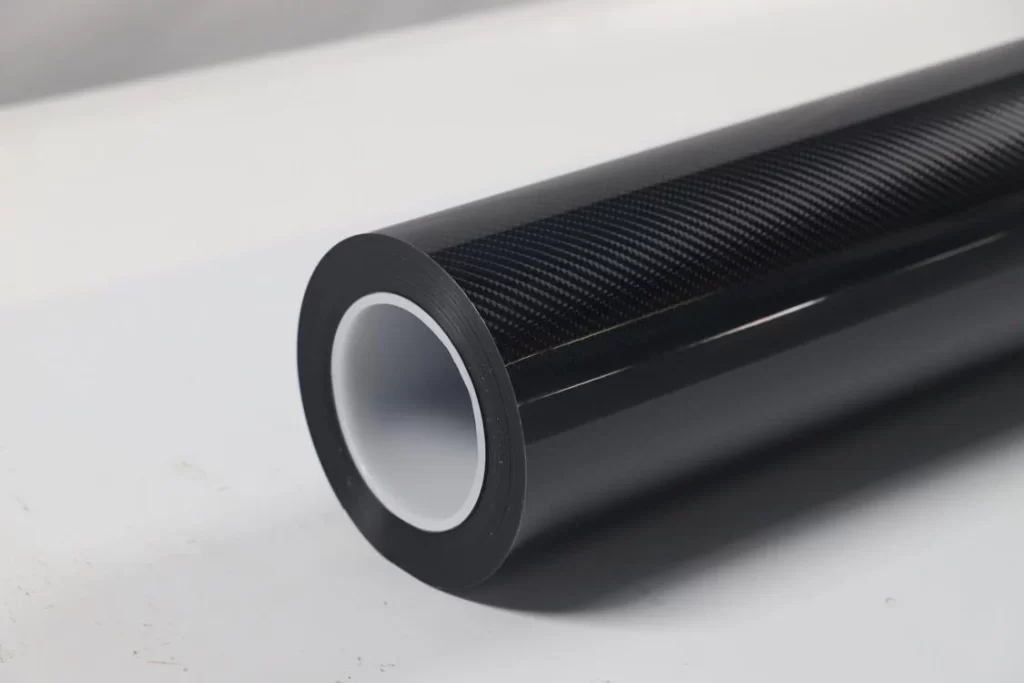
Black PPF is the perfect tool for this trend. Want a black roof on your white SUV? Apply gloss black PPF. Want a carbon-fiber look on your hood without paying for real carbon? There are black PPF options with textured finishes that mimic the real thing.
The beauty of black PPF is that it works with any original paint color. It doesn’t matter if your car is red, blue, silver, or white — adding black accents through PPF creates a striking contrast that looks custom without requiring expensive bodywork or paint.
And because it‘s PPF, not vinyl, those black accents are actually protecting the panels underneath. You’re not just changing the look. You‘re making those panels tougher at the same time.
The color PPF market, including black, is growing fast. Industry projections show 15 to 20 percent annual growth in Europe alone through 2027. The global PPF market was valued at around $1.45 billion in 2024 and is expected to reach nearly $2.8 billion by 2032, growing at over 8 percent annually. Black remains one of the most requested finishes across all regions.
Professional Installation Matters — Especially on Black
Let’s be honest about something. You can buy the best black PPF in the world, but if it‘s installed poorly, it will look terrible.
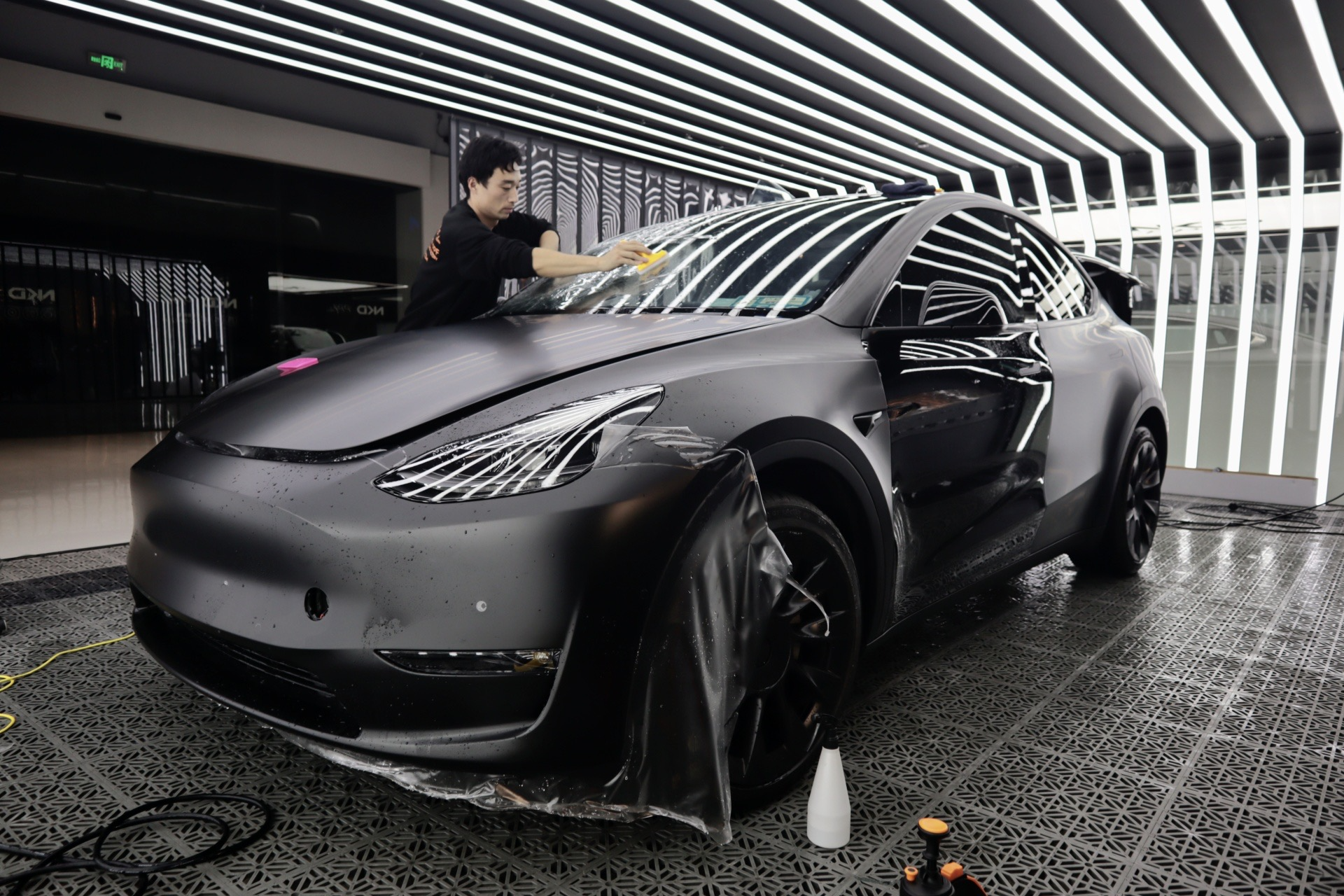
Black paint is unforgiving. It shows every bubble, every speck of dust trapped under the film, every slightly misaligned edge. A good installer knows this and takes extra precautions — dust-free environments, meticulous surface preparation, wrapped edges rather than cut edges, and careful post-installation inspection.
What should you look for in an installer?
Experience with black vehicles. Ask them directly how many black cars they’ve wrapped. An installer who‘s done dozens of black PPF jobs will have a much better eye for the tiny imperfections that ruin the final look.
Edge wrapping. The best installers wrap film around panel edges rather than cutting flush. This eliminates visible lines and prevents dirt from accumulating along the edges over time.
Dust control. PPF installation should happen in a clean, controlled environment. If the shop is dusty or they’re working with garage doors open, walk away.
Post-installation follow-up. Even the best installers sometimes miss a small bubble or lifted edge. A good shop will invite you back after a week or two for a final inspection and touch-up.
Professional installation costs more than DIY, but on a black car, it‘s not optional. Bad installation ruins the look. Good installation makes the film virtually invisible.
Long-Term Value
Quality black PPF isn’t cheap. But it‘s an investment that pays off in three ways.
First, preservation. Your factory paint stays perfect underneath the film. When you eventually remove the PPF years later, the paint underneath looks as fresh as the day it was applied.
Second, resale value. A car with flawless original paint sells for significantly more than one with chips, scratches, and faded clear coat. Black PPF protects that value.
Third, peace of mind. Every time you drive on the highway, you’re not cringing at every passing gravel truck. Every time you wash your car, you‘re not inspecting for new swirl marks. The film takes the abuse so you don’t have to stress about it.
Why Choose Decowell for Black PPF
By now, you‘ve got a pretty clear picture of what black PPF is supposed to do. Self-heal scratches. Repel water and dirt. Block UV rays. Resist stains and chemical etching. Maintain that deep, flawless black finish for years.
Now comes the important question — where do you actually get it?
Decowell has been quietly building a reputation in the automotive film space, combining advanced TPU manufacturing capabilities with factory-direct pricing that larger, more established brands struggle to match. While other manufacturers mark up prices to cover massive marketing budgets, Decowell focuses on what actually matters: material science, quality control, and consistent performance.
Here‘s what Decowell black PPF brings to the table:
True self-healing performance. Not the kind that requires a heat gun and twenty minutes of careful work. The kind that happens naturally with engine heat, warm water, or even a sunny afternoon.
Advanced hydrophobic topcoat. Water beads up and rolls off instantly. Dirt doesn’t stick. Washing takes half the time, and water spots become a thing of the past.
Non-yellowing TPU formulation. The black stays black. No shifting toward brown, no gray haze, no uneven fading after a couple of years in the sun.
Thickness that actually protects. At full spec, Decowell black PPF provides the kind of impact resistance that turns rock chips into minor inconveniences rather than permanent paint damage.
Factory-direct pricing. No middlemen, no inflated distributor margins. You pay for the film, not the marketing machine behind it.
For installers and shop owners, Decowell offers something even more valuable — reliability. Consistent rolls, predictable installation behavior, and responsive customer support. When you‘re running a business, you can’t afford to wait weeks for a replacement roll or argue with a distributor about warranty claims. Decowell understands that.
For individual car owners, the value is simpler. You get premium-level black PPF performance without paying premium-level brand tax. The same self-healing technology. The same hydrophobic surface. The same UV protection. Just at a price that actually makes sense.
Is Decowell the most famous name in PPF? Not yet. But in an industry where brand names often charge double for the exact same material science, being smart about your choice matters. Decowell is the choice for people who care more about performance than logos.
Frequently Asked Questions
Q: Can I apply black PPF over existing paint imperfections like swirl marks or chips?
A: Technically yes, but it’s not recommended. Black PPF adheres directly to your paint, so any existing imperfections will be visible through the film. Most professional installers will do a light paint correction before installation to ensure a flawless finish underneath.
Q: How long does black PPF last?
A: Premium black PPF typically lasts 7 to 10 years with proper care. Some manufacturers offer warranties up to 10 years against yellowing, cracking, and peeling.
Q: Can I wash my car normally with black PPF installed?
A: Yes, but stick to pH-neutral car shampoos and avoid automatic car washes with harsh brushes. Hand washing with a soft microfiber mitt is ideal. The hydrophobic topcoat actually makes washing easier because dirt doesn’t stick as much.
Q: Does black PPF change the color of my original paint?
A: It covers it completely. That‘s the point. If you apply black PPF over a red car, you’ll have a black car. The original paint underneath stays untouched and will look brand new if the film is ever removed.
Q: Is black PPF legal?
A: In most regions, yes, as long as you‘re not altering the vehicle’s registered color without updating your registration. Check local laws, but generally, changing your car‘s appearance with PPF is treated the same as a respray.
Q: How much does black PPF cost?
A: Prices vary widely based on vehicle size, film quality, and installation complexity. A full wrap on a sedan typically costs several thousand dollars. Partial wraps (hood, fenders, mirrors, bumper) are significantly less. While black PPF costs more upfront than vinyl, it lasts twice as long and provides real protection, making it more cost-effective over time.
Q: Can I put ceramic coating on top of black PPF?
A: Absolutely. In fact, many enthusiasts apply ceramic coating over PPF for even easier cleaning and enhanced gloss. Just make sure the PPF has fully cured first — usually a week or two after installation.
Q: Will black PPF damage my paint when removed?
A: No, quality black PPF removes cleanly without damaging factory paint. Cheaper films or improper installation can cause issues, which is why using a reputable film and experienced installer matters.
Q: What’s the difference between black PPF and colored PPF?
A: Black PPF is technically a type of colored PPF, but it‘s often treated as a separate category because of its unique aesthetic demands. Colored PPF includes a wide range of shades — reds, blues, greens, metallics — while black PPF focuses specifically on achieving the deepest, most flawless black finish possible.
Q: Does Decowell offer warranties on their black PPF?
A: Yes, Decowell backs their black PPF with comprehensive warranties against yellowing, cracking, peeling, and bubbling. Contact their team directly for specific warranty terms and coverage details for your region.
Final Thoughts
Black cars are beautiful. They’re also high-maintenance. That‘s just the reality.
But black PPF changes that equation entirely. You don’t have to choose between a stunning black finish and a protected one. You can have both.
Self-healing technology handles the swirl marks and micro-scratches that would otherwise drive you crazy. Hydrophobic topcoats make water spots a distant memory. UV protection keeps that deep black from fading into dull gray. Impact resistance turns rock chips from permanent damage into minor annoyances.
And when you choose a supplier like Decowell, you‘re not paying for a fancy logo. You’re paying for material science, manufacturing quality, and real-world performance. Factory-direct pricing means you get premium protection without the premium markup.
Whether you‘re protecting your personal vehicle or running a shop that needs reliable film for dozens of customers, black PPF is worth a serious look. It’s not the cheapest option upfront. But it is the smartest option long-term.
Ready to give your black car the protection it deserves? Reach out to Decowell today. Tell them what you‘re working on — vehicle type, desired finish, coverage area — and get a quote that actually makes sense. No inflated brand tax. Just real protection for real people.