Decowell Pure Nano Ceramic Car Window Film: The Most Comprehensive and Cost-Effective Car Film in China
20+ Years Professional Expertise | Professional Automotive Film Manufacturer | Full-Solution Provider (PPF, Window Film, Wrap Film) | 2000+ Certified Installers | From R&D to Production | High-Cost-Effective Premium Films | Ample Stock | Professional Team | Serving 40+ Countries | Reliable Logistics
Home » Products » Car Window Film » IRR99% Window Film » Pure Nano Ceramic Window Film
Product Categories
Pure Nano Ceramic Film
— Car Window Film
Product Overview
Decowell Pure Nano Ceramic Film is a premium automotive window tint designed for drivers who demand maximum heat rejection, crystal-clear visibility, and long-lasting durability. Engineered with advanced nano ceramic technology, this film delivers professional-grade performance without the signal interference common in metal-based tints.
Key Specifications
Key Product Attributes
Material: High-grade PET (Polyethylene Terephthalate)
Series: Pure Nano Ceramic Film
Size: 1.52*30m
Thickness: 2 Mil (professional grade)
VLT Options: 65%, 38%, 20%, 5%
Infrared Rejection (IRR): ≥ 95%
Ultraviolet Rejection (UVR): 99%+
TSER: 63%, 76%, 88%, 96%
HAZE: 0.45, 0.6, 0.54, 0.43
Function: UV Proof · Anti-Scratch · Self-Healing (top coat)
Adhesive: Imported self-adhesive glue for bubble-free installation
Position: All automotive windows (side & rear)
Certification: CE Compliant with EU Standards
Visible Light Reflection: Low (reduces glare)
Tensile Strength: High
Adhesive Type: Pressure-sensitive, clear
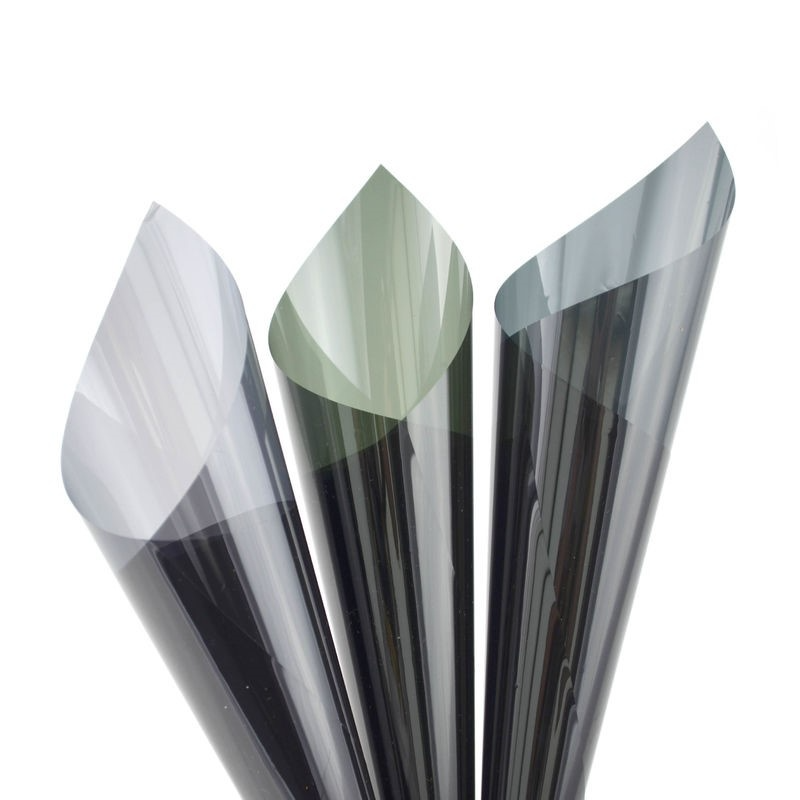
Color: Light Blue, Grey green, Dark Black, Super Dark Black
Why Choose Decowell Pure Nano Ceramic?
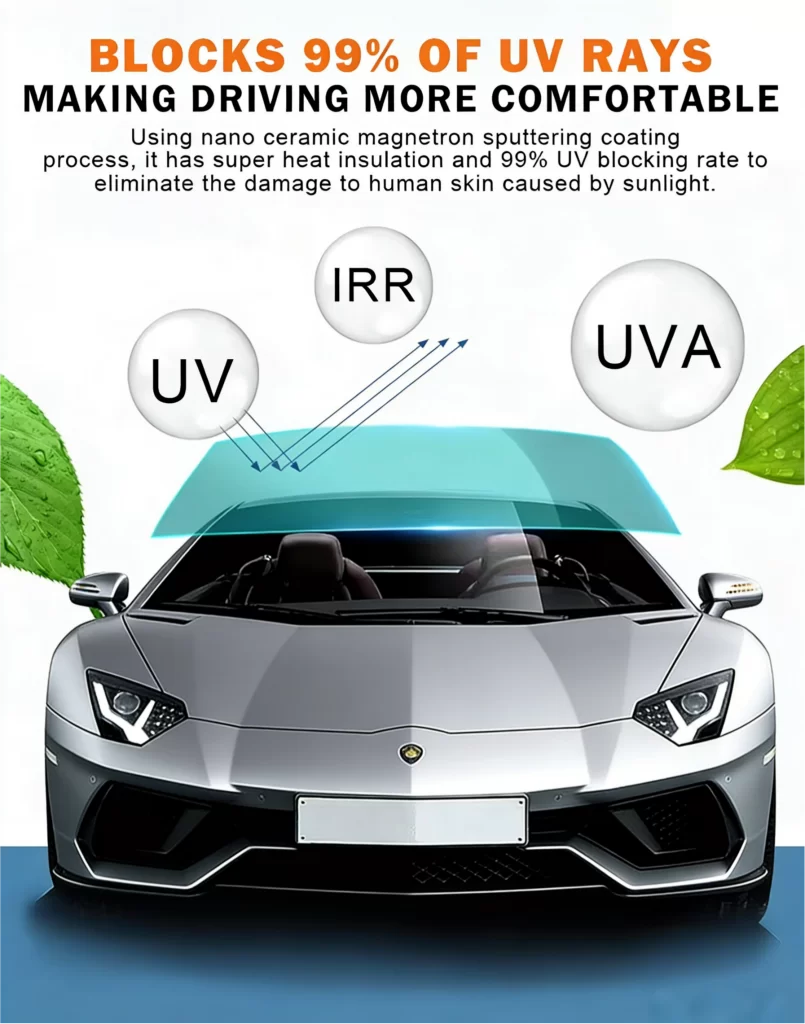
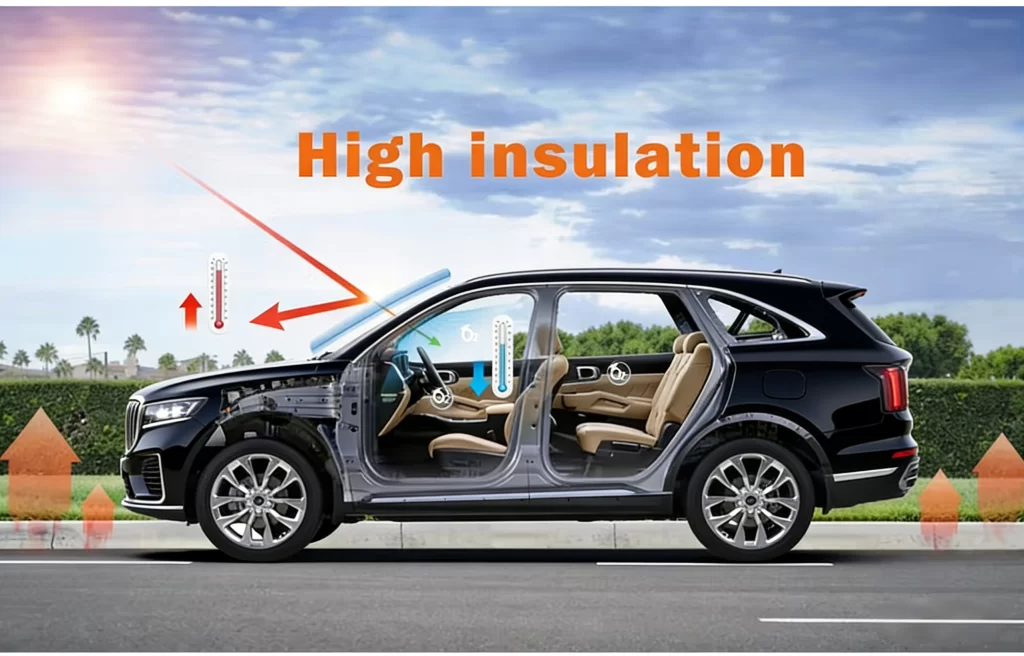
99% High Heat Insulation
Blocks up to 99% of infrared heat, keeping your car significantly cooler and reducing air conditioning load. Perfect for hot climates and long drives.
99% UV Protection
Filters 99% of harmful UVA/UVB rays, protecting your skin and preventing interior fading, cracking, and discoloration.
5G & Signal Friendly
Pure nano ceramic formulation contains zero metal, ensuring no interference with GPS, mobile signals, Bluetooth, or E-Toll devices.
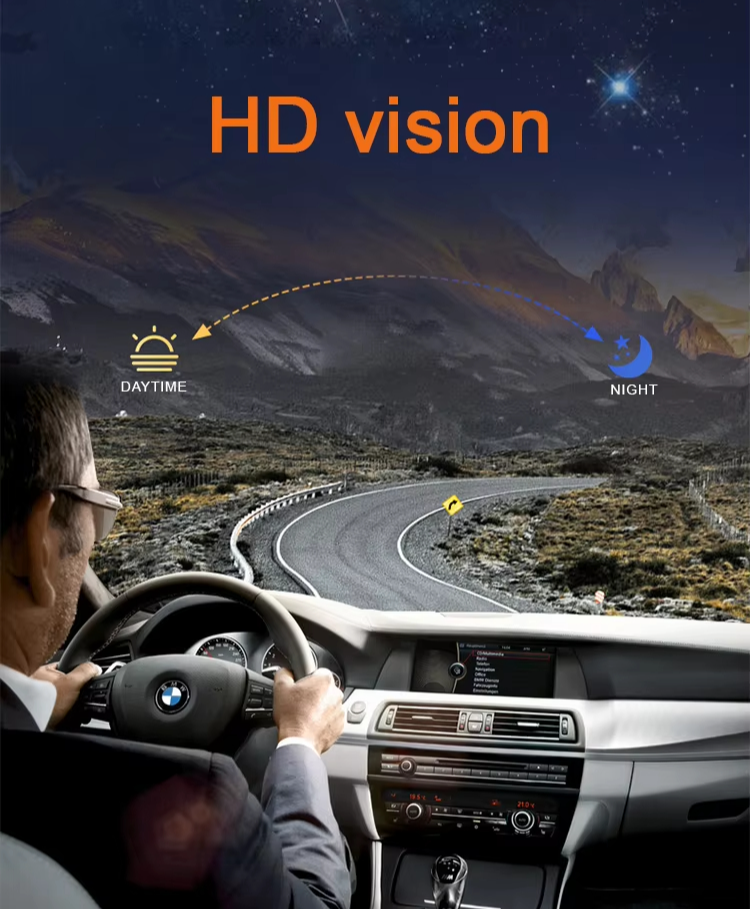
High Definition & Clarity
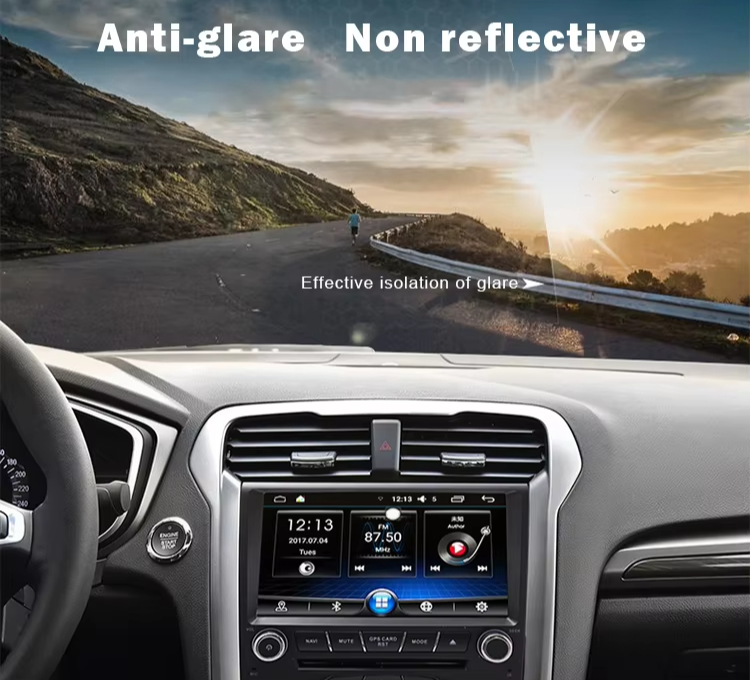
Advanced optical clarity reduces glare while maintaining true-to-color vision. No haze, no distortion—just clear, comfortable driving.
Anti-Scratch & Durable
Hard-coated surface resists daily wear from window operation and cleaning, keeping your tint looking new for years.
Four-Side Shrink Technology
Engineered for easy installation with excellent conformability on curved automotive glass. Bubble-free application saves time and ensures a professional finish.
Certifications & Compliance
CE Certified – Complies with European safety and environmental standards
EU RoHS compliant (lead-free, environmentally friendly materials)
Why Decowell?
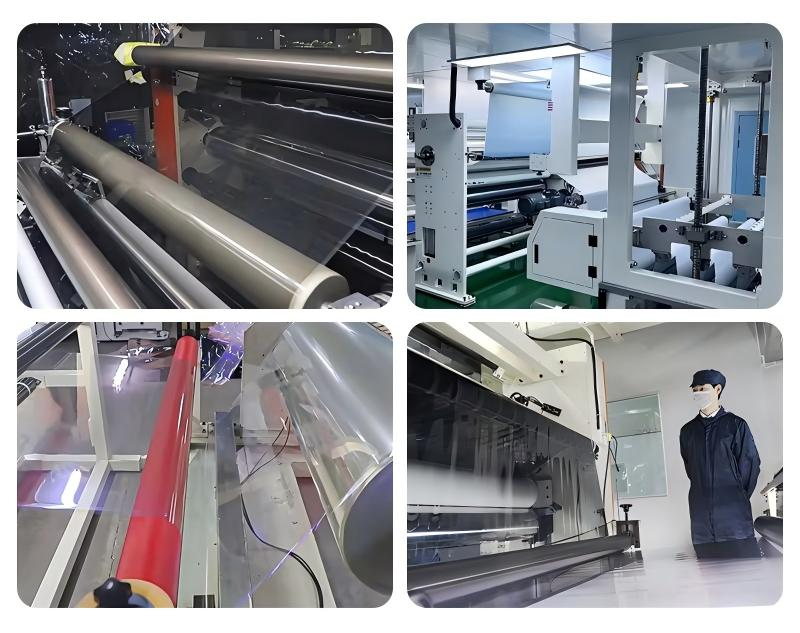
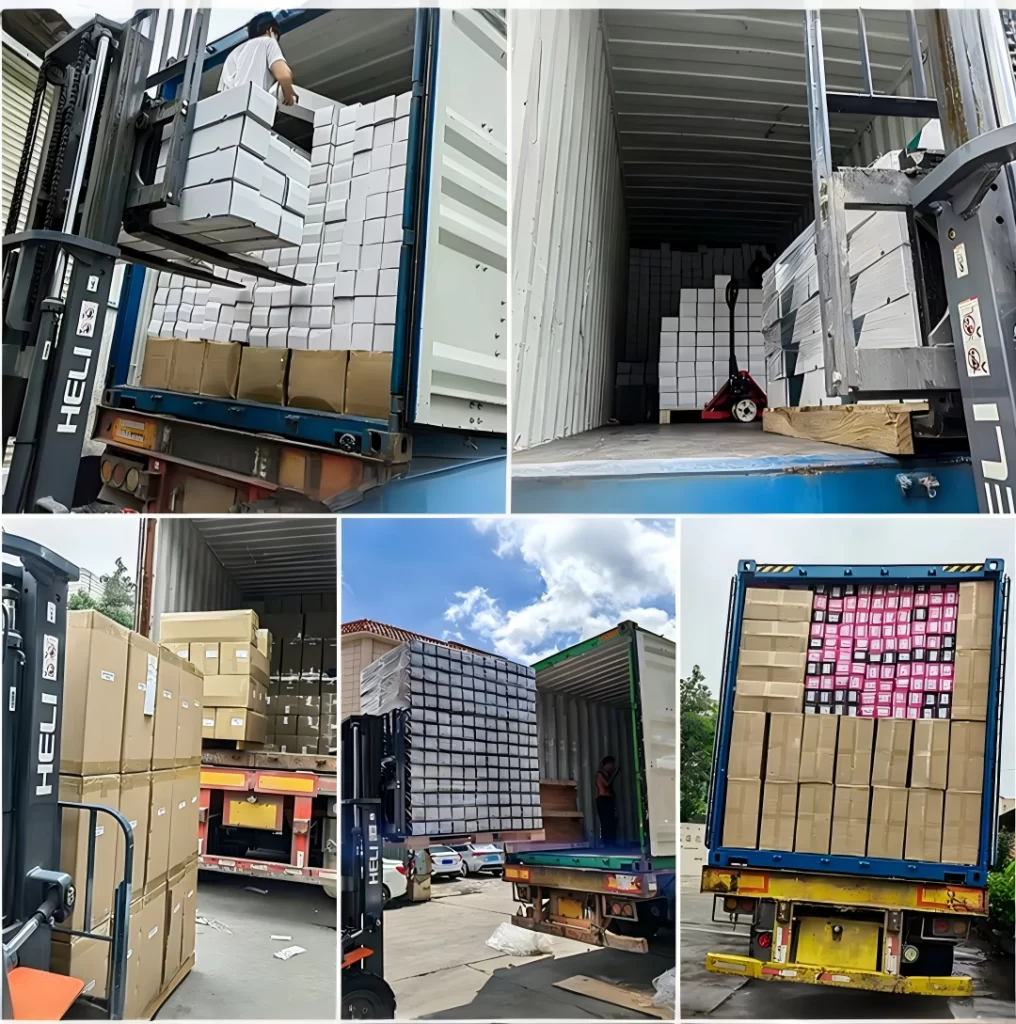
As a custom manufacturer with 6+ years of experience, Decowell specializes in nano ceramic window films trusted by installers worldwide. Our 18,065㎡ facility ensures strict quality control from raw material to finished roll.
On-time delivery rate: 100%
Main markets: Mid East, Southeast Asia, South America
Pure Nano Ceramic Car Window Film: Is It Worth Your Money?
If you’ve ever slid into your car on a scorching summer afternoon and felt like you’ve just entered a pizza oven, you already know why window tint matters. But not all tints are created equal. Walk into any tint shop, and you’ll hear terms like ceramic, carbon, metalized, and dyed thrown around—enough to make anyone’s head spin.
Here’s the truth: pure nano ceramic car window film sits at the absolute top of the food chain. It’s the film that luxury car dealerships install, the one that rideshare drivers swear by, and the technology that lets you blast music on the highway without losing GPS signal.
But is it actually worth the premium price tag? Let’s cut through the marketing fluff and look at what pure nano ceramic film actually does, how it compares to cheaper alternatives, and why thousands of drivers are making the switch.
What Exactly Is Pure Nano Ceramic Window Film?
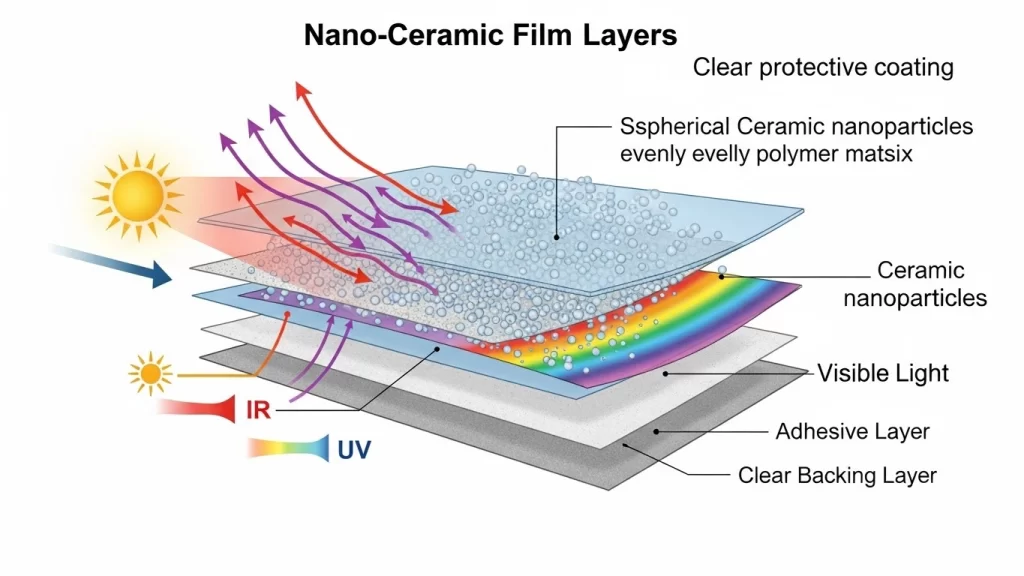
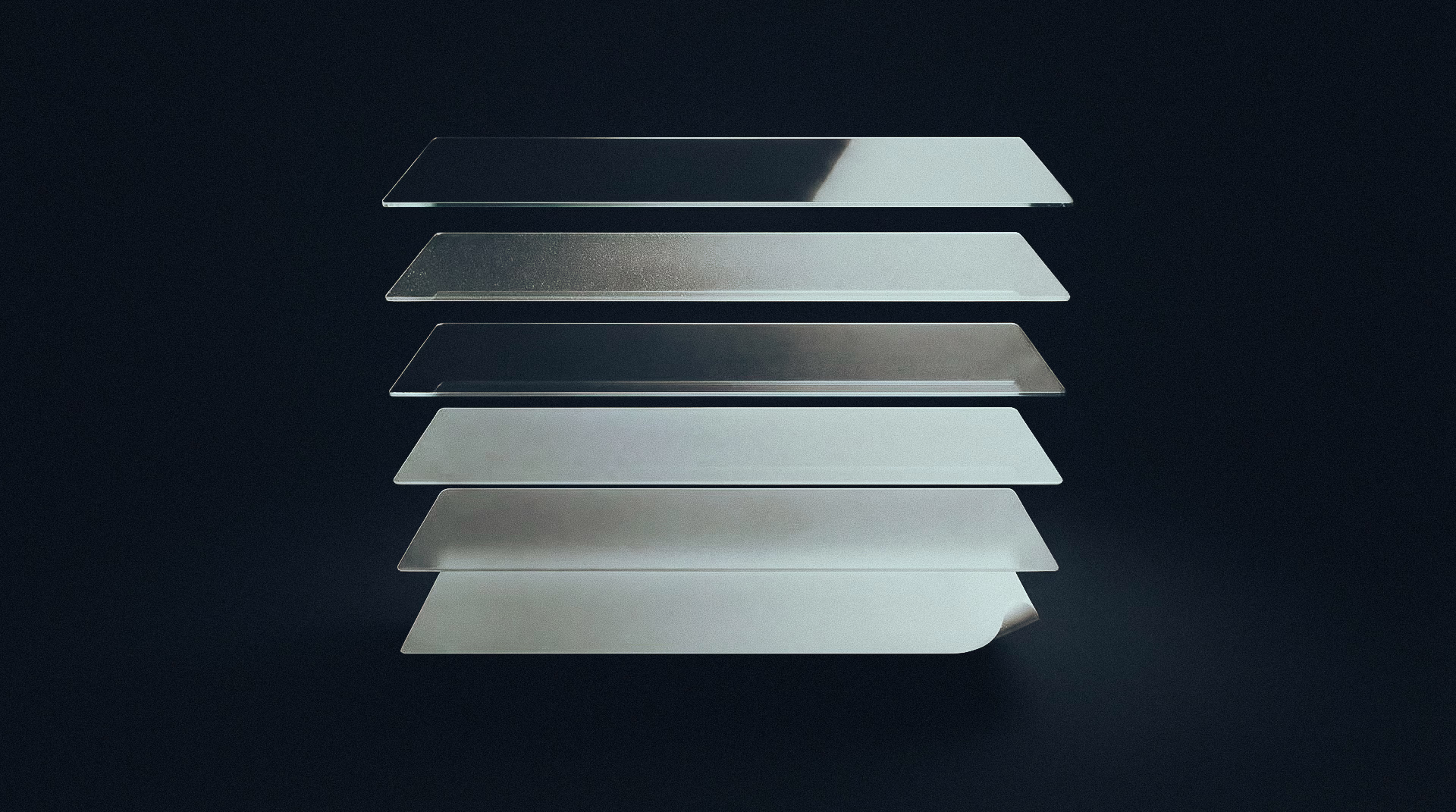
Let’s start with the basics. Pure nano ceramic window film is a high-performance automotive film that uses non-conductive, nano-sized ceramic particles embedded into multiple layers of polyester . Unlike older technologies that rely on dyes or metal layers, these ceramic particles are engineered to do one thing exceptionally well: block solar heat without blocking your phone signal.
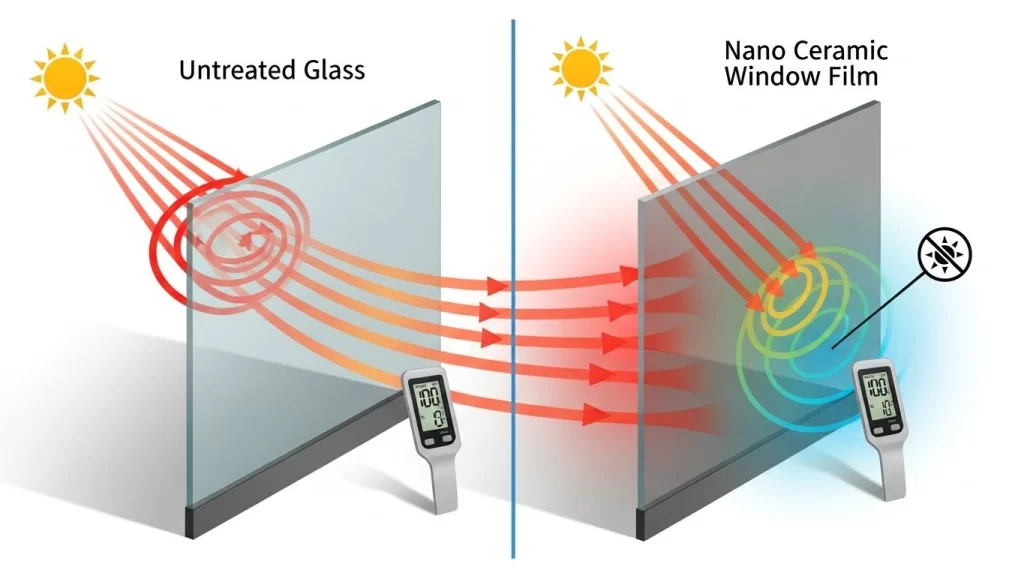
The “nano” part matters. We’re talking particles so small you could line up thousands of them across a single human hair. When evenly dispersed throughout the film, they create a high-density structure that actively absorbs and reflects infrared radiation—the invisible part of sunlight responsible for making your steering wheel too hot to touch .
Here’s what makes pure nano ceramic fundamentally different:
| Feature | What It Means For You |
|---|---|
| Non-Metal Construction | Zero interference with GPS, 5G, or Bluetooth |
| Nano-Ceramic Particles | Superior heat rejection without excessive darkness |
| Multi-Layer Design | Durability that lasts 5–10 years or more |
| Low Reflectivity | No mirror-like appearance; just clear, comfortable vision |
Pure Nano Ceramic vs. Everything Else
To understand why pure nano ceramic dominates the premium segment, you need to see how it stacks against the competition.
The Contenders
Dyed Film (The Budget Option)
This is the cheapest tint on the market. It uses a layer of dye between adhesive and polyester to absorb heat. It works—for a while. But dyed film is notorious for fading to purple within a few years and offers minimal infrared rejection . If you plan to keep your car longer than a lease cycle, skip it.
Metalized Film (The Old Standard)
Metalized film improved on dyed technology by adding tiny metallic particles that reflect heat. It blocks more solar energy and lasts longer, but there’s a catch: metal interferes with radio frequencies . Drivers report spotty GPS, dropped phone calls, and fuzzy radio reception. In an era where cars double as mobile offices, that’s a dealbreaker.
Carbon Film (The Middle Ground)
Carbon film offers better heat rejection than dyed options without the signal issues of metal. It has a distinctive matte finish that many drivers love. But it still can’t match ceramic’s infrared performance .
Pure Nano Ceramic (The Top Tier)
This is the culmination of decades of materials science. Ceramic film blocks up to 95% of infrared heat and 99%+ of UV rays while maintaining complete signal transparency . It doesn’t fade, bubble, or oxidize. And because it uses absorption rather than reflection, it won’t create that annoying mirror effect on your windows .
Side-by-Side Comparison
| Tint Type | Heat Rejection (TSER) | Infrared Rejection | Signal Interference | Lifespan |
|---|---|---|---|---|
| Dyed | 35% – 45% | 30% – 40% | None | 3–5 years |
| Metalized | 45% – 55% | 40% – 50% | High | 5–7 years |
| Carbon | 50% – 65% | 60% – 75% | None | 5–8 years |
| Pure Nano Ceramic | 60% – 96% | 80% – 95%+ | None | 10+ years |
Data compiled from industry testing and manufacturer specifications
1. You Actually Feel the Difference
Here’s a test: park two identical cars in the sun—one with standard tint, one with pure nano ceramic. Open the doors after an hour. The ceramic-tinted car will be dramatically cooler.
That’s because ceramic targets infrared radiation, which accounts for over 50% of the sun’s heat energy . While cheaper tints might darken your windows, they’re letting IR rays pass right through. Pure nano ceramic stops them at the glass.
Drivers in hot climates report cabin temperatures 20–30°F lower after switching to ceramic . That means your AC doesn’t have to work as hard, which translates to better fuel economy—or longer range if you’re driving an EV.
2. Your Electronics Keep Working
Remember the days when you’d roll through a toll plaza and your E-Tag wouldn’t read? Or when your GPS would randomly lose signal in the suburbs?
Those problems trace back to metalized window film. The metal particles create a subtle Faraday cage effect, reflecting radiofrequency energy just like they reflect heat .
Pure nano ceramic contains zero metal. Major manufacturers like 3M explicitly design their ceramic lines to be 5G compatible . Your phone, your navigation, your satellite radio—they all work exactly as intended.
3. It Looks Better, Longer
Metalized film oxidizes. Dyed film fades. Carbon film holds up reasonably well, but ceramic is in a league of its own.
Because ceramic particles are chemically stable and non-reactive, they don’t degrade over time . Professional installers note that high-quality ceramic films maintain their optical clarity and color for 10 years or more . No purple tint. No bubbling. Just consistent performance.
4. Your Interior Stays Pristine
UV damage is insidious. Over time, sunlight bleaches your dashboard, cracks your leather, and fades your upholstery. It happens slowly—until one day you realize your car looks decades older than it is.
Pure nano ceramic blocks 99%+ of UVA and UVB rays . That’s not just about resale value; it’s about comfort. UV rays also contribute to skin aging and cancer risk. Your tint should protect you, not just your car.
5. Safety Without Compromise
Here’s something drivers rarely consider: explosion protection.
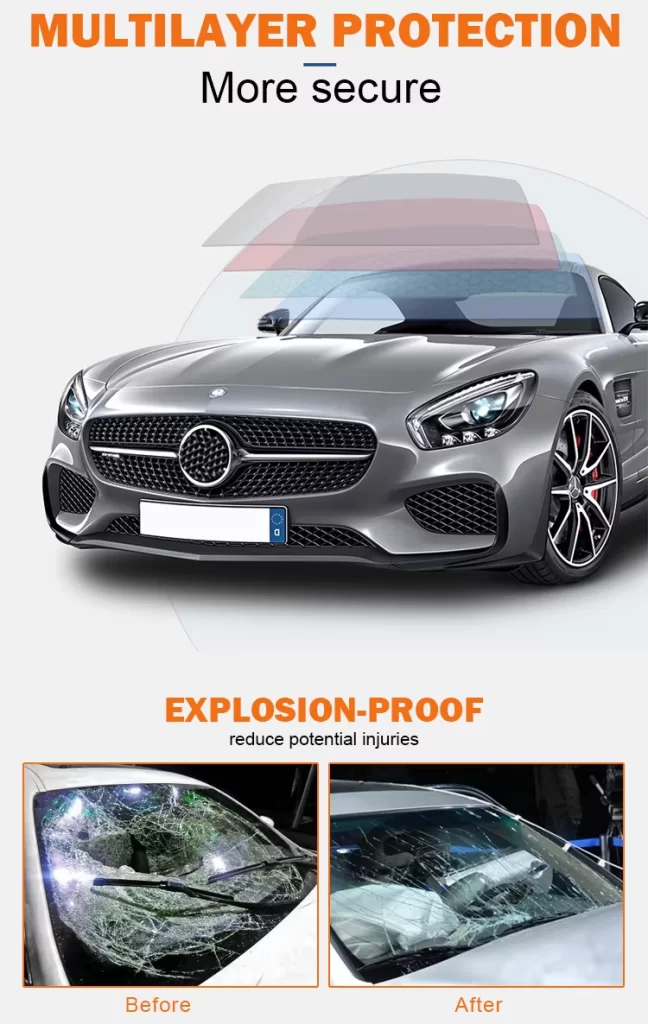
Quality ceramic film adheres firmly to glass. If a rock hits your window or someone tries to break in, the film holds the shattered glass together . Instead of a thousand dangerous shards flying toward you, the glass stays in place.
This safety feature comes standard with pure nano ceramic—not because it’s marketed as “security film,” but because the construction is inherently strong.
What About Visibility at Night?
This is the question we hear most often. “If the film blocks so much, won’t I struggle to see at night?”
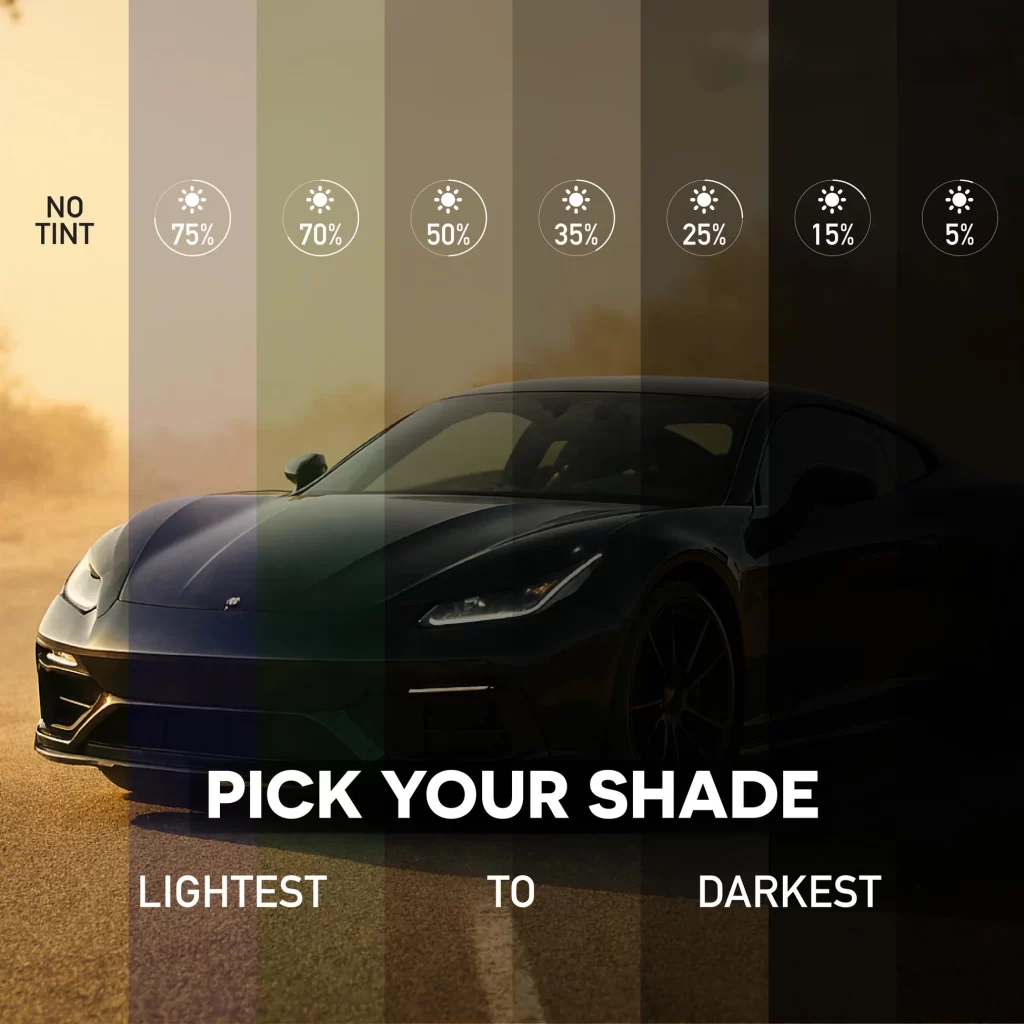
The answer depends entirely on which Visible Light Transmission (VLT) you choose.
VLT is the percentage of visible light that passes through the film. A lower number means darker glass.
5% VLT (Limo Black): Maximum privacy. Use on rear windows only.
15–20% VLT: Dark but still drivable. Popular for rear passenger windows.
35–38% VLT: The sweet spot for front windows in most regions. Good heat rejection without compromising night vision.
50–65% VLT: Light tint. Excellent clarity, still blocks significant heat.
70–85% VLT: Nearly clear. Ideal for windshields where laws restrict darkness .
Here’s the kicker: pure nano ceramic film maintains optical clarity better than any other type . Because the particles are nano-scale and evenly dispersed, there’s minimal haze—typically less than 1% . That means even at moderate darkness levels, your view remains crisp.
Common Myths About Nano Ceramic Film
“It’s too dark.”
False. Ceramic film comes in VLT levels from 5% to 85% . You can choose a nearly clear windshield film that still blocks significant heat.
“All dark tints block heat the same way.”
False. Darkness and heat rejection are not the same. A dark dyed film may look cool but let IR radiation pour through. Ceramic targets the invisible heat spectrum .
“I can install it myself to save money.”
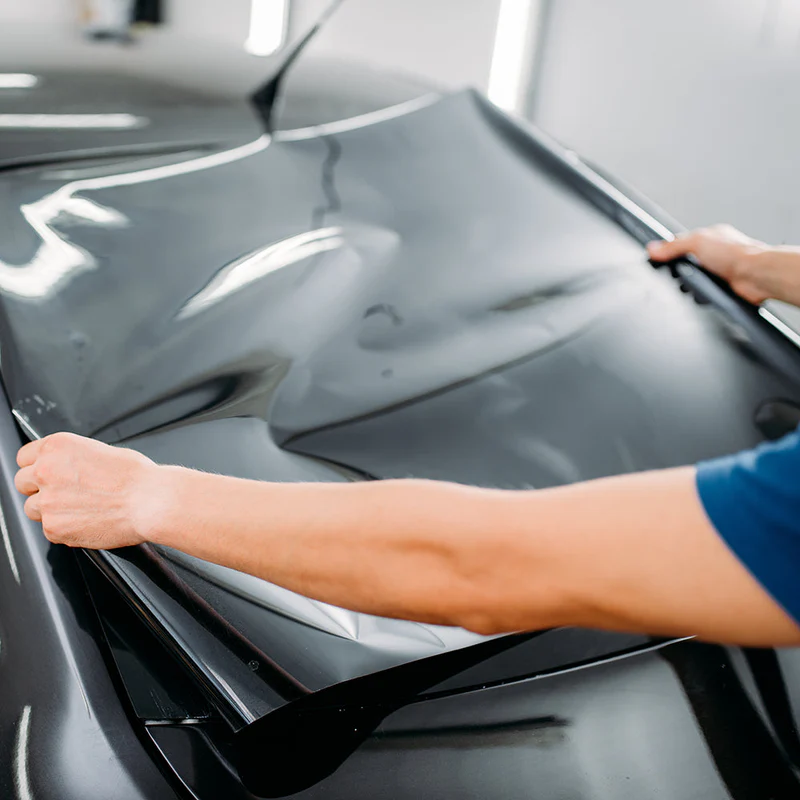
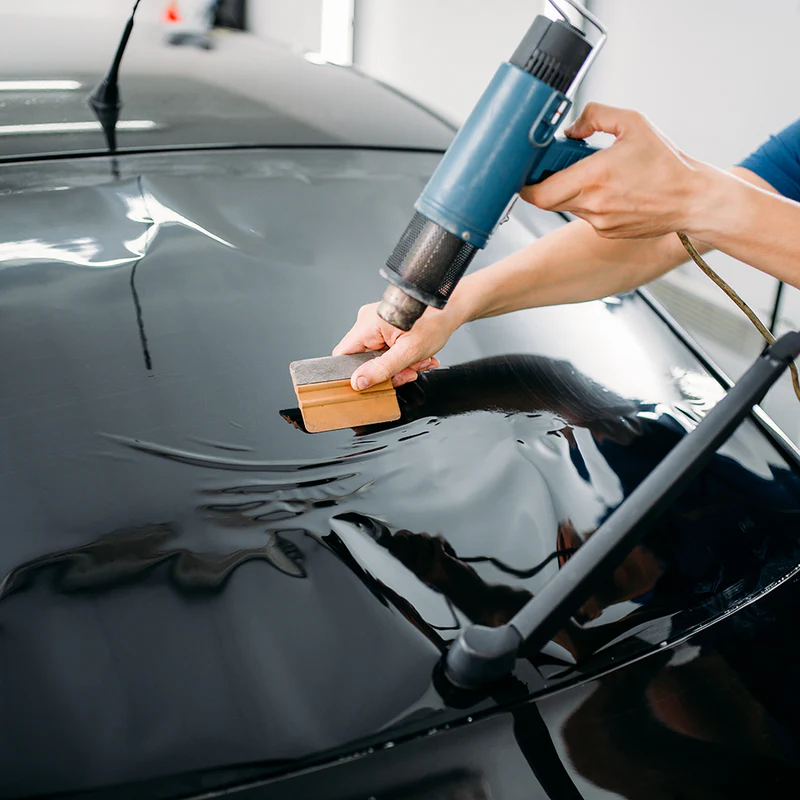
Technically yes—but we strongly advise against it. Professional installation ensures:
Bubble-free adhesion
Proper edge sealing
Warranty coverage
Compliance with local tint laws
“Ceramic tint is only for hot climates.”
Not true. Even in moderate climates, ceramic film reduces glare, protects interiors from UV damage, and improves comfort year-round .
How to Choose the Right Pure Nano Ceramic Film
Follow this checklist when shopping:
Step 1: Verify the Material
Ask directly: “Is this pure nano ceramic or a hybrid?” Pure ceramic contains no metal and no dye.
Step 2: Check the Specs
Look for:
Infrared Rejection (IRR): ≥ 95%
Ultraviolet Rejection (UVR): 99%+
Total Solar Energy Rejected (TSER): 60%–96% depending on VLT
Step 3: Confirm Signal Transparency
If the film contains metal, you risk interference. Ceramic is the safe choice for modern vehicles .
Step 4: Know Your Local Laws
Most regions regulate maximum darkness for front side windows and windshields. Check before you buy.
Step 5: Choose a Reputable Manufacturer
Quality varies wildly. Stick with established brands that offer warranties and transparent specifications.
Frequently Asked Questions
Q: Does pure nano ceramic film really block 99% of heat?
A: It blocks up to 99% of infrared heat specifically. Total solar heat rejection (TSER) ranges from 60% to 96% depending on the VLT level you choose .
Q: Will ceramic tint affect my phone reception or GPS?
A: No. Pure nano ceramic contains zero metal, so it won’t interfere with 5G, GPS, Bluetooth, or radio signals .
Q: How long does pure nano ceramic film last?
A: Quality ceramic films typically last 10 years or more with proper care . Many carry warranties matching that lifespan.
Q: Can I put ceramic tint on my windshield?
A: Yes—but check local laws. Many regions allow a clear or nearly clear ceramic film on windshields for heat rejection without compromising visibility .
Q: Is ceramic tint worth the extra cost?
A: For drivers who keep their vehicles beyond a few years, live in sunny climates, or rely on in-car electronics, absolutely. The fuel savings, interior preservation, and comfort improvements add up quickly .
Q: Does ceramic tint prevent my car from heating up completely?
A: No tint eliminates all heat. But ceramic film reduces solar gain significantly—expect 20–30°F cooler cabin temperatures compared to untinted glass .
Q: How do I clean ceramic window film?
A: Use a soft microfiber cloth and ammonia-free cleaner. Avoid abrasive materials that could scratch the surface.
The Bottom Line
Pure nano ceramic window film isn’t just another upgrade—it’s a fundamental improvement to your driving experience. It keeps you cooler, protects your interior, maintains your connectivity, and lasts longer than any alternative.
Yes, it costs more upfront. But when you factor in fuel savings, extended interior life, and the sheer comfort of a car that doesn’t bake you alive, the math works out.
Whether you’re a daily commuter, a weekend road-tripper, or someone who just appreciates a quality ride, pure nano ceramic film delivers value that compounds over time.
Ready to Experience the Difference?
Decowell Pure Nano Ceramic Film is available now for wholesale orders, custom branding, and global shipping.
Your car—and your passengers—deserve the best. Choose Decowell.